

Researcher Scientist @GoogleDeepmind working on RSI, Opinions mine
San Francisco, CA
Joined November 2019
- Tweets1.8K
- Following822
- Followers15K
- Likes5.8K




Pinned Tweet
Try Gemini 4 Argon and share your feedback.

3 SR/intern positions at @GoogleDeepMind .

Our team @GoogleDeepMind is hiring 3 PhD Student Researchers for 2027 to work on exciting, cutting-edge projects focused on understanding, evaluating, and aligning frontier AI agents and multi-agent systems. Signal your interest here forms.gle/2onGFBnyk7MaCdJn8 and spread the word!

Swaroop Mishra retweeted

Sound on!

Gemini 4 Argon built a 3D periodic table synced to Tom Lehrer’s song, “The Elements.”
Created in @Antigravity, it animates orbiting electrons, atomic data, and light spectra.


🚨 Intern (student researcher) opportunity

We're planning to host a student as part of the Google DeepMind student researcher program. The goal of the project is to understand what makes LLM-human communication effective, and to use the findings to improve models.
Good project for PhD students interested in user simulation, HCI, multi-turn interaction/RL, computational cognitive science, or related topics. This is a 24-week position in NYC. Submit an expression of interest here: forms.gle/sHQnbJbHY8SM6g5NA

Swaroop Mishra retweeted
Some great use cases from Googlers building with Gemini 4 Argon 🧵
It has a much stronger grasp of coding and multi-step tool use - starting from a raw Pixel CAD file in Google Antigravity, Argon created this exploded-view animation, lighting, camera choreography, and audio through Blender MCP.
It ran 1,000 rounds of iterative loops to check its own renders and refine the code along the way.

Intern hiring alert 🚨

🚨Intern Hiring for Summer 2027🚨
I am looking for a Research Intern to join us at @GoogleDeepMind in Mountain View, California! The project will be exploring both theoretical and empirical aspects of continual learning in deep network.
Apply here:
forms.gle/HmXExwWBguRiT1edA

Thank you @odias_in_ai for inviting me to deliver the keynote!
Tune in at Saturday 5 pm PST (US)/ Sunday 5.30 am IST (India)

The man who helped teach AI to follow instructions is speaking in Odisha AI conference tomorrow.
Swaroop Mishra , Research Scientist at Google DeepMind is the keynote at the 7th Odisha AI Conference.
Follow our social sites and check our website for more insights.

ALT Keynote talk of Swaroop Mishra at Odisha AI conference
I asked this question 5 years ago, asking again now to see if the answer has changed.
Pick one.
83%Data
17%Modeling
269 votes • Final results

Swaroop Mishra retweeted

Today, our team is sharing a preprint on our new system for generative de-novo enzyme design, AlphaProtein Novo.
At @GoogleDeepMind, we have long focused on the building blocks of life (proteins). We developed AlphaFold to predict structure, trained language models to understand function, and built AlphaProteo to design de-novo binders. But proteins play many important roles in nature, such as enzymes that catalyze chemical reactions.
Designing entirely new enzymes from scratch to catalyze custom reactions has long been a holy grail for scientists. Our team has shown how AlphaProtein Novo can produce new-to-nature enzymes with state-of-the-art activity on 2 benchmark reactions. We’ve also designed custom enzymes to synthesize the pharmaceutical motif piperidine, and others to degrade the environmental plasticizer toxin DEHP.
While there is much more work to do in this direction, we’re excited to have demonstrated the ability to design functional proteins that go beyond what is known in nature. Huge congratulations to @jueseph, @ZvxyWu, Josh Abramson, the @GoogleDeepMind protein design team, and our collaborators in the @francesarnold & Liu Group! 🎉
🔗 Preprints and code:
biorxiv.org/content/10.64898…
biorxiv.org/content/10.64898…
github.com/google-deepmind/a…


Swaroop Mishra retweeted

Very excited to announce Gemini 4 Argon! It delivers frontier performance across coding, knowledge work and cyber defense capabilities. The model is well-rounded and has great writing quality. The team has been hard at work producing this and we've all enjoyed using it everyday.
Lots of discussion out there about our next model(!), so I wanted to give an early look as soon as possible. Introducing Gemini 4 Argon!
It shows frontier performance in complex workflows, cyber defense and software engineering. Teams are using it extensively at Google, from coding to quantum computing, great feedback.
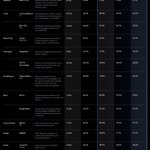
Here’s a look at the benchmarks:


