

#SyntheticRegeneration & Systems Physiology Laboratory @Columbia | Engineering Tissue Healing through Systems Physiology
Manhattan, NY
Joined April 2022
- Tweets1.1K
- Following1.2K
- Followers480
- Likes5.5K




Synthetic Regeneration Laboratory at Columbia retweeted

Motherhood’s Sentinels: Pregnancy Induces Tissue-Resident Memory T Cells to Curb Breast Cancer Growth—this In the Spotlight commentary highlights a recent Nature Immunology article. doi.org/10.1158/0008-5472.CA… #CD8TCells #TCells #TissueResidentImmunity #BreastCancer

Synthetic Regeneration Laboratory at Columbia retweeted

Compartmentalized immune dynamics in amyotrophic lateral sclerosis @NatureMedicine
⬆️Long-lived intrathecal T cell clones -> slower disease progression
⬆️circulating T cells, CMV-specific T cells & antibodiesin CSF -> faster progression
nature.com/articles/s41591-0… @karolinskainst

Synthetic Regeneration Laboratory at Columbia retweeted
Single-cell multi-omics reveals archetypal regulatory programs shared across T cell subsets @CellReports
cell.com/cell-reports/fullte… @YuriPritykin @Princeton

Synthetic Regeneration Laboratory at Columbia retweeted
Tissue-resident macrophages sense colonic stiffening via Piezo1, releasing NGF to sensitize TRPV1+ nociceptors for visceral pain @SciImmunology
science.org/doi/10.1126/scii… 🇨🇳

Synthetic Regeneration Laboratory at Columbia retweeted

Two VIPerturb-seq updates:
1. Updated preprint w/@CalebLareau where we enrich for VIPs using RNA markers before sequencing: biorxiv.org/content/10.64898…
2. Delighted to share that @10xGenomics is releasing a commercial VIPerturb-seq product! Check it out at pages.10xgenomics.com/WEB-20…

Excited to share VIPerturb-seq!
New tech from my lab which aims to improve the cost, data quality, and efficiency of single-cell CRISPR screens so that they are accessible to any lab - even at genome-wide scale
Preprint and 🧵 (1/): biorxiv.org/content/10.64898…

Synthetic Regeneration Laboratory at Columbia retweeted

Ever wondered what a cell has experienced in the past? This is in general hard to measure. Here we introduce the recordanelle, to equip cells with a tool that lets them record their own history.
nature.com/articles/s41587-0…
@NatureBiotech @ETH @randall_platt @ETH_BSSE

Synthetic Regeneration Laboratory at Columbia retweeted

Macrophages wear many hats: from guardians of tissue health to architects of tumor niches and targets for therapy. Explore their remarkable plasticity, from homeostasis to disease and back, in the new @TrendsImmuno special issue.
hubs.li/Q04Byx3b0

Synthetic Regeneration Laboratory at Columbia retweeted

🧬 The M1/M2 macrophage paradigm is no longer sufficient. What comes next?
A new Immunity Perspective by Ginhoux, Mulder, Arcila-Barrera, and Amit proposes a major conceptual shift: Macrophages should be defined by combinations of functional gene programs—not binary polarization states or individual markers.
🔬 1. Macrophage identity is modular
The authors propose eight recurring transcriptional programs:
① Homeostasis: LYVE1, TIMD4, MRC1
② Scavenger/lipid handling: TREM2, APOE, GPNMB, SPP1
③ Fibrosis/remodeling: SPP1, MMP9, TGFB1
④ Immunosuppression: IL10, IDO1, CD274
⑤ Antigen presentation: HLA-DRA, CD74, CIITA
⑥ Interferon response: CXCL9, CXCL10, STAT1
⑦ Inflammation: NLRP3, IL1B, TNF
⑧ Monocyte recruitment/transition: CCR2, FCN1, S100A8
A ninth category accommodates previously unrecognized programs.
Crucially, individual macrophages can activate several programs simultaneously.
🧠 2. The same marker can indicate opposite biological functions
TREM2 illustrates this paradox.
In Alzheimer's disease, TREM2-associated microglial programs may support lipid handling, debris clearance, and tissue protection.
In obesity, related macrophage programs can contribute to metabolic adaptation.
However, in tumors, TREM2/SPP1-associated macrophages may promote immunosuppression, fibrosis, and treatment resistance.
TREM2 expression alone does not define macrophage function.
⚡ 3. Why macrophage-targeted therapies sometimes fail
Clinical experience demonstrates the limitations of single-target approaches.
• CSF1R inhibition has shown activity in tenosynovial giant cell tumors but limited efficacy in glioblastoma.
• Anti-TREM2 antibody PY314 demonstrated minimal antitumor activity in a phase 1a ovarian cancer study.
• Anti-CD47 antibody magrolimab failed to improve survival in phase 3 AML trials.
These outcomes highlight the importance of compensatory immune programs and tissue-specific biology.
💊 4. From macrophage depletion to functional reprogramming
The authors highlight emerging therapeutic strategies:
TREM2-targeted immunocytokines: Combine macrophage targeting with tumor-localized activation of a masked IL-2 superkine.
Armored CAR-T cells: Target suppressive TREM2⁺ or FOLR2⁺ macrophages while restricting IL-12 secretion to the tumor environment.
CAR-macrophages: Engineer macrophages to enhance tumor phagocytosis and remodel local immunity.
In vivo myeloid engineering: Use delivery platforms to introduce therapeutic programs into macrophages.
These approaches aim to modify entire immune ecosystems rather than simply eliminate marker-positive cells.
🔍 5. A new framework for macrophage drug discovery
The proposed therapeutic logic is:
Single-cell profiling → Functional module scoring → Regulatory network identification → Surface-accessible targeting → Spatially restricted reprogramming
This framework could be particularly valuable in cancer, fibrosis, obesity, and neurodegeneration.
However, transcriptional modules remain working classifications, and experimental perturbation is necessary to establish causal functions.
💡 The broader implication
Macrophage plasticity is both a therapeutic challenge and an opportunity.
A macrophage population beneficial during acute tissue repair may become pathogenic when the same program persists chronically.
Future therapies must therefore consider cellular origin, tissue location, disease stage, regulatory state, and treatment timing.
The next frontier in immunotherapy is not simply targeting macrophages—it is programming the right macrophage functions, in the right tissue, at the right time.
📄 Ginhoux F, Mulder K, Arcila-Barrera S, Amit I.
Embracing macrophage complexity for research and translation.
Immunity. 2026. Perspective.
DOI: doi.org/10.1016/j.immuni.202…
#Macrophages #Immunology #Immunotherapy #TREM2 #SPP1 #TumorMicroenvironment #SingleCellRNAseq #CARMacrophages #SyntheticImmunology #CancerResearch #DrugDiscovery

Synthetic Regeneration Laboratory at Columbia retweeted

A team at the Wyss Institute and Harvard Medical School, led by George Church, with colleagues at CIC bioGUNE in Spain, screened for genes that make the activity patterns of human skin cells look younger. One of them, a splicing factor called SRSF1, reduced signs of aging in cultured cells without changing what kind of cells they were. In aged mice, switching it on slowed frailty and was associated with a 14% longer median lifespan. nature.com/articles/s43587-0…

Synthetic Regeneration Laboratory at Columbia retweeted
Delighted to share RNA fingerprinting, out today in @CellCellPress! Together with @david_a_knowles , we use Perturb-seq experiments—where the causal perturbation is known—to infer what drives cellular responses in new datasets: cell.com/cell/abstract/S0092…

Synthetic Regeneration Laboratory at Columbia retweeted

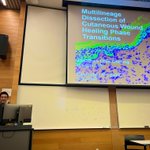
Thank you @RPI_BME for the opportunity to share our latest discoveries on organ-scale tissue repair and kickoff the Bioengineering Seminar Series at RPI!
#SyntheticRegeneration


Synthetic Regeneration Laboratory at Columbia retweeted

Macrophages eating living cells...NATURE paper !
nature.com/articles/s41586-0…

Synthetic Regeneration Laboratory at Columbia retweeted
Strongest Nature paper for us who love #cancer #immunology
Tumors use nerves to tell the brain to suppress immune response to all the cancer to grow.
nature.com/articles/s41586-0…

Synthetic Regeneration Laboratory at Columbia retweeted

Nature research paper: Imaging cellular activity across all organs reveals body-wide circuits
go.nature.com/4xSOOsS

Synthetic Regeneration Laboratory at Columbia retweeted

Our September issue is live! 🎉
nature.com/nmeth/volumes/23/…
This special issue includes a Focus on AI in biological research. AI is everywhere these days, and is impacting nearly all fields of biology. To learn more, read our Editorial and check out the focus content!
Synthetic Regeneration Laboratory at Columbia retweeted
It was such a joy and privilege to host @andrewlji to kick off our @ColumbiaMed Dermatology Research Symposium Series! Work that sets a new standard for spatially-informed human skin biology!


Synthetic Regeneration Laboratory at Columbia retweeted

Excited to share our new review in @CellCellPress. We propose fibrosis is a reversible state encoded in chromatin circuits shaped by immune-stromal crosstalk, and that rewiring this logic may offer durable therapeutic paths. @GladstoneInst
authors.elsevier.com/sd/arti…

Synthetic Regeneration Laboratory at Columbia retweeted

Together with Emma Dann, we are thrilled to present a massive new Perturb-seq atlas of 22M primary CD4+ T cells, from 4 donors, across 3 timepoints – the result of a decade-long collaboration between the Marson (@MarsonLab) and Pritchard (@jkpritch) labs.
🧵👇

Synthetic Regeneration Laboratory at Columbia retweeted
Excited to share a public beta of Seurat 5.6, implementing major improvements for speed/memory/scalability of the core workflow, especially for large datasets.
Try it out! Installation instructions at: github.com/satijalab/seurat/…

Synthetic Regeneration Laboratory at Columbia retweeted
@biorxivpreprint A Cytokine Receptor Signaling Atlas Reveals How STAT Mosaics Fine-Tune T Cell Function
biorxiv.org/content/10.64898… @Stanford
