

PBC & PAN Theory – Pressure System Psychology. Where Patterns, Pressure, Development, Environment and Autonomy Meet. https://teapawt.net/t.co/Xbv72zrbpr
Utrecht, Nederland
Joined June 2026
- Tweets367
- Following15
- Followers6
- Likes526






Pinned Tweet
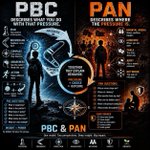
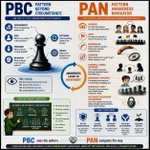
PBC & PAN Theory
PAWN → Map the system
BOOMERANG (Conflict, Projection) Feedback Cycle → Spot repeating patterns
COMPASS → Build autonomy and choice
IMAGINARY ARMY → Understand invisible pressure
PRESSURE SYSTEM → Fight, Flight, Freeze
PEEKABOO RHYTHM → Recurring relationship cycles
DEVELOPMENTAL ANALYSIS → Understand the past
SYSTEMIC MAPPING → Understand the environment
No labels. Only mechanisms.
PBC & PAN was designed as a developmental and systemic framework that can be used before diagnosis, before labels, and ideally before problems become deeply ingrained. It can help identify patterns that may resemble certain diagnostic categories without reducing a person to a label. The purpose is not to replace existing diagnoses, but to provide additional context through developmental analysis and systemic mapping. This can be especially valuable for children and adolescents, where early labels may sometimes become part of identity formation. The focus is understanding development, relationships, environment, and pressure dynamics before conclusions are drawn.

One thing business taught me: “I’m radically honest” is a claim, not a guarantee. An honest message: do not trust me.
Across 49 studies involving 38,332 people, childhood maltreatment self-reports showed high stability over time nature.com/articles/s44220-0… In 2026, Psychiatry has 300+ labels for the individual, yet in 2026 still struggles to map childhood maltreatment and the environment.


Amazing. You can already understand the mechanism without the psychiatrist’s explanation.

NEW VIDEO: Addiction Explained Through Little Kiwi🚨
His world turns dark. But the nugget still glows.
Why can’t he stop?
I react to Nuggets by A Hykade / Studio FILM BILDER, exploring the neuroscience of addiction.
youtu.be/iZW2ABTDvJE

R. Holmes - the Pawn retweeted

The Fonagy et al government report on ADHD and Autism provision is typical whitewash of be seen to be doing something whilst not doing anything to challenge the dangerous quackery of the pseudoscience. Nothing will improve madintheuk.com/2026/10/the-f…

A GP recently told me: “We can prescribe just as well as psychiatrists. They’re using trial and error too.” Well, if that’s the service on offer, let GPs do the tinkering. What exactly is psychiatry adding here?

While stimulant medications are first-line treatments, many people with ADHD and/or their parents prefer nonpharmacological treatments. alert.psychnews.org/trigemin…

Can millions of passive media viewers now confidently believe they are suffering from an innate “Highly Sensitive Person” deficit, conditioned by an unnamed professor’s relentless, repetitive online broadcasts, day after day?
pantheory.group/2026/10/30/t…

All these online “ADHD” experts girls or business models, are they informing people or performing for an imaginary audience and chasing dopamine? Since when did a content strategy become a personality disorder.

"So, what separates everyday distraction from ADHD? According to Dr Nallur, it comes down to the pattern, persistence and impact of the difficulties" news18.com/lifestyle/health-… Childhood history of impairments is also a key feature. If nothing before 12 years old, it's not ADHD.

R. Holmes - the Pawn retweeted
You have now online “ADHD” experts girls or business models, are they informing people or performing for an imaginary audience and chasing dopamine? They stopped taking medication and feeling better? Since when did a content strategy become a personality disorder, not ADHD? 🤔
There never was, and never is, “overdiagnosis.” Every person is communicating something. Behind every question, behind every discomfort, there is a story.
An interesting piece by Winnicott. He was right. By the way, NPD lies in the id field, failed ego mediation and fantasy defence involving the mother.

Would anyone with access be able to send me a copy of this please?
academic.oup.com/book/1314/c…

R. Holmes - the Pawn retweeted

Our response to @utafrith & @naomicfisher on the Fonagy report in the BMJ—with Lucy Johnstone, @joannamoncrieff and @JDaviesPhD.
Needs-led support requires rethinking what diagnosis actually explains and what a medical label adds to a system organised around people’s needs. 👇
bmj.com/content/395/bmj-2026…

R. Holmes - the Pawn retweeted
Derek Summerfield of the Institute of Psychiatry, Kings College critiques adult ADHD last week in @bmj_latest.

A parent, no stable self presents a radically different, behavioural persona to each of two children from infancy, cambridge.org/core/journals/… how academia distinguish innate biological vulnerability from divergent developmental responses to two distinct relational microenvironments?

All happens in the first years.

A fair point from this psychiatrist, avoiding medication, early support where possible, but sometimes it is necessary. Regular review matters, with gradual, supervised tapering when appropriate.

Psychiatric drugs are psychoactive, but so are insulin and blood pressure tablets. That doesn't make them the same as alcohol.
Schizophrenia involves real problems with dopamine that cause voices and paranoia. Antipsychotics target that, which is why many people stop getting locked up, stop hearing things, and manage to hold down a job or see their kids. A few beers have never fixed that for anyone.
It's the same with serious depression. Leave it untreated for long enough and the brain changes. The medications aren't perfect and they don't fix everything, but they lower the risk of suicide and help people get moving again. Coffee doesn't do that.
The idea that something isn't real medicine if it doesn't permanently fix a defect falls apart when you look at half the drugs doctors actually use. Severe illness still needs treatment.
We need a shared, empirically tested framework for structured assessment and formulation before and alongside DSM-5/ICD-11 classification, one that examines development, relationships, environmental pressures and change over time.

If you want to know what the Fonagy review missed. This analysis is enlightening.
substack.com/@fionameredith/…
R. Holmes - the Pawn retweeted

Autism spectrum disorder: has it lost its meaning and is it leading to misdiagnosis? | Psychological Medicine | Cambridge Core - cup.org/4wgJjTi
My thoughts about the broken spectrum.
