

Male | INTP | Sunni-Salafi/Wahhabi | Passionate about : History, Literature and Religious Studies | Based in KSA 🇸🇦
Joined August 2017
- Tweets2K
- Following751
- Followers355
- Likes862




The Caliphate A.M.S retweeted

كتاب "أيام مصر العثمانية" هو مجموعة من المقالات تناولت تاريخ مصر العثمانية من زوايا مختلفة، ونشرت على الموقع العزيز إضاءات - ida2at في 2017، يعني من 10 سنوات تقريبا. المقالات كانت عبارة عن ملف بمناسبة ذكرى مرور 500 عام على دخول العثمانيين لمصر، وفيه آراء وآراء مخالفة وكتبه متخصص ومهتمين بالتاريخ العثماني. الكتاب متوافر الآن على Abjjad | أبجد، وكنت كاتب فيه حسب ما اذكر مقالين أو أكثر.

What Are Fanqalahs?
Arabic speakers have employed brevity in their language, both in composition and in word formation.
For example, Arabic speakers often shorten phrases by combining words into a single expression. such as:
- Sabḥala (سبحلة): Short for – Subḥān Allāh (“Glory be to Allah”).
- Ḥawqala (حوقلة): Short for – Lā ḥawla wa-lā quwwata illā bi-llāh (“There is no power nor strength except through Allah”).
- Fanqala (فنقلة): Short for – Fa-in qāla … qultu (“If someone says … I reply”).
The fanqalah became particularly common among Islamic scholars and jurists. It can be found in the works of Ibn Taymiyyah, Ibn al-Qayyim, al-Zamakhsharī, Ibn Hazm and the contemporary scholar Ibn ʿUthaymīn.
In simple terms, fanqalah is a way of presenting a possible objection and immediately answering it im Islamic justifications or tafsir.
A scholar might say, “If someone argues that …, the answer is …”
فإن قيل: كذا، فيقال: كذا وكذا.
This allows them to address potential misunderstandings, defend their position, and respond to opposing arguments before they are even raised.

The Caliphate A.M.S retweeted

#JewishCulture
#JewishLaw
#MishnehTorah
#Halakha
#JewishMerchants
#IslamicjudicialSystem
#CairoGeniza
"Maimonides and the Merchants: Jewish Law and Society in the Medieval Islamic World"
by: Mark R. Cohen
PUB: University of Pennsylvania Press 2017

The Caliphate A.M.S retweeted
Unpublished r/IslamicHistoryMeme posts 2# : The Order of Nubuwwiyya
Among the popular organizations that appeared in the Ayyubid period was the Order of Nubuwwiyya, one of the branches of the futuwwa organization. This is confirmed by Ibn al-Miʿmār, who says:
> “Futuwwa continued to be transmitted, and so on down to our own age, until it branched out and became houses, parties, and tribes, such as the Rahhāṣiyya, the Shujayniyya, the Khalīliyya, the Mawlidiyya, and the Nubuwwiyya. Disagreements arose among them, and each of them adopted its own opinion.”
(Ibn al-Miʿmār, Kitab al-Futuwwa, p. 146)
Perhaps the most famous of these was the Nubuwwiyya organization, which Abbasid Caliph al-Nāṣir joined. This is confirmed by Ibn Wāṣil al-Ḥamawī, who says:
> “Caliph al-Nāṣir wore the trousers of Nubuwwa and futuwwa.”
(Ibn Wāṣil al-Ḥamawī, Mufarrij al-Kurūb fī Akhbār Banī Ayyūb, vol. 4, p. 164.)
The first person to speak of this group was the traveler Ibn Jubayr, who visited the city of Damascus in 580 AH. He noted the spread of Shiites, with their various branches and doctrines, throughout the lands of Syria. He then provided us with information about an order known as al-Nubuwwiyya, whose members used to kill Shiites.
With a sectarian sensibility, Ibn Jubayr expresses his delight at the emergence of this group, which he described as possessing futuwwa, strength, and skill. Here is the text of what Ibn Jubayr said in his travel account:
> “God set against these Rāfiḍites a group known as al-Nubuwwiyya: Sunnis who profess futuwwa and all the qualities of manliness. Anyone whom they attach to themselves because of some quality they perceive in him is girded with trousers and thereby admitted among them. They do not believe that any one of them should seek legal redress when a calamity befalls him; in this they have strange doctrines. If one of them swears by futuwwa, he fulfills his oath. They kill these Rāfiḍites wherever they find them. Their conduct is remarkable in its pride and solidarity.”
(Ibn Jubayr, Rihla , p. 227)
Ibn Jubayr tells us nothing further about the Order of Nubuwwiyya.
Ibn Jubayr also mentioned what this order did in the village of al-Bāb—today a city administratively belonging to Aleppo Governorate, located about 38 km northeast of Aleppo. Ibn Jubayr had visited it before reaching Damascus, in the same year, that is, 580 AH. He referred to a major massacre committed against the followers of the Ismaili sect in that village. The details are as follows:
> “It had been inhabited for eight years by a people of the Ismaili heretics, whose number only God could count. Their evil spread, and their corruption and harm cut off this road, until sectarian zeal entered the people of these lands, and pride and fervor stirred them. They gathered against them from every direction, set their swords upon them, exterminated them to the last man, and hastened to cut off their root. Their skulls were piled up in this plain.”
He then comments:
> “God spared the Muslims their hostility and evil, and turned their scheming back upon them. Praise be to God, Lord of the Worlds! Its inhabitants today are Sunnis.”
(Ibn Jubayr, Rihla , p. 202)

The Caliphate A.M.S retweeted

List of scholars of Islamic Erotology
Reference: 40 Hadiths on Intimacy by Habeeb Akande

The Caliphate A.M.S retweeted
What Did al-Andalus Think of the Mongols and the Mongol invasion of the East?
- Baghdad fell to the Mongols under Hulagu Khan in 1258 CE.
- Al-Andalus came to an end in 1492 CE, when the Emirate of Granada surrendered to the Catholic Monarchs, Ferdinand II of Aragon and Isabella I of Castile.
Over the 234 years between these two events, did any Andalusian scholars or chroniclers write about the fall of the Abbasid Caliphate? How did the people of al-Andalus react to the fall of Baghdad?
I haven't been able to find much on this subject, except for the possible writings of Ibn Saʿīd al-Maghribī (1214–1286 CE), but that alone is certainly not enough.

The Caliphate A.M.S retweeted

Couple points that interest me:
>They're "slave girls," but this doesn't appear to imply captivity - they're traveling for pilgrimage, only have an old woman chaperone. May reflect that slavery could be pretty high status, like having a good job.
>Sex segregation doesn't seem to

Arab women would satisfy their sexual desires using available sex toys or ones custom-made by artisans upon request.
The Arabic dictionaries refer to this instrument as al-Akranbaj or al-Kīranj (الكيرنج/الأكرنبج), with the plural form al-Kīranjāt (الكيرنجات). It is known today as a the Dildo.
Women who could not find someone to make one for them would use a Qiththāʾ (قثاء), a long cucumber-like gourd, known in the colloquial dialects of some countries as Ṭaraḥ (طرح).
Abū al-Faraj al-Iṣfahānī mentioned in his Kitāb al-Aghānī, on the authority of Zarqān, who reported from his father: (Vol. 1, p. 179).
“I encountered an elderly client of ʿUmar ibn Abī Rabīʿah and said to him, ‘Tell me an unusual story about ʿUmar.’
He replied, ‘Certainly. One day, I was with him when a group of Umayyad slave girls who had performed the pilgrimage passed by. He approached them, struck up a conversation with them, and continued courting them throughout the days of the pilgrimage.
One of them eventually said to him, “Abū al-Khaṭṭāb, we are departing tomorrow. Send your client here to our residence, and we shall give him a keepsake for you to remember us by.”
He was delighted and sent me to them at dawn. I found them preparing to mount their rides. They said to an elderly woman accompanying them, “So-and-so, give the client of Abū al-Khaṭṭāb the keepsake we presented to him.”
She brought out a small, locked and sealed chest. They told me to deliver it to him, and then they departed.
I brought it to ʿUmar, assuming that it contained perfume or jewels. When ʿUmar opened it, he found it filled with al-maḍārib—that is, al-kīranjāt (Dildos). Each one bore the name of a man renowned for libertinism in Mecca. Two of them were particularly large, and one bore the name of ʿUmar ibn Abī Rabīʿah.
He laughed and said, “They have played a lewd prank on me, and I shall return the favor!”
He then prepared a banquet and invited every man whose name appeared on those objects. When they had eaten and settled comfortably, he said, “Bring me that deposit, boy!”
I brought him the chest. He opened it and handed one of the men the kīranj bearing his name. When the man took it and uncovered it, he recoiled in horror and exclaimed, “May God disgrace you! What is this?”
“Easy,” ʿUmar replied. “Be patient until you see.”
He then took them out one by one and handed each object to the man whose name it bore, until he had distributed them all. Finally, he took out the one bearing his own name and said, “This one is mine.”
They exclaimed, “Damn you! What is this?”
He told them the story, and they were astonished. They continued joking about the incident for a very long time, laughing about it for years to come.’”
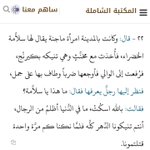
Perhaps the earliest mention of an artificial penis appears in a work by al-Jāḥiẓ (776–868 CE), Mufākharat al-Jawārī wa-l-Ghilmān (The Boasting Contest between Slave Girls and Boys), Epistle 13:
كانت بالمدينة امرأة ماجنة يقال لها سلامة الخضراء ، فأخذت مع مخنث وهي تنيكه بكيرنج ، فرفعت الى الوالي فأوجعها ضربا وطاف بها على جمل ، فنظر اليها رجل يعرفها فقال:
ما هذا يا سلامة ؟ فقالت : اسكت ، ما في الدنيا أظلم من الرجال ، أنتم تنيكونا الدهر كله فلما نكناكم مرة واحدة قتلتمونا.
“There was a licentious woman in Medina known as Salāma al-Khaḍrāʾ. She was caught with a mukhannath (effeminate man) while she was penetrating him with a kīranj (Dildo). She was brought before the governor, who had her severely beaten and paraded around on a camel. A man who knew her saw her and asked:
‘What is this, Salāma?’
She replied, ‘Be quiet! There is nothing in this world more unjust than men. You penetrate us all the time, but when we penetrate you just once, you kill us!’”
(Page of Kitāb al-Aghānī)

What Did al-Andalus Think of the Mongols and the Mongol invasion of the East?
- Baghdad fell to the Mongols under Hulagu Khan in 1258 CE.
- Al-Andalus came to an end in 1492 CE, when the Emirate of Granada surrendered to the Catholic Monarchs, Ferdinand II of Aragon and Isabella I of Castile.
Over the 234 years between these two events, did any Andalusian scholars or chroniclers write about the fall of the Abbasid Caliphate? How did the people of al-Andalus react to the fall of Baghdad?
I haven't been able to find much on this subject, except for the possible writings of Ibn Saʿīd al-Maghribī (1214–1286 CE), but that alone is certainly not enough.
The Caliphate A.M.S retweeted
#OpenAccess
#NewPublication
Poetics and Politics of Islamic Imaginaries
eds. Sertaç Sehlikoglu et al. UCL Press, 2026
PDF 🎯
discovery.ucl.ac.uk/id/eprin…
uclpress.co.uk/book/poetics-…

The Caliphate A.M.S retweeted

xitter.cf/Born2Takfir/status/209…
Ofc i am and Caliphate is my goat such a nice guy


The Caliphate A.M.S retweeted
Egypt's First "Liverpool" Enjoyer
youtu.be/yLPdICjw89A?si=RFf0…


There is probably this reason why they associated him with the Persians.
During the Abbasid period, al-Bishari describes the devotion of the people of Isfahan, Hamadan, and other Persian regions to the Umayyads, stating:
«“They are excessive in their love for Muʿawiya.”»
He recounts an incident in Isfahan similar to one that occurred in Wasit, illustrating the extent of Muʿawiya’s popularity, although it also reveals the public’s ignorance:
«“In Isfahan, the people are simple-minded and extreme in their love for Muʿawiya. A man described to me as pious and devout was recommended to me, so I sought him out, left my caravan behind, and stayed with him that night. I questioned him until I eventually asked, ‘What do you think of the Sahib [referring to Ibn ʿAbbad]?’
He began cursing him, saying, ‘He has introduced a doctrine with which we are unfamiliar.’
I asked, ‘What doctrine?’
He replied, ‘He claims that Muʿawiya was not a messenger.’
I asked, ‘And what do you believe?’
He answered, ‘I believe what God Almighty said: “We do not differentiate between any of His messengers.” Abu Bakr was a messenger, ʿUmar was a messenger...’ He proceeded to list the four [Rashidun Caliphs] before concluding, ‘And Muʿawiya was a messenger.’
I said, ‘You have no understanding. The four were caliphs, whereas Muʿawiya was a king.’
He began criticizing me, and by morning, he was calling me a Rafidi! Had my caravan not caught up with me, they would have attacked me.”»
Al-Jahiz was among the earliest authors to mention the Nābita by name. He wrote:
«“This nation had never surpassed the limits of sin and misguidance beyond what I have related to you about the Umayyads, the Marwanids, their governors, and those who did not declare them disbelievers. Then these Nābita emerged, followed by the commoners, until disbelief prevailed in this era.”»
By Nābita, al-Jahiz referred to those who opposed cursing Muʿawiya. They believed that because Muʿawiya was a Companion of the Prophet, cursing him constituted a religious innovation (bidʿa), and that anyone who hated him was deviating from the Sunnah.
The Nābita appear to have represented a significant segment of the population. Al-Jahiz frequently refers to them as:
«“The Nābita of our time and the innovators of our age.”»
He places their rise to influence and dominance in the middle of the third/ninth century.
One of the lesser-known narratives associated with Nābita literature and attributed to storytellers concerns a female Muʿawiya.
We believe this narrative may have been a direct response to Shiʿite eschatological and mystical beliefs.
According to narratives associated with the Nābita and the storytellers, Muʿawiya would be reincarnated as a woman on the Day of Judgment and would hold hands with Imam ʿAli or even the Prophet Muhammad himself.
Another narrative states that this female Muʿawiya would bear heavenly offspring with Imam ʿAli, with the offspring existing within her own blood, thereby making her the Lady of Heaven.
Interestingly, this narrative appears to bear some resemblance to Shiʿite eschatological traditions concerning Lady Fatima. In these traditions, Fatima appears at the End of Time and asks people whether they love the Household of the Prophet Muhammad. She is also described in Shiʿite literature as the “Lady of the Heavens.”
For more informations about them, see my post on Reddit over here:
reddit.com/r/HistoryMemes/s/…


The Caliphate A.M.S retweeted

Also a little note for everyone here just because it happened doesn't mean its permissible or okay or a laughing matter its just a report describing people of that era. It in no way shape or form is some Arab or Islamic endorsement of this act, and it is haram and a sin. What's being reported is people doing it, not actual approval of it.
I know this is obvious, but still.

