
Sell-side analyst @Inderes. Focus on Nordic equities. All posts investing related.
Joined November 2019
- Tweets262
- Following1.3K
- Followers1K
- Likes1.5K
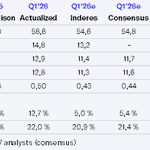


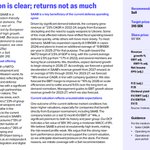


European consumer goods companies are struggling with weak macro, but sauna and wellness doesn’t seem to care about it. Harvia just dropped an all-time record quarter. €58.6M revenue, +18% in constant currencies. Secular trends are a friend when facing cyclical headwinds $HARVIA

3
287
The US hotel market gets to breathe a sigh of relief thanks to its heavy reliance on domestic demand.
Despite an HSD drop in foreign arrivals you can’t really see a dent in hotel REVPARs. In Europe, this would be a whole different story.


1
4
557
Thomas Westerholm retweeted

Dags för #Uppesittarkväll denna afton 🥳🙌 Vi gästas av omtyckta @MRKN_Helene samt @ThomasWesterhol som ska prata 🇫🇮 Rapala för oss fiskeintresserade och sist men inte minst Jörgen Wärmlöv på @SpiltanFonder som ska prata om globala investmentbolag. Bänka dig i soffan kl. 20.00 🔥 #PrataPengar #Finanstwitter youtube.com/watch?v=MexmVVFx…

Kommer att gästa på @uppesittar i kväll för att diskutera vändningsföretaget Rapala. Kul med aktiesnack med de väldigt duktiga @Investeraren, @aktiealbin & @emmavhedman ! $RAP1V

Glöm inte att #Uppesittarkväll är tillbaka på onsdag!🤩
Den här månaden gästas programmet av:
- Den omtyckta poddprofilen @MRKN_Helene
- Analytikern @ThomasWesterhol från Inderes
- @SpiltanFonder's egna Jörgen Wärmlöv
Ha en trevlig start på veckan så syns vi snart! 🌟
Another day another step towards democratizing equity research. @Inderes initiated coverage of the defense-technology company Saab.

I do appreciate when analysts put their necks out and make strong calls. A sell recommendation with a price target of 310 SEK (currently 517 SEK) surely fits that category.
1
1
204
It's been a rough 1,5 decades for investors underweighting US equities (yours truly included). At least the dividend yields are getting up there...

4
552
Last week we initiated the coverage of the early stage foodtech company Solar Foods. This one’s worth a look for anyone interested in foodtech, cellural agriculture and disruptive technologies. It is an early stage company, however, so not for the faint of heart. $SFOODS
Management has so far achieved a lot with limited funding, but outside sources of funding will play a key role in this investment story. Hydrogen fermentation has been recognized as an Important Project of Common European Interest (IPCEI). #Hydrogenfermentation #Hydrogen
1
3
343
For it’s scale up of the the 01 and 02 production facilities the company may receive up to 110 MEUR in aid related to the IPCEI-project. Equity and debt financing will most likely be part of the financing in the scale up phase as well. #precisionfermentation
1
3
305
IPOs coming to life in Finland with Solar Foods announcing their IPO intention. The early-stage foodtech focuses on producing sustainable protein using gas-fed fermentation to grow a single-cell protein called Solein.
At least BCG seemed bullish on the space some years ago

Thomas Westerholm retweeted

Random thoughts on $GOOGL Waymo / $UBER.
1) Waymo is ramping monetized rides in 3 metros against what ought to be mostly fixed costs. This could be a tailwind to $GOOGL earnings while the $5b incremental investment is likely a headwind to FCF to start.
2) I struggle to believe Waymo does not produce positive gross margins.
Waymo / $UBER / $LYFT fares are similar so let's move onto the cost side. Let's assume the average car owned by an $UBER driver is $30k and a Waymo is $120k (SWAG: An iPace is ~75k, sensors are maybe ~25k, and custom production premium is maybe $20k at scale?). So a $90k difference that gets depreciated over 10 years or $9k / year. Both Waymo and $UBER drivers have to clean / maintain their cars so let's call it a push though I would think Waymo would have a scale advantage over time. Waymo has to lease land for depots and build out charging infrastructure for each car vs $UBER drivers just leverage their garage (although some percent of $UBER drivers are part of fleets where this infrastructure cost also lives). Let's just say the operating costs per vehicle are $9k / year to be on the safe side. That puts the extra cost of the car and operations at $18k / vehicle / year - an amount that has to be far less than what an $UBER full-time driver would be paid annually.
Another angle is I doubt $GOOGL would be scaling Waymo if the service did not have unit economics figured out.
4) Consumers love downloading new apps and trying new things which is why the adoption curves for new apps gets steeper and steeper with time. It's just so easy to download and try something new. Waymo's are very visible when they are rolled out and people are very curious about them. I don't think acquiring users is going to be an issue.
I also think consumer behavior suggests people will be fine / prefer going directly to the Waymo app to book autonomous rides, and the minority will use $UBER as a super-app for all ride options. (Again, the insight here is that consumers may find Waymo superior to an $UBER so they win brand preference and thus action preference)
3) Every Waymo ride takes share from $UBER / $LYFT (except a small amount of robo-taxi tourism) and these rides lost are likely their highest margin rides. Driver density is highest in urban areas and gives $UBER / $LYFT relative pricing power (compared to a rural town where drivers need to be paid more to participate given lower utilization rates).
4) If autonomous is the future, won't $UBER / $LYFT also need to buy robo-taxis, procure power, build depots and staff them? How else will they compete?
So the tough, expensive stuff Waymo is doing today is the tough, expensive stuff $UBER / $LYFT will need to do tomorrow. I guess my point is if you think that $UBER / $LYFT will roll-out autonomous when it is available as a product, they will still need to go through a FCF investment cycle.
A counterpoint to this would simply be that autonomous will be cheaper than human, so even though this will require capital up front, the GAAP earnings from mix shifting to autonomous for $UBER will be accretive over time. But you have to go through that margin dip / investment cycle first.
Like I said, random thoughts.

