
World (In)Famous
Mississippi
Joined February 2012
- Tweets191K
- Following1.6K
- Followers1.8K
- Likes437K


Todd4State retweeted

Ozzie Smith of the St. Louis Cardinals lays down a drag bunt — the Wizard using the smallest swing in his toolbox, on purpose.
Smith's glove made him immortal: 13 consecutive Gold Gloves and records for assists and double plays turned by a shortstop. But his bat and his legs were weapons in their own right, and Whitey Herzog's Cardinals were built to use them. A switch-hitter who rarely struck out, Smith collected 2,460 hits, walked more than a thousand times and stole 580 bases, and he used the bunt the way sluggers use the upper deck — to change a game without ever swinging hard. In his finest season, 1987, he batted .303 with 182 hits and finished second in the National League Most Valuable Player voting. The drag bunt was the perfect Ozzie play: drop the ball where no one could reach it, beat the throw, steal second, and let the Cardinals' running game start turning. On a roster full of burners, the man famous for his defense may have been the most disruptive offensive player of them all — one 40-foot hit at a time.
Ozzie the defender or Ozzie the table-setter — which half of his game was worth more? ⚾ 👇️

Todd4State retweeted

Thanksgiving Day
November 22, 1990
Turkey Day was extra special in the 1990s, as each year we were guaranteed to see two of the NFL's all-time greatest running backs — the Lions' Barry Sanders and the Cowboys' Emmitt Smith.
This was the first time that Barry and Emmitt were both showcased on the same Thanksgiving.
Barry: 177 total yards, 2 TD (win)
Emmitt: 137 total yards, 2 TD (win)


Todd4State retweeted
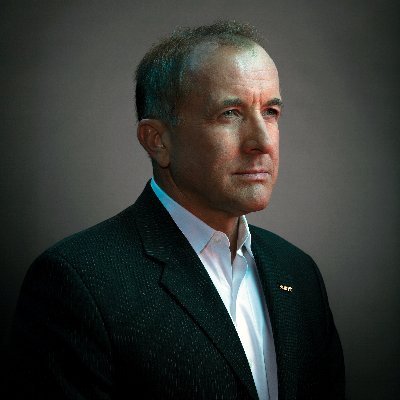
If you still have doubts about Oswald's guilt read @geraldposner book Case Closed. Here is my distillation of the man from Conspiracy.
Lee Harvey Oswald was born in New Orleans in 1939 and joined the U.S. Marines in the 1950s, where he received riflery training. Contrary to what Oliver Stone has one of his character’s say in his film—that Oswald “shot Maggie’s Drawers,” meaning he couldn’t even hit the target—in fact Oswald scored the second highest rating possible in riflery, making him a sharpshooter.
Politically, Oswald was an avowed Communist who defected to Russia in 1959, worked in a radio factory in Minsk for two years, and married a Russian woman named Marina. After he grew disenchanted with the USSR, in 1962 he moved back to the United States, to Dallas, Texas, shortly after telling friends that he wanted to move to Cuba to join Castro’s communist revolution. This background helps establish a motive for killing Kennedy, as the President was avowedly anti-Communist, and after the failed Bay of Pigs invasion of Cuba, also clearly anti-Cuban and anti-Castro.
Temperamentally, Oswald was emotionally unhinged and suffered from delusions of grandeur, telling people he had ambitions to someday do something to make himself famous. He was very likely a sociopath, and quite possibly expressed the personality traits of psychopathy, narcissism, and Machiavellianism—the “Dark Triad”—dark because the combination often leads to malevolent actions.
While in Dallas, Oswald encountered the anti-Communist crusader Edwin A. Walker, a retired general who was himself something of a conspiracy theorist, once accusing the U.S. Supreme Court Justice Earl Warren of plotting to destroy the United States by banning prayer in schools and promoting civil rights for minorities. In April of 1963, just eight months before he assassinated Kennedy, Oswald attempted to assassinate General Walker by shooting at him from around 100 feet outside his home. Walker was struck with bullet fragments to his forearm and survived, and after the Kennedy assassination it was determined that Oswald used the same firearm for both: an Italian-made 6.5 mm caliber Mannlicher-Carcano bolt-action rifle, which he purchased by mail order in March of 1963, along with a .38 Smith & Wesson revolver, leaving a paper-trail investigators later uncovered. That same Mannlicher-Carcano rifle was found among some boxes near the sniper’s nest on the sixth floor of the Texas School Book Depository building, and in the sniper’s nest were three spent Carcano cartridges scattered on the floor.
After Oswald tried to kill General Walker, he told his wife Marina what he had done, and according to her he also planned to assassinate Richard Nixon when the former Vice President (and future President) visited Dallas, but she locked him in the bathroom to stop him. (After the JFK assassination the Warren Commission determined that it was Oswald who attempted to murder General Walker.)
That summer of 1963 Oswald created the New Orleans chapter of the pro-Castro organization called Fair Play for Cuba (he was its only member there), and he was arrested for getting into fights with anti-Castro Cubans, further evidence of his violent tendencies.
In September 1963, after his wife talked him out of hijacking a plane to Cuba, Oswald traveled to Mexico City in order to procure a visa to Cuba, but the Cuban embassy said they would give him a visitor’s visa only if he was returning to the Soviet Union with his family, which he refused. So he went to the Soviet embassy where he encountered three undercover KGB agents, who later reported that Oswald seemed unhinged, so they put him off.
Oswald then returned to Dallas, where on October 16 he started work at the Texas School Book Depository Building. Conspiracy theorists have made much of the fact that the building was on Kennedy’s parade route, but that route wasn’t determined until the week before the president’s visit to Dallas, well after Oswald got the job there.
Co-workers saw Oswald on the sixth floor of the Book Depository building shortly before JFK’s motorcade arrived and saw him exit shortly after the assassination.
The sniper’s nest on the sixth floor of the Book Depository building was constructed out of boxes, which had Oswald’s fingerprints on them.
Three bullet casings were found in the sniper’s nest indicating that he took three shots. This matches what 81 percent of eyewitnesses in Dealey Plaza reported hearing—three shots.
Subsequent tests with the Mannlicher-Carcano rifle, particularly that of the 1977 House Select Committee report, found that three shots can easily be taken in the eight seconds that Oswald had to shoot (and some researchers put it at 10 seconds). In fact, with the first bullet already chambered, it would have taken only 3.3 seconds to squeeze off three shots.
The three shell casings found in the sniper’s nest carry distinct ballistic markings on them showing that they were fired from Oswald’s rifle, and the one recovered bullet at the Parkland Memorial Hospital where Kennedy and Texas Governor Connally—who was also hit by the first bullet to hit JFK—were taken, showed matching ballistic markings indicating that it had been fired from that rifle.
After killing Kennedy, Oswald went home and picked up his .38 Smith & Wesson revolver and left again, shortly after which he was stopped by Dallas Patrolman J.D. Tippet. Oswald shot him dead with four bullets, an act witnessed by ten observers, and the bullet casings at the scene matched his .38 Smith & Wesson.
Oswald then fled the scene and ducked into a nearby theater without paying. The police were summoned to the theater where they confronted Oswald. Oswald pulled out his revolver and attempted to shoot the first officer, but the gun was wrestled away from him and he was arrested, saying, “Well, it is all over now.”
Actually, it was all over for Oswald two days later, when at 11:21am CST on Sunday November 24, a Dallas nightclub operator named Jack Ruby walked into the Dallas Police Headquarters when Oswald was being transferred to the city jail and shot him dead at point-blank range. In yet another eerie coincidence, Oswald was rushed to Parkland Hospital and pronounced dead, two days to the hour after President Kennedy died in that same hospital.


Todd4State retweeted

On this date in 2013, the Cardinals traded David Freese and Fernando Salas to the Angels for Peter Bourjos and Randal Grichuk. stlredbirds.com/2021/10/28/n…


Todd4State retweeted

THEY ALREADY BUILT AN ENTIRE MUSEUM FOR THE WORLD BASEBALL CLASSIC CHAMPIONS

Este es el Museo de Los Campeones en la Avenida Lecuna en Caracas.
¡Aquí comienza la celebración de los campeones!
#ElExtrabase⚾️🇻🇪🏆


Todd4State retweeted

Theologians Say While You Don't Have To Sleep In Heaven There Will Still Be Glorious Post-Church Naps On Sunday buff.ly/gi4FBte

Todd4State retweeted
November 22, 1992
The Eagles' Vai Sikahema spars with the Giants Stadium goalpost after his 87-yard punt return touchdown🥊
At the time, the longest punt return in Eagles franchise history
Todd4State retweeted

JACKIE SHERRILL
Before he became the coach, he was one of Coach Bryant’s players.
When I look back through Alabama football history, I’m reminded that some stories keep growing long after a player takes off his uniform.
Jackie Sherrill’s is one of those stories.
Before the head-coaching jobs, the championships, and the familiar place on the opposite sideline, Jackie was a young man learning the game under Coach Paul “Bear” Bryant.
His Alabama years ran from 1962 through 1965, and he was part of the Crimson Tide’s 1964 and 1965 national-championship teams. He later stayed to serve as a graduate assistant under Bryant in 1966.
The Mississippi Sports Hall of Fame credits him with playing seven different positions at Alabama. That is a remarkable reminder of how many ways one player could be asked to contribute.
Football eventually took him to head-coaching jobs at Washington State, Pittsburgh, Texas A&M, and Mississippi State. Across 27 seasons, his teams won 180 games.
But the part of his story that means the most to me today is not another number.
Jackie is still with us—and in a November 16 interview, he was talking about helping fourth- through sixth-graders learn football in Bryan, Texas. After all those years leading college programs, he is still finding satisfaction in watching a young player gain confidence and begin to understand the game.
I love that.
The stadium changes. The players get younger. But there is still something worth giving.
Now comes an honor that brings his story back to where so much of it began.
Jackie has been selected to receive the 2027 Paul “Bear” Bryant Lifetime Achievement Award. The ceremony is scheduled for January 27, 2027, in Houston.
His response says more than I could:
“Coach Bryant shaped my life as a player, a coach and a person. I’ve always believed that success is measured by the people you help develop and the relationships you build along the way.”
That is the connection I want to recognize.
Not simply a former Alabama player who became a successful coach, but someone who carried those early lessons into a lifetime of teaching—and is still sharing the game with another generation.
Congratulations, Coach Sherrill. Your football journey took you many places, but your Alabama chapter will always be part of the story.
Roll Tide.
— Elephant Ink


Todd4State retweeted

"Why does God let kids die?" ... This is the type of question that is incredibly challenging for a pastor to answer. Recently, @ibrycecrawford hit me with it.
What I can tell you with certainty is what the answer is NOT.


Todd4State retweeted

I lost a friend and teammate Friday when Tom Jackson passed. Tom was part of the Orange Crush defense. He survived the roster purge of 1983 where 14 first year players were added to the team including me. Instead of being bitter about losing so many teammates, Tom and the rest of the veteran players took us under their wings and taught us what it means to be a Bronco, what’s expected of an NFL player, and how to be a man. The personality you saw for so many years on ESPN was authentic TJ. He was the emotional leader of the Broncos, and the captain of fun! I’ll miss his smile, enthusiasm, and his way with words. Rest in peace my friend.
share.google/yajvSbNbQBVYbNZ…
