

U.S. stock market influencer | Financial background | Global traveler | Sharing insights on markets, trade, and economics | Swim, basketball, golf enthusiast.
Texas, USA
Joined May 2024
- Tweets13.7K
- Following1.6K
- Followers29.8K
- Likes16.9K




Pinned Tweet
免責聲明更新:
大叔美股筆記歡迎各位投資同好共襄盛舉,為維護個人權益,在瀏覽各個投資筆記前,請先閱覽以下聲明,閱覽者將視為同意本聲明條款:
1. 大叔美股筆記對於所發表之投資筆記、分析數據及參考資料內容,其立論依據皆係合法引用自網路上公開資訊以及合法管道取得之資料,不涉及任何抄襲等侵害智慧財產權之行為;對於閱覽者將大叔美股筆記所發表之投資筆記,在未經同意下,從事行銷推廣、背書代言、營利等商業相關活動,無論是否獲利,大叔美股筆記將採取法律行動追究其責。
2. 大叔美股筆記所發表之投資筆記、分析數據及參考資料內容,不得作為任何交易之依據,閱覽者依筆記或數據資料內容進行任何投資行為所產生之風險及盈虧,未經自行了解判斷,而導致交易損失風險,應自行負擔,大叔美股筆記不對使用者之投資決策負任何責任。
3. 大叔美股筆記所發表之投資筆記對於所提及之其他個人、公司或組織,大叔美股筆記均不對其交易安全、商品及服務內容負任何擔保責任,其間之所有交易、擔保、賠償責任及售後服務皆係存在於閱覽者與商品或勞務提供者之間,閱覽者如因商品或服務提供者發生任何變故或糾紛,大叔美股筆記不負任何法律責任。
4. 大叔美股筆記中,涉及到其他個人、公司或組織之網站連結,對被連結之網站或其所提供之任何產品、服務或資訊,大叔美股筆記不擔保其正確性、真實性、即時性、及完整性。
5. 閱覽者同意由大叔美股筆記保留修改本聲明之權利,如有變更,將公佈於大叔美股筆記社群平台上,不另行通知。
Disclaimer Updates:
Uncle Stock Notes welcomes all investment enthusiasts to participate. To safeguard your rights and interests, please read the following disclaimer carefully before reviewing any investment notes. By accessing or reading the content, you are deemed to have agreed to the terms set forth herein:
1. All investment notes, analytical data, and reference materials published by Uncle Stock Notes are based on legally sourced information, including publicly available online data and materials obtained through lawful channels. No infringement of intellectual property rights, including plagiarism, is involved. Any unauthorized use of Uncle Stock Notes’ content for marketing, promotion, endorsement, commercial gain, or related activities—whether for profit or not—without prior consent is strictly prohibited. Uncle Stock Notes reserves the right to take legal action against any such violations.
2. The investment notes, analytical data, and reference materials provided by Uncle Stock Notes are for informational purposes only and shall not be construed as a basis for any trading decisions. Any investment actions taken by readers based on such content are undertaken at their own risk. Readers are solely responsible for any profits or losses incurred, especially where decisions are made without independent evaluation and judgment. Uncle Stock Notes assumes no responsibility or liability for any investment decisions made by users.
3. With respect to any individuals, companies, or organizations mentioned in the investment notes, Uncle Stock Notes makes no representations or warranties regarding the security of transactions or the quality of any products or services provided. All transactions, guarantees, compensation, and after-sales services are solely between the reader and the respective provider. Uncle Stock Notes shall bear no legal liability for any disputes, losses, or issues arising between readers and such third parties.
4. Any external links to websites of individuals, companies, or organizations provided within Uncle Stock Notes are for reference only. Uncle Stock Notes makes no guarantees regarding the accuracy, authenticity, timeliness, or completeness of the content, products, or services offered on such linked websites.
5. Uncle Stock Notes reserves the right to amend this disclaimer at any time. Any changes will be published on its official platforms without prior notice.

Anthropic's S-1 is out (Nasdaq: ANT).
Here's the prospectus in 7 points
1. Revenue: the growth is real
Quarterly revenue ($M):
Q1'25: 376
Q2'25: 787
Q3'25: 1,382
Q4'25: 2,040
Q1'26: 4,731
Q2'26: 11,555
📌 Q2 up 1,368% YoY
📌 Q2 was the first quarter with positive GAAP operating income: $974M
📌 Q3 isn't in the financials. The filing only says it was "86 times" Q4'24, which implies ~$16.8–17.1B
2. An $80.7B H1 net loss? Don't panic
~$72.4B of it is fair-value changes on convertible notes, and ~$9.4B comes from note purchase agreements.
The higher the valuation, the bigger the paper loss on these instruments. It's non-cash.
H1 operating loss was only ~$0.7B, and cash plus short-term investments stood at ~$131.7B.
3. Revenue is booked gross
When Claude is sold through the AWS, GCP or Azure marketplaces, Anthropic books the full amount as revenue. The cloud provider's cut goes into expenses.
Marketplace share of revenue: 32% (2024) → 47% (2025) → 48% (H1'26)
Adjust for this before comparing with companies that report net.
And read the run-rate definition carefully:
trailing-28-day consumption × 13 + monthly subscriptions × 12.
The S-1 flags two things itself:
• It includes customers later found to be violating the usage policy
• Usage is seasonal and dips over summer and year-end holidays
4. Distillation finally has a number
Customers violating the usage policy or commercial terms made up ~5–7% of 9M revenue, roughly $1.7–2.3B.
Enforcement was stepped up in Aug–Sep, and the company expects the share to fall.
It's a one-off headwind, and one the company chose.
5. Demand is real
📌 Net revenue retention ~900% (ex-Pro/Max)
📌 Customers paying >$100K / $1M / $10M a year: 11,900+ / 1,900+ / ~250
📌 No customer >10% of revenue, top 5 ≈ 25%
📌 Q3: 79% of revenue came from outside the top 5 (64% in Q1)
📌 Enterprise customers who also use Claude Code spend ~20x more
6. The real story: revenue is variable, costs are fixed
Revenue side:
• ~80% is consumption-based
• cRPO (contracted revenue recognized over the next 12 months) is ~$8.1B, less than 20% of ~$46B annualized revenue
Cost side (disclosed compute commitments):
Broadcom TPU leases: ~$161B
SpaceXAI (NVIDIA GPUs): up to ~$121B, ~$3.1B a month from Dec'26
Google: ≥$115B, plus $125–150B of TPU capacity in 2028–31
Amazon: ≥$110B
Microsoft: ≥$45B
Nscale: ~$45B
Lambda: ~$41B
AMD: >$20B
That's roughly $780–810B in total.
Treat it as a sense of scale, not a precise liability. It mixes minimums ("at least"), caps ("up to") and rent that excludes interest.
On top of that, the Broadcom leases, the credit agreement and the convertible notes carry cross-default provisions.
This is the most important risk in the filing. The question isn't whether demand exists. It's whether variable demand can carry a fixed cost base.
7. Dilution
📌 $77B of convertible capacity: Google $20B, Amazon $15B, Broadcom $42B, converting at a trailing VWAP
📌 Google can buy up to $10B more at the IPO price
📌 A Public Benefit Fund already holds 5% fully diluted, plus up to 2% more for every 50% rise in the share price
My take
① Suppliers are creditors, and could become shareholders.
Broadcom has ~$161B in leases and $42B of convertible capacity. This is the biggest "borrow to buy shovels" example yet.
② Elon is the landlord.
The SpaceXAI commitment of up to ~$121B is the other side of the "stranded compute" story from a few days ago.
③ The seasonality Nomura pointed to? The S-1 confirms it.
④ For suppliers, these are mostly take-or-pay contracts with high visibility:
$AVGO $GOOGL $AMZN $MSFT $SPCX $AMD
The risk sits with Anthropic's usage holding up.
We should focus:
1. The S-1 amendment: official Q3 numbers, run-rate, price range, total commitments
2. Q4 revenue: how big the three headwinds are (fewer policy-violating customers, price cuts, big customers moving to in-house models)
3. Hyperscaler earnings: any change in capex
Bottom line: strong demand and fresh profitability, but this is a company whose revenue follows usage while its costs are locked in.
Understand that mismatch and you understand the prospectus.
#Anthropic #IPO #AI #AVGO #GOOGL #amzn
anthropic.com/news/s1-sec

Anthropic 的 S-1 出來了(Nasdaq,代號 ANT)
在幾個小時之前出來了。我快速整理下內容跟重點給各位。
unclestocknotes.substack.com…

Brazilian assets plunged after Lula won 51.79% to 48.21%, with Flávio Bolsonaro refusing to concede and pursuing a legal challenge. The unexpected result sent the real down more than 10% intraday and triggered a stock-market trading halt. Fiscal and political risks were repriced together.
Stress reached funding markets: interest-rate futures surged and the Treasury cancelled bond auctions. Credible spending and debt-management plans now matter more than campaign promises. A firm dollar and US Treasury yields near 5% further raise the return investors demand for Brazilian exposure.
Dollar-earning exporters such as $VALE and $SUZ may receive a currency cushion, subject to commodity prices, dollar debt and costs. Regional diversification helps $MELI but does not eliminate Brazilian demand, FX or credit exposure. Watch policy, funding costs and asset quality at $PBR, $ITUB and $BBD.
A steep decline can attract buyers without resolving the risks. Watch finance-minister signals, fiscal commitments, central-bank action, legal proceedings and resumed bond auctions. Buying Brazilian equities also means accepting exposure to the real.

巴西選後股匯重挫。Lula以51.79%對48.21%勝出,Flávio Bolsonaro拒絕認輸並尋求法律挑戰。結果出乎市場預期,雷亞爾盤中貶逾10%,巴西股市大跌並觸發熔斷。選前押注落空,財政與政治風險一起被重新定價。
壓力也進入債市:利率期貨急升,財政部取消公債標售。接下來的關鍵,是新政府能否提出可信的支出與債務管理方案。在美元偏強、美債殖利率約5%的環境,投資人承擔巴西風險所要求的報酬也更高。
$VALE、$SUZ 等美元收入出口商,可能獲得匯率上的部分緩衝,但仍受商品價格、美元債務與成本結構影響。$MELI 雖有區域分散,也不能免於巴西需求、匯兌與信用風險;$PBR、$ITUB、$BBD 則須留意政策、融資成本及資產品質。
跌得很深,可以吸引買盤,還不能證明風險已經算完。先盯財長人選與財政承諾、央行動作、選舉爭議處理,以及公債標售何時恢復。

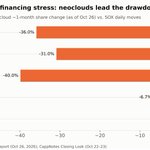
Elon Musk warned that debt markets have largely closed to neoclouds without revenue beyond AI data centers, predicting substantial failures and consolidation. $CRWV fell roughly 5% premarket, with $NBIS and $IREN down around 2–3%. Their monthly declines were approximately 36%, 31% and 40%. His assessment is not proof that funding has disappeared across the entire industry.
CoreWeave’s debt and lease obligations totaled roughly $52B at end-June, against about $104B of backlog. Those orders convert into cash over delivery and service periods, while construction and interest require funding sooner. Tighter credit can slow expansion and equipment purchases even when end demand remains strong.
$MSFT, $GOOGL and $AMZN have relative balance-sheet advantages and may negotiate better capacity and procurement terms. $MU and SK hynix retain tight-supply support, subject to customer budgets. Diversification helps $TSM but does not eliminate spending risk; $NVDA and $AMD face customer-credit and potential used-GPU liquidation risks.
Strong demand does not guarantee a loan. Watch hyperscaler capex, CRWV bonds and CDS, and rescue financing or M&A. Backlogs provide visibility; cash pays interest. Funding must last until collections arrive.

馬斯克警告,缺乏AI資料中心以外收入的neocloud,幾乎已被債市關上融資大門,未來可能出現大量淘汰與整併。消息後,$CRWV 盤前跌約5%,$NBIS、$IREN 跌約2–3%;三家公司過去一個月已分別跌約36%、31%、40%。當然這是他的判斷,不能直接當成整個產業都已斷糧。
CoreWeave截至6月底債務與租賃義務約520億美元,積壓訂單約1,040億。但訂單要等機房交付、提供服務後才能逐步收款,利息與建設費用卻持續發生。若融資收緊,即使終端需求仍在,擴建速度與設備採購也可能放慢。
$MSFT、$GOOGL、$AMZN 的資產負債表提供相對優勢,可能取得更好的容量與採購條件;$MU、SK海力士仍有記憶體供給偏緊支撐,但也受客戶預算影響。$TSM 客戶組合較分散,仍無法完全避開AI支出放緩;$NVDA、$AMD 則須留意客戶信用與二手GPU拋售風險。
需求很旺,銀行也不一定肯借。接下來盯雲端大廠資本支出、CRWV債券與CDS,以及救援融資或併購。積壓訂單能提供能見度,付利息終究靠現金;融資撐不到收款那天,再長的訂單也會變成壓力。

The Fed decides Oct. 28, with futures pricing roughly a 90.6% chance of holding at 3.75–4.00% and 9.4% for a 25bp hike. The focus is Warsh’s December message: how long the pause lasts, whether energy inflation spreads, and what would trigger another increase.
September CPI rose 3.7% YoY and 0.6% MoM; energy climbed 20.4% YoY, while core inflation was 2.6%. Expensive oil and a 10Y near 5% pressure growth-stock valuations and AI infrastructure financing. GDP and PCE follow Oct. 29. Resilient growth and hotter core prices could reinforce year-end hike expectations. Canadian, European and Japanese decisions add funding-cost and currency risk.
$JPM, $BAC and $SCHW may benefit from elevated rates, but deposit costs, loan demand and credit losses matter. Short-bill ETFs such as $SGOV offer income with low duration risk; distributions adjust with short rates, and their role differs from long-term equity growth.
A hold is largely expected; the next step moves prices. Watch the Oct. 28 statement at 2pm ET, the 2:30pm press conference, then GDP and PCE. Rate hikes cannot produce more oil. The Fed must balance inflation expectations against the cost of weaker demand.

Fed將於10/28公布決議,市場預估維持利率3.75–4.00%的機率約90.6%,升息25個基點約9.4%。這次焦點在Warsh如何談12月:暫停多久、能源通膨會不會擴散,以及什麼數據會讓Fed再次升息。
9月CPI年增3.7%、月增0.6%,能源年增20.4%,核心則為2.6%。
油價推升物價,10年美債又在5%附近,讓成長股估值與AI基建融資持續承壓。
10/29 GDP與PCE緊接公布;若成長仍穩、核心物價偏熱,市場可能強化年底升息預期。
本週加拿大、歐洲與日本央行也將決策,資金成本與匯率都值得留意。
$JPM、$BAC、$SCHW 可能受惠於利率維持高檔,但銀行仍須看存款成本、放款需求與信用損失。$SGOV 等短債ETF提供較低天期風險的收益選擇,後續配息會隨短端利率調整,也不能取代股票的長期成長角色。
這次「不升」大致在預期裡,真正會動價格的是下一步。盯10/28美東下午2點決議、2點半記者會,再接隔天GDP與PCE。能源漲價不是升息就能增產,Fed得拿捏通膨預期與需求降溫的代價。

摩根大通執行長傑米戴蒙在被問及為何美國執行長們不敢批評川普總統時反駁:「我已經表達了我的想法。你還想讓我說什麼?」
訪談者:“我真的對美國執行長們不願發表任何批評意見感到震驚。你們國家瀰漫著恐懼的氣氛。你同意這種說法嗎?”
傑米戴蒙:「達沃斯知識精英。這些年來我一直來達沃斯,聽他們各種議論。它真的讓世界變得更美好了嗎?我們聚在一起討論。你們想讓我說什麼?
我有很強的觀點。川普做的一些事是好的,有些則不然。
我不是關稅派。我會在某些情況下使用關稅嗎?是的。我認為他們應該改變移民政策。我已經說過了。
你們還想讓我說什麼?我只是想進行對話。 」
Unclestocknotes retweeted

$ONDS getting in front of US Special Forces 🇺🇸
Insignito showcased its DUMBO acoustic drone detection system at SOCOM REPTILE 2026 in Mississippi.
Direct feedback from Navy SEALs, Army Rangers and discussions on maritime deployment and system integration.
🗣️ „…and strengthening our presence in the U.S. defense market.“


Meta Platforms $META 2026 年第三季財報分析
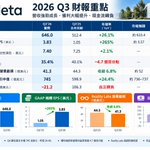
Meta 這一季營收 646 億美元,年增 26%,北美還連續三季加速。照理說是一份漂亮的財報,但隔天股價跌了約 7%。
主要因為把一次性項目兩期都還原之後,核心 EPS 只成長 2%。營收長 26%、獲利長 2%。
那錢去哪了?答案是 AI:費用年增 36%,自由現金流在公司揭露的九季裡第一次轉負,公司還宣布要發一種沒有投票權、可以拿來籌資的 C 類股。
另一邊,Muse 上線六週就有 1,000 萬人設定,四分之一的人在用它買東西。其實這是 Meta 下一個十年的故事,還是一台燒錢機器?
這篇我拆三件事:獲利去哪了、Muse 到底能不能變現、現在的股價值不值得買。
unclestocknotes.substack.com…
🤖 Made with AI

TrendForce forecasts Q4 conventional DRAM contract prices +10–15% QoQ and NAND +15–20%. Suppliers are prioritizing server and HBM capacity, while packaging, testing and front-end constraints keep supply tight. Enterprise SSD price increases are accelerating on AI inference and QLC demand, with most incremental supply already committed.
That contrasts with falling memory stocks: equities are discounting future AI spending and cycle risk while current contract prices keep rising. PC OEMs are also buying ahead of expected 2027 shortages, but inventory accumulation is not equivalent to end-user demand.
$MU, SK hynix and Samsung have DRAM pricing support. $SNDK and Kioxia depend on enterprise SSD exposure and NAND mix; Nanya and Winbond may benefit from legacy DRAM supply gaps. Higher costs, however, pressure PC and smartphone margins, configurations and upgrade demand.
Rising prices and falling stocks can coexist—the market looks ahead. Watch cloud capex, November contracts and Taiwan monthly sales. Today’s pricing power still needs tomorrow’s purchasing power. Don’t count all stockpiling as growth.

TrendForce預估Q4傳統DRAM合約價季增10–15%、NAND增15–20%。供應商優先配置伺服器與HBM產能,加上封裝、測試及前段製程瓶頸,供給仍緊。企業SSD漲價更在加速,AI推論與QLC需求是主要推力,多數新增供應已被預訂。
這與記憶體股重挫形成對比,股價擔心未來AI支出與景氣高峰,當下合約價卻仍上升。PC品牌也因預期2027年缺貨而積極採購,但提前備貨不完全等於終端需求,後續還要看庫存能否順利消化。
$MU、SK海力士與三星有DRAM報價支撐; $SNDK、鎧俠看企業SSD與NAND產品組合;南亞科、華邦電則可能承接傳統DRAM供給缺口。另一面是PC與手機成本上升,品牌廠毛利、產品容量與消費者換機意願都受考驗。
報價漲、股價跌,可以同時發生,因為市場買的是未來。接下來盯雲端資本支出、11月合約價與台廠月營收;供應商今天有議價權,也得確認客戶明天買得動,別把囤貨全算成成長。

China’s commerce and science ministries proposed export controls covering 40 items, including 23 AI technologies, with comments due Nov. 15. Scope includes large models, agents, chip designs and computing clusters. Thresholds cover models with at least 2T parameters or global top-10 rankings, plus design know-how for ≤14nm chips, 2.5D/3D stacking and certain memory designs. Open-source code is exempt; temporary registration requirements took immediate effect.
Taiwan also plans controls on advanced AI chips and servers shipped to China, with thresholds and timing pending. Extending controls to complete systems increases the importance of end-user, end-use and routing checks for server ODMs, while complicating cross-border R&D, IP licensing and cloud deployment.
SMIC, Cambricon and Hua Hong may gain localization demand. My inference: Hon Hai and Wiwynn’s overseas capacity could offer greater flexibility, but offshore assembly does not automatically establish compliance. Nor should $ORCL or $CRWV count restricted demand as secured business.
Delivery eligibility increasingly matters alongside demand. Watch China’s final rules, Taiwan’s thresholds and US responses. Before picking winners, establish which technologies, shipments and customer uses the rules actually cover.

中國商務部、科技部公布40項出口管制草案,涵蓋23項AI技術,以及太陽能、生醫項目,公開徵詢至11/15。AI範圍包括大型模型、代理、晶片設計與運算叢集;模型門檻涉及2兆以上參數或全球前十大,晶片則涵蓋14奈米以下、2.5D/3D堆疊與部分記憶體設計。開源程式碼豁免,另有臨時登記要求立即實施。
台灣也規劃將輸往中國的先進AI晶片與伺服器納入管制,但門檻與生效日尚未公布。管制若延伸至整機,伺服器ODM就得更仔細確認最終客戶、用途與轉運路徑;跨國研發、IP授權及雲端部署,也面臨更複雜的合規要求。
中芯、寒武紀與華虹可能受惠於中國在地化需求。
大叔推論,鴻海、緯穎的海外產能可能增加調度價值,但海外組裝不代表自動符合出口規則。$ORCL、$CRWV 等境外算力業者,也不能直接把受限需求視為新增訂單。
AI供應鏈愈來愈需要先看能不能交,再看交多少。接下來盯中國最終條文、台灣門檻與美方回應;草案還沒全部定案,先把技術、貨物流向與客戶用途查清楚,比急著選贏家更重要。

$Meta ’s negative free cash flow renewed scrutiny of funding sources. Its new share class creates future financing flexibility; the stock dividend itself raises no cash. With the 10Y near 5%, greater reliance on bonds, private credit and equity means interest costs, credit spreads and dilution must enter return calculations.
Full order books and customers’ ability to pay are separate tests. Watch Microsoft, Alphabet and Amazon capex, free cash flow and AI credit spreads next week. If demand holds, valuation matters; if budgets and collections weaken too, earnings need another look.

$Meta自由現金流轉負,讓市場重新檢查AI支出的融資來源。新增股別提供未來籌資彈性,但配股本身不等於已募得現金。在10年美債約5%的環境,若更多建設仰賴債券、私募信貸與增發股票,利息、信用利差及股權稀釋都得算進回報。
訂單很滿,但跟客戶付得起錢,是兩張不同的考卷。

The Fed decides Oct. 28. A Reuters poll found 94 of 100 economists expecting a hold at 3.75–4.00%, while markets priced only about a 10% chance of a hike. Roughly 25bp of tightening remains expected before year-end, making December pivotal. Watch the statement, dissents and Warsh’s press conference.
The 10Y fell from 5.13% to 4.96% on haven buying, then returned to roughly 5% Friday as oil rose. GDP and PCE follow Oct. 29, with core PCE expected at 3.1% YoY. A hotter reading alongside expensive oil could reinforce December hike expectations. Decisions in Canada, New Zealand and Japan also put global funding costs in focus.
$SCHW, $JPM and $BAC may benefit from elevated rates, subject to deposit costs and credit losses. $BRK.B’s Treasury bills continue generating interest. $SGOV and $BIL offer short-term income with low duration risk, although distributions adjust with front-end rates.
Inflation argues for braking; soft employment warns against braking too hard. September payrolls rose just 29K, with unemployment at 4.2%. An October pause looks likely; the remaining tightening path is harder. Read the decision, then PCE, “no hike this month” alone does not justify higher equity multiples.


Fed將於10/28公布決議。Reuters調查中,100位經濟學家有94位預期維持利率3.75–4.00%,市場升息定價也僅約10%。但年底前仍預期約25個基點升息,所以12月才是下一個關鍵,這次要聽聲明、反對票與Warsh記者會怎麼鋪路。
10年美債殖利率先因避險買盤從5.13%降至4.96%,週五隨油價上漲回到約5%。10/29緊接GDP與PCE,市場預估核心PCE年增3.1%;若數據偏熱,加上高油價,可能強化12月升息預期。加拿大、紐西蘭、日本央行也將公布決策,全球資金成本同樣值得盯。
$SCHW、 $JPM、 $BAC 可能受惠於利率維持高檔,但存款成本、信用損失仍會影響結果。$BRK.B 的國庫券部位持續貢獻利息;$SGOV、$BIL 則提供短債收益與較低天期風險,後續配息仍隨短端利率變動。
通膨催Fed踩煞車,就業卻提醒它別踩太重。9月新增就業僅2.9萬、失業率4.2%,這次暫停不難猜,難的是年底還能升多少。

