Usman Hanif (@UsmanHaniff) header
Usman Hanif (@UsmanHaniff) profile picture

Business Journalist Pakistan @etribune, @TribuneBiz| Ex @geonews_english| @profitpk| Business: Economy @CEJatIBA @EastWestCenter @ChevPakistan SAJP

Joined March 2012
Photo by Usman Hanif (@UsmanHaniff)Photo by Usman Hanif (@UsmanHaniff)Photo by Usman Hanif (@UsmanHaniff)Photo by Usman Hanif (@UsmanHaniff)Photo by Usman Hanif (@UsmanHaniff)Photo by Usman Hanif (@UsmanHaniff)Photo by Usman Hanif (@UsmanHaniff)Photo by Usman Hanif (@UsmanHaniff)Photo by Usman Hanif (@UsmanHaniff)Photo by Usman Hanif (@UsmanHaniff)
Sindh and Balochistan has insignificant share in the Pakistan remittances windfall!
If you think journalism is dead read this excellent article by @UsmanHaniff on the North South divide in remittances: tribune.com.pk/story/2622860…
1
3
631
Suddenly Pakistani companies have started announcing to gold and copper discovery in Balochistan🤔 There’s been a noticeable cluster of copper and gold exploration updates out of Chagai in the past few days. National Resources (backed by Lucky Cement and Fatima Fertilizer) reported mineralisation across at least eight porphyry discoveries after nearly 25,000 metres of drilling. Mari Energies shared results from its East Siah Diq target near Reko Diq, and the Frontier Works Organisation put out an early copper tonnage figure at Dasht-e-Kain. All remain at the exploration stage, but the timing around the minerals forum is hard to miss. Worth keeping an eye on the follow-up work.
91
One in three adults in Pakistan is living with diabetes. That is approximately 34.5 million people. The figure is more than a health statistic. It highlights a growing challenge for families, healthcare institutions and the country's economy. The WHO is urging people to take preventive measures, including healthier diets, regular exercise and routine medical screening. Another worrying trend is the growing risk among children, linked to unhealthy eating habits and physical inactivity. Early detection matters. Prevention needs to become a national priority, not just an individual responsibility. #Pakistan #Diabetes #PublicHealth #WHO #Healthcare
🤖 Made with AI
28
The most striking paradox of the contemporary world may be unfolding in China. For much of modern political and economic thought, economic prosperity, technological innovation and political liberalisation have been seen as developments that reinforce one another. The assumption is that an open society, freer exchange of ideas and political pluralism create the conditions in which innovation flourishes. China complicates that assumption. From the political perspective, China remains a highly centralised one-party state, with a political system fundamentally different from Western democracies. Yet economically and technologically, it has emerged as one of the world's most formidable competitors, from electric vehicles and solar panels to artificial intelligence, advanced manufacturing and robotics. The contrast has become increasingly visible in the country's extraordinary push into humanoid robots. Read full article here: tribune.com.pk/story/2636761…
28
دام ہر موج میں ہے حلقۂ صد کام نہنگ دیکھیں کیا گزرے ہے قطرے پہ گہر ہوتے تک غالب
🤖 Made with AI
27
Have you wondered why IMF, World Bank, ADB and other banks keep lending to Pakistan despite the fact it seems to default every now and then? Here is the answer: Debt business is one of the most profitable business. From 1990 to 2000, Pakistan had a total debt outstanding of $15.451 billion, while the total amount Pakistan repaid was $36.611 billion in principal and interest.
55
Happy to share a glimpse of my contribution to the Bilateral Book! 📖 The Bilateral Navigator is an extensive, data-driven diplomatic project and publication initiative (originally created by Croatian diplomat Dr. Siniša Grgić -@GrgicSinisa ) designed to map and analyze country-to-country relationships across the globe. The Bilateral Navigator leadership and technical team spans multiple countries across Europe and North America.
25
دریا، سفینہ، مانجھی، کنارا فریب ہے یعنی نظارا سارے کا سارا فریب ہے اس ایک پل میں ضم ہیں ہمارے ازل ابد بہتا ہوا یہ وقت کا دھارا فریب ہے شب کے مسافروں کو ابھی یہ خبر ملی رستہ دکھانے والا ستارا فریب ہے دیوانے سر کٹا کے بھی رہتے ہیں سربلند فرمانروائے شہر کا آرا فریب ہے ہم سے سلجھ سکی نہ یہ گتھی تمام عمر دھوکا نظر کا ہے کہ نظارا فریب ہے چپ چاپ آسمان کو میں دیکھتا رہا پھر یوں ہوا کہ کوئی پکارا فریب ہے اب میرے پاس ایک سہارا ہے آخری اور میرا آخری یہ سہارا فریب ہے وہ لوگ جن کا حق تھا وہ گمنام مر گئے یہ مرتبہ یہ نام ہمارا فریب ہے حماد غزنوی
1
86
Karachi's built-up area has expanded by about 32% between 2010 and 2025, exceeding 1,400 square kilometres, as agricultural land, rangeland and open spaces have increasingly given way to urban development, raising concerns over the economic costs of heat stress, water scarcity and inadequate infrastructure. Detailed article link in the comments
1
41
Usman Hanif retweeted
Replying to @UsmanHaniff
ساہوکار کا کام ادھار دو اور سود در سود کے ساتھ واپس لو۔ اس بار وہ ایسا گاہک ہے جو ادھار لے سکتا ہے وہ اس نے خود واپس نہیں کرنا، بلکہ پاکستان کے غرباء نے کرنا ہے۔ جب مملکت کی معاشیات، ساہوکار چلائیں گے تو قرض ہی مقدر بن جاتے ہیں @PIDEpk @nadeemhaque @ImtiazGul60 @Financegovpk
1
1
25
Seems Pakistan Finance Minister's only job is to raise debt from all over the world!
1
4
131
Pakistan’s rupee has appreciated by around Rs2 against the dollar since the war began, despite rising energy costs and global financial uncertainty. The authorities attribute the currency’s resilience to foreign exchange purchases, tight monetary policy and restrained domestic demand.But currency stability is only part of the story. Pakistan purchased $8.1 billion in net foreign exchange during FY26, while reserves increased by around $4 billion. The bigger test remains whether stronger exports and sustainable dollar inflows can support the rupee over the long term.#PakistanEconomy #Rupee #Exports
32
مالکان اربوں کمارہے ہیں مگر صحافیوں کو کم سے کم تنخواہیں دے رہے ہیں، چھانٹیاں ہورہی ہیں اور کئی ٹی وی چینلز کئی مھینوں سے تنخواہیں نہیں دے رہے ہیں ۔۔۔حکومت کو چاہئے کہ اشتھارات کو صحافیوں کی تعداد اور مارکیٹ ریٹ پر تنخواہیں دینے سے لنک کریں @CMShehbaz
4
4
8
165
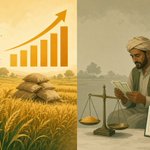
Agriculture’s tax potential cannot be judged by its share of GDP. Output is not the same as taxable income, because farm profitability depends on prices, yields, input costs, weather and market conditions. Treating the value of production as taxable income creates unrealistic revenue expectations, especially for millions of small farmers who often sell below official or expected rates. Mahmood Nawaz Shah, president of the Sindh Abadgar Board, draws the core distinction: GDP records the value of production; tax should follow profitability. Wheat is the example. In 2024-25 the government announced about Rs4,000 per 40 kg, later Rs3,900, but farmers in major areas sold at substantially lower rates. If a crop is sold below cost, that production cannot be treated as taxable income. The same gap applies to cotton, maize, rice and sugarcane, where yields and prices swing sharply from year to year. Shah rejects linking agriculture’s GDP share automatically to its tax contribution. He argues the realistic base is average profitability over five to seven years, not a single season. Agriculture employs a large share of the workforce, but income is spread across millions of people, so income per worker is often low. Employment share is not a proxy for tax potential. Muhammad Ali Iqbal, president of Concave Agri Services, says more than eight million farmers are engaged in the sector, most on small holdings. Fragmented farms make a uniform tax structure hard to apply. Tax design should rest on three variables: input costs (rising under taxes and market pressure), yields (held back by seed quality and technology gaps), and output prices, which farmers largely do not control. Price uncertainty, transparency and price discovery are the binding constraints. Without reliable production and price data, taxable income cannot be estimated accurately. Satellite imagery, remote sensing and yield-estimation algorithms could measure cultivated area and production at district and tehsil level and cross-check declarations. Aamer Hayat Bhandara of Agriculture Republic calls for a farm-to-fork digital trail: electronic weighing in mandis, with quantity, quality and the transaction recorded, to cut under-reporting. Much of agriculture’s economic value is captured later in the chain by processors, exporters and food companies, and is booked under manufacturing or other sectors. The sector should not be assessed in isolation. Transactions remain fragmented and undocumented. Late payments and weak financial and digital literacy make formal records, and therefore assessment, difficult. FBR compliance rules, especially when firms buy from non-filer farmers, can discourage formalisation among agriculture and food businesses. Full article link is in comment section:
1
55
People paying last respect to Nana Patekar!
Public, GMC staff and students paid their last respects to veteran actor Nana Patekar at the GMC morgue on Thursday. #MarathiCinema #VeteranActor #GoaNews
71
Pakistan's system socialises losses while allowing private players to capture profits.
1
68
Khaadi Pakistan plans an IPO next month to raise Rs6.2–8.3 billion for new stores. Arif Habib is advising.
1
107
Usman Hanif retweeted
⛽ Balancing fiscal targets with inflation realities is a critical challenge for Pakistan. While fuel levies offer an easy revenue target, they carry severe macroeconomic consequences. In my latest discussion with @UsmanHaniff published in @etribune , I unpacked the immediate inflation risks and outlined a sustainable alternative energy roadmap. 🇵🇰 The Inflation Multiplier (Image 1) 📉 Widespread Ripple Effect: High fuel levies multiply inflation across all economic sectors, instantly increasing direct energy costs and cascading into transportation and daily food prices. Embedded Price Instability: This policy fuels embedded core inflation, making future price stability significantly harder to control. High-Risk Revenue: Relying on fuel levies is a high-risk fiscal strategy. Policymakers must shift focus toward robust direct taxation to ensure true economic stability. The Alternative Energy Transition (Image 2) ⚡ Subsidize the Masses: To ensure an equitable transition, we must introduce direct subsidies for poorer motorcycle owners, supporting a much-needed and affordable shift. Incentivize Adoption: Significant tax credits for early EV adopters are essential to reduce purchase barriers and lower entry costs. Policy Alignment: Petroleum taxation must not undermine policies aimed at shifting consumers towards alternative energy. A Holistic Roadmap: A successful transition requires building comprehensive charging infrastructure, incentivizing domestic technology, and expanding green financing. #PakistanEconomy #Inflation #EnergyTransition #TaxReform #Macroeconomics #EVs
🤖 Made with AI
1
1
1
4
357