

Inactive | find me on the better place: @vbojarskich. bsky. social
Jena
Joined November 2018
- Tweets573
- Following389
- Followers249
- Likes2K





Pinned Tweet
Are conservatives more prejudiced than liberals? 🤔
🎙️A new HateCast episode is online.🎙️
I had the pleasure of interviewing Dr. Mark Brandt @mjbsp about the ideology-prejudice link, its roots, and❓about normativity & positionality.
#AcademicTwitter
podcasters.spotify.com/pod/s…

Vladimir Bojarskich retweeted

I'm proud of this paper out this week (d/l below)
Ever wonder what virtue-signalling is?
Or what motivates victim-signalling?
Or what the rewards of “virtuous-victim signalling” are?
The answer that “virtuous-victim signalling” is the resource transfer strategy people high on Narcissism & Machiavellianism.

Vladimir Bojarskich retweeted

Why did Trump beat Harris?
Anti-incumbency bias:
People voted against the incumbent party in every part of American and every country in the world this year--for the first time in 70+ years!
This global trend was a tsunami that swamped ideology, gender, race, age, etc.


Vladimir Bojarskich retweeted

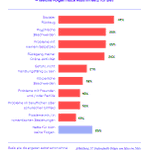
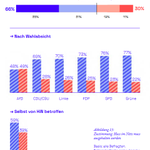
Forschende @UniJena und @TrierUni haben Einstellungen und Wahlverhalten in #Brandenburg, #Sachsen und #Thüringen untersucht. Das Ergebnis bestätigt ein Erstarken der politischen Ränder und zunehmendes Misstrauen gegenüber dem Staat und der Demokratie.
➡️ uni-jena.de/278553/demokrati…

Vladimir Bojarskich retweeted
Unfollowing toxic social media influencers makes people less hostile!
In 2 large field experiments, unfollowing a few extreme influencers:
-Reduced partisan animosity by 24%
-Increased satisfaction with Twitter/X
-Led people to share higher-quality news
Effects persisting for 6+ months and most people choose not to refollow the influencers after the study was over.
Read the full paper here: osf.io/preprints/psyarxiv/ac…

Vladimir Bojarskich retweeted
Our new paper takes you Inside the funhouse mirror factory and explains How social media distorts perceptions of norms
0.1 % of users share 80% of fake news!
A tiny proportion of bad actors cause most of the problems and distort the norms.
sciencedirect.com/science/ar…
Via @CRobertson500 & @KS_delRosario

Vladimir Bojarskich retweeted

🚨Out in Nature!🚨
Many (eg Trump JimJordan @elonmusk) have accused social media of anti-conservative bias
Is this accurate?
We test empirically - and it's more complicated than you might think: conservatives ARE suspended more, but also share more misinfo nature.com/articles/s41586-0…


Vladimir Bojarskich retweeted

Can we use nudges to reduce hate speech and/or promote civil discourse on social media?
Drawing inspiration from mega-studies, we tested the relative effectiveness of seven theoretically grounded nudges on the same population, using a platform that accurately reproduces the Facebook newsfeed.
We found two results that we believe are quite interesting:
1) None of the nudges significantly reduced overall engagement (all reactions combined) with harmful speech.
2) A nudge highlighting the injunctive norm increased engagement with harmless speech.
Exploratory analyses suggest that the null effects on harmful posts are likely due to opposing factors: a reduction in certain forms of engagement (e.g., commenting) and an increase in others (e.g., angry reactions).
It seems that some nudges, especially those based on personal and social norms, may have socially positive effects by making people more likely to ignore harmful content and more likely to respond with angry reactions.
However, this point warrants further investigation, as it stems from non-preregistered analyses.
The paper has been just published in @PNASNexus. Here’s the link: academic.oup.com/pnasnexus/a…
A big thank you to the two co-first authors: @TatianaCeladin and @FolcoPanizza

Vladimir Bojarskich retweeted

Die Wahlen in Thüringen, Sachsen und Brandenburg machen ein Erstarken demokratie- und staatskritischer politischer Kräfte sichtbar. Das @KomRex_UniJena hat vor den Wahlen eine Befragung durchgeführt. Zentrale Ergebnisse👇
#thueringenwahl2024 #sachsenwahl2024 #Brandenburgwahl24
Vladimir Bojarskich retweeted
Fast 700 wissenschaftliche und nicht-wissenschaftliche MitarbeiterInnen an Hochschulen in Thüringen haben die politischen Parteien zur Bildung einer stabilen demokratischen Regierung aufgefordert. Dass dies kein Selbstläufer wird haben wir heute gesehen.👇unigegenrechts.org/erklaerun…
Vladimir Bojarskich retweeted

#DGPs2024 Raus aus der Blase 🫧! Diskutiert heute Nachmittag mit uns über psychologische Ansätze zur Reduktion von Polarisierung und Desinformation. 🕓 16 Uhr im Audimax @univienna mit Christine Finn, @VBojarskich, @LKnochelmann, @fc_stock & @LPummerer


Vladimir Bojarskich retweeted

The editorial of this year's special issue is publicly available: "Online hate: A European communication perspective" by Heidi Vandebosch & Tobias Rothmund
degruyter.com/document/doi/1…
Vladimir Bojarskich retweeted

Was sind alternative Medien und welche Rolle haben sie bei den Thüringer Landtagswahlen gespielt? Diese und andere Fragen durften @InesEngelmann und ich im Podcast Thüringen, was geht?! beantworten. Thanks for having us @TAOnline thueringer-allgemeine.de/pod…

Vladimir Bojarskich retweeted
#machdeinkreuz bei der LTW in #Brandenburg, #Sachsen und #Thüringen. Künstler:innen, die in Sachsen leben und arbeiten, haben Plakate gestaltet, die auf die Wahlen hinweisen. Gerne teilen! machdeinkreuz.de

Vladimir Bojarskich retweeted

🚨New WP: Can LLMs predict results of social science experiments?🚨
Prior work uses LLMs to simulate survey responses, but can they predict results of social science experiments?
Across 70 studies, we find striking alignment (r = .85) between simulated and observed effects 🧵👇


Thanks, @mjbsp, for being an outstanding guest!
And thx to @NETHATE_ITN & @donnadifiume for their support in this🎧
1
130
Vladimir Bojarskich retweeted

🚨New Paper Alert🚨
Ever wondered why people endorse censoring others?
In our new paper accepted at Political Psychology (osf.io/preprints/psyarxiv/ha…), we find that people censor ideas they FEEL are harmful and untrue. We then examine ways to reduce willingness to censor
🧵👇

Episode #2 with @SophieLitvak and @BoazHameiri on psychological interventions against prejudice.

🎧 Transforming Prejudice: Exploring Psychological Interventions! 🎙️
Join me on HateCast with Dr. @BoazHameiri as we discuss interventions and intergroup relations:
podcasters.spotify.com/pod/s…
🔗Links:
Dr. Boaz Hameiri's work: boazhameiri.com/
🎧
Supported by @NETHATE_ITN .
5
159
Vladimir Bojarskich retweeted

New publication on predictors of #HateSpeech with #German representative survey data by @IDZ_Jena
check it out! @NETHATE_ITN @TobiasRothmund @IfkwJ #openaccess #socialpsychology

New Research: Ideological attitudes predicting online hate speech: the differential effects of right-wing authoritarianism and social dominance orientation frontiersin.org/articles/10.… #FrontiersIn #SocialPsychology