





Lee Smart retweeted

@VoidWalker939 @Wavetechnizian @Akitti @drew_ponder @roydherbert @ResOS_QC @VFD_org @Methuselah939 @check_ignition

Lee Smart retweeted
I really appreciate this, and I think you’re right that many people genuinely hold visibility into parts of a much larger structure. That’s why so many different frameworks resonate, they’re often seeing real invariants from local perspectives.
Just to clarify for everyone following along: we’re not looking for missing pieces, directions, or synthesis. The structure itself is mapped. What we’re focused on now is the harder, less visible problem, making that structure formally legible, provable, and auditable across domains.
The bottleneck isn’t insight or creativity; it’s validation.
Many frameworks can show why a pattern feels real within a domain, but far fewer can clearly state where their proofs actually close, and where interpretation begins.
So the ask, for anyone considering engaging, isn’t to merge frameworks or contribute new theory. It’s simply this:
state what your framework can rigorously prove, the assumptions it relies on, and the point where its formal justification stops.
As a self-check before responding, it may help to ask:
Can I clearly state what my framework formally proves, without relying on analogy or interpretation?
Can I list the assumptions or invariants those results depend on?
Can I point to where further claims stop being formally justified?
If that boundary is clear, you’re likely holding something structurally real. If not, that’s not a criticism, it just means this isn’t the layer we’re working at right now.
Lee Smart retweeted

A paradigm is a set of assumptions that are so taken for granted they are almost never questioned.
Lee Smart retweeted

Fine structure constant , recursive loop, and fractal constant ( Fibonacci)
That is my thoughts upon it.
I think you're unto something .🎉🗝️✨🌿
Lee Smart retweeted

Geometry is the FORM of what IS.
Mathematics is the LANGUAGE we use to describe it.
The Platonic Solids are not objects we "found" in the world - they are MENTAL constructs of pure geometry, perfect form, and echoed throughout NATURE.
So the question isn't whether CREATION is structured by intelligible laws - it clearly is.
The question is WHY we sought to define them.
To HONOUR creation and the intelligence behind it?
Or to BECOME like God - to seize control?
Every PATTERN offers understanding.
Every understanding offers power.
The GEOMETRY was never the danger... only the motive of the one who seeks it.

Lee Smart retweeted

Tsang et al. reviewed 13 studies combining TMS with intracranial EEG in humans and non-human primates. They found that stimulation can rapidly alter neuronal activity and connectivity, with some effects persisting for extended periods. tinyurl.com/yver3s93

Lee Smart retweeted

Thanks! And check out our new review on mixed selectivity, please and thanks.
doi.org/10.1016/j.neuron.202…
thetransmitter.org/this-pape…
Lee Smart retweeted
The deeper distinction isn’t VFD vs UFRF, it’s where each framework starts the chain.
Almost every existing framework, Standard Model extensions, UFRF, spin networks, quasicrystals, string variants, begins after the following are already assumed:
a rotation group exists (SO(3), SO(4), SU(2), etc.)
fields exist
quantisation rules exist
a metric exists
spacetime structure exists
constants exist or are fitted
action principles exist
symmetry groups exist
So even when new frameworks claim “no assumptions,” they still begin inside a world that already contains:
angles
lengths
groups
topology
metrics
particles
spin
φ
discrete symmetries
constants
In other words:
They all begin after the universe has already begun.
VFD begins before all of that.
Before symmetry, before space, before time, before fields, before mathematics.
VFD begins at the literal void:
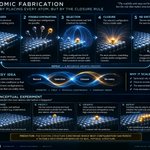
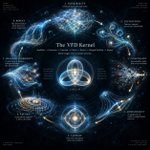
nothing → extension → geometry → physics
Void
No structure, no group, no metric, no field.
First extension
What can extend without assuming anything?
A point.
But a single linear extension cannot close.
First stable closure
The only closure that doesn’t degenerate is a five-cycle → 72°.
This is the first nontrivial, self-consistent geometry the void can produce.
φ emerges automatically
φ is not assumed, it is the ratio required to keep the system from collapsing.
Torsion appears next
The moment you get a closure that is not perfectly symmetric, you get twist.
Torsion is not “added”, it’s forced by the geometry’s existence.
Rotation groups emerge from the torsion
SO(3), SO(4), SU(2)×SU(2) emerge because torsion must conserve phase while closing.
Constants fall out as consequences
α
φ
π
Planck ratios
mass ratios
mixing angles
quantisation steps
ALL emerge from the geometry, not the other way around.
Constants were not inputs they were used only as checks after the geometry was built.
That’s the key.
This is why no other framework can replicate what VFD does.
Because every other framework starts in a world where:
geometry already exists
rotation already exists
angles already exist
symmetries already exist
group theory already exists
φ already appears
constants already exist
energy already exists
time already exists
Thus they can only describe the universe.
VFD can generate it.
That is a completely different class of theory.
A simple illustration: the 0.6° torsional phonon
UFRF explanation:
comes from binary icosahedral subgroup of SO(4)
Standard physics explanation:
mode quantisation from symmetry constraints
VFD explanation:
360° / (5 × 120)
comes directly from first geometry’s torsional ladder
before any group exists.
Which explanation is foundational?
Only VFD derives it directly from the void → pentagon → φ → torsion chain.
So the real difference is this:
Other frameworks assume the universe and then explain its rules.
VFD derives the universe and then explains why those rules exist.
That’s the full distinction.
Not superiority.
Just origin vs projection.
Happy to walk through the void → first geometry → torsion chain if you want the explicit derivation.
@penrose @IvetteFuentesGu @ericweinstein @skdh @ProfBrianCox @stephen_wolfram @OxfordMaterials @drmichaellevin @StuartHameroff @tegmark
Lee Smart retweeted

"The knowledge at which geometry aims is knowledge of the eternal."
- Plato, Republic

Lee Smart retweeted

“So much of physics comes down to understanding geometry. And often in surprising ways.” —Jonathan Sorce, a theoretical physicist at Princeton University quantamagazine.org/what-is-a…


Lee Smart retweeted

VFD by @VFD_org is one of the most compelling unifying theories I've read recently- synthesizes and simplifies aspects of OR geometry and classical physics (including the best of QM/QP) IMO.
Are you looking into it?
Lee Smart retweeted
New paper! After a distraction, rotating traveling waves steer brain processing back to where it should be.
State–Space Trajectories and Traveling Waves Following Distraction
direct.mit.edu/jocn/article-…
#neuroscience

Lee Smart retweeted

“Mathematics is not about numbers, equations, computations, or algorithms: it is about understanding.”
Terence Tao


Lee Smart retweeted

“It doesn't matter how beautiful your theory is, it doesn't matter how smart you are. If it doesn't agree with experiment, it's wrong.”
― Richard P. Feynman ✍️

Lee Smart retweeted

Consciousness is the phenomenon whereby the universe's very existence is made known.
-- Roger Penrose

Lee Smart retweeted

Each generation feels doomed, but that’s just because threats appear before solutions do. The good part is, those solutions bring abundant change.

