

CEO, Agriloom | https://teapawt.net/t.co/QcVybmPxfD
Nairobi
Joined January 2011
- Tweets8.1K
- Following1.5K
- Followers631
- Likes3.7K




The art of agricultural sourcing often involves broadcasting requests across multiple channels and platforms, hoping to trigger a signal that eventually turns into a lead. But i received and unconventional signal 😓
lnkd.in/p/dTJtBFn6

Yusto O retweeted

Who Is Actually Willing to Pay? Go-to-Market in GreenTech | timbuktoo Founders Circle teapawt.net/i/broadcasts/1pJdRDqeY…
Yusto O retweeted

This is one of the saddest videos I've seen on the Internet today.
Imagine leaving your wife at home for just one week, only to return and find another man in your house wearing a condom.

😁 Love shiny new things? AgriLoom is live in BETA! 🚀🌱
🌐 agriloom.co.ke
📱 Android app on Google Play
Discover LPO opportunities, subsidized products & commercial-volume leads. Powered by AgriMatch AI & PriceAI 🤖
📩 DM/WhatsApp +254752185900.
Happy sourcing! 🌾

Yusto O retweeted

If You're a Backend Engineer
Please Learn:
- SOLID design principles
- Multithreading
- Immutability
- Streaming, messaging
- Caching
- Idempotency
- Security
- SSL, JWT, OAuth
- Factory, Decorator, Singleton, Observer design patterns
- TDD
Yusto O retweeted

Phil Collins - Another day in paradise
Lionel Richie - All night long
Marvin Gaye - Sexual healing
Dolly Parton - Coat of many Colors
Whitney Houston - I wanna dance with somebody
Craig David - 7 days
Westlife - I have a dream
Celine Dion - That's the way it is
Nina Simone - Sinnerman
Backstreet Boys - I want it that way
Shane ward - Breathless
Boyz II Men - End of the road
Shania Twain - Any man of mine
Bon Jovi - Living on a prayer
Sade - Smooth operator
Kenny Rogers - The Gambler
Elton John - Sacrifice
Linda Ronstadt - Blue bayou
Chris de burgh - Lady in red
Ben E king - Stand by me
Bryan Adams - Everything I do
I thought we all grew up listening to these guys

Yusto O retweeted

⚙️ Backend Developer
Stage 1: Git + GitHub
Stage 2: Linux
Stage 3: Java / Go / Python / Node.js
Stage 4: REST APIs
Stage 5: SQL (PostgreSQL / MySQL)
Stage 6: Redis
Stage 7: Authentication (JWT / OAuth)
Stage 8: Docker
Stage 9: Kubernetes
Stage 10: Cloud (AWS / Azure / GCP)
Stage 11: CI/CD
Stage 12: Build scalable services
🏆 Backend Developer unlocked 🙌
Yusto O retweeted

Recently I interviewed a Senior Engineer.
Strong candidate.
Kafka? ✅
Redis? ✅
Microservices? ✅
Distributed systems? ✅
Then I asked:
“Design Google Pay.”
He started with the basics.
“Mobile app → API Gateway → Payment Service → Bank/UPI.”
Fair enough.
I asked:
“A user wants to send ₹10,000 to a friend. Walk me through the payment.”
He explained the flow.
Create transaction.
Call the bank.
Update payment status.
Send notification.
Looks good.
Then I added:
“The bank successfully processes the payment.”
“But before Google Pay receives the response, the network connection drops.”
The user sees:
“Payment failed.”
So they click Pay again.
Now I asked:
“What happens?”
“Check the transaction status before processing.”
Okay.
But then I asked:
“What if both requests reach different servers at almost the same time?”
Both servers check the transaction.
Both see:
PENDING
Both send the payment request to the bank.
💥 ₹20,000 transferred instead of ₹10,000.
“Use Redis lock.”
Okay.
“What if the server holding the lock crashes?”
“Use a database transaction.”
Okay.
“The database transaction can't roll back a payment that already succeeded at the bank. Now what?”
Silence.
And that's the point where “Design Google Pay” stops being about drawing boxes.
It's about handling:
→ Retries
→ Timeouts
→ Duplicate requests
→ Concurrent processing
→ Partial failures
→ Bank callbacks
→ Reconciliation
→ Payment state consistency
You can't guarantee that a request will never be retried.
You need to guarantee that a retry won't create another payment.
That's where idempotency comes in.
The same payment request can arrive multiple times.
But the system should produce the same outcome:
₹10,000 charged → once.
Not twice.
Not three times.
Exactly once in effect.
Your turn:
How would you design Google Pay so network failures and retries never result in duplicate payments?
There's a specific distributed-systems concept behind this.
And you'll encounter it everywhere money moves through a distributed system. 👇

Yusto O retweeted

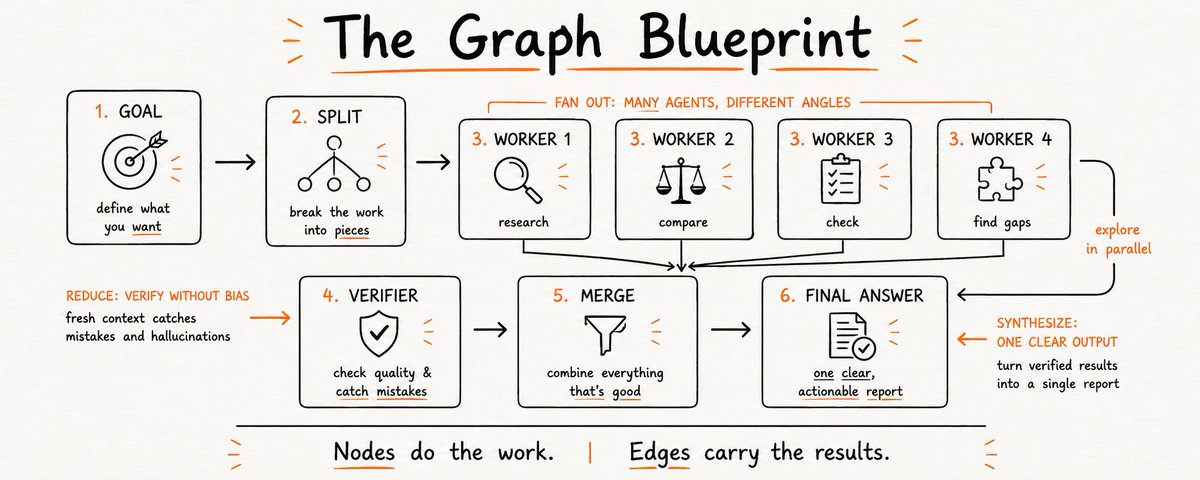
instead of watching 2 hours of Netflix tonight, watch this Stanford lecture given by Anthropic engineers
it's the clearest explanation I've seen of how AI agents actually work
useful whether you've never touched AI in your life or have been building with it every day
i took the key ideas and turned them into a practical guide, with ready-to-copy prompts
watch it, then read the guide below on how to build a system that improves itself

We Built the Operating System for Agricultural Commerce in East Africa. Here's Why That Matters. linkedin.com/pulse/we-built-…

🏢 *Buying crops at scale?*
Pay *100+ farmers directly to M-Pesa in under 2 minutes* — no spreadsheets, no bank queues, and no reconciliation headaches.
🚀 *Buy in Bulk. Pay Instantly via LoomPay.*
📅 Book your FREE 10-minute demo today:
🌐 agriloom.co.ke

Check out my latest article: The Realm Beyond Sight: Exploring the Possibility That Reality Begins Before Reality linkedin.com/pulse/realm-bey… via @LinkedIn

Yusto O retweeted

A lot of pre-seed founders approach angel fundraising the same way they woild approach applying for jobs: find a list, send applications, hope someone responds. That approach works occasionally, but it is not a strategy.
Angels invest from different theses, write different check sizes, bring different networks, and operate on completely different timelines. Treating them as interchangeable is the first thing that gets founders into trouble.
Three things have consistently worked for founders trying to get on an angel's radar.
Direct outreach, done specifically. This means identifying investors whose background or portfolio suggests genuine fit, then writing something short enough to respect their time and specific enough to prove you did not copy-paste it. My first angel investment came this way. It is not the easiest path but it is a real one.
Syndicates and angel groups. Platforms like @hoaqclub, @NairobiBAN, and Kili Ventures pool smaller checks and give founders one name on the cap table instead of several. Seventy percent of my angel investments have come through syndicates. For founders, the value is in its efficiency. One conversation can lead to multiple checks.
Conferences and startup events, approached as relationship infrastructure rather than pitch opportunities. The goal is not to close someone in a hallway after one conversation. It is to be in the room consistently enough that when a conversation does turn to fundraising, you are not a stranger. Getting a speaker slot is worth pursuing specifically because it changes who initiates the conversation.
Which of these does your current outreach strategy actually lean on?
Yusto O retweeted

All the best startup accelerators to apply in 2026 (below FULL spreadsheet):
[ Top-Tier ]
1. Y Combinator (~$500k, 7% on $125k + uncapped SAFE)
2. a16z Speedrun (~$500k for 10% + $500k follow-on)
3. Techstars (~$220k, bumped from $120k in fall 2025)
4. Founders Inc (~$100-250k for 4-7%)
5. Sequoia Arc (~$1M, terms per company)
6. South Park Commons (~$1M total, $400k for 7% + $600k guaranteed)
7. HF0 (up to $1M uncapped for 5%, repeat founders only)
8. On Deck ODX (DISCONTINUED 2022, skip)
9. Pear VC PearX (~$250k-2M for ~10%)
10. 500 Global Flagship (~$150k for 6%)
[ AI / ML Specific ]
11. AI Grant (~$250k for 7%, Nat Friedman + Daniel Gross)
12. AI Fund (~$1M+, Andrew Ng, studio model)
13. NVIDIA Inception (credits + perks, no equity)
14. Microsoft for Startups (up to $150k Azure credits, no equity)
15. Google for Startups AI Accelerator (credits, no equity)
[ Vertical / Deep Tech ]
16. SOSV (~$525k across IndieBio, HAX, Orbit)
17. IndieBio (biotech, ~$525k = $250k for 6-8% + Genesis SAFE)
18. HAX (hardware, ~$525k via SOSV)
19. Greentown Labs (cleantech, workspace + grants)
20. Activate (deep science fellowship, 2-yr stipend)
[ Crypto / Web3 ]
21. a16z crypto CSX (~$500k for 7%, SF in-person)
22. Alliance (~$500k, ALL18 starts Sept 7)
23. Outlier Ventures Base Camp (~$250k, per-chain verticals)
24. Coinbase Base Builder (varies, mostly non-dilutive)
[ International / Regional ]
25. Seedcamp (~€350k-1M first check, rolling, Europe)
26. Entrepreneur First (~$250k = $125k for 8% + uncapped MFN)
27. Antler Disrupt US (~$400k = $250k for ~9% + uncapped)
28. Brinc (~$100k, Asia + Middle East)
29. Station F (Paris campus, hosted-program terms)
30. Founder Institute ($499-999 fee + 2.5% Equity Collective warrant)
[ Pre-Seed / Idea Stage / Niche ]
31. Z Fellows (~$10k for 1%, pre-product)
32. ERA NYC (~$100k for 8%, generalist)
33. The Residency (community-first, no standard check)
34. Plug and Play (varies, often non-dilutive)
35. Build For Tomorrow (community + grants)
Four things worth knowing:
1. small program acceptance rates are higher than YC, not because they're easier, because the funnel is smaller. apply to 5-7, not 1
2. brand premium on YC is real but not infinite. Arc + Speedrun + HF0 carry signal too
3. "$X for Y%" is the only number that matters. uncapped MFNs are not free money, they dilute you on the next round
4. avoid any list still quoting Techstars at $120k, ODX as active, HF0 at $100k, or Founder Institute as "$10k for 4%". all wrong
Shared with you those where I am going to apply with my ideas and products
Terms shift annually. Verify on each program's site before applying
gl with successful raising


