








Pinned Tweet
knowing what actually counts on ethereum saves you a lot of wasted gas when farming zaps.
@zerufinance designed the zETH activity market to reward genuine usage rather than artificial volume loops.
here is how the tracking breaks down under the hood:
→ what earns zaps: eligible token swaps, spot trading, lending, borrowing, and staking or restaking across supported ethereum protocols
→ what gets filtered out: back-and-forth wash trades, internal vault transfers, and volume from outside networks
two practical things to keep in mind once you start. you can link up to 10 wallets under a single profile, and new qualifying actions take 24 hours to show up in your balance, so dont panic if today's trades appear tomorrow.
remember that zaps remain points rather than a direct token payout, with any future airdrop tied to official eligibility rules.
keep building your onchain history with @zerufinance
connect the ethereum wallets you actively use and see what your past history already unlocks: zaps.markets/?invite=_iHtOHW…
🤝 Paid partnership

30
47
944
A trader can spend years building a real track record on a CEX and still look like a complete beginner the moment they open a DeFi wallet.
That gap is not just annoying. It means lending protocols and risk systems on public chains are forced to ignore years of actual financial behavior and judge people almost entirely by their current onchain balance.
The result is worse capital allocation and higher friction for anyone whose history lives offchain.
@primus_labs is working on this with ZKredit, built with Brevis and BNB Chain. Through zkTLS a user can prove specific signals (account age, recent trading activity, volume thresholds) without handing over their full exchange history.
DeFi apps can then use those verified signals instead of treating every new wallet as a blank slate.
The direction is useful, but it is still early. The hard part will not be generating the proof. It will be getting enough protocols to actually trust and integrate those signals without creating new ways to game the system.
If this kind of offchain-to-onchain verification matters to you, the current Primus XP tasks are here: s.kaito.ai/nINhehi
Do you think DeFi risk models should start incorporating verified CEX history, or does that open more problems than it solves?

Hejar retweeted

최근 @primus_labs 의 Confidential Vault를 살펴보고 있는데, 프라이버시 중심 DeFi라는 방향이 상당히 흥미롭습니다.
블록체인의 투명성은 중요한 장점이지만, 모든 거래 내역과 자산 잔액이 공개적으로 추적될 수 있다는 점은 사용자 입장에서 부담이 될 수도 있습니다.
Primus는 FHE(Fully Homomorphic Encryption) 기술을 활용해 이러한 문제를 해결하려고 합니다.
사용자는 BNB Chain에서 USDT를 Shield하여 암호화된 상태로 관리하고, 개인의 잔액이나 포지션 규모를 공개하지 않으면서 수익을 얻을 수 있습니다.
여기에 유효 Shield 잔액을 기준으로 XP를 지급하는 보상 시스템까지 갖추고 있다는 점도 눈길을 끕니다.
단순히 자산을 예치하고 수익을 얻는 것을 넘어 프라이버시와 인센티브를 결합했다는 점에서 앞으로의 발전이 기대됩니다.
관심 있는 분들은 아래 링크에서 직접 확인해 보세요.
points.primuslabs.xyz?ref=0M…
자금을 예치하기 전에는 항상 DYOR 하세요.
#Primus #BNB


트레이더가 자신의 거래 활동과 실력을 증명하기 위해 모든 포지션과 전략을 공개해야 할 필요는 없습니다.
특히 온체인 시장에서는 투명성이 중요한 가치이지만, 그렇다고 해서 개인의 모든 거래 내역과 전략이 누구에게나 공개되어야 한다는 의미는 아닙니다.
바로 이 지점에서 Proof of Trade라는 개념이 흥미롭게 다가옵니다.
Proof of Trade는 트레이더가 실제로 거래에 참여했다는 사실과 활동을 검증할 수 있도록 하면서도, 구체적인 포지션이나 전략과 같은 민감한 정보는 공개하지 않을 수 있는 가능성을 보여줍니다.
생각해 보면 이는 트레이딩 생태계에 상당히 중요한 변화입니다.
트레이더는 자신의 실력과 활동을 증명할 수 있고, 동시에 자신만의 전략적 우위와 개인적인 거래 정보를 보호할 수 있습니다.
앞으로 온체인 시장이 더 گسترده되고 전문적인 참여자들이 늘어날수록, 프라이버시와 검증 가능성을 동시에 확보하는 기술의 중요성도 더욱 커질 것이라고 생각합니다.
투명성과 프라이버시는 반드시 서로 반대되는 개념일 필요는 없습니다.
이런 관점에서 @primus_labs 가 다루고 있는 Proof of Trade 개념은 충분히 주목할 만합니다.
온체인 트레이딩의 다음 단계는 단순히 더 많은 데이터를 공개하는 것이 아니라, 필요한 정보만 안전하게 증명할 수 있는 환경을 만드는 것일지도 모릅니다.

Hejar retweeted

Imagine you're building an app that needs to check someone's @binance trading history.
You need that information to make a decision, maybe to verify a user's trading activity or give them access to a specific feature.
But how do you get that data?
You need to connect to Binance, request the right information, identify the part you actually need, and make sure the data hasn't been changed along the way.
Now imagine doing the same thing for X, another exchange, or a different website. Each source may require a different setup, and developers end up spending time solving similar problems again and again.
This is one of the problems @primus_labs is trying to address with its Developer Hub.
Instead of making developers build every data connection from scratch, Primus provides ready made data templates. Developers can use an existing template or create their own, defining where the data comes from and which part needs to be checked.
Then, through Primus SDKs, they can connect their applications to the zkTLS system and request proof that the information really came from the source.
This matters because getting data is only one part of the job. An application also needs a way to check whether that data is genuine, without asking users to simply trust what they provide.
By making these tools easier to reuse, Primus is trying to reduce the work developers need to do before they can build applications around real world data.
And I think that's an important part of bringing privacy technology into everyday applications. It shouldn't just work well. It should also be easy for developers to use.
s.kaito.ai/mAKnc1x
🤖 Made with AI


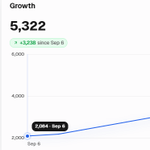
here are my @creator_wire stat:
Followers: 5,322
Smart followers: 914
Verified followers: 1,786
Median views: 546
Am I good?


6
31
518


Hejar retweeted
smart traders never settle for a single reward when the exact same volume can work double shifts on @zerufinance right now.
instead of grinding isolated campaigns, you have two live angles running at the same time:
1- the zETH activity market, where your past ethereum history locks in miner weight and gives you early bidding rights in the open auction
2- the $50k ditto trading competition, where your active volume competes for a verified $50k prize pool while stacking extra zaps toward the future airdrop
it takes two minutes to link your main wallets and knock out the platform tasks so your trades actually count across both boards.
grab my invite link below to get a 10% zaps boost for 28 days, run through the quests, and make sure your tracking your rank this week:
zaps.markets/?invite=_iHtOHW…

Hejar retweeted

The interesting part about @zerufinance Zaps is that your old onchain activity can still count.
You don't always need to chase a new trade just to qualify.
Most airdrop systems reward whoever shows up at the right time.
But rewarding activity that happened before the campaign even started is a different approach.
ActivityFi puts more weight on what people actually do, not just the attention they generate.
With zETH those Zaps also affect your Miner position and contribute to the supply burn.
I think that makes historical wallet activity more interesting than another points campaign built around daily tasks.
The real question is how much value this model can give to consistent users over time.
Start with the wallets you already trade from and check your onchain history:zaps.markets/?invite=QC5sfwi…
🤝 Paid partnership

Hejar retweeted

@zerufinance runs two boards in one campaign, and they are not the same game. The Contribution board pays impact: fifty thousand dollars in tokens across the top three hundred, settled by what you managed in one push. The Reputation board pays presence: one thousand seven hundred guaranteed Zerus spots across the top seven hundred, distributed by rank: five for the top ten, three through fifty, two through a hundred, one through seven hundred.
Read them as two theories of value sharing a dashboard. Contribution says a single moment can outweigh a month; Reputation says showing up early and staying is worth more than one spike. What both have in common is the part people miss: neither column can be filled with posting. The scores settle on activity the campaign can verify, which is why the same feed noise moves neither board.
Fourteen days remain until the campaign closes on 29 November, and the rank you hold today is the rank a snapshot would read tomorrow. Spikes decay quickly; presence compounds quietly. That asymmetry is the whole argument for working the Reputation side now instead of chasing one good week at the end.
Zaps are points intended to count toward a future airdrop, allocation follows the announced rules.
Put your name where the snapshot will find it: zaps.markets/?invite=GC0Zbdi…
🤖 Made with AI

Hejar retweeted

"fully backed" is easy to write.
It is much harder to check.
For a stablecoin or an RWA issuer, reserves are split across two worlds.
Wallets can be read onchain.
Custody accounts and bank balances can't.
So most users end up reading a report and trusting it.
@primus_labs runs a proof-of-reserve service that verifies portfolios across onchain and offchain sources in real time.
USDu is one example, with real-time proof of reserves live alongside Brevis.
What stands out to me is the shape of the claim.
The question being answered is "do reserves cover what was issued?"
Not "show me every account".
A proof can answer the first without handing over the second.
Audits still matter, and internal books stay internal.
But a claim that anyone can check on their own is a different kind of trust than a report published after the fact.
Institutions lending against or holding an asset need that answer before the exposure exists, not after.
That's why I think provable reserves will matter more than transparent ones.
Weekly XP tasks:
s.kaito.ai/FVeQ9SV
Wall Street’s confidential onchain future isn't being built on six figure datacenter supercomputers. It is running on off the shelf gaming GPUs.
Looking at what @primus_labs just shared on AutoHoG , the biggest takeaway isnt just the cryptography, it’s the hardware cost behind it.
> The Old FHE Reality:
Cryptographers had to handcraft compound gates manually like artisans. Heavy noise-refreshing required six-figure enterprise accelerators, pricing out independent operators and centralizing the network.
> The AutoHoG Shift:
Uses standard Verilog (the exact language used to design silicon chips) to synthesize logic and collapse circuits automatically. Eliminates data dependent branching, turning FHE into a clock hungry pipeline where high clock gaming GPUs actually shine. 1 bootstrapping takes ~5 ms, and a full 64 bit transfer (balance check, subtract, add, select) finishes in ~90 ms on 8 consumer RTX 5090s with pure 8.0x linear scaling.
Why does hardware cost matter to institutional finance?
Privacy and verification are prerequisites for institutional activity: funds need to use public blockchains and existing onchain financial rails without exposing sensitive positions or strategies. If confidential transactions require a $500K server rack, only a handful of mega corporations can run nodes, creating massive centralization risk. Cutting the hardware barrier to consumer GPUs at 210+ TPS makes confidential finance practical right above existing rails, long before dedicated FPGAs and ASICs arrive.
One realistic caveat though: raw GPU compute is only half the battle. FHE ciphertexts are notoriously heavy in size, so network bandwidth and crossnode propagation latency will be the real stress test once this moves from local GPU racks to a live global network.
While the tech scales, make sure you are building your onchain footprint on their dApp and verifying your trading wallets and socials to stack weekly XP here: s.kaito.ai/nINhehi
For institutional adoption, what do you think is the bigger unlock right now: sub 100ms privacy speed, or keeping node hardware cheap enough to stay decentralized?


smart traders never settle for a single reward when the exact same volume can work double shifts on @zerufinance right now.
instead of grinding isolated campaigns, you have two live angles running at the same time:
1- the zETH activity market, where your past ethereum history locks in miner weight and gives you early bidding rights in the open auction
2- the $50k ditto trading competition, where your active volume competes for a verified $50k prize pool while stacking extra zaps toward the future airdrop
it takes two minutes to link your main wallets and knock out the platform tasks so your trades actually count across both boards.
grab my invite link below to get a 10% zaps boost for 28 days, run through the quests, and make sure your tracking your rank this week:
zaps.markets/?invite=_iHtOHW…

Hejar retweeted

A big part of proving a TLS session is proving key derivation and AES-GCM and both are Boolean circuits
SNARKs are a poor fit for that, which is why zkTLS at @primus_labs leans on QuickSilver, a proof system where the prover and verifier talk back and forth.
The proving also usually happens in a browser or on a phone, and current SNARKs take a lot of proving time and memory there
QuickSilver's cost works out to about 1.9 USD per trillion AND gates, on 2 vCPUs and 1GB of memory
The catch is that back and forth. The verifier has to be online during the proof
In zkTLS that's the attestor and Primus's own guidance is to spread attestors around the world and keep them close to the client.
The one performance figure I found is from 2025 : a 200KB image from ChatGPT proven in under 2 minutes in a browser extension, using Proxy mode.
Choosing interactive proofs explains a lot about the network built around them : a client light enough for a browser and attestors placed close to the user .
Referral disclosure : s.kaito.ai/CvGKi7P

Hejar retweeted
@zerufinance's Zap mechanics thread yesterday contains one line that quietly changes what a leaderboard can measure: Zaps are based on eligible trading activity, not simply the number of transactions or total volume. The usual points engine pays for motion; this one pays for activity that qualifies, so the cheapest routes to a bigger score were designed out before anyone could farm them.
That line sits inside a five-channel list where the fifth point is worth reading twice. Link your wallets, generate qualifying onchain activity, participate in campaigns, refer other users, join or create a Clan. Notice what is missing: none of the five is posting about the project. The earn surface has no content-creation entry at all, which is the InfoFi postmortem turned into a product spec.
Even wallet access is bounded the way it should be. Zeru reads linked wallet activity to track qualification, and cannot trade or move your funds; the welcome grant looks at past activity and zScore, which means wallets with history may already be carrying Zaps they have not claimed yet.
The leaderboard this builds is the kind the campaign has been pointing at all along: a Hall of Fame scored by what people do onchain, with referrals and Clans as the network layer on top.
Zaps are points intended to count toward a future airdrop, allocation follows the announced rules.
Bring a wallet that has already been somewhere: zaps.markets/?invite=GC0Zbdi…
🤝 Paid partnership · 🤖 Made with AI

Hejar retweeted

GM legends ☕
Those who said It’s Over, I’m Buying yesterday are currently googling How To Average Down Without Crying 😁
$ETH dropped below $2,000 and we had $1.3 - 1.6 billion in liquidations in 24 hours, 89% of which were longs. Longers got rinsed. Stay safe out there.

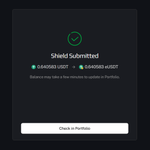
I just tested the @primus_labs dApp to see how private transfers actually work in practice, and honestly, the UX is super clean.
Instead of bridging to some isolated privacy chain, you can shield and transfer existing tokens right on current financial rails:
1. Shield: Converted standard USDT into encrypted eUSDT, moving the funds from my public wallet into a protected Confidential Balance.
2. Send: Transferred the shielded eUSDT directly to another wallet on the platform without exposing the transaction details publicly.
3. Unshield: Converted the eUSDT right back into standard USDT so the funds can be spent and used normally again.
This is the exact flow institutional finance needs. Big desks can turn stablecoins into encrypted eUSDT or eU, move liquidity between wallets privately, and unshield whenever they need standard tokens.
Make sure to test the Shield, Send, and Unshield flow on the Primus portfolio dApp first.
After that, log in through the link below, install the Primus Chrome extension, and verify your trading wallets (like Hyperliquid or Polymarket) and social accounts to boost your Primus score: s.kaito.ai/nINhehi
Have you tested private transfers on the Primus dApp yet, or have you only done the verification tasks so far?


a lot of people check their rank in the zETH miner race without realizing how @zerufinance calculates their weight behind the scenes.
the whole setup runs like a chain reaction:
→ connecting your ethereum wallets lets zScore read your past behavior and drop a starting zaps balance into your account
→ those zaps lock in your miner weight for zETH while counting toward the future airdrop
→ holding zaps also activates up to a 3x multiplier on your contribution score, plus a 10% base boost for joining
the only catch is making sure the two platforms recognize you.
you have to connect a matching wallet or your x profile to both zeru and nucleus, otherwise your multiplier wont register on the leaderboard at all.
make sure your accounts are synced up properly and see were you stand on the miner board today.
🤝 Paid partnership

40
44
1,301