







Hejar retweeted

최근 @primus_labs 의 Confidential Vault를 살펴보고 있는데, 프라이버시 중심 DeFi라는 방향이 상당히 흥미롭습니다.
블록체인의 투명성은 중요한 장점이지만, 모든 거래 내역과 자산 잔액이 공개적으로 추적될 수 있다는 점은 사용자 입장에서 부담이 될 수도 있습니다.
Primus는 FHE(Fully Homomorphic Encryption) 기술을 활용해 이러한 문제를 해결하려고 합니다.
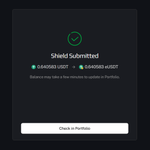
사용자는 BNB Chain에서 USDT를 Shield하여 암호화된 상태로 관리하고, 개인의 잔액이나 포지션 규모를 공개하지 않으면서 수익을 얻을 수 있습니다.
여기에 유효 Shield 잔액을 기준으로 XP를 지급하는 보상 시스템까지 갖추고 있다는 점도 눈길을 끕니다.
단순히 자산을 예치하고 수익을 얻는 것을 넘어 프라이버시와 인센티브를 결합했다는 점에서 앞으로의 발전이 기대됩니다.
관심 있는 분들은 아래 링크에서 직접 확인해 보세요.
points.primuslabs.xyz?ref=0M…
자금을 예치하기 전에는 항상 DYOR 하세요.
#Primus #BNB


트레이더가 자신의 거래 활동과 실력을 증명하기 위해 모든 포지션과 전략을 공개해야 할 필요는 없습니다.
특히 온체인 시장에서는 투명성이 중요한 가치이지만, 그렇다고 해서 개인의 모든 거래 내역과 전략이 누구에게나 공개되어야 한다는 의미는 아닙니다.
바로 이 지점에서 Proof of Trade라는 개념이 흥미롭게 다가옵니다.
Proof of Trade는 트레이더가 실제로 거래에 참여했다는 사실과 활동을 검증할 수 있도록 하면서도, 구체적인 포지션이나 전략과 같은 민감한 정보는 공개하지 않을 수 있는 가능성을 보여줍니다.
생각해 보면 이는 트레이딩 생태계에 상당히 중요한 변화입니다.
트레이더는 자신의 실력과 활동을 증명할 수 있고, 동시에 자신만의 전략적 우위와 개인적인 거래 정보를 보호할 수 있습니다.
앞으로 온체인 시장이 더 گسترده되고 전문적인 참여자들이 늘어날수록, 프라이버시와 검증 가능성을 동시에 확보하는 기술의 중요성도 더욱 커질 것이라고 생각합니다.
투명성과 프라이버시는 반드시 서로 반대되는 개념일 필요는 없습니다.
이런 관점에서 @primus_labs 가 다루고 있는 Proof of Trade 개념은 충분히 주목할 만합니다.
온체인 트레이딩의 다음 단계는 단순히 더 많은 데이터를 공개하는 것이 아니라, 필요한 정보만 안전하게 증명할 수 있는 환경을 만드는 것일지도 모릅니다.

Hejar retweeted

Imagine you're building an app that needs to check someone's @binance trading history.
You need that information to make a decision, maybe to verify a user's trading activity or give them access to a specific feature.
But how do you get that data?
You need to connect to Binance, request the right information, identify the part you actually need, and make sure the data hasn't been changed along the way.
Now imagine doing the same thing for X, another exchange, or a different website. Each source may require a different setup, and developers end up spending time solving similar problems again and again.
This is one of the problems @primus_labs is trying to address with its Developer Hub.
Instead of making developers build every data connection from scratch, Primus provides ready made data templates. Developers can use an existing template or create their own, defining where the data comes from and which part needs to be checked.
Then, through Primus SDKs, they can connect their applications to the zkTLS system and request proof that the information really came from the source.
This matters because getting data is only one part of the job. An application also needs a way to check whether that data is genuine, without asking users to simply trust what they provide.
By making these tools easier to reuse, Primus is trying to reduce the work developers need to do before they can build applications around real world data.
And I think that's an important part of bringing privacy technology into everyday applications. It shouldn't just work well. It should also be easy for developers to use.
s.kaito.ai/mAKnc1x
🤖 Made with AI


Hejar retweeted
smart traders never settle for a single reward when the exact same volume can work double shifts on @zerufinance right now.
instead of grinding isolated campaigns, you have two live angles running at the same time:
1- the zETH activity market, where your past ethereum history locks in miner weight and gives you early bidding rights in the open auction
2- the $50k ditto trading competition, where your active volume competes for a verified $50k prize pool while stacking extra zaps toward the future airdrop
it takes two minutes to link your main wallets and knock out the platform tasks so your trades actually count across both boards.
grab my invite link below to get a 10% zaps boost for 28 days, run through the quests, and make sure your tracking your rank this week:
zaps.markets/?invite=_iHtOHW…

Hejar retweeted

The interesting part about @zerufinance Zaps is that your old onchain activity can still count.
You don't always need to chase a new trade just to qualify.
Most airdrop systems reward whoever shows up at the right time.
But rewarding activity that happened before the campaign even started is a different approach.
ActivityFi puts more weight on what people actually do, not just the attention they generate.
With zETH those Zaps also affect your Miner position and contribute to the supply burn.
I think that makes historical wallet activity more interesting than another points campaign built around daily tasks.
The real question is how much value this model can give to consistent users over time.
Start with the wallets you already trade from and check your onchain history:zaps.markets/?invite=QC5sfwi…
🤝 Paid partnership

Hejar retweeted

@zerufinance runs two boards in one campaign, and they are not the same game. The Contribution board pays impact: fifty thousand dollars in tokens across the top three hundred, settled by what you managed in one push. The Reputation board pays presence: one thousand seven hundred guaranteed Zerus spots across the top seven hundred, distributed by rank: five for the top ten, three through fifty, two through a hundred, one through seven hundred.
Read them as two theories of value sharing a dashboard. Contribution says a single moment can outweigh a month; Reputation says showing up early and staying is worth more than one spike. What both have in common is the part people miss: neither column can be filled with posting. The scores settle on activity the campaign can verify, which is why the same feed noise moves neither board.
Fourteen days remain until the campaign closes on 29 November, and the rank you hold today is the rank a snapshot would read tomorrow. Spikes decay quickly; presence compounds quietly. That asymmetry is the whole argument for working the Reputation side now instead of chasing one good week at the end.
Zaps are points intended to count toward a future airdrop, allocation follows the announced rules.
Put your name where the snapshot will find it: zaps.markets/?invite=GC0Zbdi…
🤖 Made with AI

Hejar retweeted

"fully backed" is easy to write.
It is much harder to check.
For a stablecoin or an RWA issuer, reserves are split across two worlds.
Wallets can be read onchain.
Custody accounts and bank balances can't.
So most users end up reading a report and trusting it.
@primus_labs runs a proof-of-reserve service that verifies portfolios across onchain and offchain sources in real time.
USDu is one example, with real-time proof of reserves live alongside Brevis.
What stands out to me is the shape of the claim.
The question being answered is "do reserves cover what was issued?"
Not "show me every account".
A proof can answer the first without handing over the second.
Audits still matter, and internal books stay internal.
But a claim that anyone can check on their own is a different kind of trust than a report published after the fact.
Institutions lending against or holding an asset need that answer before the exposure exists, not after.
That's why I think provable reserves will matter more than transparent ones.
Weekly XP tasks:
s.kaito.ai/FVeQ9SV
Hejar retweeted

A big part of proving a TLS session is proving key derivation and AES-GCM and both are Boolean circuits
SNARKs are a poor fit for that, which is why zkTLS at @primus_labs leans on QuickSilver, a proof system where the prover and verifier talk back and forth.
The proving also usually happens in a browser or on a phone, and current SNARKs take a lot of proving time and memory there
QuickSilver's cost works out to about 1.9 USD per trillion AND gates, on 2 vCPUs and 1GB of memory
The catch is that back and forth. The verifier has to be online during the proof
In zkTLS that's the attestor and Primus's own guidance is to spread attestors around the world and keep them close to the client.
The one performance figure I found is from 2025 : a 200KB image from ChatGPT proven in under 2 minutes in a browser extension, using Proxy mode.
Choosing interactive proofs explains a lot about the network built around them : a client light enough for a browser and attestors placed close to the user .
Referral disclosure : s.kaito.ai/CvGKi7P

Hejar retweeted
@zerufinance's Zap mechanics thread yesterday contains one line that quietly changes what a leaderboard can measure: Zaps are based on eligible trading activity, not simply the number of transactions or total volume. The usual points engine pays for motion; this one pays for activity that qualifies, so the cheapest routes to a bigger score were designed out before anyone could farm them.
That line sits inside a five-channel list where the fifth point is worth reading twice. Link your wallets, generate qualifying onchain activity, participate in campaigns, refer other users, join or create a Clan. Notice what is missing: none of the five is posting about the project. The earn surface has no content-creation entry at all, which is the InfoFi postmortem turned into a product spec.
Even wallet access is bounded the way it should be. Zeru reads linked wallet activity to track qualification, and cannot trade or move your funds; the welcome grant looks at past activity and zScore, which means wallets with history may already be carrying Zaps they have not claimed yet.
The leaderboard this builds is the kind the campaign has been pointing at all along: a Hall of Fame scored by what people do onchain, with referrals and Clans as the network layer on top.
Zaps are points intended to count toward a future airdrop, allocation follows the announced rules.
Bring a wallet that has already been somewhere: zaps.markets/?invite=GC0Zbdi…
🤝 Paid partnership · 🤖 Made with AI

Hejar retweeted

GM legends ☕
Those who said It’s Over, I’m Buying yesterday are currently googling How To Average Down Without Crying 😁
$ETH dropped below $2,000 and we had $1.3 - 1.6 billion in liquidations in 24 hours, 89% of which were longs. Longers got rinsed. Stay safe out there.

Hejar retweeted
@zerufinance published the postmortem of InfoFi yesterday, and the interesting part is not the opinion, it is the paperwork: while the thread argues that attention became the goal, the platforms themselves were already tearing the reward machine apart. X restricted apps that rewarded posting through its API in January 2026, and Kaito retired Yaps and its incentivised leaderboards.
Read those two moves as a market ruling on what counted as contribution. Repetitive posts, AI replies, accounts farming points and leaderboards. The output got cheaper to manufacture than the attention it bought, so the infrastructure that paid for it was withdrawn from above. The problem was never rewarding people. It was what got rewarded.
ActivityFi is the answer built after that ruling: trading, providing liquidity and using protocols create measurable activity, tokens are spawned from onchain activity, and the people contributing to a community get a role in the market built around it. Less attention farming, more onchain activity.
Zaps are points intended to count toward a future airdrop, allocation follows the announced rules.
Register for the Activity Markets race: zaps.markets/?invite=GC0Zbdi…
YouTube ran the same experiment on creators: once monetization stopped paying for mere uploads and started paying for watch time, the copy-paste farms lost their model overnight. Platforms change what counts, and behavior follows within a season.
🤝 Paid partnership · 🤖 Made with AI

Hejar retweeted

something that's easy to blur together when you read about @atoma_fi: holding a vault share involves three separate things, and they don't work the same way
the first is the trading return. the vault holds hedged long and short positions, and what it earns or loses from price gaps between venues and funding rate differences moves the share price in USDC terms. it can go down as well as up, market neutral describes the design, not the outcome
the second is venue points. these come from the perp venues the vaults trade on, like Lighter, Extended and trade.xyz, and they belong to those venues and follow their rules. Atoma passes on what the vault actually receives, after a 20% performance fee, in proportion to your share balance over time. nothing about the amount or timing is promised, and the Genesis Points Boost doesn't touch them
the third is Atoma Points, Atoma's own points for holding vault shares, calculated from your time weighted balance and shown on the Points page in the app. this is the only one the boost multiplies, and Formation keeps running after the boost ends, with weekly Atoma Points distribution
so the boost changes the third one and nothing else. it says nothing about your trading return or your venue points, and Atoma Points recognise participation, they aren't a promise of a return. terms: docs.atoma.fi/legal/points-t…
worth keeping the practical side in mind too, TVL is still early stage, there's a 0.5% withdrawal fee, exits settle after the epoch ends so they're not instant, and shares stop earning points once you request one
app.atoma.fi/convergence/cha…
🤝 Paid partnership

Hejar retweeted

In the past it was easy to fake impressions and make things look bigger than they were
People also claimed things they couldn't really prove like being a top contributor in an ecosystem or having strong activity they couldn't back up
With @primus_labs × @KaitoAI zkTLS helps prove real activity outside the platform without exposing private data
Instead of simply relying on screenshots or self reported numbers activity can be checked against real data from external platforms
For example Kaito Pulse brings this verification approach into the Kaito ecosystem while Primus zkTLS makes some off platform proofs possible
This makes it harder for fake engagement and inflated numbers to shape someone's reputation or push them higher on leaderboards than their actual activity deserves
That means less trusting screenshots and more relying on verifiable proof
That could make leaderboards and reputation more transparent and fair for everyone
s.kaito.ai/neKLXm0


Imagine your salary being paid onchain
Your coworkers and competitors could see exactly how much you earn. That's not ideal
But what if companies could make payments transparently while keeping individual salary amounts private?
That's exactly what @primus_labs and @allscaleio tested on BNB Chain
The payments were settled onchain, while salary amounts remained encrypted
Transparent settlement, private payroll
A meaningful step toward the future of institutional finance, where payments can be verified without exposing everyone's personal financial details

Hejar retweeted
InfoFi rewarded attention. @zerufinance made the distinction explicit yesterday and put a name on the other side of it: ActivityFi is coming, and what it pays for is action.
The pattern of the last few cycles is easy to state. Incentive programs counted posts, impressions and social engagement, because those are the numbers easiest to scrape and the cheapest to fake. A timeline full of mentions looked like an ecosystem until the incentives ended and the onchain side never noticed.
Activity Markets are the correction: trading, providing liquidity and contributing to protocols generate measurable activity, tokens are spawned from that onchain activity, and verified participation helps shape the supply. The unit of reward stops being an impression and becomes an action someone can verify.
This matters beyond one campaign because it changes what builders can underwrite. Budgets follow what can be measured; when the measurable thing is attention, the industry buys attention. When the measurable thing is action, capital starts pricing participation that actually touches the protocol.
Zaps are points intended to count toward a future airdrop, allocation follows the announced rules.
Register where activity is the currency: zaps.markets/?invite=GC0Zbdi…
🤝 Paid partnership · 🤖 Made with AI

Hejar retweeted

🏴☠️ @PlunderPort is bringing a pirate tycoon game to Zero!
Start with a ruined island and turn it into your own pirate harbour, build ships, place buildings and watch your island grow even while you're offline.
Pretty cool concept
Hejar retweeted
Imagine your salary being paid onchain
Your coworkers and competitors could see exactly how much you earn. That's not ideal
But what if companies could make payments transparently while keeping individual salary amounts private?
That's exactly what @primus_labs and @allscaleio tested on BNB Chain
The payments were settled onchain, while salary amounts remained encrypted
Transparent settlement, private payroll
A meaningful step toward the future of institutional finance, where payments can be verified without exposing everyone's personal financial details
Most apps ask for far more information than they actually need ,Think about it
.A marketplace wants to know if you're a trusted seller
.A community wants to confirm you've been an active member for months
.A financial app needs to check that your KYC is complete
Why should any of them need access to your entire account to verify one detail?
This is where @primus_labs and zkTLS become interesting:
Instead of sharing your login or exposing your full activity, you can create a verifiable proof from supported Web2 data
You could prove that an account belongs to you, show your reputation on a platform, or confirm a certain history of activity without handing over everything behind it
The app gets the evidence it needs. Your private information stays yours
And there's more to the Primus approach:
.zkTLS brings real world web data onchain in a verifiable way
.AlphaNet helps verify those proofs
.FHE makes it possible to work with encrypted data, while Confidential Finance brings privacy to financial assets
Different technologies, but a shared idea:
You shouldn't have to reveal everything just to prove one thing
That's a much better direction for the internet.
s.kaito.ai/neKLXm0

Hejar retweeted

Good morning WEB3 Fellas 🌻
🇬🇧 Good morning
🇪🇸 Buenos días
🇫🇷 Bonjour
🇩🇪 Guten Morgen
🇮🇹 Buongiorno
🇵🇹 Bom dia
🇹🇷 Günaydın
🇷🇺 Доброе утро
🇨🇳 早上好
🇯🇵 おはようございます
🇰🇷 좋은 아침이에요
🇸🇦 صباح الخير
🇮🇷 صبح بخیر
🇮🇳 सुप्रभात
🇧🇷 Bom dia
diff cultures, diff locations but we are all the same in person :)
where are you from my WEB3 friends?
#GM #GoodMorning #Web3
Hejar retweeted
Most launches sell you a token and hand you a role of spectator. @zerufinance published the Activity Markets sequence today and it reverses the order: the community is the starting material, not the exit liquidity. Community first, then proof of activity earning Miner rights, then community activity feeding the burns, and only after that an open auction where the market discovers the price.
Read the sequence as an argument about who creates the market. In the usual meme launch the token exists first, insiders get their access early, and the crowd arrives at a shape it had no part in making. Here the shape is downstream of participation: verified onchain activity decides who holds Miner rights, that same activity moves the supply, and the auction at the end prices what the community's participation already built.
The race rewards the same record it selects on. Your activity earns Zaps, Zaps set your race weight and how much zETH gets burned, and Miners get the first twelve hours of the auction to bid, which turns yesterday's advantage into a concrete window instead of a slogan.
Vitalik's question about what gives an asset value beyond supply mechanics has a practical answer in this design: an economy behind the token, where the community it represents has a hand in making it.
Zaps are points intended to count toward a future airdrop, allocation follows the announced rules.
Put your activity where the market starts: zaps.markets/?invite=GC0Zbdi…
The projects that survive this cycle will be the ones whose launch structure can be explained in one breath. This one can.
🤝 Paid partnership · 🤖 Made with AI

Hejar retweeted
@zerufinance teased it last night without naming a date: a launch worth watching, and not the one the timeline is waiting for. Activity Markets are almost here, and the argument for why it matters arrived the day before with numbers attached.
The critique of launchpads has one repeated shape: the community comes last. Bundled buys, insider allocations, coordinated wallets, private selling into public attention, and @bubblemaps alleging 1.7 million dollars in profits from side wallets selling while the crowd reads the chart. Whether any single case is ever proven in full, the structure that makes those allegations routine is the real subject, because it is designed in: whoever moves first in the usual model is the one who gets to move at all.
Activity Markets invert the order instead of policing it. Tokens spawn from onchain activity, existing communities arrive before the token does, and their verified participation is what shapes the market from the first hour.
That is why the teaser lands differently from ordinary launch hype. Almost here means the sequence you have been reading about is about to run on a real clock, with registration already the only step that costs nothing.
Zaps are points intended to count toward a future airdrop, allocation follows the announced rules.
Register now while the launch is still a promise: zaps.markets/?invite=GC0Zbdi…
The next launch worth watching will be judged on one thing: who was already inside before the price existed.
🤝 Paid partnership · 🤖 Made with AI

Hejar retweeted
Typical meme launches in crypto do everything backwards, they drop a token with predefined tokenomics and hope a real community shows up later to buy the bags .
@zerufinance is flipping that entire model on its head with Activity Markets, starting directly with an existing onchain community instead of insiders.
with zETH being the first market built around Ethereum activity, verified participation is what actually earns you Miner rights and shapes the supply before trading even starts.
Instead of guessing how a launch will play out, your past transactions give you a direct role in creating the market, so go connect your active wallets on Zaps and see where you stand.
🤝 Paid partnership
