

Architecture & Stories
Joined April 2023
- Tweets14.5K
- Following395
- Followers27.2K
- Likes25.7K




Pinned Tweet
To highlight the scale once again - if you look closely (top right image), you will notice two men standing. They barely surpass the height of that tiny detail in that small corner of the roof.
King Hassan II didn’t just commission a monumental mosque - he intentionally used the project to revive, preserve, and modernize Morocco’s traditional crafts which were endangered in the 80’s.
This project revived traditional apprenticeship chains and centuries old technical methods/knowledge. All while advancing and adapting it to modern engineering and unprecedented scales.
Some also suggest he tackled rampant unemployment, while reviving domestic supply chains and industries.


Completed in 1993 as king Hassan II’s monumental gift to Casablanca. A city he thought was lacking in spiritual essence.
He said, “I wish Casablanca to be endowed with a large, fine building of which it can be proud until the end of time ... I want to build this mosque on the water, because God's throne is on the water. Therefore, the faithful who go there to pray, to praise the creator on firm soil, can contemplate God's sky and ocean.”
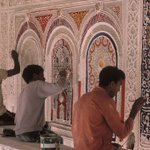
It took 6,000 traditional craftsmen 5 years to complete the Zellige tiling all over the mosque. And the effort of 35,000 men totalling 50 million hours of labour to complete the mosque.
The ceiling of the great hall sits at a height of 60 meters with 40 meter high arches below. To help visualize, you can basically fit a 20 story building beneath the carved ceiling. That also means it’s tricky to notice people standing inside. If you look to the bottom left of this image, you’ll notice a man in white standing there.

Tinmel.

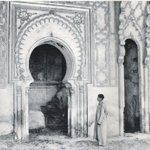
12th century Mosque at Tinmel under reconstruction following its destruction by an earthquake in 2023.
This mosque was erected in 1148 to commemorate the founder of the Almohad movement, Ibn Tumart.
Tinmel was the refuge from which Ibn Tumart preached to his followers, and congregation point from which they would lead their attacks on the Almoravids whom they would later succeed.


The Arab-Barb.
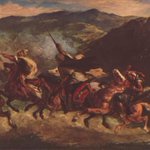
An exceptional breed that merges the agility, speed, and maneuverability of the Arabian horse with the strength, endurance, and grounded footing of the Barbary horse.
Elegance meets resounding strength.

This is in fact one of the finest examples of savagery subdued and tamed.
There’s a reason great men from Alexander to Napoleon were depicted riding a horse.
While the horse represents instinct, nature, and the untamed, the rider represents reason, willpower, and the commanding force that subdues savagery to direct it an ordered synchronous way.


Opener:
“The official visit of his Majesty Mohammed V to the south of the country, constitutes one of the most recent aspects of Moroccan sovereignty over Mauritania”


This is in fact one of the finest examples of savagery subdued and tamed.
There’s a reason great men from Alexander to Napoleon were depicted riding a horse.
While the horse represents instinct, nature, and the untamed, the rider represents reason, willpower, and the commanding force that subdues savagery to direct it an ordered synchronous way.


Details from the Koutoubia Mosque’s minbar.
It was commissioned in the early 12th century by the Almoravids. When the Almohads conquered Marrakech, it served as the pulpit in the city’s main mosque.
It stood there all those centuries until 1962.


