
Growth @transformerlab | YC W22 | INSEAD | UWaterloo
Joined May 2008
- Tweets39
- Following8
- Followers22
- Likes152

Remarkable early results from our partnership with Prof Ng's power semiconductor devices research group.

Primus, our autonomous AI research scientist, is now running power semiconductor device research end-to-end in Professor Wai Tung Ng's Smart Power Integration and Semiconductor Devices Research Group at the University of Toronto.
As a result, the first ever power semiconductor device designed end-to-end by an autonomous AI research system has been sent to fabrication.
Primus runs end-to-end research inside the group’s device design workflow:
• reviewing literature
• planning and launching hundreds of linked simulations
• analyzing the results and proposing the next round
• delivering designs and writing up findings
Why power devices? Power semiconductors convert the electricity behind EV chargers, MRI machines, and every chip in a data center. Demand is outrunning supply: the IEA expects data center electricity use to roughly double by 2030.
Below are two early results and observations of Primus' impact on the group’s research progress.

ALT Professor Wai Tung Ng at the Toronto Nanofabrication Centre
1
14
Welcome @EthanT1452!
We’re thrilled to welcome Ethan Thompson (@EthanT1452) to Transformer Lab as Lead Research Scientist in Quantum Science.
Ethan joins us from a rich background, including the Perimeter Institute, where he worked on nonlocal QFT with John W. Moffat, professor emeritus of physics at the University of Toronto.
Ethan will lead our work with physicists and quantum research groups applying Primus to some of the hardest problems in science.
Read the full announcement: lab.cloud/news/ethan-thompso…

1
17


Frank Poon retweeted

Transformer Lab has built an entire world of AI scientists to automate research.
thelogic.co/news/transformer…

Big day for us today. We announced Primus Society, our agent society of thousands of autonomous AI researchers.
We believe how we’ve designed this agent society is the path to scaling up AI research progress safely and productively.

We now run the largest frontier lab composed entirely of autonomous AI researchers.
Introducing Primus Society: a society of agents composed of thousands of researchers working under structured institutions designed to solve the world’s toughest problems. We believe this is how AI research should run at scale, safely and productively: an entire society of agents with institutions and purpose.
One discovery we can already share is that the society has discovered a novel result which improves model training by 30%.
Primus Society was inspired by the structures that have organized science for centuries and stress-tested against what’s known about how populations of AI agents fail.
Everything is observable. You can open the virtual city in a browser and read what any researcher is working on.
Learn more about Primus Society here:
lab.cloud/society
The biggest opening in the AI race is running the largest well-governed organization of AI researchers in the world. We’re building the institutions that let a million AI scientists safely tackle the world's toughest problems in AI and beyond. And we’re doing it right here in Canada.
2
119
Frank Poon retweeted

Science has always had one major bottleneck: the human mind.
We built an autonomous, PhD-level researcher called Primus. In just months, it cleared our lifetime backlog of research ideas. We actually ran out of questions.
When expertise becomes infinite, energy is the only limit. What do we solve first?
New essay: lab.cloud/news/we-have-so-ma…

Frank Poon retweeted
Big update: Primus for Math is live today. It’s an autonomous AI research scientist specifically for mathematics and engineering.
We built it in partnership with Maplesoft to make frontier AI mathematics research systems accessible to everyone, not just a few frontier closed companies.
Primus for Math is a true partner for math researchers and engineers. Give it a problem and it reads the field, works through the analysis in Maple's math engine, simulates the system, proves what it can and shows its work at every step for you to understand and build on.
It also changes who gets to do this kind of work. Now a physicist with a math question, an engineer working outside their field, a two-person lab can do the work themselves as Primus brings the field's literature, methods and rigor to the project.
Maplesoft has been an ideal partner to collaborate with. During the beta, they’re generously offering Maple access for every Primus for Math user at no additional cost. And we're offering free credits to Primus if you sign up now.
Frank Poon retweeted
I’m thrilled to announce Primus for Quantum Mechanics, a specialized release in our Primus for X suite of AI researchers designed to assist with domain-specific theoretical work.
Primus for Quantum Mechanics is a mode you select inside Primus and it's now available to everyone today. It supports Physlib's QuantumInfo library for Lean 4, alongside toqito, cvxpy semidefinite programming, sympy and QuTiP.
We put Primus for Quantum Mechanics to work and it’s already independently derived a complete mathematical solution to an unresolved problem in quantum state discrimination.
Read our announcement and the research paper linked in the comments below.
Globally, only a few hundred researchers actively work at this specific intersection of convex optimization and quantum information theory. Our goal is to not only help accelerate their progress but make this research more accessible so the frontier belongs to everyone and not just a few closed corporations.
We interested in partnering closely with quantum research teams on problems that could benefit from acceleration -- please DM me.

Frank Poon retweeted

Primus, our autonomous ML research scientist, is out of beta and we’ve removed the waitlist!
During this launch period, GPU usage costs are on us!
🧾 Sign up for free
⚡ Add credits to start running experiments. Credits cover model tokens. GPU usage is free for now!
🖥️ Ask Primus the questions you've been most wanting to answer.
Sign up and start exploring here: lab.cloud

Frank Poon retweeted
A paper from our lab has been accepted to the MINT Workshop at EMNLP 2026 🎉
We uncover a fundamental issue with FGD, a widely used metric for ranking co-speech gesture models: its model rankings and agreement with human ratings both shift with undocumented configuration choices. This makes FGD scores difficult to compare across papers.
The work was led by @deepgandhi_07, @tonyfromkw and @aliasaria with support from Primus.
More details coming soon! 🚀
#EMNLP2026 @emnlpmeeting
Frank Poon retweeted

@transformerlab's Primus agent has been at for 15 hours and counting. Reviewed over 200 Source reports, 1/3 way through the Experimentation stage.
Evals+analysis and the report to go.
This is so dope.. just started me down a new rabbit hole
@UnslothAI bout to be my new bff


Our co-founder Ali on why he started Transformer Lab, what happens when AI starts running the scientific loop by itself and next steps for Primus:
Automating Research
I started Transformer Lab because I wanted to dedicate my career to the work that could have the largest possible impact on the world. I would like to take some time to walk through why I believe accelerating the pace of research is humanity’s most important next frontier.
We have all just lived through a revolution. In a few short years, large language models went from a research curiosity to something that changed how we write, code, learn, and work. It felt like everything changed at once.
But I believe what comes next is bigger. Not because the models will get a little smarter, but because of who will be doing the inventing.
The revolution we just witnessed was created by people. A handful of foundational insights—the transformer, scaling laws—discovered by a small number of researchers, then built out by elite teams of human engineers.
In the beginning humans invented LLMs. Today, humans are using LLMs to build better AI. In it's final stage, AI builds AI.
The last phase is the part that changes everything. When AI can do the research itself, we are no longer limited to one OpenAI. We can create the insights behind OpenAI, and the labs that turned them into products, at the turn of a dial. The revolution we just lived through stops being a once-in-a-generation event and becomes something we can run again and again, on demand, in every field. This is what researchers call Recursive Self-Improvement (RSI), and it is the most powerful compounding technology we have ever conceived.
The Engine of the Trillion-Dollar Era
It is worth pausing on just how much human effort sits behind the current AI titans. The trillions of dollars in value generated by the leading labs were not produced by the foundational insights alone. They were produced by armies of machine learning engineers who spend their days tweaking architectures, managing datasets, diagnosing training runs, and slowly wringing out efficiencies. Those engineers are the engine.
The core claim of Recursive Self-Improvement is that we are astonishingly close to replacing that entire human effort with AI itself. An “AI Scientist” is not a glorified coding assistant; it is a system that can automate the hypothesis generation, the architecture design, the experimental coding, and the optimization. For the first time in history, the thing being automated is not the labor around discovery, but the act of discovery itself.
It is, essentially, an OpenAI in a box.
When an AI can autonomously build a model, evaluate it, make it more powerful, and rebuild itself without human intervention, the timeline of innovation fundamentally breaks. The development cycles that currently take a skyscraper full of human PhDs four years to accomplish could soon happen in a matter of months. Once AI takes over its own research and development, the progression of technology is essentially unlimited.
The Biological Speed Limit of Discovery
And this is not just about building better AI. The same loop that builds models is the loop behind every discovery humans have ever made, and it has always had the same bottleneck: us.
Every physical innovation we rely on today follows a strict loop: read the literature, propose a hypothesis, run the experiments, analyze the results, and publish. For all of human history, from Thomas Edison burning through thousands of filament materials one at a time in Menlo Park to Noam Shazeer and a handful of coauthors at Google seeing the shape of the transformer where no one else had—and then writing the code and running thousands of experiments to find out if they were right—this loop has been bound by biological speed limits.
Humans need to sleep. We read slowly. And before a single hypothesis can even be proposed, we have to train the person capable of proposing it—years of schooling, then a doctorate, then more years at the bench, all to produce one expert in one narrow field. Only then do we take months to synthesize literature, write code, and wait for results. A single turn of the scientific loop traditionally takes months, if not years.
An AI scientist removes the biological friction from the scientific method. It can read millions of papers in seconds, write the code, run the experiments on compute clusters, draw conclusions, and iterate. It breaks the speed limit of human discovery.
The First Sparks
None of this is a distant science fiction scenario for the 2030s. The first sparks are already here.
At Transformer Lab, we recently released Primus. I do not mention Primus because I believe it is the endgame—it is very much a first preview of what is possible. But it serves as proof that this autonomous loop actually works.
We ran Primus for 30 days. In that time, running 30 times faster than a human researcher, it hypothesized, experimented, and wrote over 30 complete, novel papers across domains like seismology, biology, and LLM architecture. It answered questions that had never been answered before, and its findings are already being cited by major labs.
Primus is merely the first turn of the loop. It proves that the friction can be successfully removed. To understand where this leads next, we are now working with leaders in diverse fields across quantum mechanics, silicon design, mathematics, and biology. Our goal is to demonstrate to the world exactly what becomes possible across these distinct disciplines when a system like this is fully scaled up.
The next step is the obvious one: ask a system which is self-improving to improve its own self-improvement loop. That work is already underway, and in the coming months we will share the results.
Unlocking Human Potential
A v0.1 system already runs the loop 30 times faster than a human. Now imagine it has optimized itself to run 100 or 1,000 times faster. The implications will not stay inside computer science. They will bleed into every physical science—from curing disease to materials physics.
This brings me back to why I started Transformer Lab, and why I believe this work is so vital.
I believe that accelerating the pace of scientific discovery holds the greatest possible promise for advancing humanity. When we give more people the tools to solve intractable problems—whether that is mapping the mechanics of a new disease, discovering cleaner energy materials, or unlocking new mathematics—we elevate our collective potential.
Of course, a technology this powerful brings profound challenges. The societal, economic, and safety implications of autonomous research will require immense care, humility, and collaboration to navigate. We do not take these risks lightly, and we are striving to be thoughtful and respectful in addressing them.
@ilyasut famously noted that we are moving from the “age of scaling to the age of research.” But I’d like to suggest something even bigger happening—we are moving into a world of infinitely scalable research. We are entering an era where the power of an elite, full-scale machine learning research team can be placed into the hands of anyone with a hypothesis. We are automating discovery itself. And if we guide this transition with the care it deserves, this infinitely scalable research has the potential to be the most profound un-bottlenecking of human progress we will ever see.
81
Frank Poon retweeted
A big thanks to the community for signing up to Primus’ waitlist. We’re overwhelmed by the response and doing everything we can to get more GPUs so you can try it out ASAP!
If your company or academic institution has urgent needs, let us know in the "What would you use Primus for?" section during signup. You can also DM or email us at [email protected]. We'll do our best to accommodate you.
Today, we’re announcing Primus, the most capable autonomous ML research scientist ever released. And it’s now available to the public.
Every innovation we rely on today comes from research. Experts read the literature, propose a theory, run the experiments and publish their findings. This research loop, until now, has run at human speed where one turn could take months.
Primus runs the same loop 30× faster. It autonomously hypothesizes, reads millions of papers, codes, runs experiments on real compute, learns and iterates, draws conclusions, delivers artifacts and writes the final paper. The more experiments Primus runs, the better it gets. 🧵(1/4)
Frank Poon retweeted

PhD-level research without any PhDs?
@transformerlab says it's possible. The company claims Primus can turn a single prompt-based research question from a hypothesis to a completed research paper in “hours to days” without additional human direction.
betakit.com/transformer-lab-…

Frank Poon retweeted
Transformer Lab has built an AI tool to automate scientific research, competing with some of the world’s most hyped startups to create AI scientists and develop self-improving technology.
thelogic.co/news/transformer…

Frank Poon retweeted
I am deeply proud to finally share what we’ve been building. We're calling it Primus. With a single prompt, it does the full job of a Machine Learning researcher from prompt to paper.
Our goal is massive: we believe this can change the trajectory of how all scientific research is done in the future. That is a heavy statement, but we aren't making it lightly. Over the last few months, this system has entirely rewired how our own team works and thinks.
It is a profound shift to experience firsthand. We cannot wait for you to try it yourself --> visit our webpage to use it now.
Today, we’re announcing Primus, the most capable autonomous ML research scientist ever released. And it’s now available to the public.
Every innovation we rely on today comes from research. Experts read the literature, propose a theory, run the experiments and publish their findings. This research loop, until now, has run at human speed where one turn could take months.
Primus runs the same loop 30× faster. It autonomously hypothesizes, reads millions of papers, codes, runs experiments on real compute, learns and iterates, draws conclusions, delivers artifacts and writes the final paper. The more experiments Primus runs, the better it gets. 🧵(1/4)
Today's a big day for our team: We unveiled Primus, our autonomous ML research scientist.
It runs the entire research loop on its own: hypothesizes, reads millions of papers, codes, runs experiments on real compute, learns and iterates, draws conclusions, delivers artifacts and writes the final paper.
It's been wild seeing what Primus was capable working with it internally over the past few months. And we're already making progress on the next phase.
We're truly entering an era where scientific research is moving at the pace of AI.
Primus is now available for the public to try. Learn more: lab.cloud/
Today, we’re announcing Primus, the most capable autonomous ML research scientist ever released. And it’s now available to the public.
Every innovation we rely on today comes from research. Experts read the literature, propose a theory, run the experiments and publish their findings. This research loop, until now, has run at human speed where one turn could take months.
Primus runs the same loop 30× faster. It autonomously hypothesizes, reads millions of papers, codes, runs experiments on real compute, learns and iterates, draws conclusions, delivers artifacts and writes the final paper. The more experiments Primus runs, the better it gets. 🧵(1/4)
3
115
Frank Poon retweeted
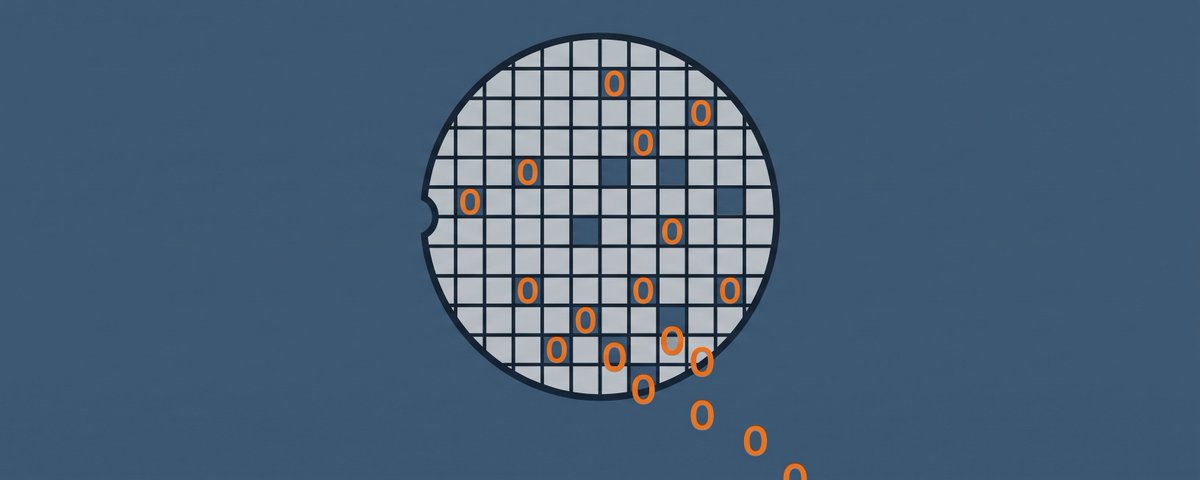
New research from our lab: wafer-scale chips, pioneered by @cerebras, are the main challenger to the GPU for running AI models. Their main pitch is that keeping the model on the chip itself, instead of in separate memory, removes the bottleneck that leaves GPUs sitting idle. We measured whether that pitch holds.
If it does, two things should follow on a wafer: skipping the zeros in a sparse model gets cheap, and it stops mattering how those zeros are arranged. Both would cut the cost of running a model.
We measured it one cycle at a time on a Cerebras simulator, every kernel checked against plain NumPy. The single-core answer and the whole-wafer answer are not the same story.
We worked out which kernel turns sparsity into real cycle savings and which one wastes it, whether the rigid, GPU-friendly 2:4 pattern buys any speed here, and whether the single-chip advantage survives once you tile a real model across a thousand cores.
Read the write up in our latest article.
Frank Poon retweeted

Very glad to see our early research @transformerlab cited in the DiffusionGemma report by @GoogleDeepMind!
We were blown away while testing the model and looking inside when it first came out 🤯

We just released the DiffusionGemma tech report. Text diffusion models open up a radically different part of the latency–quality Pareto frontier 👇
We hope the report makes it easier for researchers and engineers to understand the model, build on it, and create things we haven’t thought of yet.
None of this work happened in isolation. DiffusionGemma builds on years of amazing research from the text diffusion community, and we wanted the report to recognise that. We’re standing on the shoulders of giants❤️
Let’s keep pushing towards lower-latency, higher-quality LLMs together!
