Growth @transformerlab | YC W22 | INSEAD | UWaterloo
Joined May 2008
- Tweets39
- Following8
- Followers22
- Likes152


Frank Poon retweeted

Transformer Lab has built an entire world of AI scientists to automate research.
thelogic.co/news/transformer…

Frank Poon retweeted

Science has always had one major bottleneck: the human mind.
We built an autonomous, PhD-level researcher called Primus. In just months, it cleared our lifetime backlog of research ideas. We actually ran out of questions.
When expertise becomes infinite, energy is the only limit. What do we solve first?
New essay: lab.cloud/news/we-have-so-ma…

Frank Poon retweeted
Big update: Primus for Math is live today. It’s an autonomous AI research scientist specifically for mathematics and engineering.
We built it in partnership with Maplesoft to make frontier AI mathematics research systems accessible to everyone, not just a few frontier closed companies.
Primus for Math is a true partner for math researchers and engineers. Give it a problem and it reads the field, works through the analysis in Maple's math engine, simulates the system, proves what it can and shows its work at every step for you to understand and build on.
It also changes who gets to do this kind of work. Now a physicist with a math question, an engineer working outside their field, a two-person lab can do the work themselves as Primus brings the field's literature, methods and rigor to the project.
Maplesoft has been an ideal partner to collaborate with. During the beta, they’re generously offering Maple access for every Primus for Math user at no additional cost. And we're offering free credits to Primus if you sign up now.
Frank Poon retweeted
I’m thrilled to announce Primus for Quantum Mechanics, a specialized release in our Primus for X suite of AI researchers designed to assist with domain-specific theoretical work.
Primus for Quantum Mechanics is a mode you select inside Primus and it's now available to everyone today. It supports Physlib's QuantumInfo library for Lean 4, alongside toqito, cvxpy semidefinite programming, sympy and QuTiP.
We put Primus for Quantum Mechanics to work and it’s already independently derived a complete mathematical solution to an unresolved problem in quantum state discrimination.
Read our announcement and the research paper linked in the comments below.
Globally, only a few hundred researchers actively work at this specific intersection of convex optimization and quantum information theory. Our goal is to not only help accelerate their progress but make this research more accessible so the frontier belongs to everyone and not just a few closed corporations.
We interested in partnering closely with quantum research teams on problems that could benefit from acceleration -- please DM me.

Frank Poon retweeted

Primus, our autonomous ML research scientist, is out of beta and we’ve removed the waitlist!
During this launch period, GPU usage costs are on us!
🧾 Sign up for free
⚡ Add credits to start running experiments. Credits cover model tokens. GPU usage is free for now!
🖥️ Ask Primus the questions you've been most wanting to answer.
Sign up and start exploring here: lab.cloud

Frank Poon retweeted
A paper from our lab has been accepted to the MINT Workshop at EMNLP 2026 🎉
We uncover a fundamental issue with FGD, a widely used metric for ranking co-speech gesture models: its model rankings and agreement with human ratings both shift with undocumented configuration choices. This makes FGD scores difficult to compare across papers.
The work was led by @deepgandhi_07, @tonyfromkw and @aliasaria with support from Primus.
More details coming soon! 🚀
#EMNLP2026 @emnlpmeeting
Frank Poon retweeted

@transformerlab's Primus agent has been at for 15 hours and counting. Reviewed over 200 Source reports, 1/3 way through the Experimentation stage.
Evals+analysis and the report to go.
This is so dope.. just started me down a new rabbit hole
@UnslothAI bout to be my new bff


Frank Poon retweeted
A big thanks to the community for signing up to Primus’ waitlist. We’re overwhelmed by the response and doing everything we can to get more GPUs so you can try it out ASAP!
If your company or academic institution has urgent needs, let us know in the "What would you use Primus for?" section during signup. You can also DM or email us at [email protected]. We'll do our best to accommodate you.

Today, we’re announcing Primus, the most capable autonomous ML research scientist ever released. And it’s now available to the public.
Every innovation we rely on today comes from research. Experts read the literature, propose a theory, run the experiments and publish their findings. This research loop, until now, has run at human speed where one turn could take months.
Primus runs the same loop 30× faster. It autonomously hypothesizes, reads millions of papers, codes, runs experiments on real compute, learns and iterates, draws conclusions, delivers artifacts and writes the final paper. The more experiments Primus runs, the better it gets. 🧵(1/4)
Frank Poon retweeted
Today, we’re announcing Primus, the most capable autonomous ML research scientist ever released. And it’s now available to the public.
Every innovation we rely on today comes from research. Experts read the literature, propose a theory, run the experiments and publish their findings. This research loop, until now, has run at human speed where one turn could take months.
Primus runs the same loop 30× faster. It autonomously hypothesizes, reads millions of papers, codes, runs experiments on real compute, learns and iterates, draws conclusions, delivers artifacts and writes the final paper. The more experiments Primus runs, the better it gets. 🧵(1/4)
Frank Poon retweeted

PhD-level research without any PhDs?
@transformerlab says it's possible. The company claims Primus can turn a single prompt-based research question from a hypothesis to a completed research paper in “hours to days” without additional human direction.
betakit.com/transformer-lab-…

Frank Poon retweeted
Transformer Lab has built an AI tool to automate scientific research, competing with some of the world’s most hyped startups to create AI scientists and develop self-improving technology.
thelogic.co/news/transformer…

Frank Poon retweeted
I am deeply proud to finally share what we’ve been building. We're calling it Primus. With a single prompt, it does the full job of a Machine Learning researcher from prompt to paper.
Our goal is massive: we believe this can change the trajectory of how all scientific research is done in the future. That is a heavy statement, but we aren't making it lightly. Over the last few months, this system has entirely rewired how our own team works and thinks.
It is a profound shift to experience firsthand. We cannot wait for you to try it yourself --> visit our webpage to use it now.
Today, we’re announcing Primus, the most capable autonomous ML research scientist ever released. And it’s now available to the public.
Every innovation we rely on today comes from research. Experts read the literature, propose a theory, run the experiments and publish their findings. This research loop, until now, has run at human speed where one turn could take months.
Primus runs the same loop 30× faster. It autonomously hypothesizes, reads millions of papers, codes, runs experiments on real compute, learns and iterates, draws conclusions, delivers artifacts and writes the final paper. The more experiments Primus runs, the better it gets. 🧵(1/4)
Frank Poon retweeted
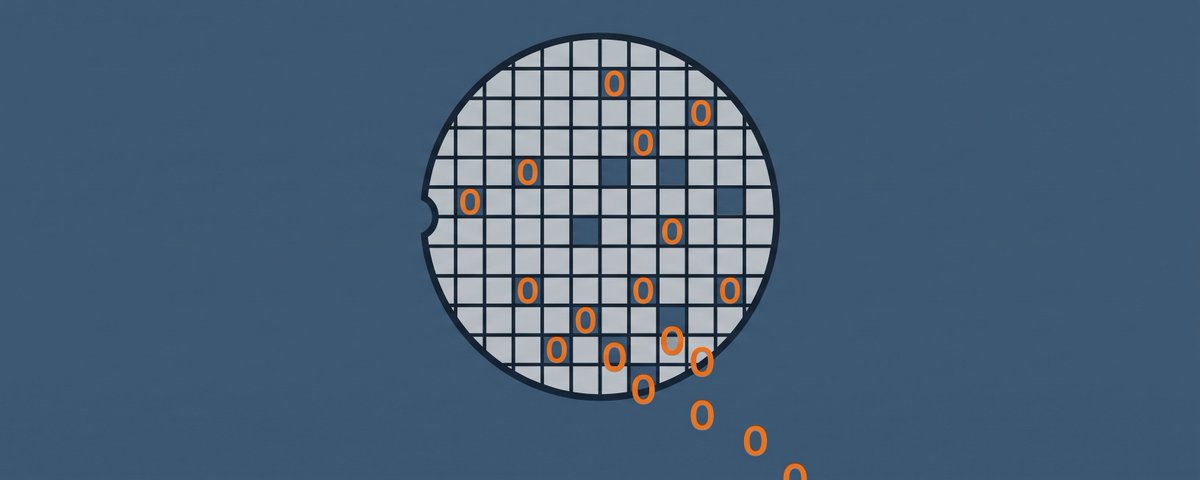
New research from our lab: wafer-scale chips, pioneered by @cerebras, are the main challenger to the GPU for running AI models. Their main pitch is that keeping the model on the chip itself, instead of in separate memory, removes the bottleneck that leaves GPUs sitting idle. We measured whether that pitch holds.
If it does, two things should follow on a wafer: skipping the zeros in a sparse model gets cheap, and it stops mattering how those zeros are arranged. Both would cut the cost of running a model.
We measured it one cycle at a time on a Cerebras simulator, every kernel checked against plain NumPy. The single-core answer and the whole-wafer answer are not the same story.
We worked out which kernel turns sparsity into real cycle savings and which one wastes it, whether the rigid, GPU-friendly 2:4 pattern buys any speed here, and whether the single-chip advantage survives once you tile a real model across a thousand cores.
Read the write up in our latest article.
Frank Poon retweeted

Very glad to see our early research @transformerlab cited in the DiffusionGemma report by @GoogleDeepMind!
We were blown away while testing the model and looking inside when it first came out 🤯

We just released the DiffusionGemma tech report. Text diffusion models open up a radically different part of the latency–quality Pareto frontier 👇
We hope the report makes it easier for researchers and engineers to understand the model, build on it, and create things we haven’t thought of yet.
None of this work happened in isolation. DiffusionGemma builds on years of amazing research from the text diffusion community, and we wanted the report to recognise that. We’re standing on the shoulders of giants❤️
Let’s keep pushing towards lower-latency, higher-quality LLMs together!

Frank Poon retweeted
New research: We made LLMs play co-op games to show how to detect lying by comparing three readouts at once: what each one did, what it said about its own strategy, and what its neurons showed.
We studied LLMs playing two games: Stag Hunt, a coordination game an agent learns to cooperate in, and Among Us, the social-deduction game where a hidden impostor lies to survive.
Words, actions and neurons start to deviate in two different situations, when an agent is honestly learning something new, and when it's lying.
We worked through which read-out to trust while an agent is still learning, where a lie actually shows up, and why a probe that scores perfectly can still tell you nothing.
Read the article for more info.

Frank Poon retweeted
New research: the strongest open-weight LLMs increasingly come from Chinese labs, and they carry political censorship from training. Ask about Tiananmen, Xinjiang, or Taiwan and the model deflects, hedges, or restates the official line.
Can you remove it? The obvious tool is machine unlearning, the standard way to make a model forget something.
We took Qwen2.5-7B and tried it. No matter how long we trained, it backfired: instead of removing the censorship, the methods made it worse or broke the model.
We explored why the method built to make a model forget is the wrong one here, what actually removes the censorship without breaking the model, and why you can't even tell how censored one of these models is until you fix the way censorship is measured.
Download the full research paper: lab.cloud/research/uncensori…

Frank Poon retweeted
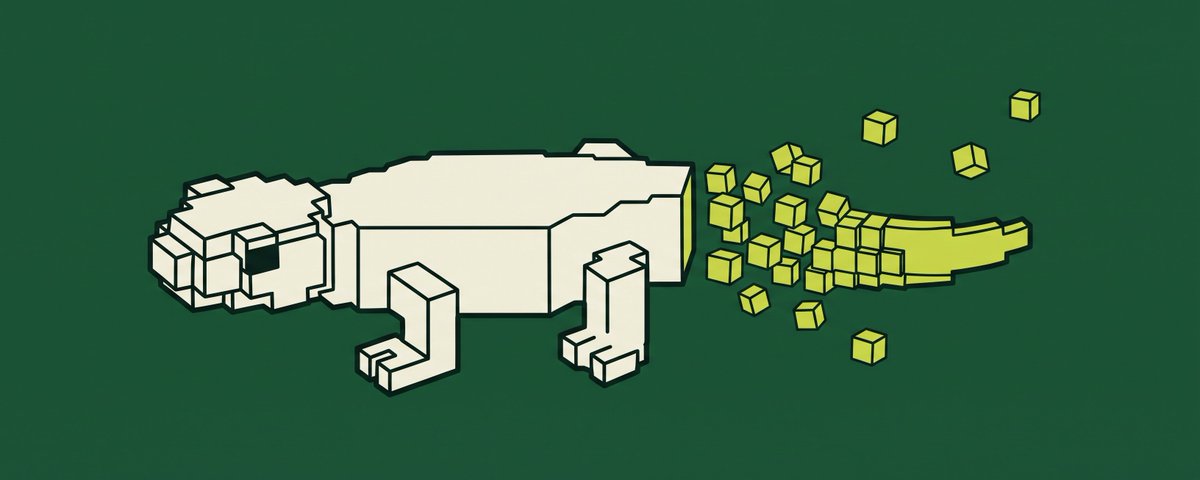
New research from our lab: how much of a 3D shape can you cut away before a model can't grow it back?
A salamander regrows a lost limb with no brain steering it, just local cells following the same rule. We trained tiny 3D neural cellular automata to do the same with voxel shapes: grow one from a single cell, then regrow it after cutting a chunk away. If self-repair like that holds, you get robustness with no central controller. The open question is how much damage it survives, and where it fails.
The shape our model grew most accurately was the hardest one for it to grow back.
We explored whether a model that only learned to hold a shape can still repair it, how much you can cut before recovery falls apart, and which shapes never fully come back. The technical write-up and the paper are open.
Coincidentally, @SakanaAILabs published a similar study a few days ago (teapawt.net/SakanaAILabs/status/20…). We worked on this before we knew of their work and are sharing our findings for comparison.
Download our full paper here: lab.cloud/research/how-much-…
Frank Poon retweeted
New finding from our research lab: Your favourite LLM is secretly a Canadian in disguise.
In Canada, there’s a common assumption that because major AI models are built by US tech giants and trained on American-dominated data, they default to American cultural and political values. A controlled audit we ran at Transformer Lab reveals the opposite: asked subjective value questions, top language models are actually more biased toward giving Canadian-like answers🧵👇

Frank Poon retweeted
New research from our lab: is your zero-shot foundation model actually reasoning or just retrieving the closest example that it has been trained on?
Chronos and TimesFM (forecasting) and scGPT (genomics) are sold on a key promise: pretraining taught them something general, so they handle a new task with no training. But if that skill is really just finding the closest example it has seen and copying it, a score that looks like intelligence is mostly lookup.
So we tested it and across both fields, a cheap retrieve-and-copy baseline reproduces most of what the model adds.
We tested which tasks the model beats copying on, where it collapses to repeating the last value, whether a bigger model closes the gap, and how it holds in genomics. Evaluation-only, on public data and open models.
Full paper here: lab.cloud/research/learning-…