

goth girl. 1%. immortals w/ @bryan_johnson
Joined February 2018
- Tweets112
- Following3
- Followers44.1K
- Likes40







almost no one has said “worker is more valuable”
but it seems our societal infrastructure disagrees?
In the U.S…
1/ the US is the only wealthy country with no federal paid parental leave. workers get 12 weeks unpaid… if they qualify (around 40% don't)
2/ infant daycare costs more than in-state college tuition in most states (around $13k per yr average)
3/ a work year is ~250 days. a school year is ~180. the school day ends 2–3 hours before the work day
4/ social security pays you based on your 35 highest-earning years…. While a year spent raising a kid counts as $0
how does one reconcile that?
Women have erections too
This happens during sleep... just like men
The clitoris contains erectile tissue. When blood flow to the clitoris increases, it can become enlarged and firm.
It is a normal sleep function and non sexual.
Studies show women get spontaneous increases in genital blood flow during REM sleep…
This is the female version of nocturnal erections. Researchers call it nocturnal clitoral tumescence.
It can happen without stimulation, arousal, or any sexual activity. You can have a female erection without an orgasm... similar to male nighttime erections. Clitoral engorgement and orgasm are two different physiological responses.
We don't know yet if men or women have more sleep erections… Men's nighttime erections have been studied for decades
Female nighttime erections are less understood. We don't have equal data on frequency, duration, or function.
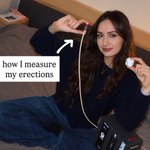
I’ve been tracking my own nighttime erections.. because women need this research too.
I have a special device I lovingly call my “techno tampon” to measure it.
I’m also tracking 1,900 biomarkers and collecting 14 million data points on my menstrual cycle.
I'll share all the results here

pregnancy can change women's feet… even after birth
A small 2013 study found arch height dropped and feet got longer during pregnancy, and the changes hadn't reversed 5 months after birth
some pregnancy hormones loosen ligaments to prepare the pelvis, but it affects ligaments all over the body
you might literally ‘feel’ your ovulation
“Mittelschmerz” is a medical term for ovulation pain. It literally means “middle pain” in German… and it can affect up to 40% of women who ovulate
The exact cause of the pain is still unknown
some theories:
+ contractions around the ovarian follicle
+ prostaglandin activity around ovulation
+ the follicle changing and breaking open
+ fluid or a little blood entering the pelvis
Fetal cells have been found in mothers' hearts, livers, skin, thyroid, lungs, and brain...
These are actual living cells
This means some of your child’s cells can live in your body for decades
The placenta is a barrier with gaps... starting early in pregnancy (as early as the first trimester) a trickle of whole cells crosses it in both directions
Here are five insane facts about the female body
(coming from the world’s most measured woman)
#1
Your period fluid is more than blood.
It contains:
+ endometrial tissue
+ cervical and vaginal secretions
+ immune cells
+ hormones
+ DNA/RNA
+ proteins
+ stem/progenitor cells
…and more
This is why I am collecting my menstrual fluid. We’re using it to analyze my health, and we’ll share our learnings here.
#2
Women’s lungs are shaped differently.
Even at the same height and age, one study found that a female’s lungs are usually 10–12% smaller in volume than a man’s.
Women also have a more inclined rib cage, which allows the chest to expand more.
The same researchers suggested this rib cage shape may accommodate pregnancy.
#3
Your pain tolerance may change slightly during your cycle. But the science is thin here.
In one study, women had greater sensitivity to heat pain during the follicular phase than the luteal phase. They also experienced stronger pain relief from morphine during the follicular phase.
Other studies found the opposite direction… so more data is needed.
#4
A woman’s cholesterol can change by 19% over her cycle.
Cholesterol reads high during the follicular phase and falls after ovulation.
And according to one study, this could be true for about 50% of the molecules measured in a woman’s blood and urine
#5
Blood volume rises by about 45% in pregnancy.
That's roughly an extra 1.2–1.6 litres of blood… The heart pumps 30-50% more blood per minute to keep up.
--
These facts inspired me to become the world’s most measured woman. I’m gathering 14 million data points on my menstrual cycle and collecting 1,900 biomarkers across skin, brain, microbiome, smell, taste, etc.
I’ll be sharing all the results here

I’m spending $2.6 million on female health…
Here are 5 facts most women don’t know
#1
Your labia minora folds can fuse together after menopause.
When estrogen declines, vaginal tissue tends to thin and dry out… it’s rare, but this can lead to fusing.
More commonly, this hormonal decline can affect lubrication, urinary function, and/or sex. Many women don’t realize these conditions are treatable.
#2
Your voice may change every month…
The vocal folds have receptors for sex hormones, and estrogen and progesterone levels are constantly rising or falling
Researchers have measured differences in pitch, voice quality, vocal cord movement, etc. across the menstrual cycle
It’s debated because not all studies agree on the size or direction of these changes
#3
Women metabolize some drugs differently…
For example, Ambien.
Studies found that women had around 45% higher blood concentrations of ambien (zolpidem) than men after the same dose. Women also cleared the drug from the bloodstream more slowly.
In 2013, the FDA cut the recommended starting dose for women in half.
#4
Your brain changes during pregnancy…
And some parts shrink
The extreme hormonal changes are linked to the brain remodeling itself. Gray matter volume and cortical thickness both decrease
In a 2016 human study, changes occurred in regions involved in social cognition.
#5
A lot of female anatomy is named after men.
It was common to name body parts after a person associated with describing or studying it.
So we ended up with…
Fallopian tubes --> Gabriele Falloppio
Bartholin’s glands --> Caspar Bartholin the Younger
Skene’s glands --> Alexander Johnston Chalmers Skene
Gartner’s ducts --> Hermann Treschow Gartner
Müllerian ducts --> Johannes Peter Müller
--
Female health is severely understudied… this is why I am becoming the world’s most measured woman.
I’m gathering 14 million data points on my menstrual cycle and collecting 1,900 biomarkers across skin, brain, microbiome, smell, taste, etc.
I’ll be sharing all the results here

I spent today in a stupor...
Last night, my MRI results came back
my disease is worse than I thought
The space between my uterus and rectum is almost completely sealed shut with scar tissue. Normally, this is an open pocket.
My uterus wall is the most affected… the endometriosis has grown all the way through the muscle wall, extending up to the top of the uterus.
My rectum and lower colon are tethered… pulled and stuck by adhesions where they meet.
Inside, I am twisted, contorted, scarred.
Earlier this week I was on the phone with my mum, asking her about her own previous menstrual cycles. I asked questions that no one had ever asked her… did she also have pain while defecating? Just how painful were her periods? A memory of my 13th birthday comes back… me finding her curled up on the couch, doubled over in pain.
I concluded that she, too, probably had endo.
She tried to explain that ‘back then’ there just “wasn’t that much attention on female health”.
Funny, this is a line I still say today.
I thought about my future daughter… would she be repeating the same line in 30 years?
Oh.. can I even have a daughter?
Maybe not. Infertility affects 30 to 50% of women with endometriosis. My endo is likely stage 4 (the worst stage).
There’s so much to say on this topic…
For now, all I know is this:
I have a slow-growing disease, which is very very burdensome to diagnose, and has been increasingly distorting my body for 8 years…
It affects 1 in 10 women, likely more. 190 million people. And yet, most people don’t know about it.
So.. what do we do now?
Honestly, tonight, idk.
If you’d asked me yesterday, I would have told you all about our grand plan to cure my endo. Bryan and I have been cooking up a strategy with scientists around the world. But my results came back so much worse than I thought.
Tomorrow I am sure I will wake up, dust off the despair, and get back to work. The usual treatments (hormonal suppression and surgery) don’t cut it. Both suck. And neither is a cure.
So, tomorrow, we’ll see what else is possible.
But tonight I grieve with millions of women.
I had to fill my vagina with ultrasound gel yesterday for an MRI...
I had no idea this was a protocol for measuring endometriosis! how cool
It's a technique called vaginal opacification... the vagina is normally a collapsed space, and on an MRI, collapsed walls are hard to tell apart from the tissues right next to them
When you fill the space with gel, it distends the walls and separates the structures so the radiologist can see the boundaries better
One of the hardest places to detect deep infiltrating endometriosis is the area behind your uterus. Lesions there are small, fibrotic, and often missed
The gel shows up as a bright signal on the images, so any lesion pressing into or growing through the vaginal wall appears as a dark nodule against that bright background
Endo affects 1 in 10 women, usually takes 7 years to diagnose, and traditionally requires surgery for diagnosis.... this MRI protocol is an alternative route for detecting deep endo
here are my 11 rules for virality
across 5 years, we have...
+ created billions of views
+ in the press weekly
+ spawned new industries
+ become a household name
It's everything I've learned.. hope you enjoy.

She's the reason why @bryan_johnson is always all over your feed
AND the subject of a $2.6 million project to become the most measured woman in history by tracking 1,900 biomarkers
We sat down with @_katetolo to learn the 11 marketing rules that built the Bryan Johnson universe
00:00 - Intro
00:58 - Who Is Kate Tolo
03:35 - The Nightclub Theory of Going Viral
08:54 - Never Assume, Always Test
11:36 - Why Failure Is Invisible
14:09 - Start With Text First
18:04 - Turning Press Publish LA Into a Pitch
24:31 - Know Your Ticket Price
26:48 - Ruthlessly Create Value
30:22 - If It Works, Say It Again
34:34 - Speak Simply
35:57 - See It In Context
39:07 - Publish Immediately
41:47 - Timely vs Timeless Content
43:03 - The Yes And Approach
c46:06 - Bryan's Girlfriend Reveal
🚨 my hormones just did something unexpected...
They are usually more erratic... but last menstrual cycle my daily hormones seemed ‘calmer’...
+ daily estrogen swings ~35% less
+ daily progesterone swings ~30% less
+ cycle length shortened
What’s going on?
First, my cycles have never been regular. Over the past 18 months, they ranged from 31 to 68 days. And the hormones underneath were noisy:
+ would regularly max out my tests
+ big repeated spikes
+ multiple waves per cycle
But then I changed my lifestyle dramatically overnight…
I just did 40 days of perfect consistency:
+ same food
+ same bedtime
+ same workouts
+ no alcohol
+ 8.5 hrs sleep every night
+ same hydration
+ NO cheat days
+ NO deviations
Here’s how that affected my results...
My latest cycle:
+ 34 days long
+ clean LH surge
+ estrogen rose once
+ progesterone rose on schedule
+ 35% smaller swing than last year
… and ovulation around day 24, versus my historical average of day 29
It was my most ‘normal’-looking cycle ever.
Why would this happen?
Keep in mind… I’ve been incredibly overwhelmed, stressed, and busy while starting this new protocol to become the world’s most measured woman.
Here are some theories...
1/ Consistency.
Your cycle is run by your hypothalamus. It’s a region of your brain that also monitors your stress, your sleep, and your food supply.
And we know unstable schedules disrupt cycles…
A meta-analysis of 14 studies found that women working rotating shifts have 35% higher odds of irregular cycles than women on fixed schedules… and for women under 30, it's 66% higher.
My protocol locked sleep, food, and my schedule down to the minute. Maybe my hypothalamus finally got a quiet room?
2/ Coincidence.
Erratic cycles are sometimes followed by calm ones. One cycle proves nothing. I am very curious to see what my next cycle is like…
3/ Cleaner measurement.
I test my hormones via urine, and urine concentration moves with hydration.
In the last 40 days, my water intake and test times have been steady every day… so part of the "calm" may be that my measurements got steadier, not just my hormones.
Two things this can't explain: my LH stopped spiking for days at a time, and my cycle length shortened.
4/ Something else?
It could be something we haven't thought of yet… That's why we measure and get repeat measurements.
--
If theory #1 is real, it matters far beyond me.
An estimated 14-25% of women of reproductive age have irregular cycles.
The standard responses are wait and see… or hormonal birth control.
If consistent sleep, meals, and routine measurably stabilize cycles… the first thing to try would be free.
My next cycle will give us clues… I'm already 7 days in.
If you're new here:
I am becoming the world's most measured woman… collecting 14 million data points across my menstrual cycles, because female health is desperately understudied.
We’ll post all results here (good and bad, wins and failures) with you for free.... sharing everything we find.


I’m collecting 10,000 glucose measurements across my menstrual cycle…
+ I eat the same thing
+ wear a CGM 24/7
+ track my hormones daily
We’ll see how my body handles the same food differently.
During this experiment:
+ same portions
+ every calorie counted
+ chosen by a medical team
By keeping my food fixed, we will be able to track changes that are caused by my hormones fluctuating (and not by food).
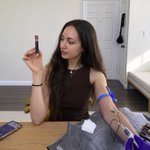
A glucose sensor lives in my arm 24/7.
It fires a tiny needle into my body and instantly retracts it… leaving behind a soft, flexible filament about 5mm long.
Its tip is coated with an enzyme that reacts with glucose, and that reaction creates a tiny electrical current.
More glucose = more current.
The sensor converts that current into a glucose reading every 5 minutes, collecting ~10,000 per cycle.
It's called a continuous glucose monitor (CGM).
What does this mean for women?
The best study to date (49 women) found glucose runs around 5% higher in the two weeks after ovulation.
If the pattern is real and measurable, it means the same breakfast can hit your body differently each week…
For women near the diabetic threshold, food choices carry extra weight in the two weeks after ovulation… the same meal lands on a body that's already working harder. And among diabetic women of reproductive age, almost 1 in 3 don't know it.
I am just finishing my first full cycle… it is in data analysis now.
My second cycle starts in the coming days.
We’re asking questions like…
+ Did my glucose rise before my period?
+ How did my lipids change?
+ Did this predict any other changes?
If you're new here: I am becoming the world's most measured woman.
We're spending $2.6m collecting 14 million data points on my menstrual cycle… because female health is desperately understudied.
We'll share everything here, the wins and the failures, so follow along to find out what happens.

I just collected 51,000 minutes of sleep data… using three different devices:
🛏️ eight sleep (bed)
💍 happy sleep (ring)
💪 whoop (wristband)
To compare with my menstrual cycle data….
I did this for female health.
Over the last 34 days, I’ve tracked my menstrual cycle extensively: brain, skin, vaginal microbiome, blood, saliva, etc.
Sleep is one part of the 14 million data points I am collecting
But there's a strange contradiction in sleep science… specifically in female health.
Women consistently report their worst sleep in the days before their period… but when scientists review the data, the sleep looks fine.
So, what’s being missed?
In a study of 26 women (cycle phases verified with hormone tests), total sleep, REM, and deep sleep all stayed stable across the month.
Sleep quality stayed the same.
Yet, women consistently report their worst sleep in the days before their period.
Sleep stays consistent… but the body itself changes dramatically
After ovulation, for ~2 weeks of every month, you sleep the same… in a measurably different body.
+ resting heart rate rises
+ heart rate variability dips
+ breathing speeds up slightly
+ body temperature climbs
It makes sense that your sleep feels different
Sadly, most sleep trackers don’t take this into account.
When your heart rate rises and your HRV falls after ovulation, recovery algorithms read it as "you're run down."
Millions of women get scolded by their wearables every month… just for having a menstrual cycle.
So, here’s how I am measuring my sleep….
---
1. My Bed
Inside my mattress cover is a thin strip of sensors at chest level. It measures every heartbeat and breath. It's called an Eight Sleep Pod.
Its most famous feature is heating and cooling your bed… but I intentionally turned that off.
Because my body's overnight temperature IS the data. For this baseline measurement, we wanted to see what my body does before intervention.
2. A Ring
Happy Ring is an FDA-cleared medical device.
It measures my heart rate, blood oxygen, skin temperature, movement, and breathing… precisely enough to diagnose sleep apnea.
It's new to my protocol, so no promises yet… but it's the most intensive sleep measurement I've ever worn. We'll see what it finds.
3. Wrist Band.
I've worn a WHOOP for years, so it holds my before-the-protocol baseline.
It can answer the question: does protocol-me sleep differently than normal-life me?
---
My first full cycle of data is in analysis now.
Results coming soon…
If you're new here: I am becoming the world's most measured woman. We're spending $2.6m collecting 1,900 biomarkers on my menstrual cycle… because female health is desperately understudied.
We'll share everything here, the wins and the failures, so follow along to find out what happens.


The package is en route to plane right now....
+ 10 ml collected
+ Landing at 6 am ET
+ Package inspected by courier
+ Departing LA tonight @ 8 pm PT
+ Arriving to laboratory @ 8 am ET
+ 24 hrs from body to lab
Mission successful so far. We will know in 2 weeks if this experiment worked...


SHE STARTED BLEEDING
The problem is that these cells start dying immediately. They need to be processed expeditiously by a laboratory within 24 hours.
It’s a race against the clock:
> bleeding started 10:34 am
> she has a 6 hour collection window
> entire global team activated
> she immediately inserted a cup
> tubes, ice, packing on standby
> overnight courier booked
> goal: collect 7 mL blood
If we miss this, we’re delayed 35 days
The blood is being used for frontier science…more details soon.
IT HAS ARRIVED
Kate’s period will start any minute now….
I’ve been waiting for 34 days.
This is historic; the most measured menstrual cycle in history.
What we’ve measured so far:
> 408 min of brain data
> 10k blood glucose readings
> 48,960 core body temp readings
> 136 photos of her body
> much more.. see below
In total, 14 million data points.
Full list of what we’re measuring:
> core body temp via ingested pill
> pain threshold
> grip strength
> photograph of the body
> body thermal temperature
> blood pressure
> weighing menstrual blood
> cortisol
> blood glucose
> DNA methylation
> oral microbiome
> stool microbiome
> urine metabolites for hormones
> stool microbiome
> vaginal microbiome
> cervical mucus
> sleep
> wearable
> resting metabolic rate
> metabolism.
> techno-tampon, for lady boners
> reaction time
> skin biological age
> brain with Kernel
> breast measurement
> urine concentration
> hormone concentration
> weight
> nutrition
proud of @_katetolo for becoming the world's most measured woman
