




Wild_C retweeted
Nova Lake Mobile Die Sizes
Figures are rounded from higher precision.
Thank you @mooreslawisdead for the package shots.


Want to see annotated Die Shots of #Intel Nova Lake, and see the specs of their #AMD Medusa Halo Mini Killer? Well, check out my latest video!🤠
Oh, and I also analyze #Nvidia's N1X APU that just launched, and leak how easy it will be to find one...
youtu.be/VR4pGjq1drY

Wild_C retweeted

I kinda forgot to post this
Snapdragon X2 Elite Extreme—Glymur die


Wild_C retweeted

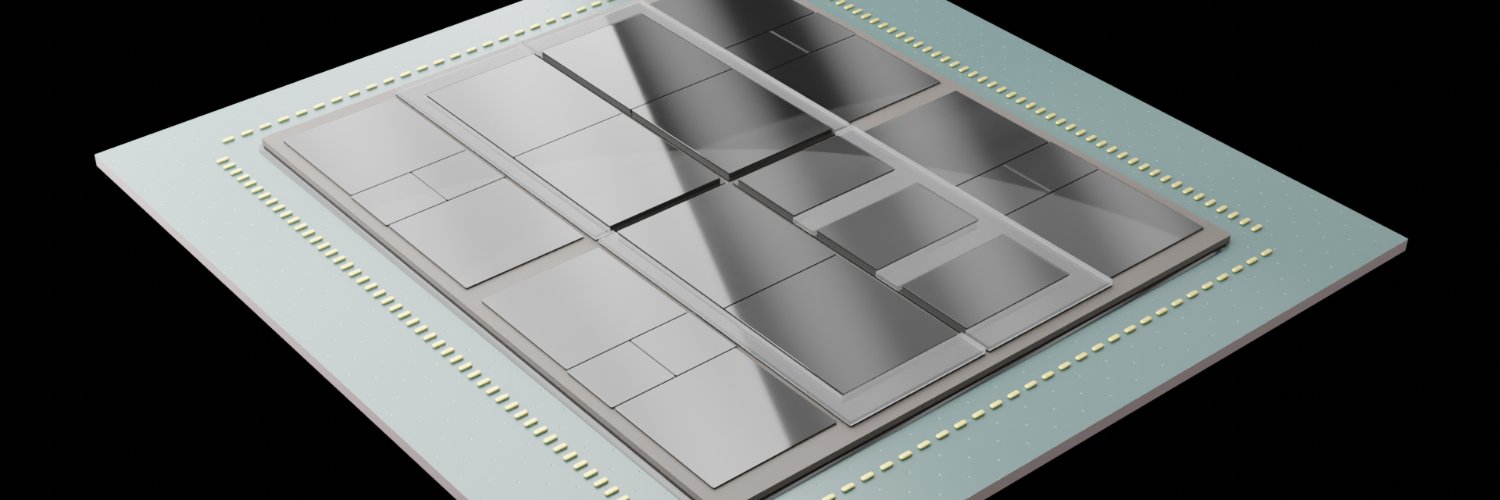
Well that wasn't what I ordered, I wanted PonteVecchio. Turns out some of the Arctic Sound HP tiled chips made it into engineering samples that got into the wild. Never thought I'd see one of these after they got memory holed.


Wild_C retweeted

Intel: DMR, Crescent island, WCL
AMD: FPGAs, MI400 series
Nvidia: Vera, Rubin, Spectrum, bluefield and VPU
Google, Meta, Microsoft: TPUv8, MTAI 400, MAIA 200
Arm: AGI CPU
Fujitsu: Monaka CPU
Samsung: LP5X-PIM
Sambanova: SN50
Broadcom: Thor ultra
IBM: Z and Inference chip


Wild_C retweeted
Apple and Google are gradually expanding their use of hardware-based attestation. They're convincing a growing number of services to adopt it. Google's Play Integrity API and Apple's App Attest API are very similar. Apple brought it to the web via Privacy Pass, which Google intends on doing too.
Google's Play Integrity API requires hardware attestation for the strong integrity level and is gradually phasing in requiring it for the more commonly used device integrity level. Apple already has it as a requirement. Over the long term, this will increasingly lock out hardware and OS competition.
The purpose of these systems is disallowing people from using hardware and software not approved by Apple or Google. This is wrongly presented as being a security feature. Banks and government services are the main ones adopting it but Apple and Google are encouraging every service to use it.
Apple's Privacy Pass brought hardware attestation to the web to help with passing captchas on their own hardware. Many people saw that as harmless since few sites would be willing to lock out non-Apple-hardware users. Apple and Google are both likely to bring broader hardware attestation to the web.
Google's reCAPTCHA is planning an approach where they use Privacy Pass on Apple hardware, their own approach on Google Mobile Services Android devices and a QR code scanning system to require an iOS or Google certified Android device for Windows and other systems:
support.google.com/recaptcha…
Banking and government services increasingly require using a mobile app where they can use attestation to force using an Apple or Google approved device and OS. Apple's privacy pass, Google's 'cancelled' Web Environment Integrity and now reCAPTCHA Mobile Verification are bringing this to the web.
Current media coverage for reCAPTCHA Mobile Verification misunderstands it and the impact of it. They're bringing a hardware attestation requirement to Windows, desktop Linux, OpenBSD, etc. by requiring a QR scan from a certified smartphone to pass reCAPTCHA in some cases. They could expand it more.
Control over reCAPTCHA puts Google in a position where they can require having either iOS or a certified Android device to use an enormous amount of the web. Google defines certification requirements for Android which includes forcing bundling Google Chrome, etc. It's enormously anti-competitive.
Google's Play Integrity API bans using GrapheneOS despite it being far more secure than anything they permit. It also bans using any other alternative. This isn't somehow specific to an AOSP-based OS. You can't avoid this by using a mobile OS based on FreeBSD instead. You'll just be more locked out.
Google's Play Integrity API permits devices with no security patches for 10 years. The device integrity level can be bypassed via spoofing but they can detect it quite well and block it once it starts being done at scale. The strong integrity level requires leaked keys from TEEs/SEs to bypass it.
It doesn't provide a useful security feature, but it does lock out competition very well. Services requiring Apple App Attest or Google Play Integrity are primarily helping to lock in Apple and Google having a duopoly for mobile devices. Play Integrity is more relevant due to AOSP being open source.
Governments are increasingly mandating using Apple's App Attest and Google's Play Integrity for not only their own services but also commercial services. The EU is leading the charge of making these requirements for digital payments, ID, age verification, etc. Many EU government apps require them.
Instead of governments stopping Apple and Google from engaging in egregiously anti-competitive behavior, they're directly participating in locking out competition via their own services. Requiring people to have an Apple device or Google-certified Android device is anti-competition, not security.
reCAPTCHA Mobile Verification will currently work with sandboxed Google Play on GrapheneOS but it clearly exists to provide a way for them to start using hardware attestation on systems without it. People without an iOS or Android device will be locked out when this is required even without that.
This isn't about security or any missing functionality. GrapheneOS can be verified via hardware attestation. Google bans using GrapheneOS for Play Integrity because we don't license Google Mobile Services and conform to anti-competitive rules already found to be illegal in South Korea and elsewhere.
Services shouldn't ban people from using arbitrary hardware and operating systems in the first place. Google's security excuse is clearly bogus when they permit devices with no patches for 10 years but not a much more secure OS. It's for enforcing their monopolies via GMS licensing, that's all.
Wild_C retweeted

website update some thing
kurnal-insights.com/Logic-De…
Chip logic density calculator and ranking chart: Curious about your favorite process technology's ranking? This chart allows you to quickly find out the density ranking of your preferred process technology.


Wild_C retweeted

May 1st. See it for yourself.
tenstorrent.com/deploy


I’ve been thinking about the usual order of problem solving in computers
1) Compute
2) Memory
3) IO
Scaling with MPI or similar is often an exercise for the reader
@tenstorrent solved it in this order
1) Data placement and movement for Scaling
2) IO
3) Memory
4) Compute
Compute is the easiest and best understood so making it last makes sense
This was hard, actually, but puts the hard part first.
Results are surprisingly good
Wild_C retweeted

In case anyone is wondering why the bot has been so quiet lately: Twitter has completely removed the free API tier without prior notice. Every single request now has to be paid for.
Since I’m certainly not going to pay money to a billionaire, this is probably the end of this bot.
Wild_C retweeted

I have added latency, throughput, and port usage data for Emerald Rapids, Meteor Lake, Arrow Lake, and Zen 5 to uops.info/table.html.
Wild_C retweeted
Intel Panther lake-H Dieshot
Thanks by 万扯淡 Decap
high pixel Dieshot in my website
kurnal-insights.com/dieshot/…
CPU 14.32x8.04x0.18mm
GPU 8.14x6.78x0.2mm
IOD 12.44x4.00x0.18mm
Kurnal will try to change the CPU Die


Wild_C retweeted

It's NOT a giant for gaming. It is GR212. As you see, GR100 is based on two GR102, looks the same as GB100.

Some quick assumptions about @Nvidia's new Rubin CPX. Quiet similar to GB202, with some obvious changes to the GPCs. Looks like it has full raster units (full GPU) with up to 256 ROPs. Could this be the RTX 6090? (even though Rubin was supposed to be AI only)

Wild_C retweeted

Yes but only the big boys are sourced at TSM.
Client parts are sub-ret and are sourced at ASE.
Wild_C retweeted

Adjusted with CAD without modifying dimensions to approx. 34,9x24,90 (35x25 BGA1516, right?)
Thanks to Anshel Sag for the perfect photo!


Wild_C retweeted

Intel Wildcat Lake in the wild. And I saw systems running in the demo room. It is on. $INTC
