
Neuroscientist | Hearing and Multi-Sensory Integration
Rotterdam, The Netherlands
Joined July 2019
- Tweets87
- Following157
- Followers69
- Likes346


Pinned Tweet
My first last-author paper has just been published at @JNeurophysiol. Read it here: Neuronal responses in mouse inferior colliculus correlate with behavioral detection of amplitude modulated sound | Journal of Neurophysiology journals.physiology.org/doi/…

Check out our posters at #FENSForum2026 this week in #Barcelona by:
- Blom Kraakman (PS07-10AM-521) 🔊📳 interactions shown by high dens in vivo ephys
- Falk Brönnle (PS07-10AM-543) subthreshold 📳 responses with in vivo whole-cell, plus tracing, cFos & more🔬
@FENSorg
1
48
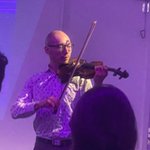
🎻✨ Excited to share my journey from music to auditory research at "Beer, Brain, and Arts!" last night during Brain Awareness Week. Join us tomorrow at the Natuurhistorisch Museum Rotterdam for a lab tour! 🔗
brain-awareness-week-euc.nl/
#BrainAwarenessWeek #Neuroscience 🧠🍻


2
33
Just as the unprecedented tragedy happened in Hong Kong, the National Security Office arrested an initiator of an online petition to the HK government to investigate the Wang Fuk fire incident.

One of the people who started the petition has been taken away by the police, and the Instagram page has shut down - ReNews

2
147
Aaron B. Wong retweeted

Come join my research group as a PhD student for an exciting project in collaboration with Ilya Nemenman at Emory University. The project will focus on inference of social forces in animal groups. Timely and fun topic 😁

Pls RT this ad:
I have an opening for a PhD student in my @IntBioPhysics group to begin ASAP , part of a collaboration with the group of Ilya Nemenman @INemenman at Emory university.
Deadline: 1st November
Details here: stellen.uni-konstanz.de/jobp… and application portal here: stellen.uni-konstanz.de/en/j…
We are seeking a doctoral student with a quantitative background. Ideally, the candidate should have a master degree in physics but other quantitative backgrounds will be considered. The researcher will be based in the Integrative Biophysics group at the University of Konstanz and Max Planck Institute of Animal Behaviour, located in Konstanz, Germany.
The project summary is as follows:
Project Title: Inferring dynamical interactions in social groups
Project Abstract:
Social interactions are one of the most foundational building blocks of group behaviors, shaping decision making strategies across ecologies. Social groups consist of small number of individuals in contrast with collectives that consist of large number of agents. Despite the importance of social groups as a building block of living systems, there is little understanding of mechanistic details of the nature of those social interactions and how they shape emergent social functional properties. This stands in contrast with physics of collectives, which usually focus on the dynamics of very large group of individuals and have been thoroughly studied. In an experimental system or in field observations tackling social behaviors, we do not know a priori the social forces, nature of those interactions and their dynamics. Recent advances in software and hardware allow us to track the behavior of multiple individuals over extended spatio-temporal scales. Thus it is crucial to develop methodologies to infer dynamical social interactions and social forces from experimental observations. This relates closely to work done inferring "social forces" from dusty plasmas.
Recent theoretical work has developed an information theoretic approach to estimate intrinsic motivation, based on maximizing an agent's empowerment (defined as the mutual information between its past actions and future states). This approach can be used to study social behaviours, where individuals choose actions without an explicit reward signal. In this project, we are planning to apply this framework to infer and understand social behaviour of small animal groups specifically locusts, mice and marmosets monkeys offering not only a mechanistic insights into mechanisms of social organization but also make quantitative evolutionary comparison of social behaviours.
1. Yu, Wentao, Eslam Abdelaleem, Ilya Nemenman, and Justin C. Burton. "Physics-tailored machine learning re-veals unexpected physics in dusty plasmas.Proceedings of the National Academy of Sciences 122, no. 31 (2025): e2505725122.
2. Tiomkin, Stas, Ilya Nemenman, Daniel Polani, and Naftali Tishby. "Intrinsic motivation in dynamical control sys-tems.” PRX Life 2, no. 3 (2024): 033009.

Nice piece stressing the importance of comparative and evolutionary perspective in neurophysiology. Focus on few model species may over-represent their species-specific adaptation.
Systems and circuit neuroscience need an evolutionary perspective thetransmitter.org/systems-n…

24

Thanks the amazing @OhnTzu for showing me around @EMBLHeidelberg and the fancy microscope he built! It was great seeing all the great work happening.

10
189
Aaron B. Wong retweeted

Gwyneth Ho, who was sentenced today in the #HK47 trial to 7 years in prison for running in a primary election has just had this statement posted on her Facebook page. It's the first public statement from her in a long time.
Read it in full here: facebook.com/gwynethhokl/pos…

Aaron B. Wong retweeted

Drawing on social media posts and survey responses, we examine how Hong Kong-based Trump supporters reconcile two seemingly incongruent understandings of democracy—support for Hong Kong’s democratic future and support for Trump who is often seen to promote democratic backsliding.

Aaron B. Wong retweeted

⌛️⌛️Final days to apply for the Neural Mechanisms of Acoustic Communication GRC & GRS!
& don't forget to register!
Check out our fantastic program & apply here: grc.org/neural-mechanisms-of…
Additional speakers will be chosen quickly after the deadline so get those abstracts in 🥳🥳
Aaron B. Wong retweeted
A joint PhD position between Marseille and Konstanz. Deadline 15th February. Theoretical and experimental work on the tension between time versus effort during mice foraging . Exciting opportunity . @CBehav @IntBioPhysics @MPI_animalbehav @UniKonstanz @centuri_ls
Job ad: @dav_robbe , Eloy Christophe and myself are looking to recruit a PhD student as part of the @centuri_ls program in Marseille. We are looking for candidates with strong quantitative background excited to work on foraging in mice. Project details: centuri-livingsystems.org/ph…

Aaron B. Wong retweeted

🐭 Auditory system researchers, lend your ears 😉! @blom_kraakman & team from @aaronbwong lab introduce a protocol for accessing the mouse's inferior colliculus tailored for long-term, awake studies with #2photonmicroscopy & #ephys: pubmed.ncbi.nlm.nih.gov/3815…
Aaron B. Wong retweeted

Transgenic Tet- and Cre-inducible jGCaMP8m/s mice lines are now available as pre-order from JAX. Janelia is distributing a new RiboL1-tagged line that localizes jGCaMP8s to the soma. Check out the white paper describing all the lines and order here: forms.gle/jnmBfZdh8g7QVRBg7

Aaron B. Wong retweeted

Very excited to announce this GRC which I am co-chairing with Mala Murthy. I also want to encourage applications from students, postdocs and junior faculty who have never attended a Gordon Conference and who interested in this topic.

We are excited to announce that registration is open for the 2024 Neural Mechanisms of Acoustic Communication Gordon Research Conference. The preliminary program is now live: grc.org/neural-mechanisms-of…
We invite everyone to apply! See you @ Sunday River, Maine, May 19-24, 2024.


In this @JNeurophysiol paper, we showed that #InferiorColliculus neuronal responses to sound modulation reflect the mouse behavioral limits very well, especially when represented in a population-based model. Follow up coming soon…
#auditory #neuroscience #AmplitudeModulation

#JNeurophysiol published research ➡Neuronal responses in mouse inferior colliculus correlate with behavioral detection of amplitude-modulated sound (Maurits M. van den Berg et al.)
ow.ly/hZbr50PSE8z
@aaronbwong #AmplitudeModulation #InferiorColliculus #Multielectrode

Aaron B. Wong retweeted

My lab is open to colleagues afected by the horrific violence. Berlin. Auditory systems neuroscience

Our in vivo multielectrode recordings in the inferior colliculus of both anesthetized and awake mice also revealed a few single units with remarkable phase-locking ability to 512 Hz amplitude modulations, the highest modulation frequency we tested in physiology.
104