

(He/Him) World's only AAA-rated GRC Hacker. DEF CON Group Melbourne Founder. Infinidash Expert. @aldebaran@defcon.social Former blue check.
Lands of the Kulin Nation
Joined April 2008
- Tweets31.4K
- Following1.9K
- Followers1.8K
- Likes46.3K





Ⓐllen Barano🅅 retweeted

We started "Distance" back in 2020. More than 900 hand-painted frames and a long list of talented collaborators later, it's finally done.
Written by Nate DiMeo and originally published in @thememorypalace , it tells the story of Samuel Finley Breese Morse: his years as a painter, his personal story, and the path that led him to help shape one of the most important inventions in modern communication.
It had its night on the big screen in September where it won "Best Canadian Short" at the Spark Animation 2026 festival @SparkCG. Now it's coming to the tiny ones in your pockets and your desks.
Online premiere October 21.
Except in the Southern Hemisphere, they go clockwise

Ⓐllen Barano🅅 retweeted

Look, picking between nano or vim isn't just an editor preference. I have a theory that it tells me what kind of person you are.
nano users:
- get promoted at work for being "easy to work with"
- spend a considerable amount of time working on improving their LinkedIn headline
- write documentation
- likely have a plant on their desk
- cook from a recipe
- have a partner that knows what they do for a living
- have more IRL friends than online
- write dates like Sept 16, 2026
- have hobbies
vim users:
- have job stability because no one else knows how to keep the legacy servers running
- spend a considerable amount of time working on improving their terminal settings (zsh ftw btw)
- don't read documentation
- likely have a mechanical keyboard on their desk
- cook from memory or feel
- have a partner that just thinks you "do computers" for a living
- have more online friends than IRL
- only uses ISO 8601 date format
- have a hobby

Ⓐllen Barano🅅 retweeted
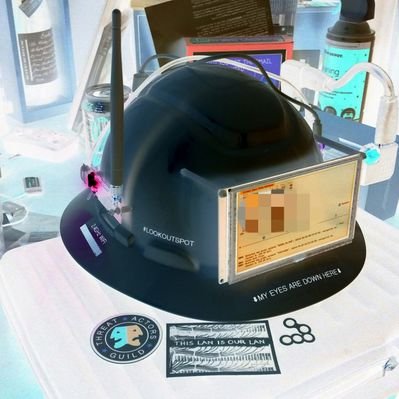
Share this with your local @defcongroups and beyond 💯
#CantStopTheSignal


Ⓐllen Barano🅅 retweeted

Did you love the live music sets in Chillout at #DEFCON34‽ Well, they are now available on the DEF CON media server. Thanks @defcon_music @defcon and all the amazing Artists! #chillout #hackermusic #DEFCON
media.defcon.org/DEF%20CON%2…


The #bsidesmel2026 team right now. Thank you to the absolute legends who make up the @BSidesMelbourne team and everyone who helped make 2026 the best yet.. until the next one!


Ⓐllen Barano🅅 retweeted

Last year I posted 500 open positions for my company.
We hired 34 people.
The other 466 jobs were never real.
I'm the Head of Talent Acquisition.
That's not what I acquire.
What I acquire is data.
Resumes, salary expectations, skill sets, market intelligence.
160,000 applicants gave us their career history for free.
We used it to benchmark compensation.
Not to raise salaries.
To confirm we were paying below market and get away with it.
I call it "building a talent pipeline."
A pipeline is a thing you build and never turn on.
Recruiters call this "passive sourcing."
There is nothing passive about wasting 160,000 people's time.
But it sounds like a strategy.
Some of our listings have been posted for 11 months.
One has been up for two years.
It's for a "Director of Innovation."
We don't have an innovation department.
We don't have the budget.
But the listing makes us look like we're growing.
Investors see open roles and think momentum.
Our stock went up 8% after we posted 200 jobs in one week.
We didn't hire anyone that week.
Or the week after.
We have an applicant tracking system.
It auto-rejects 95% of applicants.
Based on keywords.
I don't know what keywords.
No one does.
It was configured in 2019 by a contractor who no longer works here.
We've never updated it.
Some applicants spend hours customizing their resumes.
The system reads them for six seconds.
Then it sends a rejection email.
"After careful consideration."
There was no consideration.
Careful or otherwise.
I know this because I'm the one who wrote the template.
Sometimes I repost the same job with a different title.
"Senior Data Analyst" becomes "Data Analytics Lead."
Same description.
Same salary.
Same no one getting hired.
But it resets the posting date.
Fresh listings get more applicants.
More applicants means more data.
More data means better benchmarking.
Better benchmarking means I present at the quarterly review.
I presented last quarter.
I showed a slide that said we "received unprecedented candidate interest."
160,000 people applied for jobs that didn't exist.
That's the unprecedented interest.
The VP of People called it "brand strength."
The CFO asked about our hiring efficiency.
I said we were "optimizing for quality over speed."
Quality means we haven't hired anyone.
Speed means we don't plan to.
HR asked about candidate experience.
I showed them our NPS score.
It was 12.
Out of 100.
I said that was "within industry range."
I made up the industry range.
No one checked.
They never do.
Last month a candidate emailed me directly.
She said she'd applied to four roles over eight months.
Customized every resume. Wrote every cover letter.
Never heard back.
She asked if the jobs were real.
I sent her to the automated FAQ.
The FAQ says "We value every application."
That's not true.
We value every data point.
There's a difference.
I'm up for promotion.
My metrics are outstanding.
500 roles posted. 160,000 applicants captured.
Cost per acquisition: $0.
I didn't acquire anyone.
But the cost was zero.
Zero is a good number in a dashboard.
Dashboards get presented.
Presentations get approved.
Approvals get me promoted.
I'll be VP of Talent by Q4.
I don't find talent.
I collect it.
Like a jar you never open.
Ⓐllen Barano🅅 retweeted

The history books quietly bypassed is that Barack Obama, during the most pressure-saturated nights of his presidency, would retreat alone to the Treaty Room on the second floor of the White House residence — not to strategize, not to take calls, but to handwrite personal letters to ten ordinary American citizens every single night, a practice he maintained with almost monastic devotion across all eight years, selecting the letters himself from the 40,000 that arrived daily at the White House, and his longtime correspondence director Fiona Reese confirmed that Obama would often weep privately while reading certain letters, folding them carefully before writing responses so personally detailed and emotionally present that recipients frequently described the experience of receiving them as the most significant moment of their lives, with one Ohio steelworker writing back to say that Obama's letter had physically stopped him from making a decision that would have permanently altered his family's future. What makes this practice almost unbearably moving is the detail that surfaced later — Obama never used a computer for these letters, always a black felt-tip pen, always legal yellow paper first as a draft, always rewritten onto White House stationery by hand a second time, because he believed, as he told historian Doris Kearns Goodwin in a rare private conversation later recounted in her 2018 work, that the physical act of pressing pen to paper forced a quality of attention that typing simply could not replicate, a philosophy rooted in his years as a constitutional law professor at the University of Chicago from 1992 to 2004 where he developed the conviction that democracy only functions when its leaders remain genuinely, uncomfortably close to the specific gravity of individual human suffering rather than processing it from behind the insulating distance of institutions and screens."
