


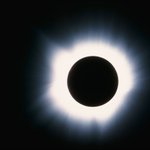


Por si quieren un motivo existencial de preocupación, el fin del mundo puede llegar mil millones de años antes de lo esperado, antes de que el Sol deje de quemar hidrógeno - en @Nature : The Solar System could die one billion times earlier than thought nature.com/articles/d41586-0…

46
Por mas revolucionaria que sea la IA, debemos seguir transfiriendo el conocimiento entre nosotros y entre generaciones. En @Nature "In praise of human teachers: universities must resist outsourcing everything to AI" nature.com/articles/d41586-0…

Alberto Carramiñana retweeted

En el año 2000 se inició la construcción del Gran Telescopio Milimétrico (GTM), un megaproyecto científico que surgió de una colaboración entre INAOE y la Universidad de Massachusetts. El GTM es el telescopio de plato único y movible más grande del mundo. Fue pieza clave en la captura de las primeras imágenes de un agujero negro supermasivo (M87* y Sagitario A*). Tardaron 12 años en concluir la obra, empezando a operar en Mayo de 2013 y 100% operativo en 2018. En su momento tuvo un costo de +2000 millones de pesos (actualizado al momento presente, costaría entre 3,500 y 4,500 millones de pesos volver a construirlo).
Todo ésto para decir que $7,000 millones de pesos (que es lo que se pretende gastar en el Cablebús poblano) puede siempre emplearse en cosas más trascendentes, útiles y necesarias.

Alberto Carramiñana retweeted

Muchos topacios azules que vemos en joyerías comenzaron siendo prácticamente incoloros. Su transformación puede empezar dentro de un reactor de investigación, donde la gema se expone a un intenso flujo de neutrones rápidos capaces de alterar su estructura cristalina y crear los llamados centros de color.
Esos neutrones desplazan algunos átomos de la red del cristal y dejan defectos capaces de atrapar electrones. El resultado, tras la irradiación, puede ser un tono marronáceo que posteriormente se modifica mediante tratamiento térmico hasta obtener el característico azul comercial. El proceso no «pinta» la piedra ni añade ningún pigmento, sino que modifica la forma en que su estructura absorbe y transmite la luz.
Aquí aparece además una diferencia muy interesante entre irradiación y activación. Los neutrones rápidos son los principales responsables de generar el color, mientras que los neutrones térmicos (lentos) pueden activar pequeñas impurezas presentes en la gema y producir radionucleidos. Por eso, después del tratamiento, los topacios se almacenan durante un tiempo y se analizan hasta comprobar que su actividad ha descendido a los límites establecidos antes de poder comercializarlos.
La gema tampoco queda «contaminada» en el sentido habitual del término, porque el material radiactivo no está depositado sobre su superficie: algunos de sus propios átomos o impurezas han sido activados por los neutrones. Con el paso del tiempo, esos radionucleidos decaen y su actividad disminuye.
Un topacio puede entrar casi incoloro en una instalación nuclear, pasar por una etapa marronácea y terminar convertido en una gema azul. Una pequeña lección de física nuclear escondida en una joya.
orau.org/health-physics-muse…

Alberto Carramiñana retweeted

In Case You Missed It: This morning's launch of @NASA's Nancy Grace Roman Telescope.
[7:26am ET, August 30, 2026].
Will arrive at Sun-Earth L2 in Early December, to discover Exoplanets and observe the effects of Dark Matter & Dark Energy on the Universe.
Alberto Carramiñana retweeted
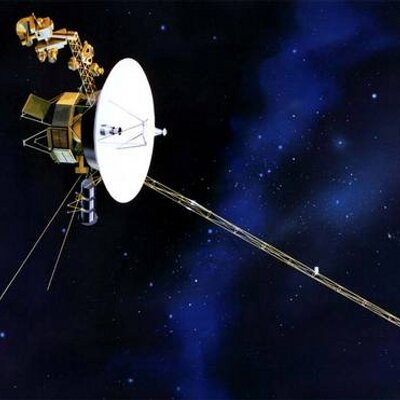
OTD in 2012, sister Voyager 1 made her final transition from the region dominated by our Sun's solar wind into the region dominated by the other stars' cumulative winds: 'interstellar space.' For the first time, we were measuring particles mainly from other stars.
The measurements are from the LECP instrument, and the oscillations in late July and August show the buffeting nature of the boundary as it billows out from the Sun and then is pushed back by interstellar pressure, with the boundary moving back and forth over Voyager 1 several times. The August 25, 2012 transition occurred at a distance of 16H:51M light-time from the Sun, or about 121.6 AU.
Voyager 2 encountered this boundary in 2018 from early November to early December, but the boundary was smoother and closer in: from 16H30M to 16H32M, or 119.0 to 119.3 AU. Both crossings occurred during solar sunspot cycle 24, with the V2 crossing possibly occurring at a quieter time.

Alberto Carramiñana retweeted

La mediocridad de la LigaMX se explica por las reglas económicas impuestas por sus dueños:
1. Torneos cortos
2. No descenso
3. Multipropiedad
4. Derechos de TV fragmentados
5. Violación a derechos laborales de futbolistas.
Mi texto en @ElFinanciero_Mx
elfinanciero.com.mx/opinion/…

Platicaré del solsticio y un par de asuntos relacionados, hoy en poco más de una hora.

📢Videoconferencia: El solsticio de verano y otras cuestiones astronómicas Contaremos con la participación del investigador del INAOE, Alberto Carramiñana, quien nos hablará sobre este fascinante fenómeno y otros temas de astronomía.
@FCEMexico
@inaoe_mx

40
Alberto Carramiñana retweeted

In the 1960s, a direct flight to Neptune would have taken nearly 30 years. That was longer than most spacecraft could survive. Reaching the outer planets seemed almost impossible.
But one engineer, working quietly with a pencil, found a way around this problem.
Gary Flandro, a scientist at NASA’s Jet Propulsion Laboratory, was asked to study how spacecraft might travel to the distant planets despite the limits of rocket technology at the time. Fuel was scarce, and engines were not powerful enough for such long journeys.
Flandro turned to a clever idea from physics called a gravity assist, sometimes known as a planetary slingshot. The concept is simple in principle. When a spacecraft passes close to a large planet, the planet’s gravity pulls it in and then flings it forward. In doing so, the spacecraft steals a tiny bit of the planet’s motion around the Sun. The planet slows down by an amount too small to notice, but the spacecraft gains a huge increase in speed without using any fuel.
With only paper, pencil, and the limited computers of 1965, Flandro calculated the future positions of Jupiter, Saturn, Uranus, and Neptune. What he found was remarkable. In the late 1970s, these giant planets would line up in a rare formation. This alignment would allow a single spacecraft to travel from one planet to the next, gaining speed at each step.
This opportunity appears only once every 176 years.
Flandro showed that a spacecraft could use Jupiter’s gravity to reach Saturn, then use Saturn to reach Uranus, and finally use Uranus to reach Neptune. This chain of boosts would cut the travel time to Neptune from about 30 years down to just 12.
This elegant piece of mathematics changed everything.
It became the foundation for the Voyager 1 and Voyager 2 missions, both launched in 1977. Thanks to this precise planning, the two spacecraft sent back the first close images of the outer planets. They later continued their journey beyond the solar system, becoming the first human-made objects to enter interstellar space.
All of it began with a simple insight, worked out by hand, that turned an impossible journey into a reachable one.

Alberto Carramiñana retweeted

🚨 ESCÁNDALO EN CDMX 😡
Un malandro pelón en una Mercedes GLA 200 (placas S81-BSY) se bajó furioso y le dio una madriza brutal a un ciclista en plena calle. Patadas, puñetazos y lo dejó tirado en el pavimento como si fuera basura.
Todo grabado con cámara 360 del ciclista.
¿Quién conoce a este cobarde? ¿Alguien lo ubica?
¡Compartan masivo para que las autoridades lo encuentren y lo hagan famoso en la cárcel!
#CDMX #AgresionVial #JusticiaParaCiclistas #Mercedes #Maladro #ViralMexico #CDMXSegura
Alberto Carramiñana retweeted

Te lo dejan en el auto, lo escaneas y te clonan el celular. 👇👇
Tengan cuidado…

Readers added context they thought people might want to know
El simple escaneo del QR no puede "clonar" un (numero) celular, esta imagen se ha viralizado desde 2024 en Argentina, el modus operandi del QR es que se requeria la instalación de una aplicación spyware, sin embargo hoy en dia ese QR está deshabilitado.
cadena3.com/noticia/notici…
myqrcode.mobi/qr/disabled
Alberto Carramiñana retweeted

Ever seen a piece of 1960s space hardware still haunting Earth's neighborhood decades later? 🚀
This NASA JPL animation shows J002E3 - the spent S-IVB third stage from Apollo 12's Saturn V (launched November 1969).
In 2002, amateur astronomer Bill Yeung spotted it and logged it as a near-Earth asteroid. Turned out to be a 33-year-old rocket stage.
Watch the cyan path trace its journey from May 23, 2002 to June 17, 2003. It drifts in from the left, loops and twists around Earth and the Moon in wild, non-repeating arcs, threading past the L1 point - the gravitational gateway between Earth's and the Sun's sphere of influence - while the Moon tugs it back and forth in a chaotic, unpredictable dance.
No neat ellipses. No tidy repeating orbits. Just a 50-year-old rocket stage being slowly torn between three gravitational masters.
No trajectory predictor in 1969 could have told you where this thing would be in 2002. Chaos saw to that.
🧵 Part 2: the full orbital mechanics breakdown ↓
Alberto Carramiñana retweeted

Menahem Pressler, at 90 years old, delivers a stunning performance of Frédéric Chopin—proof that true artistry only grows with age! 🎹✨

Alberto Carramiñana retweeted

La escala de la cruz que corona la torre más alta de la Sagrada Familia.

Don’t deprioritize curiosity-driven research nature.com/articles/d41586-0…
Prioridades económicas y políticas, de corto plazo, en detrimento de investigación guiada por curiosidad. Falta consciencia del valor del conocimiento x sí mismo, fuente de desarrollo a mediano y largo plazo.
1
29

Alberto Carramiñana retweeted
The Trump Administration is once again trying to deny science and reality – this time, by throwing out the well-established research connecting the climate crisis to public health.
While the Trump Administration can try to ignore the climate crisis, it’s painfully clear that the climate crisis will not ignore us. Last summer, the US experienced a dozen once-in-1,000-year floods in the span of just three days. In Texas, one of those flooding events killed at least 135 people, including 37 children at summer camp.
The Trump Administration’s rollback of the endangerment finding is not only a direct assault on science, knowledge, and public health, it is an insult to the people across the country who are already coping with the disastrous consequences of climate-driven extreme weather events.
The decision to revoke the endangerment finding is one of the more egregious examples of the Trump Administration prioritizing fossil fuel profits over American lives.
Alberto Carramiñana retweeted

The polar vortex is fracturing — unleashing Arctic cold.
High in the stratosphere above the Arctic, an unusual and powerful event is taking shape: a major sudden stratospheric warming (SSW) is projected to peak in early February 2026. This dramatic atmospheric disruption has the potential to release prolonged, intense cold across large parts of North America and Europe.
Normally, the polar vortex forms a tight, fast-spinning ring of strong winds around the North Pole during winter, acting like a barrier that locks the coldest air inside the Arctic. When a sudden stratospheric warming occurs, temperatures in the upper atmosphere soar and pressures rise, distorting and often splitting or collapsing this protective vortex.
Current high-resolution forecast models indicate the vortex is already deforming significantly. Stratospheric temperatures over the Arctic are expected to climb more than 90 °F (50 °C) above average, severely weakening the vortex's structure by early February.
What unfolds 18–30 miles (30–50 km) above the surface eventually influences weather at ground level. A weakened or collapsed polar vortex frequently allows lobes of Arctic air to plunge southward, bringing extreme cold outbreaks to mid-latitudes.
Early model guidance already points to a strong surge of frigid air descending from central Canada across much of the United States, with the potential for widespread and persistent cold extending well into mid-February. Similar impacts are possible across parts of Europe.
However, the connection between stratospheric upheaval and surface weather is not instantaneous. Effects typically appear days to several weeks later, and not every SSW delivers a severe cold wave. When the vortex undergoes a full breakdown, though, the odds of significant and prolonged cold snaps rise sharply.
["Stratospheric Warming Alert: A Massive Shift in the Polar Vortex is Forecast for early February." Severe Weather Europe, 2026]

En @Nature - "El cancer puede brindar protección contra el Alzheimer". Difícil decidir si son buenas o malas noticias...
Cancer might protect against Alzheimer’s — this protein helps explain why nature.com/articles/d41586-0…