

https://teapawt.net/t.co/lrCEwyX7YE
- Tweets5.5K
- Following232
- Followers857
- Likes3.5K


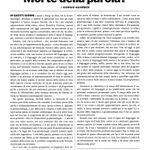
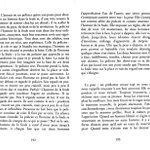


ALT «Cette fois-ci pourtant, tout se passe autrement. Le policier crie, mais l'homme ne prend pas la fuite. Il reste debout et regarde le policier. Son regard est prudent et encore un peu craintif, mais peu à peu il devient dur et insolent. Parfait ! L'homme de la foule regarde avec insolence l'agent en uniforme. Il ne bronche pas. Puis il regarde autour de lui, il voit les regards des autres. Ils sont comme le sien : prudents et encore un peu craintifs, mais peu à peu ils se font durs et inflexibles. Personne ne fuit bien que le policier continue de crier. Il finit par se taire. Un silence pesant s'installe. Le policier et l'homme de la foule se rendent-ils compte de ce qui se passe ? Nul ne le sait. L'homme de la foule a cessé d'avoir peur.» — Le Shah, par Ryszard Kapuscinski, traduit du polonais par Véronique Patte, Paris: Flammarion, [1982] 2010, pp. 192-193

ALT “But this time everything turns out differently. The policeman shouts, but the man doesn't run. He just stands there, looking at the policeman. It's a cautious look, still tinged with fear, but at the same time tough and insolent. So that's the way it is! The man on the edge of the crowd is looking insolently at uniformed authority. He doesn't budge. He glances around and sees the same look on other faces. Like his, their faces are watchful, still a bit fearful, but already firm and unrelenting. Nobody runs though the policeman has gone on shouting; at last he stops. There is a moment of silence. We don't know whether the policeman and the man on the edge of the crowd already realize what has happened. The man has stopped being afraid-and this is precisely the beginning of the revolution.” — Shah of Shahs by Ryszard Kapuscinski, tr. from Polish by W.R. Brand and K. Mroczkowska-Brand, New York: Vintage Books, [1982] 1985, pp. 109-110


ALT Marguerite Yourcenar, L’oeuvre au noir, Gallimard, 1968, couverture

ALT «- Mirages, fit Zénon. Il en est de vos âges d'or comme de Damas et de Constantinople qui sont belles à distance ; il faut marcher dans leurs rues pour voir leurs lépreux et leurs chiens crevés. Votre Plutarque m'apprend qu'Héphestion s'entêtait à manger les jours de diète comme le premier égrotant venu, et qu'Alexandre buvait comme un soudard d'Allemagne. Peu de bipèdes depuis Adam ont mérité le nom d'homme.» p. 109

ALT Gustave Flaubert, Madame Bovary, Louis Conard éd., 1910 [1857], couverture

ALT «Il ne faut pas toucher aux idoles : la dorure en reste aux mains.» p. 390


