

Welcome to die. He’m don't have face. His only feel is murder. Him know no eyes but he am cry. oh no.
Nah.
Joined November 2012
- Tweets33.2K
- Following534
- Followers278
- Likes10.5K




T-Money retweeted

Reading through the comments on this post, I realized that while some players are frustrated with game translations, translators themselves also carry complex feelings toward those criticisms.
As a developer, I believe game translation is genuinely difficult. Since I’m Japanese, I know firsthand how challenging it can be to translate Japanese into English.
For example, say you’re translating an RPG set in Kyoto into English. Players naturally want to feel the authentic vibe of Kyoto through gameplay. So, what is “Kyoto-ness”? Players likely want a role-playing experience where they can feel traditional Japanese culture. In that case, how should you translate proper nouns or dialect / phrasing unique to Kyoto into English? Do you substitute them with proper nouns or expressions from Edinburgh, Scotland? 😅
That might convey a traditional, archaic atmosphere in English, but players would probably be furious:
“I want to play to feel Kyoto, not Edinburgh!”
(Fun fact: Kyoto and Edinburgh are official friendly tie-up cities. 😀)
While that’s an extreme example, I think these kinds of dilemmas pop up in game translation all the time.
To help English-speaking players truly experience “Kyoto” while playing, do you boldly lean into archaic British English? Or do you keep the Kyoto phrasing as-is, even if most players won’t understand it? Then again, some hardcore Japanophiles might say, “Don’t underestimate us - we get it!”
One reason I think games are harder to translate than novels is that players must fully grasp the context to actually progress. Stephen King’s novels translated into Japanese are packed with proper nouns from rural America. I don’t always get every reference, but they convey that American atmosphere brilliantly. In a game, though, that causes real problems. If players don’t thoroughly understand the narrative, they might get stuck on puzzles and be unable to beat the game.
The translation approach is deeply tied to level design. A puzzle that’s easy to solve in Japanese could easily become impossible in English.
At the end of the day, I’m just a developer. But poor translation quality isn’t solely on the translators. It’s a shared responsibility among developers, translators, LQA teams, and publishers. We all need to communicate closely to deliver the best possible translation for our players.

When it comes to game localization, I believe the most important thing is whether the experience the developer wants to convey to the player is communicated in the same way as the original. At the same time, languages can never be tranlated on a strict 1:1 basis.
For example, in the English version of Schrödinger's Call, when Mary makes a phone call, players are almost always presented with a single choice: "☎️Hello." In the Japanese version, this is "☎️もしもし(Moshi-Moshi)."
First of all, the use of "Hello" as a telephone greeting is often credited to Thomas Edison, who competed with Alexander Graham Bell, the inventor of the telephone. Althought the word itself existed long before the telephone, Edison proposed using it when answering phone calls, and it eventually became the everyday greeting we know today.
Japan, however, has its own unique telephone greeting. When answering or making a phone call, Japanese people traditionally say "☎️もしもし(Moshi-Moshi)." The expression comes from "申す(mōsu)", a humble form of the verb "to say," and originally served as a polite way of getting someone's attention before speaking.
Furthermore, the "☎️もしもし(Moshi-Moshi)" in the Japanese version of Schrödinger's Call carries another meaning, "もし(Moshi)" corresponds to "What if...?" in English. This concept of "What if" is also a core theme of the game. What if the moon hadn't fallen during the call...What kind of conversation would they have continued to have....?
When playing the Japanese version, players realize this sort of wordplay or metaphor through a certain line of dialogue near the end of the story. However, the English version does not have this.
As the author, I struggled with this decision. The English word "Hello" does not carry the meaning of "What if." I even considered forcefully adding a few extra lines exclusively to the English version, Howeve, I decided that doing so would disrupt the rhythm of the story.
Ultimately, what we prioritized was the deep experience of the game that transcends mere words. "☎️もしもし(Moshi-Moshi) = What If" is merely a form of wordplay that can only be understood in Japanese. Rather than that, to provide all users with a meaningful experience that transcends language, I chose not to add unnecessary English dialogue.
As you can see, even just between Japanese and English, there are many differences. I believe the key is for developers to understand as much as possible about multiple languages and make informed decisions. Of course, there are limits, but effort goes a long way.


T-Money retweeted
been losing potential voice acting roles for YEARS bc every time they say “any accent” in an audition (they mean British, European, Transatlantic, Southern) I just keep doing a Vietnamese accent 💀
and I won’t stop bc I wanna see a game character with a THICK VIET accent so bad
T-Money retweeted

What I Learned After Working On Over 1,000 Switch 2 Joy-Con nintendolife.com/features/wh…

T-Money retweeted

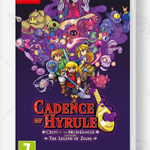
If you saw Cadence of Hyrule mentioned in the Zelda direct this week and want to give it go, Nintendo's put it on a rare sale for 30% off! (🇺🇸 U.S. only!)


T-Money retweeted

Blaming yourself for a loss is the most narcissistic thing you can do
“I should’ve rotated”
“I should’ve kept farming”
“I could’ve killed there”
You’re NOT the main character
Grow up, be mature, and start blaming your teammates


