
AI & tech policy @VanderbiltU Policy Accelerator. My own views.
Washington, DC
Joined February 2009
- Tweets457
- Following1.9K
- Followers1.2K
- Likes5.8K
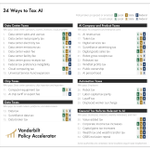




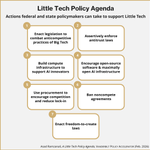
From city councils to Congress, there’s a growing desire to tax AI, but policymakers don’t always know their options. My new paper outlines 34 ways to tax AI across data centers, chips, data, AI cos. & products, automation & general tax reforms. vanderbiltpolicyaccelerator.…

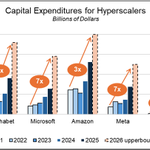
And the AI industry receives sales tax exemptions, property tax abatements, bonus depreciation & preferential tax treatment for investors. If AI takes jobs, the tax base shrinks further: ~3/4 of fed. tax revenue comes from taxes on labor. Now is the time to tax AI.
This is also the first paper from VPA's new AI Governance Project. Subscribe to our substack for more like this. vanderbiltpolicyaccelerator.…
asad ramzanali retweeted

OpenAI’s about-face on chip export controls is a case study in the ways monopoly power — in this case Nvidia’s — distorts our markets and our politics.
Export controls are a clear boon for OpenAI; they are good for OAI’s business, maintain America’s lead over China, and arguably improve AI safety, which Open AI's leadership claims to care about.
So why the reversal? OpenAI depends on Nvidia for chip access, and Nvidia strongly opposes the controls.
Monopolies like Nvidia create a culture of fear and silence for the businesses, workers, and consumers they can (and do) abuse. And in this instance, even a giant like OpenAI isn’t immune.
So instead of hearing what OpenAI leadership actually prefers, we hear what they know Nvidia expects of them. It’s just the latest example of Nvidia’s growing power, and why Congress, State AGs, and the Justice Department should investigate Nvidia.

OpenAI once pushed to keep AI chips from China. Now it's staying quiet. politi.co/3TRuwRQ

Thanks to @KevinTFrazier & @lawfare for having me on their pod to discuss AI-driven cyber incidents, why we should bring back the Cyber Safety Review Board, and what we're up to with the AI Governance Project. lawfaremedia.org/article/law…
asad ramzanali retweeted

Today's @lawfare podcast w/ @asad09 (@VanderbiltU) is worth listening to in full...but here's the ten word summary:
Bring.
Back.
The.
Cyber.
Safey.
Review.
Board.
And.
Then.
Some.
Give it a listen, then read his paper w/ @JBBranchPolicy

News: I’m leading the Vanderbilt Policy Accelerator’s new AI Governance Project! AI is reshaping the economy, work, security & culture, but largely at the direction of private actors. AGP will build policy that puts the public's interest at the center. vanderbiltpolicyaccelerator.…
We’ll hit the ground running. On deck this month: a brief on how to apply utility-style regulation to AI & a paper mapping ways to tax AI at the local, state & fed. levels. Subscribe to stay updated.
And we’re hiring! Apply here: vanderbilt.edu/vanderbilt-po…

asad ramzanali retweeted

NEW: AI development is starting to make inflation worse. But the government has the power to fight back (if it wants to).
In a new paper, I explain how the Defense Production Act can help protect Americans from AI-induced price shocks. 🧵[1/7]

asad ramzanali retweeted

it’s funny to see tech accelerationists and tech skeptics cohering around “we have all the existing laws we need to regulate ai.”
unless paired with consistent demands to enforce specific laws, this is the language of mollification and passivity. it’s meant to be a conversation ender.
and there are all kinds of reasons why one might want to do that, such as:
a financial stake in keeping ai unregulated, an ideological reluctance to concede anything that even resembles industry hype, a cultural commitment to “nothing ever changes” cynicism.
but ultimately, the lack of urgency from accelerationists and tech skeptics reveals a deep pessimism about ai capabilities, and what those capabilities might entail.
Fed gov't employees are using AI to revoke visas, in patient care for vets, & for military ops. Last month the Nat'l Archives said most of that use of AI doesn't count as a “record” under the Fed Records Act. Margaret Mullins & I analyze the guidance here: vanderbiltpolicyaccelerator.…
asad ramzanali retweeted

The National Archives and Records Administration's new AI guidance creates an "accountability gap," in federal record-keeping, write @asad09 and Margaret Mullins.
justsecurity.org/157670/fede…

asad ramzanali retweeted

Who should investigate Hugging Face-style incidents? We once had a Cyber Security Review Board, but it was killed off a couple years ago. Here, great proposal for new and improved CSRB. Needed.
vanderbiltpolicyaccelerator.…
@asad09
asad ramzanali retweeted

listen man sometimes you gotta put the manhattan project on hold to sell b2b SaaS


X was full of takes (& takes on takes) about the OpenAI–Hugging Face incident. But almost no one asked the more basic question: how do we actually know what happened?
When an airplane crashes, we don't rely on the airline; the National Transportation Safety Board investigates. For a couple of years, we were making progress toward an NTSB for cyber...until the current admin effectively gutted it.
In a new essay for @YaleJREG's Notice & Comment (and cross-posted by VPA), JB Branch & I argue Congress should revive a stronger Cyber Safety Review Board w/ subpoena power, real staffing, funds to use AI, & real independence. vanderbiltpolicyaccelerator.…