




Bishan retweeted

In the last several years AI has progressed rapidly but predictably, and in that time the cyber community learns the bitter lesson over and over again. We’ve collectively sleep walked into the current state of things and now I see emotionally driven responses when those outside the community try to address it. “Do nothing” and continuing down the same path isn’t a counter proposal.
These models are far more capable and scaleable than any of us. And they cannot be deterred like a human adversary. Why would we reject the possibility that an agentic swarm could take down vast swaths of the internet, including critical infrastructure? This is rather ironic considering I've seen virtually no push back to L0pht's Senate testimony 28 years ago (or any of the panels celebrating its anniversary since) where they claimed they could take down the internet in 30 minutes.
We all know how broken things are, how so many in leadership never respond beyond moral support despite the overwhelming evidence. I'm no AI doomer, quite the opposite, but the current state of cyber stands in the way of realizing all of AI's benefits. The old way isn't going to work anymore and its time to abandon it. Abandon the complex risk management spreadsheets, the performative training, the compliance regimes, and yes remove humans in the loop for every decision. None of this will survive the speed and sophistication of agents driven by frontier models.

Bishan retweeted
… and leaders who have no technical background. Solving these problems will require much more than security teams. The security industry needs to start over or face irrelevance.
Bishan retweeted

We have a limited window to strengthen cyber defenses, and together with organizations including @AnthropicAI, @awscloud, @Google, @Microsoft, and @Oracle, we're calling for a global effort to give defenders the tools, resources, and support to protect the infrastructure we all depend on.
If we act decisively, we can turn today's AI advances into lasting improvements in security and make our digital world safer for everyone.
openai.com/collective-cyberd…

Bishan retweeted

An open letter for a global surge in cyber defense, signed by over 100 organizations including Anthropic, AWS, Google, Microsoft, OpenAI, and Oracle.

Bishan retweeted

this is a critically important moment for cyber defense with AI; there is not much time to act.
we are happy if you want to work with us or any of our competitors or partners, but please take this moment seriously.
only an urgent and intense collective response will work.
Bishan retweeted
I have so much gratitude to people who wrote extremely complex software character-by-character. It already feels difficult to remember how much effort it really took.
Thank you for getting us to this point.
Bishan retweeted

A few random notes from claude coding quite a bit last few weeks.
Coding workflow. Given the latest lift in LLM coding capability, like many others I rapidly went from about 80% manual+autocomplete coding and 20% agents in November to 80% agent coding and 20% edits+touchups in December. i.e. I really am mostly programming in English now, a bit sheepishly telling the LLM what code to write... in words. It hurts the ego a bit but the power to operate over software in large "code actions" is just too net useful, especially once you adapt to it, configure it, learn to use it, and wrap your head around what it can and cannot do. This is easily the biggest change to my basic coding workflow in ~2 decades of programming and it happened over the course of a few weeks. I'd expect something similar to be happening to well into double digit percent of engineers out there, while the awareness of it in the general population feels well into low single digit percent.
IDEs/agent swarms/fallability. Both the "no need for IDE anymore" hype and the "agent swarm" hype is imo too much for right now. The models definitely still make mistakes and if you have any code you actually care about I would watch them like a hawk, in a nice large IDE on the side. The mistakes have changed a lot - they are not simple syntax errors anymore, they are subtle conceptual errors that a slightly sloppy, hasty junior dev might do. The most common category is that the models make wrong assumptions on your behalf and just run along with them without checking. They also don't manage their confusion, they don't seek clarifications, they don't surface inconsistencies, they don't present tradeoffs, they don't push back when they should, and they are still a little too sycophantic. Things get better in plan mode, but there is some need for a lightweight inline plan mode. They also really like to overcomplicate code and APIs, they bloat abstractions, they don't clean up dead code after themselves, etc. They will implement an inefficient, bloated, brittle construction over 1000 lines of code and it's up to you to be like "umm couldn't you just do this instead?" and they will be like "of course!" and immediately cut it down to 100 lines. They still sometimes change/remove comments and code they don't like or don't sufficiently understand as side effects, even if it is orthogonal to the task at hand. All of this happens despite a few simple attempts to fix it via instructions in CLAUDE . md. Despite all these issues, it is still a net huge improvement and it's very difficult to imagine going back to manual coding. TLDR everyone has their developing flow, my current is a small few CC sessions on the left in ghostty windows/tabs and an IDE on the right for viewing the code + manual edits.
Tenacity. It's so interesting to watch an agent relentlessly work at something. They never get tired, they never get demoralized, they just keep going and trying things where a person would have given up long ago to fight another day. It's a "feel the AGI" moment to watch it struggle with something for a long time just to come out victorious 30 minutes later. You realize that stamina is a core bottleneck to work and that with LLMs in hand it has been dramatically increased.
Speedups. It's not clear how to measure the "speedup" of LLM assistance. Certainly I feel net way faster at what I was going to do, but the main effect is that I do a lot more than I was going to do because 1) I can code up all kinds of things that just wouldn't have been worth coding before and 2) I can approach code that I couldn't work on before because of knowledge/skill issue. So certainly it's speedup, but it's possibly a lot more an expansion.
Leverage. LLMs are exceptionally good at looping until they meet specific goals and this is where most of the "feel the AGI" magic is to be found. Don't tell it what to do, give it success criteria and watch it go. Get it to write tests first and then pass them. Put it in the loop with a browser MCP. Write the naive algorithm that is very likely correct first, then ask it to optimize it while preserving correctness. Change your approach from imperative to declarative to get the agents looping longer and gain leverage.
Fun. I didn't anticipate that with agents programming feels *more* fun because a lot of the fill in the blanks drudgery is removed and what remains is the creative part. I also feel less blocked/stuck (which is not fun) and I experience a lot more courage because there's almost always a way to work hand in hand with it to make some positive progress. I have seen the opposite sentiment from other people too; LLM coding will split up engineers based on those who primarily liked coding and those who primarily liked building.
Atrophy. I've already noticed that I am slowly starting to atrophy my ability to write code manually. Generation (writing code) and discrimination (reading code) are different capabilities in the brain. Largely due to all the little mostly syntactic details involved in programming, you can review code just fine even if you struggle to write it.
Slopacolypse. I am bracing for 2026 as the year of the slopacolypse across all of github, substack, arxiv, X/instagram, and generally all digital media. We're also going to see a lot more AI hype productivity theater (is that even possible?), on the side of actual, real improvements.
Questions. A few of the questions on my mind:
- What happens to the "10X engineer" - the ratio of productivity between the mean and the max engineer? It's quite possible that this grows *a lot*.
- Armed with LLMs, do generalists increasingly outperform specialists? LLMs are a lot better at fill in the blanks (the micro) than grand strategy (the macro).
- What does LLM coding feel like in the future? Is it like playing StarCraft? Playing Factorio? Playing music?
- How much of society is bottlenecked by digital knowledge work?
TLDR Where does this leave us? LLM agent capabilities (Claude & Codex especially) have crossed some kind of threshold of coherence around December 2025 and caused a phase shift in software engineering and closely related. The intelligence part suddenly feels quite a bit ahead of all the rest of it - integrations (tools, knowledge), the necessity for new organizational workflows, processes, diffusion more generally. 2026 is going to be a high energy year as the industry metabolizes the new capability.
Bishan retweeted

Thanking @theregister for featuring this Open Source, help make safer web. Yahoo! Gits! Web! Security! Scanner! theregister.co.uk/2015/09/25…
Bishan retweeted

Today, we open sourced Gryffin, Yahoo’s large scale web security scanning platform. github.com/yahoo/gryffin Pull requests welcome! #golang


Bishan retweeted
Yahoo! Paranoids at @appsecusa:
@yukinying, @b1shan on large scale web security scanning as infrastructure:
appsecusa2015.sched.org/even…
Bishan retweeted
@YahooSecurity @owasp @appsecusa @b1shan and we open sourced github.com/yahoo/gryffin during the talk.
Sad to see @alexstamos leave. By far the best executive and super boss I ever worked for. Go rock at FB !! teapawt.net/alexstamos/status/6138…
3


At #blackhat listening to the young @dpnishant a fellow Yahoo Paranoid flickr.com/gp/bishan4u/361hA…
slides from my talk 'Security @ Large Scale' at LPSE meet with notes slideshare.net/BishanSingh/s…
A better, brighter Flickr blog.flickr.net/en/2013/05/2… via @flickr

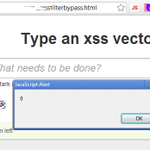
nice talk on detecting #XSS #DOMXSS at scale by @paradoxengine watch 7:50 on youtube.com/watch?v=ShBxhL4t… .waiting to be open sourced