
Open minded interested in anything on wheels, views my own retweets are not necessarily endorsements
England
Joined April 2011
- Tweets12.5K
- Following192
- Followers90
- Likes24.4K


Martin Jones retweeted

You don't see it.
You won't hear about it.
But every minute of every day the UK's nuclear submarines – and the extraordinary crews who operate them – are keeping us all safe 👇
Martin Jones retweeted

The idea that Earth’s climates will stop changing because we achieve “net zero” emissions is completely laughable. The climate system is chaotic. It is more than capable of changing by itself without an external forcing, believe it or not. It always has done so. It always will. If you lose any more hair on that noggin, you’ll get brainwashed in the shower.

Climate change stops when the world reaches net zero emissions. @afneil calls it a scam because he is a climate change denier.
Martin Jones retweeted

Today is:
#WorldDiabetesDay 💙
In the honour of Sir Frederick Banting
Trained as an orthopaedic surgeon
Practiced as General Practitioner
One of the key men involved in discovery of #Insulin
Won #NobelPrize 1923
Sold patent for #Insulin to University of Toronto for 1$
Saviour of many
Legend
Born 14 Nov 1891 💙

Martin Jones retweeted

Despite having more ex-PMs than ever, only one of them is in the Commons
They said Rishi Sunak would be straight off to California
Today he asked a question about parking at a local railway station

Martin Jones retweeted

Every legend has a beginning. From a bold dream to an eye-opening debut, discover how @jonathanrea's #WorldSBK journey began 🚥
Watch the docuseries on WorldSBK.com 📺👉 tinyurl.com/44tft7vu
#WorldSBK #thegREAtest
Martin Jones retweeted
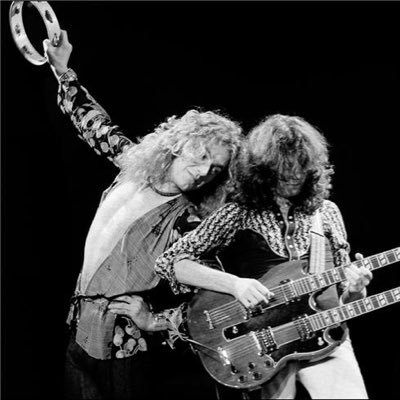
Terry Reid was born 77 years ago today, on November 13, 1949, in St Neots, England.
They called him Superlungs, and the biggest names in rock agreed. Graham Nash said he should have been a gigantic star. Aretha Franklin said there were only three things happening in England: the Rolling Stones, the Beatles and Terry Reid.
In 1968, with the Yardbirds finished, Jimmy Page wanted Terry to sing in his new group. Terry had already promised to open for the Rolling Stones and Cream in America, so he said no, and told Page to check out a young Birmingham singer named Robert Plant, and the drummer in his band, John Bonham. The rest is Led Zeppelin.
Terry said he never regretted it. He went on to make records like River and Seed of Memory, and to sing on albums by Don Henley, Jackson Browne and Bonnie Raitt.
This photo was taken backstage at the Bitter End in New York in 1974.
Photo: Dina Regine
Had you heard Terry Reid sing before, or is he new to you?

ALT Terry Reid backstage at the Bitter End in New York, 1974, holding a tin and looking to the side
Martin Jones retweeted

MATT RIDLEY: If Britain reaches its Net Zero target, the world will be 0.00376C less warm by 2100. Is that REALLY worth £695bn? trib.al/OLz21G6

Martin Jones retweeted

“At a cost of £695billion we can make our great-grandchildren’s lives cooler by under four thousandths of a degree Celsius”
Matt Ridley, using NetZeroCostBenefit.com
Each pound buys just 11p of climate benefit
NetZeroCostBenefit.com/UK?s=…
dailymail.com/debate/article…


Thanks, Matt, for showing the real numbers.
In short: for every pound Britain spends on net zero, the world gets 11p of climate benefit back.
See the UK, or any country: NetZeroCostBenefit.com/UK?s=…
Martin Jones retweeted

Skelts is so well liked, not just within the Wallabies, but across the #rugbyfamily 🙌🏽
Man Mountain.
Gentle Giant.
Top Bloke.
🤜🏽🤛🏽
Martin Jones retweeted

When a Vanguard-class SSBN slips past the Gare Loch into the Clyde, the Ministry of Defence PR apparatus frames it as the relentless triumph of the Continuous At Sea Deterrent (CASD). The operational reality is far darker. This is a scene of institutional brinkmanship, played out in four distinct acts across the British state.
1. Within forty-eight hours, that 16,000-ton boat will vanish below the acoustic layer. Somewhere in the North Atlantic, another Vanguard is waiting. That returning crew has likely been submerged for upwards of 150 to 180 days—double the 90-day patrol limit the submarine was originally designed for. The handover is entirely cryptographic. Once Northwood Headquarters confirms the outbound boat has the watch, the exhausted inbound crew will turn her bow toward Scotland. They will be back in Faslane within a week. But the crew that just left? They are now entombed until late spring 2027.
2. Who actually makes the decision to lock 140 men and women in a steel tube for six months? The operational order comes from Commander Operations (COMOPS) deep inside the permanent joint headquarters at Northwood, specifically the node designated as CTF 345. But the admirals at CTF 345 are not making a strategic choice; they are playing a rigged hand dealt by Westminster. The doctrine of CASD dictates that one boat must always be on patrol. You need four submarines to maintain this mathematically: one on patrol, one training/working up, one in routine maintenance, and one in deep refit. But the math has collapsed. COMOPS is forced to order 200-day patrols because he simply doesn't have the hulls available in the rotation cycle.
3. Why doesn't the government intervene? Because successive governments are the exact architects of the crisis. To understand why that boat is being run into the ground, you have to look at the Treasury and the civil service managerial cartel. In the 2010s, chancellors like George Osborne and Philip Hammond engaged in "fiscal smoothing"—delaying the Dreadnought-class replacement submarines to save in-year accounting costs. Simultaneously, Whitehall utterly failed to manage the sovereign refit infrastructure at Devonport (Babcock’s Dock 9). They outsourced the deep maintenance (the Long Overhaul Period and Refueling, or LOP(R)) and let the dry docks decay. So, instead of a refit taking two years, it takes four to five.
You cannot rotate four boats if two are functionally trapped in a crumbling dockyard in Plymouth. The politicians did not intervene because intervention requires capital expenditure; they preferred to quietly force the Royal Navy to absorb the risk on the balance sheet.
4. Can it be proven that the Royal Navy is at a drastically elevated risk entirely due to government decisions? Unequivocally.
First, there is metallurgical and mechanical reality. The Vanguard class was commissioned in the 1990s with a 25-year lifespan. They are now being pushed past 30 years. Running ancient pressure hulls, aging reactor cooling systems, and legacy life-support scrubbers on 200-day continuous cycles creates exponential mechanical fatigue.
Second, there is the human capital destruction. You cannot repeatedly subject highly specialized, nuclear-qualified engineers to six-month underwater incarcerations without destroying their family lives. The retention death-spiral in the submarine service is not a mystery; it is the direct, predictable outcome of Treasury penny-pinching.
The politicians delayed the replacements. The civil service botched the dockyards. And as a direct result, the Vanguard crews are now operating at the absolute outer edge of physiological and mechanical safety just to keep the Whitehall illusion of seamless deterrence alive.


Martin Jones retweeted

One of the most intense and profound moments in history. 11am on the 11th November 1918 when the guns fell silent. This should be shown in every school.
Martin Jones retweeted

Sadly, the last known surviving WW2 veteran of the SAS, Matthew "Matt/Jock" Mackinnon-Pattison died on Thursday 5th November aged 102years. We remember Matthew. Here is a summary of Matthew's wartime service. Please share widely: Matt MacKinnon Pattison was among hundreds of thousands of Allied soldiers who fought Germans in Italy in the spring of 1944.
Sometimes remembered as the "D-Day Dodgers", in reference to their role away from Normandy, men in Italy faced brutal conditions as they battled to take Monte Cassino and dislodge enemy soldiers.
"We came back from Italy having flogged ourselves to pieces, nervous wrecks, and people say 'where were you on D-Day?'" said Matt, from Penrith, Cumbria.
"We just say we were busy bloody well fighting."
British Prime Minister Winston Churchill thought of Italy as the "soft underbelly" of Nazi-dominated Europe, but the campaign there proved difficult and costly.
With perhaps typical military irony, the men in Italy adopted the "D-Day Dodgers" moniker, even creating a song to the tune of Lili Marleen, a famous wartime melody.
"We are the D-Day Dodgers in sunny Italy," rang the chorus.
But this was no sojourn in the sun and the Allied forces knew it.
Enemy soldiers were dug in on defensive lines across the country, and at Monte Cassino it took four separate attacks from US, British, Polish and Commonwealth forces to destroy and take the hilltop monastery.
Matt still has razor-sharp memories of the battles he fought, and the comrades he lost.
He fled agricultural service in Kilmarnock as a teenager to get to Glasgow to enlist as an infantryman before ending up "right in the forefront" of the battle for Monte Cassino.
Advancing up the slopes amid the fog of deadly artillery bomb blasts and the continual crackle of gunfire, the soldier saw many of his comrades fall.
But, he said, there was no time to be frightened.
"You don’t look upon it as bravery, you just look at it as part of your life," he told the BBC.
"When the officers told you to advance, that was what you had to do.
"Every battle is the same. You get pounded to death, whether it was Normandy, Burma or anywhere."
Matt was recruited for the SAS after being injured and taken to a Naples hospital to recover.
From 100 candidates, he was just one of 10 that made it. He was dropped behind enemy lines near Genoa, tasked with finding Italian dictator Mussolini who by then had been captured by partisans.
Once the war was over, he was sent to Germany as part of the War Crimes Unit to find Nazi suspects who had executed captured members of the SAS.
There, he said, he saw a broken nation, but people "just like us".
Eight decades on, he can clearly recall the claustrophobic horror of war, from German soldiers playing dead to entice Allied soldiers into shooting range, to landmines and enormous loss.
"I lost a lot of my mates, especially one called Ginger," he said.
"And when he died he was sitting in a trench with his head down. There was a smile on his face."
"Still a smile on his face that marked the place where he and his maker met.
"And that was Ginger. He was a good lad."
Dodging D-Day was no pass, and so many thousands paid the ultimate price in Italy.
In his flat, Matt still has his SAS beret, his medals and his memories.
He also has his nation’s thanks.
(Source: bbc.co.uk/news/articles/ce99…)

Martin Jones retweeted

The Lord Mayor’s Show is over 800 years old. Your souvenir costs £5. 📖
Get the official programme at the City of London Information Centre opposite St Paul’s, the Guildhall Art Gallery shop or from volunteers on Show day, Sat 14 Nov.
cityoflondon.gov.uk/things-t…
#LordMayorsShow

Martin Jones retweeted

We will remember them. #RemembranceSunday
Martin Jones retweeted

Now trans ideology picks on the parents
Please do read the actual bill. You will see it’s self ID by the back door & will stop loving parents parenting
thetimes.com/article/20cad62…

Martin Jones retweeted

Watch: A panel of NHS executives were left FLUSTERED when Rupert Lowe read out their salaries at a Select Committee hearing
Lowe told Sir Jim Mackey, boss of NHS England, that he was ‘making out like Dick Turpin!’ @RupertLowe10
Martin Jones retweeted

On behalf of every British taxpayer in the country, I just gave the Chancellor and his pygmy ministers the honest assessment of our public finances.
They did not like it.
Martin Jones retweeted

Hear, hear !
The deliberate torture of animals in accordance with
barbaric seventh century thinking needs to be stopped
1,500 years later

Martin Jones retweeted
Gurkhas are a blessing to our society
Thank you. Gurkhas !!


Martin Jones retweeted
"Just because someone stumbles and loses their way, doesn't mean they're lost forever.
Sometimes all we need is a little help"
A line with much poignancy
R.I.P. @SirPatStew ❤️