
Oil and equity Fintwit. Refinery Supply. Oil trader. Former quant. Chart nerd. Speculator. Up is good. Follow the money. Nothing matters but money flow.
Joined January 2012
- Tweets4.5K
- Following2.1K
- Followers1.8K
- Likes43.2K





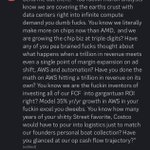


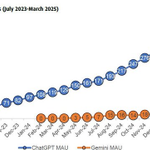
Amzn(bag)holder2 retweeted

I've thought about it, and I think the solution is unfortunately that LLMs need to be meaner.
There's no substitute for some guy with randomly extreme expertise who's determined to make you look like an ignoramus.
You need at least a facsimile of debate.

I've had plenty of occasions where I've seen intelligent, open-minded people use LLMs and get totally misled by them in areas that require expert knowledge to prompt right.
I don't know how to overcome this.
I've documented some cases here: cremieux.xyz/p/how-do-you-as…

Amzn(bag)holder2 retweeted

Okay. Look. Imagine how you'd have felt if an AI had just proved the Riemann Hypothesis.
Now you will predictably, at some point, get that news LATER, if we're not all dead before then. So you can go ahead and feel that way NOW, instead of acting surprised LATER.
Amzn(bag)holder2 retweeted

Catastrophic cyber attack/data breach against Japanese software company Plaid $4165, stock -57% in 5 sessions.
The service is offline, company says a "fundamental rebuild" is necessary and no resumption until mid-January 2027 (!!).
No revenue until then.


Amzn(bag)holder2 retweeted

$AMZN owns more Anthropic shares than all Anthropic's founders combined
Amzn(bag)holder2 retweeted
Good grief. Worst home sales ever (in the data to 2000).

It's hard to believe it could get any worse than this.
Homebuyer demand in the U.S. set a new record low in October 2026.
With the NAR's pending sales index falling 16.7% YoY to a level of 63.0
This is the worst reading for pending sales and contract signings for existing homes in U.S. history (worst than any period during the 2008 downturn).
Current levels of contract signings are down 53% below the pandemic peak, and down 40% from pre-pandemic levels.
It's a housing demand depression on a scale we've never seen.
The upshot is that it's actually a good time to make offers, especially in high inventory states.
Sellers sitting on market for 3+ months, who've already cut prices, heading into the winter. Target these sellers in areas with downward forecasts, and you could get a major discount.
To see the areas with the biggest downward forecast, search your ZIP now on Reventure: reventure.app/map/BpAxZfHd0s

Amzn(bag)holder2 retweeted

AWS CEO Matt Garman on space datacenters:
“I think they are highly unlikely to be economically feasible or practical in the next decade or two.
It sounds good, you get free energy, great.
Launches are still infrequent and expensive. As a world we don’t do 1 launch per day. And we at Amazon are landing 1 GPU in a datacenter every 14 seconds.
Space doesn’t have air, so dissipating heat is hard. Serviceability is hard.
These are solvable problems but they will take time.”
youtu.be/1C_MErgk2Z0?si=JtO9…

Amzn(bag)holder2 retweeted

100% of children want ice cream for dinner

Amzn(bag)holder2 retweeted

Jensen Huang: "How could I be targeted by Chinese sex spy?"
Also Jensen Huang for the past four years:
Amzn(bag)holder2 retweeted

TRUMP DEFENDS NVIDIA $NVDA CEO Jensen Huang and says he should stay as CEO of Nvidia.
Amzn(bag)holder2 retweeted

Rip Jensen

3) $NVDA vouches for Megaspeed - its largest SEA chip buyer, under U.S. and Singapore investigation - as having no Chinese ownership and free of diversion concerns. We uncovered documents, however, that suggest Megaspeed was financed by Alibaba through a Singapore shell company.


Amzn(bag)holder2 retweeted

The good news is that Democrats don't actually want to slow AI or obstruct data centers. They just want to look like they're doing that. And so wherever there's an opportunity to look like they're doing it, without actually doing it, that's where they're going to prefer to go.
Amzn(bag)holder2 retweeted
Strongly believe $MU buyers are like bicycle buyers during Covid. Enjoy it while it lasts.

Amzn(bag)holder2 retweeted

The $ANT S-1/A gives us some insights into a restructured $AMZN deal, and the potential headwind that posed to AWS growth this past quarter.
It's possible that AWS & Anthropic restructured a deal this past quarter and that it partially explains the Q3 AWS miss (39% vs. the ~42% the buyside was looking for)... and the Anthropic S-1/A actually allows us to size this.
The filing says S&M as a % of revenue fell in Q3 partly due to "changes in the terms of our channel partner distribution arrangements." So something changed.
Anthropic books CSP marketplace sales gross and runs the partner's cut through S&M (that cut is AWS/Google/MSFT revenue).
Piecing it together:
(i) Share of revenue sold through CSP marketplaces was 48% in 1H26 and 44% for 9M26, which implies ~40% in Q3, or ~$6.8B.
(ii) S&M was $2.4B in Q3. Partner fees were ~$351M in 2025 ($43M of 2024 S&M less $33M of advertising, plus a reported $341M increase in partner fees), and the filing says they rose $4.8B Y/Y over 9M 2026. That leaves ~$530M of non-partner marketing over 9M 2026, or ~$207M in Q3 with a modest step-up through the year. This implies Q3 partner fees were ~$2.15B.
(iii) That puts the partners' cut at ~35% in Q2 vs ~32% in Q3. ~3.7 pts on ~$6.8B = ~$250M of fees partners didn't collect.
The $250M is across all CSPs, and the filing doesn't say which partner's terms changed (the $110B AWS compute agreement isn't described as amended; Google's & MSFT's are).
If AWS absorbed ~75-100% of it, that's ~55-75 bps of Y/Y growth.
So something was restructured, but the headwind looks quite manageable. I think it explains a piece of the miss, not the whole thing (as shown here, I think capacity timing is the larger culprit: teapawt.net/PrefShares/status/2116…).
Table attached.


$AMZN
Lots of hand-wringing about AWS growing 39% Y/Y vs. expectations of closer to ~42%. However, the long-term portion of $AMZN's unearned revenue (attributable to AWS) jumped ~$2B Q/Q in Q3, vs. roughly flat in prior Q3s.
Add the change in unearned revenue back...
and "billings" grew ~45-46% Y/Y.
To me, it looks like some capacity is set to land in the next few months and there were pre-payments, but Amazon wasn't able to recognize because it wasn't placed into service in Q3.
-----
"We add a lot of capacity every quarter. The amount that we add every quarter is not equal. We are adding different amounts each quarter." - Andy Jassy
and later...
"The amount of capacity we add each quarter will vary, but at this scale to be projecting growing over 40% year-over-year in each of 2027 and 2028 is pretty significant."

Amzn(bag)holder2 retweeted

So many people keep complaining about the CapEx at $META $AMZN $GOOGL and $MSFT without looking at what these businesses are actually producing.
You want faster growth, better products, more cloud capacity, and leadership in AI. Then the bill arrives for the infrastructure required to deliver it, and suddenly everyone wants management to stop spending.
Where exactly do you think that growth is supposed to come from?
Look at the operating cash flow chart. Over the trailing twelve months:
• $META: $133 billion, up 23.7%
• $AMZN: $168 billion, up 28.8%
• $GOOGL: $180 billion, up 18.6%
• $MSFT: $196 billion, up 33.2%
Combined, that’s approximately $677 BILLION in cash from operations. An increase of $140 billion, or 26.1%, in one year.
Anyone discussing their spending without acknowledging that growth is leaving out a pretty damn important part of the story.
Now look at the second chart. Combined CapEx increased from approximately $330 billion to $615 billion.
Of course that puts pressure on free cash flow. When investment spending grows faster than operating cash generation, less cash is left over. That arithmetic tells you how much cash remains after investment. By itself, it doesn’t tell you whether management is making a good investment.
A business generating substantial cash and reinvesting aggressively deserves a different analysis from a business whose operations cannot support themselves.
Amazon is a perfect example. Its reported trailing twelve-month free cash flow was negative $42.4 billion, while operating cash flow increased 29% to $168.3 billion. Meanwhile, AWS revenue grew 39%, and Amazon delivered its highest quarterly operating margin ever at 13.9%. Explain how “negative free cash flow” alone captures what is happening inside that business.
Microsoft reported Azure growth of 48% and quarterly operating cash flow of $58 billion. Management still says customer demand exceeds available supply. When customers want more capacity than you can provide, building capacity is a pretty logical business decision.
Google Cloud revenue increased 103% to $30.7 billion, with operating income climbing from approximately $3.6 billion to $11.1 billion. Infrastructure and enterprise AI demand contributed to that growth, alongside TPU systems sales. There is an actual business developing here with actual customers and actual operating profits.
Meta says its AI investments are already generating additional advertising revenue through better recommendations, stronger engagement, and improved monetization. That matters because AI can improve the economics of products billions of people already use, well before some entirely new business becomes material.
This is the relationship investors need to understand: infrastructure enables more usage, better products, and additional revenue opportunities. Successful investments can expand cash generation, which helps fund the next round of growth.
The money goes out before the full benefit comes back. A data center doesn’t repay its construction cost the quarter it opens.
That doesn’t make every dollar of CapEx brilliant. These charts alone cannot prove that spending caused every dollar of cash flow growth. Equipment depreciates, operating costs rise, and management still has to earn an adequate return.
Hold them accountable for that. Look at demand, utilization, margins, and the cash those assets generate over time. I absolutely care about free cash flow, including whether today’s spending eventually produces more of it.
What I’m tired of is people treating a lower free cash flow number as the entire investment thesis while ignoring the expanding businesses underneath it.
You can make this year’s free cash flow look better by cutting investment. You can also leave yourself without the capacity to serve next year’s customers.
I want management building a more profitable, more competitive business for the next decade.
If your entire analysis ends at “CapEx went up,” you haven’t finished the analysis.


Amzn(bag)holder2 retweeted

I don't think I have ever seen as many worries about something that goes this well.. It is in fact absolutely bizarre

Amzn(bag)holder2 retweeted

First early sign of a top in the oil tanker cycle? Always watch utilization rates.
And as you can see, they're dropping FAST! Something to keep an eye on...

Amzn(bag)holder2 retweeted

$AMZN AWS CEO: "...we’re installing an accelerator chip, whether a GPU or a Trainium chip, every 14 seconds. It is a massive and rapid scale up. And today, we’re still supply constrained, and we’re scaling really rapidly for customers."
$AMZN CEO: "We are installing an AI accelerator about every 14 seconds, and almost as fast as we install capacity, customers are gobbling it up. Our core compute and storage revenue grew at their fastest rates in several years."