

Economist @rff, via @DukeU, @NERA_Economics, & @USCBO. Opinions my own.
Washington, DC
Joined October 2010
- Tweets582
- Following1K
- Followers659
- Likes1K








Gasoline prices have been doing something strange recently. When crude prices crashed in June, gas prices didn't follow, and this wasn't just the usual "rockets and feathers" lag. This interactive data tool I built explores up just how unusual this is (bprest.github.io/data-tools/…).


U.S. refiners have responded by running harder (eia.gov/todayinenergy/detail…), but not by making more gasoline. Gasoline crack spreads are up 60% year-on-year, but jet fuel and diesel spreads have more than *doubled*.
The House Natural Resources Committee today is marking up its piece of the reconciliation bill currently making its way through Congress.
These values represent only the approximately 50% share of royalties retained by the federal government, so the cuts would lead to similarly large revenue losses to the states where the oil and gas is being produced.
Brian Prest retweeted

My analysis on potential impacts of expanded US LNG exports is available here zenodo.org/records/13738309
@RFF's analysis of oil & gas leasing led by @bprest can be found here rff.org/publications/issue-b…
One can read these and verify the letter's statement is incorrect.
Brian Prest retweeted

We have a paper out in @ScienceMagazine today showing how new guidelines allowing for income weighting in federal cost-benefit analysis would affect the social cost of carbon. Main takeaway, the SC-CO2 increases nearly 8x to ~$1300/ton. @rff @ERGBerkeley
science.org/doi/10.1126/scie…

Brian Prest retweeted

Discounting in benefit-cost analysis using investment rates of return can yield very misleading estimates of the costs and benefits of policies with long-lived impacts, from @richardgnewell, @billypizer, and @bprest nber.org/papers/w31526

Brian Prest retweeted

Check out this new research in #JEEM on climate royalty surcharges on fossil fuels by Brian C. Prest (@bprest) and James H. Stock (@jimstockmetrics).
Increasing royalty rates on federal fossil fuel reduces global emissions.
Link to paper: sciencedirect.com/science/ar…


Brian Prest retweeted

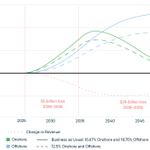
Psyched about this new @rff working paper from @bprest, Zach Whitlock, & me. It asks: in a future with more ambitious climate policies, what happens to oil and gas production in different US regions, and how does that affect local gov't revenue? 1/8
rff.org/publications/working…

Wonky paper alert! New @RFF working paper, "The Shadow Price of Capital", with @billypizer and @richardgnewell
rff.org/publications/working…

In the near term, the difference is small. We show this by redoing the cost-benefit analysis of the 2015 Clean Power Plan, showing that the SPC approach is similar to using 7% for near-term benefits (here, health cobenefits), but massively different for long-term climate benefits
This is super important for properly measuring the benefits of climate policy and regulations. like the @EPA's soon-to-be announced successor to the Clean Power Plan.