


SMAC Ⓜ retweeted

Who Is the Audience at a Political Funeral?
At the state funeral of former Deputy President Phumzile Mlambo-Ngcuka in eXesi, one of the most revealing moments came when President Cyril Ramaphosa said the ANC should discuss its electoral decline inside the party. By then, former President Thabo Mbeki had already put the question before the mourners. In explaining why the debate belonged elsewhere, Ramaphosa had become its second speaker.
That moment captures what gives funerals their significance in political theatre. The family gathers to say goodbye. Former colleagues come to honour someone whose work they knew firsthand. Citizens listen for what their leaders consider worthy of remembrance. Everyone hears the same speech, but the speaker’s choice of whom to address can change the character of the occasion.
Mbeki spoke as the president who had chosen Mlambo-Ngcuka as his deputy. He recalled entrusting her with the work of accelerating growth and developing the skills South Africa needed. Then he turned to the ANC’s loss of public support. He set the roughly 70% the party won in the 2004 general election alongside the approximately 30% it received in the 2026 local elections. He imagined his former deputy asking, “What have we done wrong?” The word we mattered. Mbeki placed himself inside the movement he was calling to account.
Ramaphosa spoke as the head of state delivering a eulogy on behalf of South Africans, including millions who owed the ANC no allegiance. He recalled Mlambo-Ngcuka asking “Can I do this?” when Nelson Mandela invited her into government. It was a story about the responsibility of accepting public office. Yet Ramaphosa also answered Mbeki in his capacity as ANC president. Any honest reckoning, he said, would have to examine where the party’s problems began. His reply left a question for both men. How far back should accountability reach?
Speaking in someone’s memory carries unusual authority. Mbeki could tell South Africans why he trusted Mlambo-Ngcuka with power. Ramaphosa could tell them how seriously she weighed its responsibilities. What neither could settle from the lectern was how she would have judged the ANC today.
That is where the exchange reaches beyond the funeral and into the succession contest. Whoever seeks to lead the ANC next will have to offer an account of why voters left. Where they say the decline began will tell us whose record they intend to defend, whose leadership they intend to challenge and what they believe must change.
Whatever happens, the stage is set for a political bloodbath. Succession politics in the ANC is now in full swing.
🤖 Made with AI

SMAC Ⓜ retweeted

In human history including our own recent history funerals have been used for political mobilisation. Thabo Mbeki walked on the footsteps of great statesmen and revolutionaries in launching fresh thinking and challenge to the current leadership malaise in RSA that is sponsored by Big Business.
Throughout history, major civilizations have transformed state funerals from private moments of grief into powerful stages for political messaging, regime changes, and ideological shifts.
Because funerals gather large crowds and command intense public emotion, leaders and opposition groups alike have used them to legitimize power, rally citizens, or introduce radical new policies.
Ancient Civilizations
Classical Athens (Pericles' Funeral Oration, 431 BCE): During the Peloponnesian War, Athenian statesman Pericles used the annual public funeral for war dead not just to mourn, but to deliver a landmark political manifesto.
He praised Athenian democracy, defined civic duty, and rallied citizens to keep fighting for their way of life.
The Roman Republic (Julius Caesar's Funeral, 44 BCE):
Following Caesar's assassination, Mark Antony turned the public funeral into a political turning point. By displaying Caesar’s bloodied toga and reading his will—which left money to Roman citizens—Antony sparked a riot that drove the assassins out of Rome and set the stage for the fall of the Republic and the rise of the Roman Empire.
Early Modern & Modern Eras
The French Revolution
(Jean-Paul Marat, 1793): When radical journalist Marat was murdered, the Jacobin leadership organized an elaborate, theatrical funeral designed by painter Jacques-Louis David.
The event elevated Marat to a secular "martyr of the revolution," justifying the radicalization of the movement and the ensuing Reign of Terror.
Apartheid South Africa (The Funeral of Steve Biko, 1977 & Cradock Four, 1985): Under strict apartheid bans on political gatherings, funerals became the primary legal space for mass anti-apartheid mobilization.
The 1977 funeral of Black Consciousness leader Steve Biko drew over 20,000 mourners and international diplomats, turning global attention toward South Africa and energizing a new wave of youth resistance.
Similarly, the 1985 mass funeral of the "Cradock Four" featured prominent display of the banned African National Congress (ANC) flag, signaling open defiance and a shift toward ungovernability.
The Soviet Union (Joseph Stalin, 1953 & Mikhail Gorbachev's Era): Stalin's massive state funeral initially projected continuity, yet within days, his successors used the transition to quietly launch "de-Stalinization" and collective leadership. Decades later, in 1989, the funeral of dissident physicist Andrei Sakharov became a massive public rally that accelerated democratic reforms and the eventual collapse of the USSR.
Key Political Functions of State Funerals
Political FunctionHow It WorksHistorical Example
Legitimizing SuccessionA new leader leads the rites to prove they are the rightful heir.Augustus organizing the deification and funeral rites of Julius Caesar.
Mobilizing ResistanceOpposition groups use grief to bypass bans on protests and build solidarity.Anti-apartheid funerals in South Africa during the 1970s and 1980s.
Redefining National IdentityEulogies introduce new national values, enemies, or political directions.Pericles defining Athenian democratic exceptionalism.
Diplomacy ("Funeral Diplomacy")World leaders use attendance or snubs to signal new foreign policy alliances.Cold War leaders meeting informally at state funerals in Moscow or Washington.
SMAC Ⓜ retweeted

The hate being directed towards President Thabo Mbeki is understandable.
Mbeki's comments at today's funeral cut to the heart of the organisational weakness in the ANC that has plagued it for years. They push on the most painful button, a sustained electoral decline across the country.
Mbeki knows the ANC does not have an internal review institutional culture. When I say that, I mean physically within Luthuli House they do not have the capability to pull up a map of the country and trace voting patterns, changes and behaviors.
The ANC is no longer capable of identifying what are vote maximizing and vote harming political strategies. This capacity doesnt exist.
So each election they are effectively rolling the dice. Blindly campaigning like it is the early 2000s in the face of an electorate that is far more well informed and has far more options. And is feeling real pain from garbage service delivery.
Mbeki also knows the ANC will not conduct an internal review. They didnt do one in 2024 and they sure as well wont do one now before an electoral congress.
He knows his comments will go nowhere. But when things get worse, rest assured he will be able to say " I said this in 2026, why did the organisation not listen."
To do this kind of institutional review exercise requires organisational discipline, data and a real commitment.
The kind that requires someone brave to stand up and go "We are going to spend an entire weekend unpacking why we got bliksemmed in this election."
Why can't the ANC do this?
SMAC Ⓜ retweeted

December 1997: Thabo Mbeki, the next President of the ANC and South Africa. Credit: AP Archives


SMAC Ⓜ retweeted

Interesting moment in the Constitutional Court today:
Advocate Geoff Budlender SC is representing the Free State MEC for Health.
His son, Acting Justice Steven Budlender, is posing questions to him.
It’s happened twice before with the Chaskalsons and the Yacoobs.

SMAC Ⓜ retweeted
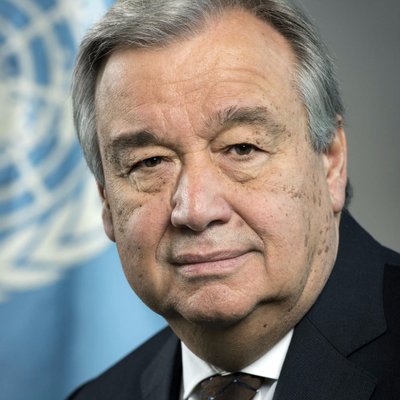
Deeply saddened by the passing of Phumzile Mlambo-Ngcuka, South Africa’s first woman Deputy President & former @UN_Women Chief.
A lifelong champion of the rights & empowerment of women & girls, Phumzile believed that gender equality is not a favour to be granted but a right to be claimed.
My deepest condolences to her loved ones, and to the women & girls everywhere whose lives she touched & changed.

SMAC Ⓜ retweeted

Many of us who grew up with a reverence for the ANC have mourned its demise. We were labeled " DA coconuts, clever blacks, counter revolutionaries " because those who wear ANC regalia believe they have legitimacy.
They ignored the umbilical chord that tied us to this party and the painful separation that HAD to happen because of its own conduct. The party chose itself and not "the people." They didn't ask WHY. So with that in mind, I respond to you.
My dear sister, what, exactly, is a “black party”? A party founded by black people? Led by black people? Supported by black voters? And what happens when its leaders steal from the people whose racial identity they share?
Does a black official who loots a public institution advance black power? Does a black politician who protects corruption become progressive by virtue of pigmentation? What liberation reaches a black household when money intended for its water, electricity, healthcare or education disappears?
A party that helped teach the world the meaning of non-racial liberation cannot respond to electoral rejection by dividing South Africans into racial camps and suggesting that black voters who choose differently are restoring colonial rule. If the ANC has abandoned its commitment to non-racialism, its leadership must tell us. PUBLICLY. And explain which conference authorised that departure.
Because history and documents say otherwise.
In 1955, the Congress of the People adopted the Freedom Charter, declaring that “South Africa belongs to all who live in it, black and white”.
Albert Luthuli addressed precisely this in his 1961 Nobel lecture. He explained that the liberation movement had consciously rejected the easy mobilisation of racial resentment, despite the brutality inflicted on black South Africans. He described its vision as “a nonracial, democratic South Africa”. The refusal to answer racial oppression with racial exclusion was a considered political choice.
Mandela expressed that commitment at Rivonia in 1964: “I have fought against white domination, and I have fought against black domination.” Those words placed a moral limit on the exercise of power, including power exercised by black leaders.
The ANC translated principle into organisational decisions. At Morogoro in 1969, it opened membership to South Africans of all races, although the NEC remained restricted to Africans. At Kabwe in 1985, it removed that leadership restriction. Tambo subsequently described the opening of membership as “a giant leap forward towards the true nonracialism within the ANC”.
These were deliberate changes to who could belong and who could lead. So wena what are you saying here? And is this the party's position or are you all saying what you want, when you want?
The constitution adopted at the ANC’s 2022 conference retains non-racialism as part of the organisation’s defining character. Rule 3.4 commits it to combating racial, tribal and ethnic exclusivism or chauvinism. None of this requires silence about racism, white economic power or the enduring distribution of deprivation along racial lines.
The people harmed by corruption do not experience it less brutally because the person responsible looks like them. You invoke historical and dialectical materialism. This makes your argument especially vacuous. A serious materialist analysis would examine ownership, class interests, institutions, labour and the distribution of resources. Counting parties by the presumed race of their leaders tells us remarkably little about whose interests those parties actually serve.
Black citizens are entitled to withdraw support from a party that disappoints them. Their freedom includes the right to reject the ANC without being accused of betraying their people. You celebrate the political wisdom of black voters when they support you, then diagnose their ignorance when they leave?
You, @MYANC abandoned us. YOU have made us a laughing stock. Don't you dare preach to us about what we do next.

The “we will be the generation that removes the ANC from power”, turned out to be “we are the generation that brings back colonists back to power”🙈
Go se tsebe ke kotsi🙏🏾, biblically this is located in the book of Hosea, Chapter 4: verse 6, “ my people perish for lack of knowledge”
It does not just end there, we had abandoned our revolutionary duty of conscientising and imparting dialectical and historical materialism amongst the people, the motive force as their tools of analysis when confronted with many complex issues affecting our country . We abandoned this revolutionary duty by also allowing the enemy camp to be the ones who drive the narrative in the country.
I do not have to repeat what we have already conceded to and accepted as our weaknesses as the ANC, and how we have contributed to loosing public trust amongst the people. We accepted and we will change that for the better. But South Africans must equally understand that we can’t auction the country away just for vibes and because there is an anti-ANC bandwagon we jump onto without being scientific and by being ahistorical. I don’t know how many times we have repeated these words, that the disintegration of black power will never be to the benefit of the progressives in this country but to the minority.
I asked a simple question to day why do we have 544 different black parties in the country contesting each other, but only have two major white political parties that have remained as they were since 1994 and the only answered I got were insults etc. we have never heard of a DA splinter, or FF + splinter party. Their numbers remain solid whilst we continue to disintegrate and the black power neutralised and we think we are spitting one another and proving superiority over one another. Whilst the enemy camp marches ahead and advancing towards complete victory.
Let those who can hear, hear!

SMAC Ⓜ retweeted

The people's cause prevailed and liberation was achieved. That is not the issue. The issue is what was done to dismantle the work of the first 15 years of our democracy. It is the arrogance and entitlement with which the ANC acted. It is the thieving, the self-enrichment and the taking advantage of the poor.
You defended some of the most indefensible acts of the ANC's former president, Jacob Zuma, for example. What you were telling us, indirectly, was that the ANC and its leadership were far more important than the people. The people had been placed last in the hierarchy, and the people remembered.
In 2014, I wrote an article for the Mail & Guardian in which I quoted the ANC's very own Mangaung resolutions from the 53rd National Conference: "Believing that the neglect of cadre policy is at the centre of most of the current weaknesses and challenges faced by our movement in the post-1994 era. The policy conference reaffirms the perspective that our revolution will only succeed if the movement continuously produces a contingent of cadres who are conscious, competent, committed, disciplined and conscientious."
Having read the resolution, I went on to say the following: "The important point here regarding 'the neglect of cadre policy' being at the centre of the weaknesses of the ANC is recognised, however, it is one thing to acknowledge this on paper and quite another to implement it. If cadre policy is not implemented vigorously, the weaknesses the party sees will continue to prevail and it will descend into an abyss of chaos and attract parasites who will only see it as a means to serve themselves and not the people. The ANC will become a feeding frenzy and will be left but a carcass beyond redemption. This cannot and should not be allowed to happen. To avoid this, the ANC must not neglect the cadre policy when it suits certain individuals. It must apply it to all, otherwise people will support the party begrudgingly and eventually not at all."
This was not a prediction. It was obvious to all that this was where the party was headed, but no one was willing to put the brakes on before the cliff.
Is the ANC salvageable? Perhaps. But not with the current leaders, I'm afraid. I am sure none of you want to hear that, because all your lives you have worked to be at the helm of the movement. But if you love the ANC, you will admit that you are the wrong people to lead it towards its next chapter. Perhaps there are hidden gems within that you are suppressing. Let them shine, and stand back.
But are you guys capable of doing so? I doubt it, deeply.

"Before I sit down, I wish to make a few observations: we did not tear ourselves apart because of lack of progress at times. We were always ready to accept our mistakes and to correct them. Above all we succeeded to foster and defend the unity of the ANC and the unity of our people in general. Even in bleak moments, we were never in doubt regarding the winning of freedom. We have never been in doubt that the people`s cause shall triumph." Cde President Oliver Tambo addressing the 48th National Conference of the African National Congress (ANC) on July 2, 1991, Durban. This was the first ANC national conference inside the country after almost three decades of an extremely difficult, painful, and revolutionary struggle outside and inside the country, for the liberation of the people.

SMAC Ⓜ retweeted

URhadebe has a way of articulating issues and stay above petty politics. This is the kind of sobriety we need in our leaders.
SMAC Ⓜ retweeted

Our first CSIR election modelling predictions are out!
Working in collaboration with the @SABCPortal, #TeamCSIR has deployed its election prediction model at the National Results Operations Centre (ROC) to support data-driven election analysis throughout the 2026 local government elections.
Our team will continue to monitor incoming results and update model outputs as more official election data becomes available.
Follow along for insights into the science, data and innovation behind the process. #LGE2026
ℹ️ elections.sabcnews.com/
@dstigovza


SMAC Ⓜ retweeted

The senator for Georgia is now given a 24 per cent change of becoming the next presidential nominee for the Democrats, jumping up nine per cent in the past day.
Read more: independent.co.uk/news/world…

SMAC Ⓜ retweeted

IEC Election numbers coming in | 04 November 2026 teapawt.net/i/broadcasts/2mdAgrmkk…


SMAC Ⓜ retweeted
You are quite stupid and ignorant. Trump, a convicted felon and political gangster has given many of you trashy verkrampte rats some boldness lately. It’s all going to yield to zero.

The ANC government is weaponizing the Hawks who should be apolitical to open treason cases against AfriForum and Solidarity, civil rights groups advocating for Afrikaner rights in the USA. Silencing political opposition this way is a grave mistake with serious international consequences. This basically proves President Trump‘s point. This is political persecution.
SMAC Ⓜ retweeted
This turmoil will last for the duration of this lunatic’s presidential term. Nothing more. The PayPal boys that you’re dog whistling to have this felon’s ear. So you may win the little battle but not the war. As for SA’s long term prosperity and sovereignty, you won’t touch it.

Hunter Biden is in South Africa. President @realDonaldTrump responds: “South Africa, you know, is on a watch list … because what they are doing to people is brutal.”
I agree. Threatening the continued cultural existence of Afrikaans communities by attempting to destroy Afrikaans schools with @PresidencyZA Ramaphosa’s signing of the BELA Act is brutal indeed. We will not take this attack on our existence lying down.
