

Chairman, Amsterdam Berlin; CEO & Founder, Amsterdam Worldwide, Creative Entrepreneur, irrational attachment to Arsenal, Ajax, and Montreal Canadiens
Amsterdam
Joined April 2008
- Tweets13.8K
- Following4.8K
- Followers1.2K
- Likes22.2K


Sehr Gut - Danke Deutschland

🇩🇪🇺🇦 “I'll never get into a Soviet tank again.” How German military aid is helping Ukraine defend against Russia's invasion.
That's what Ukrainian senior sergeant Andrii said after switching from a Soviet T-72 to a German Leopard 2.
His experience is far from unique.
An IRIS-T crew intercepted eight Russian cruise missiles in 30 seconds. A Gepard crew shot down 17 Shahed drones in one night. A Leopard 2A6 survived 12 hits and brought its crew home.
These are real battlefield results behind Germany's military assistance.
German weapons are helping Ukraine fight and survive. Ukrainian combat experience, in turn, offers Germany valuable lessons for strengthening its own defenses.
Ten stories from Ukrainian soldiers about German weapons, their performance in combat and what both countries can learn. 🧵👇

13
Brian Elliott retweeted

So the CEO of one of the most valuable companies in the world is now effectively serving at the pleasure of the president. Not good.

MAJOR: President Trump dialed into Nvidia board meeting to argue for Jensen’s return, source with knowledge tells me - WH affirms to @semafor
“President Trump was totally involved and this is a great decision by the NVIDIA board. We have to protect our geniuses,” WH communications director Steven Cheung tells @ShelbyTalcott $NVDA
Brian Elliott retweeted

At its peak, Russia was losing 720 soldiers a day – more in a week than the US lost in the entire Iraq war. Our long read on confidential Russian state data that gives the most detailed picture yet of nearly 500,000 Russian war deaths since 2022
theguardian.com/world/2026/n…


Brian Elliott retweeted

GENE WILDER on arguing with MEL BROOKS over an iconic scene he wrote for
YOUNG FRANKENSTEIN (1974)





Brian Elliott retweeted

The most important article of 2026 is this piece by @jburnmurdoch, building overwhelming evidence on the unsustainability of the pension systems in many countries and the broken intergenerational contract.
To me this is the single underlying problem explaining the inability of many countries (incluiding my two, UK and Spain) to invest and grow and the malaise in their youth. Every future oriented policy, education, innovation, investment in infrastructure, is being sacrificed to increase pensioners living standards.
But the problem is political, and some countries have solved it. E.g. in Denmark the retirement age increases (years later) semi automatically with life expectancy. See the result in the last graph.
giftarticle.ft.com/giftartic…


Brian Elliott retweeted
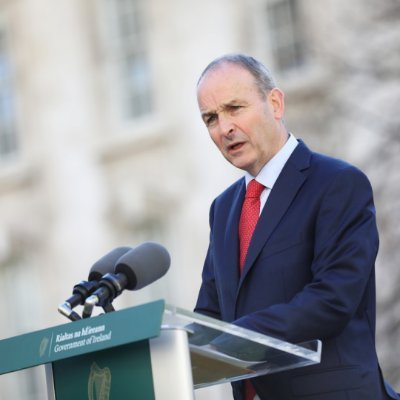
The European Union has transformed Ireland. It is a peaceful endeavour.
Yet we hear the same old untruths from the opposition on every single treaty, proving they can never bring themselves to embrace what has been a very good experience for us.
Brian Elliott retweeted

The Armed Forces of Ukraine congratulate Lisbon’s Vasco da Gama Bridge on being named the longest bridge in Europe!
Brian Elliott retweeted

Canada is a greatest place in the world to build. More founders are betting on it.
Keep going 🇨🇦

Nature is healing.
A year ago, our data showed that by 2024, more of Canada’s high-potential founders were building in the US than at home.
In 2025, for the first time since 2018, the share building in Canada went up.
New @leadersfund data:
📈 In 2025, 40% of Canada’s high-potential founders built in Canada, up from 32% in 2024.
🇺🇸 Nearly half of Canadian-educated founders still build in the US: 49% in 2025, 48% in 2024.
The direction is encouraging.
And with Ottawa’s new Canada Growth Incentive, Canada is finally competing for its founders, and the vibe is shifting positive.
Big thanks to our friends @SpecterHQ for their partnership on the data.

Brian Elliott retweeted

Mark Carney: "It would be simpler if we could just align just within the Western alliance that was there, and take first best technologies. But you can't go through Greenland, you can't go through 51st State, you can't go through Ukraine and Starlink and responsibly hold that assumption 100%."
Make Ukraine Great Again

🇺🇦👀 Ukraine will receive F-16 and Mirage aircraft, missiles, as well as millions for drones from partners - main points from the 37th Ramstein.
🇩🇰 Denmark - €645 million for drones, ammunition for F-16 and PURL, another €200 million for air defense.
🇩🇪 Germany - a package of €1 billion with IRIS-T systems, radars and interceptors. Also $300 million for PURL.
🇳🇴 Norway - about $800 million, including $300 million for Ukrainian drones, $300 million for PURL and $150 million for air defense.
🇬🇧 Great Britain - £240 million for missiles, interceptors and radars.
🇳🇱 Netherlands - a winter package of €500 million, support for PURL and the "Drone Line".
🇧🇪 Belgium – 10 F-16 fighters by the end of 2026 and €100 million for PURL.
🇫🇷 France – two Mirage 2000-5Fs by the end of the year, GF300 radar, AASM Hammer aerial bombs and ammunition.
🇪🇸 Spain – over €400 million for drones, artillery shells and IRIS-T missiles.
🇫🇮 Finland – two aid packages of €291 million and €40 million for PURL.
🇨🇦 Canada – up to C$45 million for AIM-7, R-73 and R-27 missiles, FrankenSAM optical systems and ammunition.
🇸🇪 🇵🇹 🇱🇺 🇱🇹 🇪🇪 Sweden – $71 million, Portugal – €50 million for PURL, Luxembourg – €25 million for PURL. Lithuania plans to allocate €250 million in military aid in 2027, while Estonia plans to allocate at least 0.25% of GDP to support Ukraine.

24
Excellent @philvenables
“The actual need here is to reduce brittleness and increase resilience on the assumption that everything will always fail in some way at some time.”

Coincidences Magnified - Are We Under Attack?
I will preface this with the humility that I might be totally wrong and all these recent events really are some type of coordinated cyber-attack, although I would say if it is it’s all rather pointless and unfocused. But, I doubt this is really an “attack” in any way. However, just because you’re paranoid doesn’t mean that they are not really out to get you.
No, the most likely explanation of what is going on is:
1. Fragility of increasingly large-scale and under-maintained, complex and brittle infrastructure.
2. Our increased digital dependence such that when these events happen we notice them more.
3. A few independent incidents coincidentally occurring together which causes the media and the rest of us to be more attuned to other outages that would normally go unreported, that we now bucket into some mythologized growing category.
4. Lack of resilience in the presence of failures so that their impact is longer-lasting and more impactful.
Let’s pick on a few of these. First, independent occurrences of events that seem to be connected. One example I remember was a day many years ago when the New York Stock Exchange was down for the day (software error), a US airline was ground stopped (hardware event), and on the same day a bunch of major bank CISOs, including me, were going into the White House Situation Room for a totally unrelated threat briefing (we had to hide from the White House Press Corp in case that was further coincidental evidence of “attack on America”.) After this I looked at what else happened that was unreported that day and there were dozens of other unrelated outages at hospitals, power plants, and so on. Perhaps even more happened that one day than has been happening this past week. It just went unreported.
Second, do we have any base rate data to understand if what of anything that has happened is actually so unusual or surprising? [Note: something being unsurprising doesn’t mean it’s acceptable, in fact we want such events to become ever more surprising of course].
- Microsoft outage: yes, this was unusually big, but a Microsoft outage isn’t a new occurrence. (Other large-scale tech providers have outages also, to be fair to Microsoft).
- FAA outage: maybe this was a minor change to one of 1000’s of cables that had previously been fine that had some weird accidental effect they’d not seen before hence this wasn’t the situation of “why do a production change on a Friday?” Organizations do changes all the time that they think are distant from impact risk. Perhaps this was like that. But it does seem their network should not have been so brittle in the face of this. I guess we will find out.
- NSA Net outage: do you know how many times NSA Net goes down per year? I don’t. But perhaps NSA Net isn’t a literally 100% available system (most things aren’t [literally], even stupendously critical things), so perhaps this was still within their four or five 9’s SLO. Perhaps it goes down several times a year but we just don’t normally hear about it. I don’t know, most of everyone else doesn’t either.
The list could go on.
The thing that should be disturbing to us though is the point on resilience.
I really worry when things like this happen together or in isolation and our response is: “This [bad thing] must never happen again.” and the organizations involved, sometimes when compelled to, make that system less likely to break. Then we build up more dependence on it, but again it will inevitably break in some new way for some other reason and the damage will be bigger because that increased confidence induced more dependence, because we all said “this must never happen again.”
The real lesson here is that we need to not just build resilience to failure in specific components but resilience in the overall “system”, like let’s always assume FAA comms may go down albeit at some increasingly low probability and have a true back-up emergency communications approach to at least sustain some operations. Maybe they’re working on this, I don’t know. And make sure that critical industrial systems don’t depend on alerts only being delivered by cloud-based email.
I’ll start where I began. It will be darkly funny if I’m wrong and this really is a set of related attacks. But when you look at how much breaks regularly everywhere all the time, I doubt it.
The actual need here is to reduce brittleness and increase resilience on the assumption that everything will always fail in some way at some time.

21
Brian Elliott retweeted
Former Canadian Ambassador to the U.S.: "I don't think there's any way that we're going to get back to what I would call a normal relationship with the United States anytime soon. It may be a generation."


