

Climat: science, industrie, politique et ingénierie sociale. Aussi : transport, data, IA, et un soupçon de fun
Chambéry, France
Joined August 2015
- Tweets9.7K
- Following1.6K
- Followers477
- Likes12.7K




Benjamin Blanc retweeted

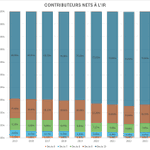
Ca fait longtemps que je voulais ces chiffres, alors je les ai compilés moi-même.
Beaucoup de profs presque retraités ne comprennent pas qui a été lésé par le gel de la paie. Ils disent souvent : "moi sur toute ma carrière, je n'ai connu que des gels du point d'indice", pensant les nouveaux arrivés potentiellement mieux lotis. Ils ne comprennent pas pas que la baisse qu'ils ont connu à un âge, ceux qui suivent la subiront aussi quand ils auront le même âge.
Alors ici, je montre combien gagne un prof-type sur une carrière entière, versement de retraite comprise. Et j'ai extrapolé sur la base des décisions des 25 dernières années.
Un prof certifié recruté en 1966 a reçu 2,35 millions d'euros en paie + pensions. Aujourd'hui, ce même prof' travaillera 5,5 années de plus et touchera 1,64 millions.
Bref, voici très concrètement, dans un métier, comment des générations l'emportent sur une autre. Et les conditions d'exercice ne vont pas s'améliorant non plus.
Inflation neutralisée, IR déduit. Données :
g-lat.fr/carrieres-profs/

Benjamin Blanc retweeted

Bon. J'ai lu 2-3 trucs et je crois avoir une très vague idée de la façon dont Reality View fonctionne. Un TRÈS VAGUE IDÉE. Soyons francs: je ne penses pas être plus con qu'un autre et je n'y comprends pas grand chose... Et pourtant le résultat est là. Un truc qui paraît totalmt

FSD v15 now starting to roll out – upgrading every part of the end-to-end driving network
Safety
25x better handling of safety critical cases
Tesla Reality View
Adds a live visualization of the drive that lets you see & control what FSD is planning to do
Navigation for start & end of the trip now learns end-to-end from fleet route preferences. Later v15 releases will expand this to the entire route.
You also should notice better detection of signs, animals, debris, potholes and standing water, plus more natural speed handling in school zones and inclement weather.
Lastly, FSD can now slow for speed cameras & Bike Rack Mode lets you enable FSD w/ bike racks or similar hitch accessories
Benjamin Blanc retweeted

It's mind numbing to me that Finland's GDP per capita has grown 0% since 2006
That's zero growth in two decades
I finished high school in 2007 and we will most likely be remembered as the forgotten generation when it comes to growth
I've never witnessed in my adult life (I turned 18yo in 2006) my home country grow
Insane

Benjamin Blanc retweeted

Au XIVe siècle, des Aztèques découvrent les ruines d'une cité gigantesque, à quelques kilomètres de l'actuelle Mexico.
Des pyramides immenses, des temples, des avenues monumentales. Une ville abandonnée depuis plus de 1000 ans par ses bâtisseurs.

Benjamin Blanc retweeted

A toothpaste company has quietly killed the entire market research industry and nobody is talking about it.
Colgate published a paper showing you can predict real purchase intent by simply asking LLMs to roleplay customers.
And this is beyond insane.
If you ask an AI, "Rate this product from 1 to 5," it gives safe, middle-of-the-road garbage.
So researchers invented a method called Semantic Similarity Rating (SSR).
Instead of asking the AI for a number, they asked it to roleplay.
They gave the LLM a demographic profile. They showed it a product concept. And they asked it to write down its raw, unfiltered thoughts.
Then, they used a semantic model to translate those written thoughts into a numerical score.
The results are staggering.
Tested against 57 real personal care product surveys and 9,300 human responses, the synthetic consumers hit 90% of human test-retest reliability.
They perfectly mirrored how different age brackets and income levels react to price changes.
And they provided detailed, qualitative feedback that was deeper and more critical than what actual humans wrote.
This destroys the economics of traditional market research.
You don't need to wait a month to see if a product will sell.
You can simulate 1,000 hyper-targeted customer interviews overnight.
You can A/B test pricing across every demographic instantly.

Benjamin Blanc retweeted

🚨 UPDATE sur Riemann et elle est énorme
Hier, Levent Alpöge, mathématicien chez Anthropic, annonçait avoir trouvé une preuve avec Claude. C'était une revendication, personne n'avait encore vérifié
Aujourd'hui, la Lean FRO et la Mathlib Initiative, les deux organisations derrière Lean et sa bibliothèque de maths, publient une déclaration commune : « We hereby certify that both the statement and the proof of the Riemann Hypothesis are correct »
EN 24 HEURES !!
Elles écrivent avoir « full confidence » dans la preuve et félicitent Alpöge
Après 167 ans cest le plus gros morceau des maths qui tombe, alors que tout le monde le voyait encore résister 30-50 ans.
1. Ce qui a changé en 24h
Hier je vous disais que personne hors de son cercle n'avait confirmé que le code compile, ni que le théorème final dit exactement ce que dit l'hypothèse de Riemann
Les deux points sont réglés. Des dizaines de personnes ont recompilé la bibliothèque de leur côté et obtenu le même fichier de preuve, sans aucune erreur
Et l'énoncé démontré est bien celui de Mathlib, qui avait déjà été relu par des experts de Lean et de théorie des nombres
2. Comment ils ont vérifié
La preuve fait 17 millions de lignes de Lean et ne dépend directement que de Mathlib
La communauté a isolé l'énoncé de Riemann dans un fichier à part, qui n'importe que Mathlib, puis l'a comparé au théorème d'Alpöge avec deux outils indépendants, comparator et con-leche. Les deux confirment que c'est exactement le même énoncé
La preuve a ensuite été passée dans plusieurs vérificateurs, dont le noyau officiel de Lean, con-leche et con-ron, plus d'autres écrits par des tiers dans d'autres langages
Détail très fort : con-leche et con-ron ont eux-mêmes une preuve formelle qu'ils ne peuvent pas accepter une fausse preuve. Ça répond à la crainte d'une faille dans la logique de Lean que la preuve aurait pu exploiter
3. Claude des deux côtés
Andrew Sutherland, du MIT, publie tous ses fichiers de vérification. Et ses contrôles ont été lancés avec Claude Code
Sur sa page : les 175 187 modules compilent, la preuve n'utilise que les trois axiomes standard de Lean, et nanoda, un noyau indépendant écrit en Rust, accepte la preuve complète
Donc Claude a aidé à trouver la preuve, et Claude a aidé à la vérifier. Avec des outils indépendants à chaque étape.
Pour le million du Clay Institute, les règles demandent une publication dans une revue reconnue, deux ans d'attente puis une acceptation générale par la communauté. Et Anthropic n'a fait aucune communication officielle
5. Ce que ça débloque
Comme je vous disait hier Des milliers de théorèmes commençaient par « si l'hypothèse de Riemann est vraie, alors… ». Ils tiennent maintenant sur une preuve vérifiée par machine
Pour les gros needs, Sutherland l'a déjà montré : en combinant la preuve avec une formalisation indépendante du critère de Robin, Lean démontre l'inégalité de Robin pour tout n > 5040, sans aucune mention de la fonction zêta
Le Lean blog conclut en attendant toute l'activité de la communauté pour expliquer les idées nouvelles de cette preuve. Les humains doivent maintenant comprendre ce que Claude et Alpöge ont trouvé, une première dans l’histoire
L’ère de l’exponentielle vient de commencer, l’humanité entre dans un âge d’or


The Lean FRO and Mathlib Initiative have released a joint statement on the Lean verification of the Riemann Hypothesis.
On November 20, Levent Alpöge released a proof of the Riemann Hypothesis as a Lean library of 17 million lines of code. Over the past day, the Lean and Mathlib communities worked together to verify it. The statement certifies the proof as correct and describes how it meets all necessary verification criteria.
Congratulations to Levent on this achievement, and thank you to everyone in the community who contributed to the verification.
Full statement: leanprover-community.github.…

Benjamin Blanc retweeted

A sea of illuminating charts on pension spending from @jburnmurdoch
“If the France’s pension age had followed the same path as that of Denmark, France’s debt-to-GDP ratio today would be closer to 70 per cent than 120 per cent”
ft.com/content/6986a3b5-12ed…

Benjamin Blanc retweeted
Want to know why young people are angry and feel increasingly hopeless? This chart says a lot.
V good story by @jburnmurdoch.
giftarticle.ft.com/giftartic…

Benjamin Blanc retweeted

J’ai dû intervenir sur @franceinter cette fois pour recadrer @gabriel_zucman… On peut jamais prendre de vacances chez vous !
Benjamin Blanc retweeted

In the spring of 2023, Anthropic invited me to spend several weeks at their headquarters ahead of the launch of Claude 2, sitting in on meetings and interviewing dozens of employees to write the first major profile of the company in the NYT.
I just reread that story, and went back through my notebook in light of Anthropic's IPO. A few things that stuck out:
-- Anthropic was very small, very recently. When I visited, they had 160 employees in a small office on Sansome, a chatbot nobody had ever heard of, and seemed to have no interest in running a business. I wrote in my notebook that they seemed like "ambivalent capitalists"; their newly hired sales guy told me that the only reason he needed to make money at all was so that the safety researchers could save the world.
-- Things were not going well for them: their biggest shareholder (SBF) had been arrested for fraud, and OpenAI was eating their lunch with ChatGPT. (I later learned that they also had an expensive model training failure in 2023.) This was 3.5 years before they went public as one of the most valuable companies in the world, with 5,300 employees and 14x annual revenue growth. I guess they figured out the capitalism thing!
-- They were obviously and sincerely terrified of AI. Claude 2 was a very dumb model by today's standards, but every discussion I had there revolved around existential risk. Researchers told me they lost sleep over their fears of AI takeover, and made terrifying predictions of how soon AGI would arrive. It didn't seem fake or manufactured, but I didn't really get it! I wrote in my notebook: "I have never encountered a company that so badly needs a Klonopin." (I stand behind this, although I also need one now.)
-- Dario was in Italy when the NYT photographer wanted to take his picture, so his team rented an office in some random Italian town and staged it to look like his actual office, and they took the photos there. It had a rotary phone (?) and panic-room red lights, which I never really understood.
-- The Ants I talked to mostly struck me as sharp and thoughtful, although I did end up wondering whether they were too safety-obsessed to run an actual business. (I jotted down: "I do not know why you would invest in a company like this.") But I was struck by their earnestness, especially because I'd just spent several years covering social networks that didn't worry about the harms of their products at all.
Anyway, I'm feeling sort of conflicted about the Anthropic IPO. (As are a lot of people, including some at Anthropic!) I don't know if being public makes an AI company more or less likely to follow through on its safety commitments, and I know the company has changed a lot as it has grown. But on some level I'm also just like, damn, what a crazy story.
Here's the gift link, it's sort of fun to look back on the ancient runes of July 2023.
nytimes.com/2023/07/11/techn…


Benjamin Blanc retweeted

Après Elon Musk et Jensen Huang, j'ai rassemblé toutes les interviews de Steve Jobs, de 1980 à 2011, sur un seul site.
151 vidéos. 123 heures. 270 citations. Et 14 de ses prédictions vérifiées une par une.
Tout se regarde directement sur le site, en 10 langues.
silicon-valley.tech
Benjamin Blanc retweeted

LFI veut confisquer les logements transmis par héritage au-delà du cinquième.
C'est tellement stupide qu'on se demande si quelqu'un a pris trente secondes pour réfléchir avant de pondre cette ânerie.
Prenons un propriétaire de 20 appartements.
Il lui suffit d'en vendre 15 avant de mourir et de transmettre l'argent à ses enfants. Ou de faire des donations de son vivant. Ou de transmettre des parts de SCI, si la loi ne prévoit pas ce cas.
Résultat : l'État récupère exactement ZÉRO logement.
Mais le plus grotesque, c'est le plafond en nombre de logements plutôt qu'en valeur.
Vous héritez d'une villa de 15 millions d'euros sur la Côte d'Azur ? Aucun problème.
Vous héritez de six studios à 80 000 € dans une ville moyenne ? L'État vous prend le sixième.
Le millionnaire conserve son patrimoine. Le petit investisseur se fait dépouiller.
Et qui va décider quels logements sont confisqués ? L'État ? Les héritiers ? Que fait-on des crédits en cours, des logements en indivision, des biens détenus à l'étranger ?
Et surtout, comment comptez-vous confisquer des propriétés privées sans indemniser leurs propriétaires ?
Parce que, détail apparemment secondaire pour nos apprentis révolutionnaires, le droit de propriété est protégé par la Constitution.
Si vous indemnisez, il faut payer. Si vous ne payez pas, vous vous heurtez à la Constitution.
Mais imaginons même que vous réussissiez à mettre en œuvre cette usine à gaz.
Vous pensez que les propriétaires vont tranquillement attendre de mourir pour offrir leurs appartements à l'État ?
Ils vont vendre, donner, restructurer leur patrimoine ou investir ailleurs.
Vous aurez découragé l'investissement locatif, compliqué les successions, mobilisé une armée de fonctionnaires et de contrôleurs, et créé exactement ZÉRO logement supplémentaire.
Car oui, autre détail : changer le propriétaire d'un appartement ne fait pas apparaître un nouvel appartement.
Le problème français, c'est notamment qu'on ne construit pas assez de logements là où les gens veulent habiter.
La solution de LFI ? Menacer ceux qui possèdent et financent des logements existants, tout en rendant l'investissement immobilier encore moins attractif.
C'est toute la magie de leur pensée économique : ignorer les comportements humains, mépriser le droit, confondre redistribution et création de richesse, puis s'étonner que la réalité refuse d'obéir.
Le communisme commence toujours par une grande idée de confiscation. Et finit généralement par une grande surprise devant la pénurie.

Benjamin Blanc retweeted

Je devrais me moquer de Foucault plus souvent, c'est très drôle : un article du Nouvel Obs a entrepris de me philosophy-checker. Allons-y, prenons les arguments un par un : 👇


Benjamin Blanc retweeted

J'ai trouvé le meilleur prof de France!
Malheureusement, il vient de démissionner, dégoûté par la réaction de l'Education Nationale face aux blocus et aux émeutes.
Écoutez-le, c'est très instructif.
Benjamin Blanc retweeted

welt.de/wirtschaft/article6a…
Liebe Deutsche,
manchmal muss man zwei Nachrichten einfach nebeneinanderlegen.
Dann braucht man keinen Kommentar mehr.
SpaceX hat gerade etwas geschafft, das man eigentlich nur so beschreiben kann:
Musk parkt das Raumschiff rückwärts ein.
Gut, technisch ist es die Starship-Oberstufe.
Ein rund 50 Meter großes Ding.
Nach ungefähr 22 Stunden im All.
14-mal um die Erde.
Und dann kommt dieses Monstrum wieder zurück, stellt sich senkrecht vor den Startturm und lässt sich von zwei riesigen Stahlarmen auffangen.
Nicht auf irgendeinem Acker.
Nicht mit Fallschirm.
Nicht: „Wir gucken mal, wo das Ding runterkommt.“
Nein. Rückwärts einparken.
SpaceX:
„Wir holen mal eben eine Raketenstufe aus dem Weltraum zurück und fangen sie mit einem Turm.“
Deutschland:
„Die Verwaltung muss digitalisiert werden.“
Musk parkt das Raumschiff rückwärts ein.
Deutschland:
„Wir brauchen dringend einen Bürokratieabbau.“
Musk parkt das Raumschiff rückwärts ein.
Deutschland:
„Können Sie das Formular bitte ausdrucken, unterschreiben, einscannen und per E-Mail schicken?“
Musk parkt das Raumschiff rückwärts ein.
Deutschland:
„Leider fehlt auf Seite 7 unten links Ihre handschriftliche Unterschrift.“
Das ist inzwischen keine technologische Entwicklung mehr.
Das sind zwei verschiedene Zivilisationen.
Auf der einen Seite Ingenieure, die offenbar morgens ins Büro kommen und sagen:
„Was wäre, wenn wir eine hundert Tonnen schwere Raketenstufe aus dem Orbit zurückholen und mit zwei Metallarmen aus der Luft pflücken?“
Und irgendeiner antwortet:
„Klingt schwierig.“ „Gut. Machen wir.“
Auf der anderen Seite Deutschland:
„Könnten wir den Bauantrag irgendwann digital einreichen?“
„Ui.“ „Schwierig.“ „Datenschutz.“ „Zuständigkeit.“ „Schnittstelle.“ „Landesrecht.“ „Bundesrecht.“
„Da müssen wir erst einmal einen Arbeitskreis bilden.“
Voraussichtlicher Abschluss:
Vielleicht.
Aber wir waren selbstverständlich auch innovativ.
Wir haben den Plastikdeckel an der Flasche festgemacht.
Das war übrigens tatsächlich europäische Gesetzgebung: Seit 2024 müssen bestimmte Kunststoffverschlüsse an Einweg-Getränkebehältern befestigt bleiben.
Auch Technik. Irgendwie.
Die Amerikaner fangen also ein Raumschiff aus dem Weltraum.
Europa fängt den Plastikdeckel. Man muss seine Kernkompetenzen kennen.
Und bevor jetzt jemand glaubt, ich würde behaupten, in Deutschland könne niemand Technologie:
Unsinn. Deutschland hat hervorragende Ingenieure.
Hervorragende Unternehmen. Hervorragende Forschung.
Und bei der Nutzung künstlicher Intelligenz in Unternehmen liegen wir sogar noch deutlich über dem EU-Durchschnitt.
Noch.
Das ist nämlich genau der Punkt.
KI ist eine dieser Technologien, bei denen gerade nicht derjenige gewinnt, der 2032 die schönste nationale Strategie als PDF veröffentlicht.
Sondern derjenige, der sie jetzt benutzt. In Unternehmen. In Softwareentwicklung. In Produktion. In Verwaltung. In Forschung.
In ganz normalen Arbeitsabläufen.
Und deshalb habe ich nur eine Bitte:
Könnten wir vielleicht ausnahmsweise etwas, bei dem wir noch ordentlich dabei sind, nicht erst regulieren, diskutieren, zertifizieren, dokumentieren und anschließend verwalten, bis andere zehn Jahre weiter sind?
Nur einmal?
Ein einziges Mal?
Vielleicht schauen wir einfach kurz nach Texas.
Da kommt gerade ein fünfzig Meter hohes Raumschiff vom Himmel.
Zwei Arme greifen danach.
Klack. Geparkt.
Und währenddessen öffnet irgendwo in Deutschland ein Beamter eine E-Mail und schreibt zurück:
„Sehr geehrter Herr Müller,
leider können wir Ihren digital ausgefüllten Antrag nicht bearbeiten.
Bitte reichen Sie diesen erneut auf dem Postweg ein.“
Aber keine Sorge.
Der Plastikdeckel bleibt dran.
Es lebe der Fortschritt.

Benjamin Blanc retweeted

SpaceX caught Starship, so what now?
Before SpaceX can land astronauts on the Moon, it has to refuel a Starship in orbit. That could take 6 tanker launches. Or more than 20.
Here's how the whole mission works.
Starship reaches orbit almost empty, so a depot ship waits up there and tankers fill it one by one. Each tanker docks alongside, small thrusters settle the propellant at the back of the tanks, and tank pressure pushes it across.
Musk says 6 to 8 tankers and NASA officials agree. A NASA safety adviser said about 22.
So far propellant has only been moved between tanks inside one ship, on Flight 3 in March 2024. The first ship-to-ship test is planned for early 2027.
Then four astronauts launch in Orion and dock to the lander's nose in Earth orbit. Starship fires and pushes both of them to the Moon, about four days away.
In lunar orbit two of the crew move into Starship and head for the south pole. Raptors do most of the braking, then thrusters high on the hull can take over for the last 100 metres so less dust gets thrown up. A few days on the surface, back up to Orion, and Orion brings all four home.
And those big wings on the lander? Solar arrays, about 18 metres each going by SpaceX's renders. No heat shield and no flaps, because it never comes back.
The plan is a docking test in 2027 and a first landing in 2028. NASA hasn't picked the lander yet, and these dates have slipped before.
Still to prove: ship-to-ship refuelling, keeping propellant cold for weeks, launching about once a week, and landing on the Moon without a crew.
This week Starship reached orbit again and the tower caught the ship for the first time. Now it needs to do that every week.
Sources: NASA, SpaceX, ESA/Airbus, NASASpaceflight, SpacePolicyOnline, AmericaSpace
Benjamin Blanc retweeted

Most Americans have no fucking clue who Alexander Stubb is.
Which is unfortunate, because Finland somehow managed to elect an actual functioning adult.
PhD in international relations. Speaks five languages (his wife does too). Ironman triathlete. Commander-in-Chief of a country sharing 830 miles of border with fucking Russia.
Meanwhile, half the political class can’t string together a coherent sentence without a teleprompter and a team of handlers.
No tantrums. No bumper-sticker bullshit. No chest-thumping circus act.
Just a terrifyingly competent human being casually dropping geopolitical wisdom in his THIRD LANGUAGE.
“What humans begin, humans can also end.”
Imagine that. A politician with a brain AND the ability to operate it.
Benjamin Blanc retweeted

Hoy, SpaceX cambió para siempre el equilibrio de la economía mundial, la política y la guerra moderna.
Tras desplegar 26 satélites Starlink V3 de nueva generación en 14 órbitas distintas, la nave Ship 42 resistió la reentrada atmosférica a más de Mach 25 y aterrizó sin contratiempos entre los brazos de Mechazilla en Starbase.
Por estas razones, todos los ministros de Finanzas, los organismos reguladores y los ministerios de Defensa del planeta amanecieron hoy ante una nueva realidad.
La reutilización completa de la etapa superior acerca el costo de cada lanzamiento orbital al del combustible y el mantenimiento. Si a eso se suman el suministro de silicio de Terafab para uso propio y los pedidos de paneles solares de heterounión (HJT) por un total de 100 GW que SpaceX ha hecho para Starmind, Musk ya puede desplegar centros de datos orbitales de IA a escala de gigavatios y ofrecer banda ancha mundial más rápido y a menor costo que los gigantes de la nube, que en tierra afrontan esperas de cinco años para conectarse a la red eléctrica.
Una Starship totalmente reutilizable que despliegue 26 o más satélites V3 por vuelo crea una infraestructura mundial de comunicaciones y cómputo imposible de censurar, con conexión directa a los celulares. Esa infraestructura permite eludir los monopolios nacionales de telecomunicaciones, los puntos críticos de la red de cables submarinos y los vetos de los reguladores locales.
Las redes interconectadas de satélites en órbita terrestre baja, capaces de seguir funcionando incluso si fallan algunos de sus componentes, el seguimiento de misiles hipersónicos y la rapidez logística definen hoy la guerra moderna. La captura de hoy demuestra que Estados Unidos cuenta con un sistema de lanzamiento de gran capacidad, a escala industrial, capaz de reponer en cuestión de días constelaciones enteras de satélites de defensa como Starshield. Con el tiempo, ese sistema podrá entregar más de 100 toneladas de carga militar en cualquier punto de la Tierra en menos de 45 minutos.
El 14 de noviembre de 2026 pasará a la historia como el día en que el espacio dejó de ser una frontera para la exploración y se convirtió en la posición estratégica dominante en la disputa por el poder mundial.
