

Tourism Blogger☀️👣 Sights. Nature. Environment https://teapawt.net/t.co/4SVG9EMVx6
Zimbabwe
Joined July 2020
- Tweets921
- Following585
- Followers1.8K
- Likes3.6K






Charter Sights 🌺 retweeted
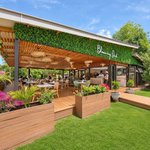
Sunrise Eco Resort 📍Nyanga
Nestled in the breathtaking landscapes of Nyanga, it’s the perfect escape to unwind, reconnect with nature and create memories
#visitzimbabwe #charteradventures #Nyanga


Charter Sights 🌺 retweeted

What you need is more than just a holiday destination — you need a holiday experience. 🌴🇲🇺
And ZimAdventures has got you!
Our Mauritius packages start from just US$795 per person, including:
✅️ 5 nights in 3-star accommodation
✅️ Daily breakfast
✅️ Activities
✅️ All scheduled transfers
Mauritius is calling. Are you coming? ✈️


Charter Sights 🌺 retweeted

OFF THE GRID. WORTH THE HIKE!
If you're looking for your next adventure, Uchacha Falls needs to be on your bucket list!
Hidden away in the heart of Bakasa, Guruve, this untouched paradise serves up an 11 km scenic hike, epic hilltop views, breath taking waterfalls, crystal-clear swimming spots, and all the nature vibes you could ask for. 🥾🏞️
Whether you're chasing waterfalls, creating content, or just escaping the city, this is your sign to go.
📍 Uchacha Falls – Bakasa Area, Ward 20, Musauki Village, Guruve
🚗 36 km from Guruve Centre | 186 km from Harare
🛣️ Access via the Kadzimwenje turnoff
⚠️ Please visit responsibly. Coordinate your trip through Headman Kazunga, Councillor Gwaze's office, or local tour operators to ensure a safe experience and respect local community customs
Tag your adventure squad and start planning!
📸 : Hike and Climb, Earground TV
#UchachaFalls
#ExperienceMashCentral
#OurHeritage
#NhakaYedu
#IlifaLethu
#ZimBho👍


Charter Sights 🌺 retweeted
❤️Love isn’t just a destination it’s the journey you share.😌
📩 Enquire today and let’s plan your happily ever after: +263 78 368 2334
🇿🇼ZimAdventures Explore the world. 🌍


Charter Sights 🌺 retweeted
In a major boost to Regional Tourism Development, Zimbabwe and South Africa have reaffirmed their commitment to strengthening Bilateral Tourism Cooperation following the successful hosting of the 6th Session of the Joint Tourism Technical Committee (JTTC) in Pretoria from 7 to 9 July 2026. Co-chaired by the Secretary for Tourism and Hospitality Industry of Zimbabwe Dr Takaruza Munyanyiwa and the Director-General of South Africa's Department of Tourism Mr Victor Vele, the meeting assessed progress made under the Memorandum of Understanding on Cooperation in the Field of Tourism while identifying Strategic Priorities to deepen collaboration and accelerate the growth of the Regional Tourism Economy.
The deliberations focused on advancing Innovation, Tourism Intelligence, Sustainable Tourism Development, Destination Marketing and Institutional Collaboration to improve Destination Competitiveness and Tourist Experiences. Both countries also agreed to implement a Joint Tourism Marketing Plan, strengthen Market Intelligence Sharing, promote Tourism Product Development and exchange Technical Expertise on Tourism Standards, Grading and Quality Assurance. To further unlock Regional Tourism Potential, the two countries committed to enhancing Cross-Border Tourism Facilitation and Connectivity, while Zimbabwe extended an invitation to South Africa to participate in the Sanganai/Hlanganani/Dzimbahwe World Tourism Expo in Masvingo from 9 to 12 September 2026, reaffirming their shared commitment to a Competitive, Integrated and Sustainable Regional Tourism Sector.
#ZimbabweSouthAfrica
#ExperienceZimbabwe
#NhakaYedu
#IlifaLethu
#OurHeritage
#ThisIsUs
#ZimBho👍

Charter Sights 🌺 retweeted
Sunsets are beautiful.
But they're even more breathtaking in paradise.
What better way to unwind than spending your holiday in a little piece of heaven?
Mauritius is waiting, and we can take you there.
📲 WhatsApp us: +263 77 511 3650


Charter Sights 🌺 retweeted

DID YOU KNOW
Mutemwa (sometimes spelled Mtemwa) is a mountain and associated leprosy care centre near Mutoko in Mashonaland East Province, Zimbabwe. It has become a major Christian pilgrimage site, particularly for Catholics, due to its links to the life, service, and martyrdom of John Randal Bradburne.
Etymology and Early Context
"Mutemwa" is a Shona word meaning "you are cut off" or "outcast/isolated," reflecting the area's historical isolation and its use as a settlement for leprosy patients, who were socially marginalized.
The leprosy care centre itself was established around 1937 (some sources reference earlier colonial-era efforts), as a settlement for people with leprosy who were often abandoned or segregated.
The mountain (elevation around 1,503m) and nearby Chigona Mountain have long served as natural landmarks. In local traditions and more recent Christian contexts, they function as "prayer mountains" for spiritual reflection, healing, and intervention. Before Bradburne's time, the centre was reportedly neglected.
John Bradburne and the Transformation of Mutemwa (1969–1979)
The site's modern spiritual significance stems almost entirely from John Randal Bradburne (1921–1979), an English lay Franciscan (Third Order of St. Francis), poet, and former British Indian Army officer.
Background: Born in England, Bradburne served in WWII (including with the Chindits in Burma), had a profound religious conversion, and lived a wandering, ascetic life across Europe and the Middle East, seeking a contemplative existence. In 1962, he wrote to a Jesuit friend in Rhodesia (now Zimbabwe) asking, “Is there a cave in Africa where I can pray?” He arrived and was introduced by Jesuit missionaries to the Mutemwa Leprosy Settlement in 1969.
His Work at Mutemwa: He became the warden of the centre, which housed dozens of leprosy patients living in poor conditions. Bradburne devoted himself to caring for them—feeding, bathing, nursing, teaching (including Gregorian chant), building a small church, and providing companionship. He lived simply in a tin hut outside the perimeter (especially after conflicts with authorities), ate minimally, prayed extensively, wrote thousands of poems, and walked prayer paths on the hills. He expressed three wishes: to serve leprosy victims, die a martyr, and be buried in a Franciscan habit.
Death: During the Rhodesian Bush War, he refused to leave the patients despite risks. On 2 September 1979, he was abducted from his hut, and he was shot and killed (dying on 5 September). He was buried at Chishawasha Mission. Reports of miracles, such as blood dripping from his coffin, circulated soon after.
Pilgrimage and Legacy
Since Bradburne's death, Mutemwa has grown into a major pilgrimage centre. Thousands (often peaking in September around the anniversary of his death, sometimes drawing up to 25,000) visit the leprosy centre, his shrine, the prayer paths on Mutemwa and Chigona mountains, and related sites for prayer, healing, and spiritual intervention. Many regard him as a saintly figure or martyr; his cause for canonization (beatification/sainthood) has advanced in the Catholic Church, with formal nihil obstat issued in 2019.
The John Bradburne Memorial Society supports the ongoing Mutemwa Leprosy and Care Centre, which now serves people with leprosy, AIDS, disabilities, and other needs.
In summary, while the area had colonial-era roots as an isolated leprosy settlement, its historical and spiritual prominence today is deeply tied to Bradburne's decade of selfless service and his dramatic death, turning Mutemwa into a beacon of faith, charity, and pilgrimage in Zimbabwe. Local Shona spiritual traditions around the mountains as sacred sites likely predate or coexist with the Christian overlay.


Charter Sights 🌺 retweeted
After you have done our local holiday packages, come talk to us for international holidays♥️
You choose your own dates of travel
You book your own flights
We can customise them to suit your needs
You pay in instalments
WhatsApp ZimAdventures at +263 775 113 650 for bookings


Charter Sights 🌺 retweeted
MAJESTIC AND MYSTIC MANA POOLS
Mana Pools National Park is a renowned wildlife conservation area in northern Zimbabwe, along the southern bank of the Zambezi River. It covers about 2,196 km² (848 sq mi) and forms part of a larger UNESCO World Heritage Site (inscribed in 1984) that includes adjacent safari areas like Sapi and Chewore, totaling over 6,700 km².
Etymology of the Name
The name "Mana Pools" derives from the Shona language where "Mana" simply means "four." It refers to the four large, permanent (or semi-permanent) pools—remnants of ancient oxbow lakes or former channels of the meandering Zambezi River.
These pools (often named Main/Mane, Chine, Chisambuko/Long, Green Pool, or Chisasiko, depending on the source) are key features on the river's floodplain. They hold water year-round or for much of the year, serving as critical dry-season watering holes for wildlife, including large concentrations of hippopotamus, crocodiles, elephants, and birds. The pools formed through ongoing geological processes of erosion and deposition by the Zambezi.
Historical Background
Pre-colonial and Indigenous History:
The broader Zambezi Valley area, including Mana Pools, has a long human history. Indigenous groups such as the Tonga people (Bantu-speaking communities) traditionally used the riverine and floodplain areas for subsistence farming (e.g., millet and sorghum on fertile soils after floods receded), fishing, and opportunistic hunting. Earlier hunter-gatherer groups, possibly including San (Bushmen) peoples, left traces, with Iron Age archaeological sites also present. Permanent large settlements were limited due to factors like annual flooding, tsetse flies, and wildlife.
Colonial and Protected Area Era:
In the mid-20th century, the area saw increasing formal protection. Much of it was declared a non-hunting area around 1952.
Mana Pools Game Reserve was established in 1963.
Nearby areas like Chewore, Sapi, and others were designated as safari areas in the mid-1960s.
It became a full National Park in 1975 under the Parks and Wildlife Act.
Post-Independence and Conservation Milestones:
The park (along with the safari areas) was inscribed as a UNESCO World Heritage Site in 1984 for its outstanding natural beauty (criterion vii), ecological processes like river dynamics and plant succession on alluvial deposits, and biodiversity including its importance as a refuge for species like black rhino at the time.
It was later designated a Ramsar Wetland of International Importance in 2013.The park faced challenges, including a proposed hydroelectric flooding scheme (which was averted, contributing to its UNESCO status) and significant poaching pressures, particularly in the 1980s–1990s. Black rhino numbers dropped dramatically from around 500 in 1984 to about 10 by the mid-1990s, leading to their relocation for safety.
Poaching of elephants and other species has also been an issue at times, though conservation efforts (including partnerships like those with Peace Parks Foundation) have helped in recent years.
Mana Pools remains one of Africa's more remote and unspoiled wilderness areas, prized for its walking safaris, canoeing on the Zambezi, and exceptional wildlife viewing amid magnificent forests of acacia, baobab, mahogany, and other trees. Its "history" is as much a story of natural geological and ecological processes as of human conservation efforts.


Charter Sights 🌺 retweeted
DID YOU KNOW
Chizarira National Park is one of Zimbabwe’s larger and more remote protected areas, located in the northwest on the Zambezi Escarpment in Matabeleland North Province (Binga District), overlooking parts of the Zambezi Valley and Lake Kariba. It covers roughly 1,900–2,000 km² and is known for its rugged terrain, gorges, wilderness character, and wildlife.
Name Origin
The name Chizarira derives from the local Tonga language. It comes from words like chijalila, sijalila, which translate to “great barrier” (or simply “barrier”/“closing off”).
This refers to the park’s dramatic landscape: steep slopes, high hills, and sheer gorges of the Zambezi Escarpment, which form a formidable natural barrier dropping hundreds of meters toward the Zambezi Valley floor. The terrain, including gorges carved by rivers like the Sengwa, historically made the area difficult to traverse even for local people.
(Note: In Shona, “chizarira” can separately mean something like “trap,” but this is unrelated to the park’s etymology, which is firmly rooted in Tonga.)
Establishment and Historical Background
Early protection: The area was first proclaimed a non-hunting reserve in 1938 (some sources cite 1958).
It became a game reserve in 1963.
It was officially designated a National Park in 1975 under Zimbabwe’s Parks and Wild Life Act.
A key driver for its establishment as a protected area was the construction of the Kariba Dam (completed in the late 1950s) and the creation of Lake Kariba. This displaced significant wildlife from the Zambezi Valley, and Chizarira’s escarpment location provided a sanctuary for animals moving upslope.
The park’s remote and rugged nature has kept it one of Zimbabwe’s more pristine but less-visited wilderness areas, appealing to those seeking hiking, walking safaris, and solitude rather than high-density game viewing. It faces challenges like poaching, especially during periods of economic difficulty, but remains an important conservation area with species such as elephant, buffalo, lion, leopard, sable, roan antelope, and notable birds like the Taita falcon.


Charter Sights 🌺 retweeted
THE NJELELE SHRINE & SIGNIFICANCE
Njelele (also known as Matonjeni or Mabweadziva) is a sacred cave shrine in the Matobo (Matopos) Hills of southwestern Zimbabwe, roughly 100 km south of Bulawayo. It holds deep spiritual importance, primarily as a rainmaking site tied to the Mwari (or Mwali/Mlimo) revered by Shona, Kalanga, Ndebele, and related groups.
Etymology of "Njelele"
Primary meaning (Kalanga/Tjikalanga origin): "Njelele" is a Kalanga term referring to a specific type of bird, often described as a rain-associated bird or hawk (sometimes linked to njerere or similar). These birds are seen as omens or symbols of impending rain—e.g., flying in circular patterns (mayile) to herald the wet season. This ties directly to the shrine's core function as a rainmaking site.
Alternative oral tradition: Some accounts link it to "Njenjema," possibly the name of a founding priest or early deity/figure associated with the shrine's establishment. This is less documented and stems from indigenous oral histories.
Related names:
Mabweadziva (Shona): Means "place of spring waters" or similar, emphasizing perennial water sources that reinforce its rainmaking role.
Malindidzimu (Tjikalanga): "The Sacred Place for Our Ancestors."
The name reflects the site's deep integration with local cosmology, where natural signs (birds, water, rocks) connect to the divine.
How It Became a Sacred Place
Its sacred status dates back centuries, rooted in pre-colonial local spiritual traditions, particularly the Mwari (a high god associated with creation, fertility, rain, and oracles).
Origins (c. 14th century): Oral traditions (especially Rozvi) link it to the migration of Mbire (or related proto-Shona) groups from areas near Lake Tanganyika southward. They settled at Great Zimbabwe (c. 1250–1450 AD), where the Mwari beliefs may have first taken root. It possibly shifted or was re-established in the Matobo Hills with Rozvi administrative or religious changes, or due to a split from Great Zimbabwe amid religious disputes. Breakaway priests or groups are said to have founded or emphasized the shrine there.
Role in regional spirituality: The Matobo Hills were already significant (with ancient San rock art and earlier spiritual associations). Njelele became a central oracle and rainmaking shrine among Kalanga, Venda, Shona, and later Ndebele communities. Pilgrims visited (especially August–September before rains) for rain petitions (ukucela imvula or kukumbira mvura), healing, forgiveness for societal wrongs, guidance, and blessings. A "voice" of Mwari/Mlimo was historically believed to emanate from the rocks, delivered via spirit mediums (e.g., uNgwali or Thobela). Offerings included clay pots, iron hoes, animal skulls/horns, beads, and more.
Adoption and continuity: The Ndebele (arriving in the 19th century under Mzilikazi) adopted the cult, calling the deity Mlimo, and respected the site (e.g., paying tribute). It influenced resistance to colonialism (e.g., 1890s uprisings) and Zimbabwe's liberation struggle (1960s–70s), where fighters and leaders like Joshua Nkomo sought blessings. Custodianship has involved specific clans (e.g., Ncube/Malaba), with rituals emphasizing purity (e.g., involving pre-pubescent girls or post-menopausal women).
The shrine's power derives from its perceived connection to ancestral spirits, the supreme deity, and the natural environment (granite caves, springs, birds). It remains active for annual rituals, though the audible "voice" is said to have ceased due to desecration or disrespect. Conflicts over custodianship have persisted into modern times, preventing it from being fully integrated as a national monument despite its location in a UNESCO World Heritage area.


Charter Sights 🌺 retweeted
WHY CECIL JOHN RHODES WAS BURIED SPECIFICALLY AT MATOPOS HILLS
Cecil John Rhodes (1853–1902), the British imperialist, mining magnate, and politician who played a major role in the colonization of southern Africa (including the territory that became Rhodesia, now Zimbabwe), specified in his will that he be buried atop a granite hill in the Matopos (or Matobo) Hills.
Why Buried at the Top of a Rock?
Rhodes explicitly wanted a simple grave cut directly into the solid granite rock at the summit of a specific hill, covered by a plain brass plate with the inscription: "Here lie the remains of Cecil John Rhodes." This reflected several personal and symbolic reasons:
>The grandeur and panoramic view: He called the spot "The World's View" (or "A View of the World") because of its stunning 360-degree vistas over the rugged Matopos landscape of granite domes, boulders, and valleys. >He found it profoundly moving and awe-inspiring—a place of "chaotic grandeur" that made one feel small and contemplative. He visited it multiple times to ponder and "dream."
>Simplicity and permanence: Rhodes admired the "grandeur and loneliness" of the Matopos. The rock-cut grave on an exposed hilltop symbolized endurance, tied to the ancient, timeless granite formations. His will emphasized this modest, unadorned style rather than an elaborate monument.
>Symbolic connection to the land: He had a deep (if possessive and colonial) attachment to the region. Accounts note he initially considered burial near the Zimbabwe ruins but changed his mind due to his love for the Matopos and its people. His brother later emphasized this at the funeral, framing it as a gesture of unity.
The burial followed his wishes precisely after his death from heart failure in Muizenberg, South Africa, in March 1902. His coffin was transported by train to Bulawayo, then hauled by oxen up a specially built road to the summit for the funeral on April 10, 1902.
Why Specifically the Matopos Hills?
Personal discovery and attachment: During the 1896 Matabele Rebellion (First Umvukela), after a key indaba (meeting) with Ndebele leaders, Rhodes rode into the hills with companions (accounts vary slightly, mentioning Dr. Hans Sauer or Earl Grey and others). He spotted a formidable granite dome with boulders on top, climbed it, and was struck by the view. He declared it "The World’s View" and later decided it would be his burial place. He revisited it and remained attached to the site.
Sacred and historical significance: The Matopos (Matobo) Hills, now a UNESCO World Heritage Site, have long been revered by local peoples. The specific hill, Malindidzimu ("place/hill of benevolent spirits" in Kalanga/Shona), was considered sacred. Ndebele king Mzilikazi (founder of the Ndebele nation) is buried nearby in a cave. Rhodes was aware of this spiritual aura, and some accounts suggest he saw a fitting parallel—his grave near indigenous leaders' resting places. At the funeral and afterward, Ndebele chiefs participated and were asked to guard the site as a "sacred trust," with some viewing the spirits of Mzilikazi and Rhodes as meeting there.
Strategic and emotional resonance: The hills' dramatic, isolated beauty aligned with Rhodes' imperial vision and personal reflections. It became a site tied to his legacy in the territory he helped shape (named after him). Other figures like Leander Starr Jameson and members of the Shangani Patrol were later buried nearby.
Note on controversy: The site remains a tourist attraction but is contested today. Many Zimbabweans view the burial on a sacred indigenous site as disrespectful or sacrilegious, given Rhodes' role in colonization, land dispossession, and conflict. There have been periodic calls for exhumation, though it has stayed in place.
In short, Rhodes chose the spot for its breathtaking isolation, symbolic power, and personal significance to him as a place of reflection and dominion over the landscape he helped claim.


Charter Sights 🌺 retweeted

A historic conservation milestone for Zimbabwe!
In a remarkable testament to conservation efforts, the Zimbabwean government and its partners are celebrating the return of rhinos to Matusadona National Park. The historic operation, led by Matusadona National Park, the Zimbabwe Parks and Wildlife Management Authority (ZimParks), and African Parks, reflects visionary leadership, effective wildlife management, value-driven partnerships, and the dedication of conservationists and local communities.
The return of the iconic giants, which historically inhabited the Matusadonha landscape, not only consolidates Zimbabwe’s status as a global leader in biodiversity conservation but also directly supports Zimbabwe's National Rhino Strategy by establishing a founder population that should, over the next 15 years, contribute to another metapopulation in the country.
ZimParks Director General Prof. Edson Gandiwa stated, “The return of black rhino to Matusadona National Park is a historic event and a proud moment for Zimbabwe’s conservation efforts. It is a testament to what is possible when government, conservation organisations, and local partners work together with a shared purpose."
We extend our sincere gratitude to the Wyss Foundation, Stichting Natura Africae, the European Union, Thomas and Sara de Swardt, Global Wildlife Fund, Pangolin Crisis Fund, and the Elephant Crisis Fund, whose ongoing support for Matusadona has been instrumental in creating a safe, well-managed protected area for rhinos to roam once more. Our appreciation all goes to Imire and the Dambari Wildlife Trust for their role in ensuring the success of this operation.


Charter Sights 🌺 retweeted
This is Forest Hillls Resort 🌲
'Heaven on Earth '
📍Vumba 🇿🇼
Click for more tiktok.com/@charter.adventur…


Charter Sights 🌺 retweeted

Protecting our wetlands remains a top priority as Government restores order and ecological integrity to Monavale Vlei.
@HeraldZimbabwe @ZBCNewsonline
@ZiFMStereo @classic263
#EnvironmentalStewardship
#MonavaleVlei
#WetlandsProtection
#NaturePositive #Zimbabwe

Charter Sights 🌺 retweeted
The Matusadona Conservation Trust (MCT), a partnership between African Parks
and Zimparks, to co-manage Matusadona National Park, is proud to announce the successful translocation of 20 African Wild Dogs (Lycaon Pictus) to Matusadona National Park, marking the return of this critically threatened species to Zimbabwe’s iconic wilderness.
This translocation is a vital step in boosting the wild dog population. With only about 6,600 wild dogs left in Africa and fewer than 700 breeding pairs, every success story like this is a massive victory for conservation. The success of this journey was made possible through incredible teamwork and years of meticulous planning. From preparing the boma to the stress-free 2-hour flight and the final release into the Matusadona wilderness, every detail was managed to ensure these dogs have the best chance to thrive in their new home.
#MatusadonaNationalPark #AfricanWildDog #ConservationSuccess #WildlifeRestoration #AfricanParks #ZimParks #Zimbabwe #InHarmonyWithNature


Charter Sights 🌺 retweeted

The wait is over! 🏌️♂️
The driving range at The Hills is officially open. It’s time to elevate your game and enjoy the finest views in the city while doing it.
This isn’t just about golf; it’s about creating a lifestyle-centric community where excellence and relaxation meet. Whether you’re a seasoned pro or just looking to find your swing, the range is ready for you. Come and experience the future of Zimbabwean luxury. ⛳️
See you on the green!


