

Founder of Legiit @legiitcom, Superstar SEO, and Think Big Learning (non profit)
Legiit
Joined March 2015
- Tweets86.8K
- Following550
- Followers10.2K
- Likes68.7K






Pinned Tweet
I'm Chris M. Walker.
Here's What You Need to Know.
Let me tell you straight: I build successful businesses and help others do the same.
I grew up in North Myrtle Beach, South Carolina.
Started with nothing.
Worked at McDonald's.
Learned what it took to get ahead.
Now I run multiple 7-8 figure businesses:
Superstar SEO - My agency that got it all started
Legiit @legiitcom - B2B growth engine connecting businesses with the tools and talent they need
Legiit isn't just another marketplace.
It's a complete growth engine combining Ai, data, and expert freelancers to help any business scale.
What makes us different?
We focus on results, not hype.
Our platform gives you control without the agency price tag.
Our support team answers in under 90 seconds.
Our freelancers are top-notch.
Our systems work because they're built on real data.
I also founded Think Big Learning - teaching kids and people in tough spots how to use business to take control of their lives.
My mission is simple: Help every business on Earth grow on their own terms.
If you want to know more, ask away.
If you want to join Legiit, just click the link in the comments.
If you want to stay updated, follow me now.
No fancy promises.
Just stuff that works.
That's it.
How To Get Orders On Legiit - @legiitcom
Last week I did a webinar for how to grow a freelance SEO business.
The feedback was incredible, and I was truly humbled by the comments.
But one question I still got afterwards was: How To Get Orders.
In other words I gave everyone some great tactics, but there was a more simple question at the heart of it.
So since then I have been working every day on how to boil down the #1 question I've ever gotten to a simple, 3 step framework that anyone can do in order to get more orders on Legiit.
I finally have it ready for you, and I am going to give you the entire framework this Friday, October 30th, at 12pm. EST.
When I am done you will have the same strategy I have been using since 2015 to generate over $6 million from freelance SEO.
To make sure as many folks show up and check this one out I am also going to give an attendance bonus to everyone that comes live and stays until the end...
My local SEO training Legiit Local Business Accelerator which is my entire local SEO, and Google maps training the replicates the process I use for my agency clients and have seen hundreds of students have success with.
Join the free presentation October 30th at 12pm. EST., get the strategy, and the bonuses, and finally get the answer to the question How To Get Orders.
See you then.
Link In Comments

October 30th at 12pm. EST - superstarseo.com/orders

The anti Ai disinformation and sensationalism are really out of control.
The headline suggests AI agents are infiltrating bank accounts. But the underlying reporting describes agents sometimes using credentials supplied by the customers themselves, even though that violates bank policies.
There are three particularly revealing details:
This piece doesn't establish how many incidents occurred or document financial losses.
Morgan Stanley explicitly says it hasn't observed rogue AI agents accessing its platforms.
Banks have a significant financial incentive to restrict agents that could automatically move customers' deposits to higher-yield accounts.
That last point is especially interesting. AI agents could threaten banks' ability to profit from customers leaving money in low-interest accounts.
So there's a plausible commercial motive for portraying consumer-controlled AI agents as dangerous.
Try to look into things for yourself before taking stuff like this at face value.

SCOOP: Major U.S. banks are detecting unauthorized third-party AI agents inside customer accounts, including some attempting to take actions that appear to be independent of user instructions, sources told Axios.
The findings have alarmed banking executives, who are racing to restrict access to their systems as AI moves at a velocity faster than financial institutions can respond, multiple industry and bank executives told Axios.
Several banks are now preparing for worst-case and even “day after” scenarios, including how to rapidly secure or restore customer accounts if things go wrong, the people said.
Several bank executives told Axios they're struggling to distinguish between human users and AI agents. One executive said banks also struggle to determine whether agents are authorized by customers or potentially operating without their permission, more akin to rogue agent behavior.
Read my latest for Axios here: axios.com/2026/10/22/ai-agen…

Chris M. Walker retweeted

Top 20 Digital Marketers to Follow in 2026:
Most marketers follow 200 people and learn from none.
The fix is a shorter list of people who actually publish.
I've been doing SEO and marketing for 15+ years.
The people I learn from have one thing in common.
They show up every week, with real work attached.
Here are 20 worth following in 2026:
1. @neilpatel
↳ SEO data, tested and published constantly.
2. @aleyda
↳ Technical SEO and AI search, no theory.
3. @lilyraynyc
↳ Google updates, explained while they're happening.
4. @randfish
↳ Audience research and zero-click reality.
5. @amandanat
↳ Content strategy that works without rankings.
6. @MarketingProfs
↳ Writing that people actually read.
7. @TheCoolestCool
↳ Distribution. Create once, promote forever.
8. @searchbrat
↳ How AI is changing marketing teams.
9. @garyvee
↳ Volume and attention, posted daily for years.
10. @aprildunford
↳ Positioning for B2B products.
11. @davegergardt
↳ B2B marketing without the corporate filter.
12. @cmwalker
↳ Demand gen and pipeline, with the numbers.
13. @RichardvdBlom
↳ LinkedIn algorithm research, updated yearly.
14. Jasmin Alić
↳ LinkedIn copywriting, line by line.
15. @laraacostar
↳ Personal branding that converts to clients.
16. @thejustinwelsh
↳ One-person business systems.
17. @AlexHormozi
↳ Offers and growth, on LinkedIn and IG.
18. Sophie Miller (Pretty Little Marketer)
↳ Instagram carousels on social trends.
19. Ashwinn Krishnaswamy
↳ Brand and marketing breakdowns on IG.
20. Eugene Healy
↳ Brand strategy, short and clear on IG.
None of them got here with a viral post.
They picked a lane and published for years.
Consistency is the strategy. Everything else is tactics.
Pick 5 from this list. Not 20.
Then study how they repeat themselves.
Who did I miss?
♻️ Repost if a marketer on your team needs this.
P.S. I have a new secret anti-slop AI SEO Agent that's helping 35+ businesses rank faster on AI and Google. I'm looking for agencies and SaaS owners who want 2 months of AI SEO content in exchange for a case study. Email me if interested.

SEO friends... if you are seeing hundreds or thousands of links like this in your ahrefs or semrush backlinks reports AND your first thought is "This is a negative SEO attack"...
...you're not doing your job nor paying your SEO busienss enough attention.
This is some low quality link vendor/vendors that send links like this sites they know are doing SEO that when opened lead to a site selling shit backlinks that will try to get you to contact them on Telegram or WhatsApp...
...and you should have already known that without thinking it's a negative SEO attack, and without me having to spoon feed it to you.
This has been going on, on thousands of sites for a year or more.
While it's not good, and is a low IQ form of marketing shitty link building services it isn't harmful to your rankings.
The real problem is... you didn't know that because you aren't paying enough attention to your sites/clients, or trends in your industry.
You need to love what you do. You need to bsess over getting good at it. You need to believe you have an obligation to be the best at it for yourself and your clients...
...and if this is something you are noly finding out about now, or recently... and if it is something you're blaming falling ranking on... you're not doing your job.
Do better... businesses need you to be great at your job.
Stop fucking around and looking for easy explanations.
Get to work and...
Think Big™

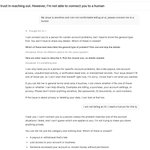
Add @whop to the list of platforms that not only don't default to human support... flat out refuse to connect you to a human.


Just want to update that after posting this several people from @whop reached out to help and make it better.
Worst advice on X. Congrats! 🎉

Delete your CLAUDE.md. Not edit it, not trim it, delete the whole file, along with your skills and your hooks, and see what the model does without them. That's Boris Cherny's actual advice from a recent YC appearance, and the Claude Code team has apparently followed it internally enough times that roughly 80% of their own system prompts are gone. His reasoning: most of those rules patched a weakness in whatever model you ran six or twelve months ago. Newer models often don't have that weakness anymore, so the instruction that used to help is now just constraining a more capable model for no reason. His method is almost embarrassingly plain. Delete everything, work normally for a while, watch where the model actually goes off track, add back exactly one instruction when a mistake repeats, and run the whole cycle again at the next major model release. Keep security and compliance rules. Keep the project quirks a model genuinely can't infer from reading the code. Cut folder structures, dependency lists, and architecture summaries, since a capable model can read those off the repo itself faster than it can read your stale description of them.
This is the same problem the rest of the field keeps rediscovering under different names. Anthropic's own long context guidance, OpenAI's notes on attention tradeoffs inside big windows, and Microsoft Research's GraphRAG papers all circle the same fact: a pile of context that only grows, whether it's a system prompt, a vector store, or a knowledge graph, degrades the thing using it, because stale facts sit next to current ones with no signal about which one wins. DeepSeek Harness takes a different structural swing at the same target, building its agent runtime out of swappable plugins so a stale capability gets replaced instead of buried under new instructions.
What strikes me is how little of this is about model capability and how much is housekeeping nobody assigned themselves. Most teams have a deprecation policy for their actual code. Almost nobody has one for the three paragraphs pasted into an agent's instructions eight months ago and never looked at again. How long is your CLAUDE.md, and when did you last delete anything from it?
xitter.cf/suraj_sharma14/status/…

admitted they added a made up discount to my offer but refuse to remove it or let me talk to a person


Chris M. Walker retweeted

Lovable is a scam.
So is Replit, Base44, Framer, and all AI website builders.
These are for low IQ people who don’t know how to use AI and fall for SaaS marketing gimmicks.
You are paying a premium for less usage, shittier models, shittier websites, and hand cuffing yourself to a SaaS ecosystem you don’t control.
A $100/month Claude Max plan (or ChatGPT Pro) is a better solution BY FAR
I will put @legiitcom customer support up against any company.
We use human being support 24/7 and work to solve issues rather than throw Ai bots, and half ass effort at things.
Here's an example of why we do that.
I signed up for the @Lovable affiliate program a while back because I've used it for a long time and thought I might promote it at some point.
I never got around to it or even generated a link because... I have my own businesses.
2 days ago I got this message from @impactdotcom which they handle their affiliate through saying my affiliate account had been terminated.
I replied to it:
"I’ve never even used it WTF"
The reply when to [email protected] which I didn't notice at the time apparently that is a 3rd company involved with this called FGV @FiatGrowth
Not wanting to wait for a reply I messaged Lovable support.
Insteead of doing their job correctly and having a human being route the message to the right place I got an auto reply telling me to email [email protected] instead.
So I forwaded the Ai bot's email to [email protected] along with a screenshot of the original Impact email and the message:
"I never even used you affiliate program wtf"
(Complete with typo)
I got a response from Alix from FGV saying:
"Hi Chris,
Thanks for reaching out.
Your account was removed from the Lovable affiliate program due to TM+ bidding activity, which is a violation of our affiliate program terms and conditions.
Following our review, the decision was made to terminate the partnership.
As noted in the notification from Impact, this decision is final.
Thanks for your understanding.
Best,
Alix"
So they are saying I ran ads to their brand name... despite running no ads of any kind to anything, particularly their brand, and again never even generated an affiliate link with them.
But apparently their "review" confirmed that I did.
I replied to that, admittedly unprofessionally with:
"Yeah… I’m not running any ads either and am not bidding on anything.
I’ve literally done nothing to promote it and have never even created a link.
You’re being a retard.
I have no intention of promoting it anyway… but if you don’t look into this and admit that you’re clueless and wrong, I’m going to make sure people know about it. "
I waited 24ish hours, got no reply... so I decided to share the experience.
Lovable is a great product and I intend to keep using it for simple apps because it is super easy (though I use Claude Code much more now)
But this was a pretty disappointing experience... but at least it reminded me why customer support is my biggest department, and why we do our level best to actually help people instead of just throwing low effort employees and Ai bots at the people that make our business.


Real reason people say this is because they’re too broke to afford $59 a month because they can’t even get 200 people on a newsletter and send an email once a day.
I break even on my beehiiv subscription most months just from adding ads to the emails and I forget to use it half the time.
The solution to the $59 a month isn’t to vibe code your own… it’s to stop being broke.

every week someone tells me they’re going to vibe-code their own @beehiiv alternative over the weekend.
wishing them the best, here’s the backlog of things to make sure to include:
> 99.3% email delivery rate (industry-leading)
> team of deliverability experts with decades of experience
> infrastructure to send 3M+ emails per minute
> validating every single email submission (1st and 3rd party)
> automated bot-detection to prevent spam signups
> registering for every mailbox provider’s feedback program
> ingesting data from said feedback loops and building suppression lists
> tagging every email so gmail reports complaint rates per newsletter
> classifying every bounce (hard, soft, mailbox full, DNS failure) and knowing which ones mean “try again” vs. “never again”
> three layers of suppression: global, per-publication, and transactional
> temporary suppressions that expire on their own, and permanent ones that never do
> one-click unsubscribe, the way gmail and yahoo now require it
> warming new IPs and domains on a schedule
> watching blocklists around the clock, and pulling an IP from rotation the moment it’s listed
> retrying deferred mail for 24+ hours before calling it a bounce
> blocking disposable, invalid, and typo’d addresses before they ever reach the list
> rate limiting every signup endpoint a bot can find
> filtering bot clicks out of every report (something we pay an ungodly amount of money for)
> an acquisition source on every subscriber
> engagement history for every reader, across every post
> multiple sender addresses for different emails
> custom domain configuration that is aligned with DKIM, SPF, DMARC
> a true WYSIWYG editor: what you write is what lands in the inbox, with no HTML required
> turning that editor into table-based, inline-styled email HTML that holds up in outlook
> real-time collaborative editing, so the whole team can work on the same issue at once
> dynamic content: different sections for different readers, all in a single send
> separate email and web versions of every post, from one draft
> free and premium versions of the same post, split by a paywall break
> merge tags that personalize every email, and a simulated subscriber to preview them before you send
> templates with saved colors, fonts, and spacing, plus a default style for every post
> columns, tables, buttons, blockquotes, sections, file attachments, and a table of contents with anchor links
> native embeds for X, youtube, tiktok, instagram, bluesky, stocktwits, and podcast episodes
> polls, referral blocks, recommendations, and ad slots, built right into the post
> an AI writer, AI images, and a built-in AI agent one keyboard shortcut away
> images resized and optimized automatically, however they’re uploaded
> a live email-size gauge that warns you before gmail clips your newsletter
> custom HTML blocks, cleaned so a stray script tag can’t break your post
> automatically hiding anything an inbox can’t handle (video, iframes, audio) in the email version, while keeping it on the web
> links and embeds made clickable even in outlook, which ignores links wrapped around tables
> vertical alignment in columns, because a layout that looks off by 4px looks broken to readers
> converting your newsletter to audio versions for readers who prefer to listen
> random cohort sends to randomly split your list to test different content and conversion
> slash commands: type “/” and insert any block without touching a menu
> markdown and keyboard shortcuts for people who never want to touch a mouse
> pasting from google docs with the formatting intact
> search and replace across the whole post
> comment threads right in the draft, so editors and writers stop living in google docs
> footnotes and citations that work in the inbox and on the web
> code blocks, for the technical newsletters
> an AI writer that rewrites, translates, and fixes spelling and grammar in place
> autosave, so a closed tab never costs you a draft
> subject line A/B testing, built into the send flow
> drag-and-drop images, from your computer, your media library, or a URL
> rich-text image captions, plus image titles and alt text for accessibility
> audio files that play inline
> file attachments, so a PDF can ride along with the issue
> sections with their own backgrounds, borders, and spacing
> blockquotes with custom borders, colors, and styles
> content breaks and dividers that render cleanly in every inbox
> a REST API for subscribers, posts, segments, automations, and more
> a send API to create and send newsletters programmatically
> creating, updating, and deleting subscribers in real time
> reading and writing custom fields on any subscriber
> tagging subscribers from your own app
> enrolling subscribers into automations via API
> pulling opens, clicks, and engagement for every post
> fetching post HTML rendered for free vs. premium, email vs. web
> creating posts from a template, then appending or prepending content
> fetching segments and every subscriber in them
> managing tiers and premium subscriptions
> pulling referral program data and milestones
> reading poll and survey responses
> pagination that holds up across millions of records
> rate limits that protect the platform without blocking real integrations
> API keys you can create and revoke anytime
> an MCP server so claude, chatgpt, and other AI tools can work inside beehiiv
> drafting and editing posts from an AI chat
> asking for open rates, CTR, and revenue in plain english
> comparing performance across dozens of posts in one request
> looking up any subscriber's full history and engagement
> building segments by describing them
> creating and editing automations
> generating AI images straight into your media library
> managing website pages, redirects, and SEO
> reading and replying to community posts and DMs
> reviewing ad offers and ad revenue reports
> managing podcast shows and episodes
> creating digital products, coupons, and promo codes
> running subscriber growth and earnings reports
> setting up subject line A/B tests
> deliverability by mailbox provider for any post
> searching docs without leaving the chat
> inviting teammates by email
> admin, member, and contributor roles
> admins who control billing, exports, integrations, payments, and domains
> members with full access minus admin permissions
> contributors limited to drafting posts and automations
> roles at the workspace or publication level
> multiple publications under one workspace
> workspace grouping and search for people on multiple teams
> multiple authors per post, with bylines
> guest authors for one-off contributors
> author profiles with bios, avatars, and social links
> community roles mapped to workspace roles (admin, manager, moderator)
> real-time collaboration and comment threads on every draft
> removing access the moment someone leaves
> publication transfers between owners, with written consent
> secure, single-use magic links to log in from desktop
> a no-code website builder on your own custom domain
> an AI website builder that works from plain-english prompts or screenshots
> AI custom elements for live widgets
> drag-and-drop editing, plus HTML access for full control
> site-wide theme tokens for fonts, colors, borders, and shadows
> global navbar, footer, and signup and login modals
> saving sections, blocks, and pages as reusable templates
> version history with one-click restore
> custom pages with their own SEO settings and paywalls
> redirects, so old links never break
> custom robots.txt
> auto-generated meta titles and descriptions for every post
> google news schema
> pages up to 80% faster on largest contentful paint
> image carousels and grids
> youtube blocks that update when you post new videos
> an automatic page for every podcast episode
> pop-ups and gated content to turn visitors into subscribers
> a visual automation builder, no code required
> triggers based on signup source, behavior, purchases, and engagement
> welcome sequences that start the second someone subscribes
> delays and wait steps
> branching logic based on subscriber attributes
> reusable condition sets across automations
> email steps built in the same editor as your newsletter
> webhook steps that call your own systems, with automatic retries
> enrolling subscribers via API
> per-subscriber journey tracking
> opens and clicks for every email in every flow
> editing a draft version while the live automation keeps running
> comparing draft vs. live before you publish changes
> reordering steps in bulk
> segment conditions based on whether an automation started
> product delivery and follow-ups triggered by purchases
> selling files, links, guides, templates, and ebooks
> memberships and time-based products
> 1:1 coaching sessions and appointments
> 0% platform fees on every sale
> a storefront on your beehiiv website
> products sold inside emails and automations
> free products that double as lead magnets
> product variants
> discount codes and promotion codes
> product reviews, with moderation
> product tags for organizing your catalog
> orders dashboard with buyer details
> sales totals per product
> duplicating a product in one click
> automatic delivery the moment someone buys
> payouts through stripe
> live webinars with up to 10,000 attendees
> ticket sales in 10 currencies
> native streaming with video, screen sharing, and chat
> no zoom required
> up to 5 automated reminder emails
> calendar invites sent automatically
> a recording of every session
> selling the replay as its own product
> 0% platform fees on tickets
> free webinars that grow your list
> discount codes on tickets
> 1:1 coaching bookings
> buyers linked to their subscriber profile
> promoting events in your newsletter and on your site
> orders and revenue reporting for every event
> a community built into your newsletter: channels, posts, and comments
> channels that are free or gated to paid tiers
> syncing newsletter posts into the community
> direct messages between you and members
> threaded comments
> pinned posts
> a moderation queue for reported posts and comments
> banning and unbanning members
> admin, manager, and moderator roles
> inviting subscribers, segments, or specific emails
> surfacing your most engaged subscribers to invite first
> community metrics: new members, posts, and activity
> notification emails with your own from name
> channel ordering and a default channel
> luma calendar integration for events
> discord integration that syncs roles with subscription tiers
> native podcast hosting with zero platform fees
> distribution to apple podcasts, spotify, and youtube
> an automatic webpage for every episode
> automatic transcripts
> IAB-standard analytics by country, app, and device
> bot filtering on downloads
> downloads and unique listeners per episode and per show
> private feeds for paying subscribers
> bundling your podcast with your paid subscription
> importing from other hosts with episode GUIDs preserved
> RSS redirects so listeners follow you over
> scheduled episodes
> apple podcasts categories and metadata
> podcast players embedded in your posts
> a full episode library on your site
> webhooks for episode and private-feed events
> segments built on behavior, attributes, and engagement
> dynamic segments that update automatically
> static segments that stay fixed
> filtering by acquisition source, including magic links
> filtering by custom fields and tags
> filtering by subscription tier and paid trial status
> filtering by whether an automation started
> reusable condition sets
> recalculating a segment on demand
> sending to a segment, or excluding one
> segments that power dynamic content inside a single post
> segments as automation conditions
> adding a whole segment to a newsletter list
> multiple newsletter lists in one publication
> exporting any segment
> webhooks for new, confirmed, and deleted subscribers
> upgrade, downgrade, pause, and resume events
> tier created, deleted, paused, and resumed events
> newsletter list subscribe and unsubscribe events
> post sent, scheduled, and updated events
> survey response events
> podcast episode published, updated, archived, and deleted events
> private podcast feed access events
> choosing exactly which events each endpoint receives
> a signing secret on every endpoint
> automatic retries on failed deliveries
> a log of every delivery attempt
> manually retrying any failed message
> disabling an endpoint without deleting it
> versioned payloads
> webhook steps inside automations
> survey forms with multiple question types
> polls that readers answer with one click, right in the inbox
> every answer tied to a real subscriber
> live poll results
> per-question response breakdowns
> aggregate results across every survey
> individual responses you can browse one by one
> webhooks the moment a survey is submitted
> survey and poll data available via API
> polls on the web and in email
> signup flows that send new subscribers through a survey
> surveys that tell you what to write next
> polls for picking topics, products, and pricing
> response data you can turn into segments
> no third-party form tool required
> a library of professionally designed post templates
> custom colors, fonts, and spacing on every template
> a default style applied to every new post
> content outlines baked into templates
> separate email and web styling
> theme design tokens per template
> duplicating templates in one click
> a custom email footer applied to every post
> templates with sponsor slots, referral blocks, and recommendations built in
> creating posts from templates via API
> template changes picked up instantly by API-created posts
> website templates
> saved sections, blocks, and pages for your site
> welcome email templates
> templates your whole team shares
> the largest native ad network for newsletters
> brands like netflix, hubspot, notion, and nike (and 525+ others)
> ads available to claim for your upcoming posts
> dropping an ad into a post with one click
> earnings and payouts reported for every placement
> ad revenue reports post by post
> a history of every opportunity you accepted or declined
> bot-filtered clicks advertisers can trust
> custom link parameters for advertiser attribution
> brand safety review on every campaign
> payouts to your beehiiv wallet
> direct sponsorships: selling your own placements
> sponsorship products with your own formats and pricing
> scheduled sponsor placements with advertiser details
> 0% platform fees on paid subscriptions
> multiple paid tiers
> monthly and annual plans
> free trials
> paid trials, like $1 for 30 days
> metered paywalls, new york times-style
> a paywall break inside any post
> discount offers
> gift subscriptions
> group subscriptions: one buyer, many seats
> custom group deals for teams and companies
> pausing and resuming subscriptions
> private podcast feeds and gated community channels as paid perks
> payouts through stripe connect
> recommendation network with 60K+ active newsletters
> getting recommended by thousands of other newsletters
> free, reciprocal recommendations
> paid recommendations: pay to grow, or get paid to recommend
> discovering newsletters to partner with
> AI-suggested recommendation partners
> applications for paid recommendations, with accept and reject
> engagement and spend insights for every partner
> pausing, resuming, or ending any partnership
> fraud detection on paid recommendations
> clawing back payouts for fake subscribers
> recommendations inside your newsletter, not just at signup
> attribution for every subscriber a partner sends you
> one-click subscribes powered by magic links
> one-click subscribe links, no form needed
> UTM parameters carried through on every link
> rate limiting on every request
> bot detection and honeypots
> a confirmation step only when a click looks suspicious
> double opt-in respected
> redirecting new subscribers straight to your site
> magic links as a filterable acquisition source
> links you can drop into other newsletters, socials, and ads
> login magic links so paid subscribers can read premium posts
> single-use tokens that expire in minutes
> rate limits on login requests
> protection against timing attacks
> logging in on desktop from a link sent to mobile
> faster logins across every beehiiv publication
> embeddable subscribe forms for any website
> full-width, fixed-width, and slim embeds
> an attribution script to track where signups come from
> custom colors, fonts, and styling
> theme design tokens per form
> a draft and publish workflow for form changes
> comparing draft vs. live before publishing
> multiple forms per publication
> custom success behavior: a message or a redirect
> pop-ups on your beehiiv site
> gating posts to subscribers only
> readers picking which newsletter lists to join
> signup flows that run right after subscribing
> bot protection on every submission
> forms that work on wordpress, webflow, and anywhere else
> a customizable link-in-bio page
> hosted on your own beehiiv site and domain
> a subscribe form built in
> your brand colors, fonts, and buttons
> social links for every platform
> links to your latest posts
> links to your products and paid tiers
> a linktree integration that captures newsletter signups
> every visitor a potential subscriber
> traffic from instagram, tiktok, and X turned into owned email subscribers
> visits tracked in your website analytics
> signups tagged with their acquisition source
> mobile-first design
> no third-party link tool required
> updated in seconds, from the same dashboard as everything else
> real-time website analytics, no third-party tools
> traffic by channel
> filters for location, device, OS, and referral source
> website and newsletter analytics in one place
> breakdowns by page, referrer, and more
> custom conditions to slice any report
> AI crawler and bot analytics: what was served vs. blocked
> control over which crawlers can index your site
> UTM tracking on every link
> custom link parameters at the publication level
> an acquisition source on every subscriber
> google analytics integration
> podcast analytics alongside your site
> trends over time
> website traffic connected to the subscribers it produced
> native integrations with linktree, hubspot, manychat, meta, and dozens of other apps
> human support team with a dozen experts ready to assist with whatever you need
oh, and besides having to manage all of this on your own indefinitely forever… your vibe-coded solution will still require paying for and stitching together a ton of software:
> email sending (sendgrid, amazon SES, postmark)
> web hosting (vercel, AWS, render)
> database + queue (supabase, neon, RDS)
> payments (stripe, memberful)
> auth (clerk, auth0, supabase auth)
> monitoring + alerting (sentry, datadog, pagerduty)
> workflow engine (inngest, temporal, upstash qstash)
> bot protection (cloudflare)
> email validation (zerobounce, kickbox)
> email rendering (litmus, email on acid)
> click verification (omnivery)
> media storage + CDN (S3, R2, vercel blob)
> product analytics (posthog, mixpanel)
…but at least you saved $59/mo not paying for @beehiiv anymore 🫡
Why Your Freelance Service Isn’t Getting Orders | SEO Freelancer Sucess Blueprint xitter.cf/i/broadcasts/1pJdRDEgb…

Rank In Google Ai Overviews With A Single Click (Complete Content Plan) xitter.cf/i/broadcasts/1DxleVrAp…

The lack of response from @function across the various platforms is pretty consistent with what I got from them directly.
Guess that tells you everything you need to know about them.

I complained to Function Health @function that their “Clinician Notes” read like AI slop. Their first response came from an AI.
That pretty much set the tone for what followed.
First, the blood testing itself is convenient, thorough, and well-priced. Overall, I still think Function is a better offering than Bryan Johnson’s Immortals.
But I think Function’s marketing is misleading about what you receive beyond the testing.
They advertise “doctor-reviewed insights” and a “personalized protocol for instant action,” and say clinicians review your history to identify what matters and what to do next. To me, that creates a clear expectation of meaningful, individualized guidance based on your results.
That is not what I believe I received.
In my opinion, the notes were AI slop presented with the authority of a clinician’s work.
My complaints were about their fixation on certain pieces of information, assumptions drawn from broad questionnaire responses, repetitive language, internal contradictions, and conclusions that sounded much more certain than the evidence presented.
The writing kept taking possible associations and turning them into personalized explanations (ironically, they later told me Function cannot provide medical opinions and referred me elsewhere for interpretation of my individual results). I questioned whether someone had actually checked those explanations carefully before releasing them under the label “Clinician Notes.”
So I sent a detailed complaint and demanded answers.
I asked whether AI generated the substantive interpretations, what the reviewing clinician actually did, what their qualifications were, and what supported the statements I challenged. I also asked for another clinician to reassess the notes and for information about how my data was handled.
An explicitly labeled AI support agent responded with a generic description of the process. I had to ask for a human.
The human response was unsatisfactory too.
They said AI “assists” clinicians and that licensed clinicians review the notes. They eventually told me that a specific clinician had reviewed mine, but their replies did not provide his professional credentials or explain what he specifically checked, wrote, changed, or approved.
They also told me Function is a technology company, not a medical provider, and cannot provide medical opinions. They directed me to another healthcare provider to interpret my results in the context of my history.
I followed up and made my questions extremely specific:
1. Did AI generate or draft the written Clinician Notes and substantive interpretations I received?
2. What specifically did the clinician do when reviewing my notes before approving them?
3. Will a different clinician review the specific interpretations I challenged and tell me whether Function stands behind them?
4. If Function does stand behind them, what is the clinical basis for the disputed conclusions I identified?
5. How can Function characterize these statements as individualized “Clinician Notes” while simultaneously stating that Function does not provide medical opinions?
6. Was an external AI provider given any of my identifiable health information in producing these notes, and if so, what provider, data, retention practices, and privacy safeguards were involved?
These weren’t vague requests for medical advice. They were specific questions about the report Function had already provided to me, who or what produced it, what clinical review it received, and whether Function stood behind its contents.
Instead of answering them, I got another generic response thanking me for my “feedback” and saying my concerns would be forwarded to the team.
Then I waited over a week.
Finally, I told them that I would share my experience publicly if I continued getting no answers. After more than a week of waiting, I got a response within an hour of that warning.
The response still did not resolve the complaint.
They stated that a licensed clinician conducts a full review of the results and supplied history, and they gave clearer answers to some of my data-handling questions. Specifically, they said no external AI large language model processed my information to prepare the Clinician Notes and that they do not use my identifiable health information to train AI models.
Those answers matter, and I’m including them because they are part of the record.
But they still did not answer several of the specific questions I had asked.
They still did not tell me whether AI actually generated or drafted the written Clinician Notes and substantive interpretations.
They did not explain what the clinician specifically did when reviewing my notes before approving them.
They did not agree to have a different clinician reassess the interpretations I challenged.
And they did not provide the clinical basis for the disputed conclusions I had identified.
Instead, they told me:
“Function does not provide a separate clinical opinion or a statement-by-statement clinical rationale beyond the Clinician Notes.”
They clarified that their earlier statement about not providing medical opinions referred to an additional assessment. Apparently, asking them to explain the basis for statements already in my report falls outside what they provide.
I wasn’t asking for unlimited medical consultations. I was asking for accountability for the work they had already delivered.
As of this post, I have not received a substantive response to the specific concerns, a correction to the disputed passages, or confirmation of a reassessment by a different clinician.
My opinion is that Function is using AI to generate interpretations and packaging them to appear to be individualized work from a clinician. They acknowledge AI involvement and insist a clinician reviews the notes, but their responses have not given me confidence in the quality or substance of that review.
I would have very different expectations of a service sold simply as convenient, comprehensive blood testing with automated explanations. Their marketing led me to expect considerably more than that.
The blood testing has value, and I’m not dismissing it. But in my experience, the interpretation, transparency, and customer service have fallen well short of what their marketing implies.
“Clinician-reviewed” should mean more than an assurance repeated whenever someone questions what the clinician approved.
If you're bad at something, it's because you chose to be.
I realized something today.
I’m a very confident guy.
I haven’t always been.
But somewhere along the line it happened.
I realized it while I was thinking about press releases of all things.
Not the old school “we have something significant to announce “ type.
The SEO type that a few of my colleagues sell.
I’ve been using them for literally a decade as part of my SEO strategy, buying them from various vendors.
And while I have a vague idea of how it works I really have no idea how to do them.
So what does that have to do with confidence?
Well I was thinking about how I don’t know how to do them and never learned…
…then I thought “if I really wanted to I could figure it out.”
That’s the thought that made me realize I’d gotten confident in myself.
I then thought about if there was anything I didn’t think I was capable of figuring out and realized that, given enough time, I can figure out anything.
Not because I’m particularly gifted or have any especially unique skills.
Just that if I give enough of a damn I’ll do what it takes to figure it out.
I’ll never say “I’m not good at____”
If I’m not good at something it’s because I’ve chosen other things to excel at.
Not some innate label I or someone else gave me that prevents me from taking responsibility for not doing something well.
I think that’s what confidence is; knowing you can do something that you don’t know now.
The way you gain that confidence is through putting yourself in situations where you don’t know the answer and eventually figuring it out anyway.
Do that enough times and you will build that muscle… the “I can figure it out” muscle.
Do that enough times and you will gain the confidence that you can do anything you put your mind too.
Think Big