Abstract Victim
Joined February 2015
- Tweets11.4K
- Following3.4K
- Followers8.8K
- Likes35.3K






Pinned Tweet
You think the Pudgy Penguins team regrets lying to their @AbstractChain users?
They laugh at you & are happy they finally got rid of you

Cody retweeted

I don't like the trend of projects shutting down pre-TGE and being seen as somewhat heroic because they didn't extract.
It's incredibly disingenuous because people burn thousands, sometimes tens of thousands of dollars farming these airdrops, I know people who are down five figs on Abstract memes or paid high four figs in StandX fees.
Not doing a TGE just for the sake of it *can* be heroic, but only if there's adequate compensation for the people who used the products in justified expectations of being rewarded

Cody retweeted

Nearly Two Years on Abstract: A Personal Account
After investing nearly two years of my time, energy, and money into @AbstractChain, the reported decision to shut down the chain has left me deeply disappointed.
I was not a casual participant. I played countless games, created content, completed hundreds of thousands of transactions, remained active for hundreds of days, accumulated millions of XP, and spent approximately $30K across the ecosystem. The attached Abstract Passport reflects only part of that commitment.
Throughout this journey, the community was repeatedly encouraged by ambitious statements from the leadership. Michael Lee (@CashBowie) spoke confidently about a future token, potential XP rewards such as flights, accommodation, Super Bowl tickets, and World Cup tickets, and a sustainable ecosystem where people could both enjoy themselves and earn value.
Luca Netz (@LucaNetz) also described an economy in which users would not simply play games but could earn from their participation. He discussed Project Quantum, a potential token valuation of $20B to $30B FDV, and a system through which XP and community activity could generate economic value.
These statements created expectations. They gave people reasons to invest more time, money, creativity, and trust in Abstract. Yet, from my perspective, the outcomes repeatedly presented to the community never materialized. Instead, users were kept engaged by increasingly ambitious promises while receiving little clarity about what was actually achievable.
The team made clear promises that encouraged people to invest their time, money, and trust in Abstract. None of those promises were fulfilled, and the community was left without transparency, accountability, or a meaningful explanation.
What hurts me most is not the money. It is the time. Money may eventually be earned again, but almost two years of sustained effort can never be recovered. It is difficult to accept that the people who helped build activity, visibility, and culture around Abstract may now walk away with nothing, without even a transparent explanation or a meaningful attempt at recognition.
Some people appear to take pleasure in the losses of others. I find that truly pathetic. A healthier Web3 community requires more informed participants who are willing to speak when something is wrong. Accountability is not FUD. Asking difficult questions is not an attack. It is one of the few ways this industry can mature.
I also cannot ignore Luca’s silence. If he genuinely believed that the community had been treated fairly, would he not be willing to explain what happened, address the promises that were made, and propose a meaningful solution? Silence may not prove wrongdoing on its own, but in circumstances like these, it raises serious questions. A leader who has nothing to hide should be prepared to communicate openly and take responsibility. Instead, Luca has chosen silence while the people who invested their time, money, and trust are left without answers.
Even redirecting part of the budget used for marketing and merchandise toward recognizing committed Abstract users could have demonstrated goodwill. From the outside, however, it feels as though meaningful compensation or acknowledgment has not been treated as a priority.
My experience with @Somnia_Network showed me that another approach is possible. I became active during its testnet, contributed to the ecosystem, created content, and earned $30K. More importantly, Somnia founder @0xPaulThomas consistently communicated the project’s development, updates, and objectives through video content. Whether everything succeeded or not, the community could see genuine effort, progress, and leadership.
My experience with Abstract was the opposite. Apart from interviews, which were often filled with major promises, Luca rarely communicated directly about the project during the nearly two years I participated. Those interviews strengthened people’s confidence and encouraged further commitment, but the community now deserves more than silence.
After everything that has happened, I have completely lost my trust in Luca and his team. Trust cannot survive indefinitely on branding, interviews, or promises. It requires delivery, transparency, and accountability, especially when people have invested significant portions of their lives and savings.
This is my personal experience, supported by the record of my activity in the attached Abstract Passport, a tool created by Abstract community member @bycoinraven. I welcome informed disagreement and any factual corrections from the team. However, please engage with the substance of what happened before dismissing the concerns of those who gave this ecosystem their time, money, and trust.
The Abstract community deserves answers.

Cody retweeted

Some say that Abstract is "being responsible" by not launching a token with no pmf. But for years users spent real money on XP with the promise of a token. And these promises helped moon PENGU. Of which the team sold hundreds of millions of dollars worth. Compensate these people.

Luca Netz made me lose faith in Web3.
I was on Abstract from day one. I never stopped believing because Luca was behind it, and I trusted his promises. I spent around $40–50K and dedicated nearly two years of my life to it.
We were promised a token. They kept our hopes alive until the very end, only to tell us we would receive nothing for the Xp we had earned.
After all that time, money, and trust, I feel scammed by @LucaNetz I won’t stay silent

Cody retweeted

Luca Netz made me lose faith in Web3.
I was on Abstract from day one. I never stopped believing because Luca was behind it, and I trusted his promises. I spent around $40–50K and dedicated nearly two years of my life to it.
We were promised a token. They kept our hopes alive until the very end, only to tell us we would receive nothing for the Xp we had earned.
After all that time, money, and trust, I feel scammed by @LucaNetz I won’t stay silent
Cody retweeted

some truth serum thoughts this morning on abstract chain
as much as the abstract team and community team wants to pretend like nothing major happened, something very serious did, and you're accountable
a large community filled with the most loyal and dedicated believers got blindsided by an unacceptable result
infinite $ and more importantly time spent
"thank you" is not good enough
promises were made and promises were not kept
an uncountable number of lies and manipulation were told
too many rugs and scams were promoted to count
this isn't going anywhere. you can look the other way all you want and hope that people forget, but it will be a part of your resume going forward and the best thing you can do is address it properly and to the right people
I, along with many others, will not let this die out in the way that you're hoping for
and to the scammer teams who overpromised and underdelivered on abstract chain, I will personally make sure that you never have success in your next rug pulling endevaors
you know exactly who you are
Cody retweeted

After over 2 years of extraction this is all that is left from @AbstractChain
Hope to get some regulation in space because doing this anywhere outside crypto would get you in jail 💀
Also hope that everyone affected by this scam is feeling fine, or at least better then 2 weeks ago 🙏
Hope you can sleep well @LucaNetz 🤥

Cody retweeted

对于 @AbstractChain 的用户来说
只是单纯购买徽章就花了350万美金
还不算gas费700万美金
用户提供给生态贡献了5500万美金收入
最后连一句道歉也没有
@LucaNetz @IglooInc 这帮人吃干抹净就想跑?
赚钱的时候玩命营销 一旦亏钱就立马RUG
这不是诈骗犯的一贯操作吗
@LucaNetz 🍽️💩

$3,500,000 FOR USELESS BADGES 🤡
An estimated $3.43–3.54 million spent by users completing the requirements for Abstract paid badges, according to the table.
• Cambrian Artifact Hunter: $894k
• The Onchain Hero: $463k
• The Big Badge: $317k
• Multiply It: $267k
• Gigaverse: $196k
These badges were used to grab attention and keep people spending
Buy an NFT, pay for access, complete another task, get another badge on your profile.
Real money
Months of users’ time
All for useless badges you can now wipe your ass with
The table estimates spending. Actual losses depend on the value of any assets users still hold.


Cody retweeted
Abstract asked its community for time, money, attention, and belief. After nearly two years of XP, badges, token expectations, and ambitious promises, the community deserves clear answers, meaningful recognition, and accountability.

Cody retweeted
Honestly, its far worse than these figure estimates
We simply can’t let people get away with this behavior for the health of our space
Do not look the other direction. Do not stay quiet
Abstract, and the people behind it, need to be made an example of what happens with rugs of this caliber
Continue to make noise until there is a fair explanation and or resolution

3.5 Million dollars
That's the estimated figure cost to mint all abstract paid badges
You might say all badges were in collaboration with other teams but i bet abstract took a large % of share
If not, they can deny it with proof @AbstractChain
Published a list
gist.github.com/0xairr/891fa…

After we raised concerns about Cygaar bridging funds off Abstract, the team called it “optics.” The team said every action would be scrutinized “until there’s a bigger announcement.”
Abstract announced it was winding down less than a week later. The community had reason to be concerned.


On September 28, @0xCygaar bridged funds off @AbstractChain. We asked if Abstract was shutting down and were told: “It’s his money; he can do what he wants.”
We said, “Bit different when it’s your own blockchain.” They called it “optics.”
A week later, Abstract shut down.

Cody retweeted

$3,500,000 FOR USELESS BADGES 🤡
An estimated $3.43–3.54 million spent by users completing the requirements for Abstract paid badges, according to the table.
• Cambrian Artifact Hunter: $894k
• The Onchain Hero: $463k
• The Big Badge: $317k
• Multiply It: $267k
• Gigaverse: $196k
These badges were used to grab attention and keep people spending
Buy an NFT, pay for access, complete another task, get another badge on your profile.
Real money
Months of users’ time
All for useless badges you can now wipe your ass with
The table estimates spending. Actual losses depend on the value of any assets users still hold.
3.5 Million dollars
That's the estimated figure cost to mint all abstract paid badges
You might say all badges were in collaboration with other teams but i bet abstract took a large % of share
If not, they can deny it with proof @AbstractChain
Published a list
gist.github.com/0xairr/891fa…
Cody retweeted

3.5 Million dollars
That's the estimated figure cost to mint all abstract paid badges
You might say all badges were in collaboration with other teams but i bet abstract took a large % of share
If not, they can deny it with proof @AbstractChain
Published a list
gist.github.com/0xairr/891fa…
Abstract users were worried about whether to keep using the chain and whether any devs were left, as team members like @coffeedev, @masoncags, @jarrodwatts, and @0xbeans had left.
So we asked how many devs were still working on @AbstractChain. The team replied: “More. Pretty much all non-public hires.”
Abstract announced it was winding down 37 days later. That answer deserves scrutiny.

On September 28, @0xCygaar bridged funds off @AbstractChain. We asked if Abstract was shutting down and were told: “It’s his money; he can do what he wants.”
We said, “Bit different when it’s your own blockchain.” They called it “optics.”
A week later, Abstract shut down.
Cody retweeted

Abstract set a dangerous precedent: an L2 can collect gas fees, make teams pay to build on its chain, incentivize users and builders with token expectations, then shut down without ever delivering a TGE.
They extracted value from an ecosystem they encouraged people to invest in, then left those same people holding the bag.
Base and RH are different, they never ran points campaigns tied to expected token rewards.
If Abstract gets away with this, every L2 gets a blueprint to exploit its community and walk away with zero accountability.
Cody retweeted
HOLY SHIT FORBES REALLY DON’T MISS 😭


LUCA NETZ WAS TEACHING PEOPLE HOW TO MANIPULATE CUSTOMERS AND MAKE MONEY IN HIS $1,700 COURSE
Footage from a training program previously sold for $1,700 by Luca Netz, the owner of Pudgy Penguins, reveals highly questionable marketing practices and raises serious concerns about the methods he was teaching.
Throughout the course, Luca explains how ordinary products can be sold at inflated prices by exploiting human psychology, creating artificial perceptions of trust, and influencing consumers' purchasing decisions.
1. SELLING PRODUCTS UNDER THE PRETEXT OF SAVING KOALAS
One of the strategies Luca discusses in his course involves purchasing bracelets and necklaces from Chinese suppliers at extremely low prices and reselling them for approximately five times their original cost.
However, the most concerning aspect is not the profit margin itself, but the marketing strategy used to sell these products.
The accessories were marketed as products that would help rescue and protect endangered koalas affected by wildfires in Australia.
Customers were told that a portion of the profits from every purchase would be donated toward rescuing and protecting these animals.
In other words, people's compassion for animals and their genuine desire to help were placed at the center of a commercial sales strategy.
This raises several important questions. How much revenue did this campaign generate? How much of that money was actually donated? Which organizations received those donations, and where is the documentation proving that the donations took place?
2. CREATING AN ARTIFICIAL PERCEPTION OF LUXURY AROUND ORDINARY PRODUCTS
In another section of the course, Luca explains how he made an ordinary product sourced from China appear significantly more valuable than it actually was.
To accomplish this, he added expensive products from internationally recognized luxury brands to his website.
He then marked those products as sold out, leaving only his own product available for purchase.
This strategy was designed to make visitors believe they were shopping from a prestigious luxury brand.
A product that was relatively inexpensive to source was presented alongside high end brands to artificially increase its perceived value.
The objective was not simply to promote a product, but to deliberately influence how consumers perceived its worth.
3. CREATING FAKE TRUST THROUGH PURCHASED FOLLOWERS, LIKES, AND COMMENTS
One of the most revealing parts of Luca's course involves his explanations of how to manufacture social media popularity.
Luca discusses how his friends attempted similar sales strategies but failed to achieve the same results.
When explaining why they were unsuccessful, he suggests that they had not put enough effort into developing their Instagram accounts, purchasing likes, and faking various aspects of their online presence.
The course also demonstrates where students can purchase fake followers, likes, and comments.
The purpose of these methods is to create an artificial impression of popularity and credibility among potential customers who encounter the brand for the first time.
Consumers may naturally assume that a brand with thousands of followers and numerous positive comments is trustworthy.
However, when those interactions are purchased rather than earned organically, the trust influencing their purchasing decisions is based on manufactured social proof rather than genuine customer experiences.
4. TEACHING THESE METHODS TO THOUSANDS OF PEOPLE
Perhaps one of the most disturbing aspects of this situation is that Luca was not merely discussing these strategies in relation to his own businesses.
He was teaching them to students as part of a $1,700 training program.
The methods described in the course included exploiting people's desire to support charitable causes, manufacturing an artificial perception of luxury around ordinary products, and creating credibility through purchased social media engagement.
Teaching these practices to a large audience raises concerns that extend far beyond a single brand or business.
It potentially encourages the widespread use of deceptive marketing techniques that could influence purchasing decisions across numerous online stores.
5. THE LINE BETWEEN MARKETING AND DECEIVING CONSUMERS
Purchasing inexpensive products from China and reselling them at a substantial profit is not inherently fraudulent.
However, manufacturing popularity through purchased followers, creating artificial prestige around products, and leveraging people's compassion to drive sales raise serious ethical concerns.
When charitable causes are involved, transparency becomes even more important.
Customers deserve to know whether the donations promised to them were actually made and whether the charitable claims used to influence their purchasing decisions were legitimate.
The methods described in Luca Netz's course provide a striking example of how consumer trust can be turned into a commercial tool.
The fundamental question is simple:
If a brand's credibility is built not on genuine customer satisfaction, but on purchased followers, fake engagement, manufactured luxury perceptions, and marketing strategies that exploit people's compassion, can we really call that successful entrepreneurship?
The methods Luca discusses in his own training materials raise important questions about the marketing practices behind certain business success stories.
They also serve as a reminder that what is presented as entrepreneurial success may sometimes deserve much closer scrutiny.
So, let me ask you this: Do you still trust this guy? If your answer is yes, then it's time to take a hard look at yourself.
Source: docs.google.com/document/d/1…
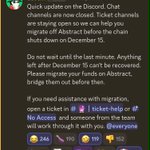
24 hours after my post, they announced they were shutting down the @AbstractChain Discord chats
I knew it was coming, so I saved 100+ screenshots before the chats were closed
You’ll be held accountable for rugging the Abstract community and lying to us, @LucaNetz.

On September 28, @0xCygaar bridged funds off @AbstractChain. We asked if Abstract was shutting down and were told: “It’s his money; he can do what he wants.”
We said, “Bit different when it’s your own blockchain.” They called it “optics.”
A week later, Abstract shut down.


Cody retweeted

This is my last post about Abstract chain.
I gave myself enough time to clear my head and look at both sides. I think that's important before speaking out.
I invested heavily in Abstract, both time and money. Over the last 6 months, I even started building my own project and was preparing to announce a new chapter. Then kwell shutdown happened.
I understand that a business concept can fail. But that doesn't justify how we, as both users and founders, were treated.
One of the saddest days, if not THE saddest day, in my entire crypto career.
I didn't just lose money. I lost time I'll never get back. Opportunities I missed because I kept doubling down on Abstract.
And worst of all, I lost trust.
Thousands of people are now left without the rewards they spent two years working towards, after dedicating 2–12 hours EVERY SINGLE DAY to Abstract and pouring back most, if not all, of their $PENGU airdrop and even more.
I've experienced a lot of nasty stuff in crypto, but this is beyond anything I could have imagined.
The @pudgypenguins community deserves so much better than the way we were treated.
But I'm moving forward.
My focus is back on my own project. Building, creating, and bringing positive vibes.
I know my success wasn't just luck or a $PENGU airdrop. I've built things, helped people, and created value. And I'll keep doing that.
See you on the other side. 😉