Cory Jack retweeted

Starting Jan 1st, you can cash out $67,650 in stock gains and pay $0 in federal tax.
$135,300 if you're married & file jointly.
The IRS just released the 2027 numbers, up from $65,550 and $131,100 this year.
Here's how it works:
Cory Jack retweeted

Is American History repeating itself with Donald Trump and Grover Cleveland?
The parallels between both men are stunning. Let me explain
Both men hail from New York. Cleveland was the Governor. Trump pondered running for Governor and would have likely won if it wasn't so Blue.
When Cleveland ran in 1884 what did he run on? Law and Order. What did Trump run on? Law and Order.
Cleveland's opponent was James Blaine who was the former Secretary of State. Blaine was considered corrupt. HRC was the Secretary of State and she was corrupt.
Many people considered Blaine the favorite like HRC was but he lost because of corruption like hers.
Cleveland edged him out in a close race winning 20 states to Blaine 18 states.
Then in 1888, Cleveland lost to Benjamin Harrison under strange circumstances despite Cleveland’s popularity. Harrison won 20 states to Cleveland 18 states.
Despite that Cleveland came roaring back in 1892 and faced a rematch with Harrison like Trump was to face Biden.
Cleveland won by a larger margin than in 1884 due to the popularity of his 1st term and because of Harrison unpopularity just like Trump.
However, Cleveland's 2nd term was a nightmare and a disaster according to many historians because of economic woes.
As a result, the 1894 midterms were a blowout and a Red Tsunami.
Republicans gained 4 Senate seats, 110 House seats, and 7 governors' seats.
Then in 1896 Democrats moved in a different direction than Cleveland who became more Conservative
The party picked William Jennings Bryan from the Midwest who was 20 years younger than Cleveland and was very different in terms of policies
Bryan was an economic populist and was what the party wanted while the party became tired of Cleveland.
However, Cleveland didn’t want him and undermined him against William McKinley in 1896.
Reminds you of anything?
As a result, Bryan lost in a landslide mainly due to Cleveland's unpopularity and because Cleveland turned his base against Bryan.
As a result, Cleveland's party lost the next 4 elections until Woodrow Wilson won in 1916 mainly because of Taft and Teddy running against him.
That was in part because of Cleveland, part because of strong nominees by Republicans and Weak nominees by Democrats.
Vance reminds me of William Jennings Bryan. Both are young, from the Midwest, and populists.
Both Cleveland and Trump faced nonsensical accusations of sexual misconduct and both have younger wives and younger VPs. However, they disagree on tariffs.
I am not saying Vance is Bryan. Both are 5 letters but they were both Christians and populists
For all we know Vance would win in 2028 depending on who the Democratic nominee is or the nominee would be someone else or he may not even run in 2028.
So that is just a very interesting historical observation or a warning of the not-so-distant future
As Old Man Biff Tannen said “There's something very familiar about all this.”

Cory Jack retweeted

Elon Musk says there will be more Optimus robots that are great surgeons than all the surgeons on Earth, and he gave it 3 years:
Asked about Dario Amodei's prediction that the human lifespan could double in the next ten years:
"That's probably correct. I don't know about doubling, but significant increase."
"I've long thought that longevity or semi-immortality is an extremely solvable problem."
"Nobody has an old left arm and a young right arm. Why is that? What's keeping them all in sync? You're programmed to die. And so if you change the program, you will live longer."
"In retrospect, the solution to longevity will seem obvious."
Then he was asked when Optimus becomes a better surgeon than the best surgeons:
"Three years. I'd say three years at scale."
"There will probably be more Optimus robots that are great surgeons than there are all surgeons on Earth. Not like absolutely certain, but I'd say if you say like four years, I'd be absolutely certain."
His reason it moves this fast:
"You have three exponentials multiplied by each other. You have an exponential increase in the AI software capability. Exponential increase in the AI chip capability. And an exponential increase in the electromechanical dexterity."
Interested in AI?
Follow @MuahDavis and never fall behind.
I track ChatGPT, Claude, and how every new agent is changing how we work and think, then hand you the pure signals.
Cory Jack retweeted

Elon says Optimus will ultimately be better than the best human surgeon. Today the best surgeons work in a handful of big city hospitals, and everyone else waits or travels to see one. A robot that precise can be built by the thousands and sent to any town. If its track record beat the best surgeon's, I'd let it do my surgery. Would you? teapawt.net/teslaownersSV/status/2…

@elonmusk says Optimus will eliminate poverty and give everyone amazing medical care.
"Optimus will actually eliminate poverty. With humanoid robots, you can actually give everyone amazing medical care. Optimus will be more precise. Optimus will ultimately be better than the best human surgeon, with a level of precision that is beyond human."
This is what Tesla means by sustainable abundance: the best care for everyone, not just the few.
Cory Jack retweeted

🚨 ELON MUSK SAYS ROBOTS WILL REPLACE AND OUTPERFORM HUMAN SURGEONS - VERY SOON
Elon Musk just laid out a future that sounds insane - until you actually think about it.
He said becoming a great surgeon takes decades, costs a fortune, doctors are overworked, knowledge constantly changes, and mistakes happen. Even then, there simply aren’t enough elite surgeons on Earth.
Now compare that to AI-powered Optimus robots that can be trained at scale, updated instantly, never get tired, never forget, and can operate anywhere electricity exists - from major hospitals to villages that have never had a doctor at all.
Musk says these robots won’t just assist surgeons.
They’ll outperform the best ones.
And there could eventually be more robot surgeons than human surgeons worldwide.
“There will probably be more Optimus robots that are great surgeons than all the surgeons on Earth.”
He even hinted this won’t roll out in the U.S. first - it’ll appear where doctors are scarce and lives are lost every day.
So if a robot can save more lives than the best human surgeon, what exactly are people afraid of?
Cory Jack retweeted

Elon Musk just put an expiration date on the medical profession.
And he gave it three years.
The interviewer asked when Optimus would be a better surgeon than the best surgeons on Earth.
Musk didn’t hesitate.
Musk: “Three years. I’d say three years at scale.”
Not a prototype. Not a lab experiment. At scale.
To understand why that timeline is plausible, you have to understand the fundamental problem with human medicine.
Musk: “Takes a super long time to learn to be a good doctor. And even then, the knowledge is constantly evolving. It’s hard to keep up with everything.”
Musk: “Doctors have limited time. They make mistakes. How many great surgeons are there? Not that many.”
That is the brutal reality of the greatest healthcare system humanity has ever built.
It runs on exhausted humans with biological limits, trained over decades, who can only operate on one patient at a time.
Optimus has none of those constraints.
It doesn’t get tired.
It doesn’t forget a study published last week.
It doesn’t have an off day. It doesn’t have a caseload limit.
And once you train one, you can manufacture ten thousand more with identical precision.
Musk: “At that point, there will probably be more Optimus robots that are great surgeons than there are on Earth.”
Think about what that actually means.
The scarcity of elite surgical skill has been one of the defining limits of human healthcare since the beginning of medicine.
Geography determined your odds of survival.
Zip code determined your access to expertise.
That bottleneck disappears overnight.
Because you can’t train human surgeons fast enough to meet global demand.
But you can manufacture infinite robots running identical perfect code.
The most valuable skill in the world is about to become software.
Infinitely replicable. Infinitely scalable. Available to every human being on Earth regardless of where they were born.
Medical scarcity doesn’t fade gradually under that reality.
It ends.
And whoever controls that code controls healthcare access for billions.
For all of human history, the leading cause of preventable death wasn’t disease.
It was the shortage of great people to fight it.
That problem has a solution now.
And it ships in three years.
Cory Jack retweeted

I don't think people realize what's happening with Elon Musk right now.
Look at what he posted today. The CEO of the most valuable car company in the world explains, on a Sunday, on X, that his team had to fit the decoder of their world model into the chip's SRAM, that they only had half an accelerator to work with, that this accelerator only handles 8-bit integers, and that softmax has to be emulated in 28 steps.
Name one other CEO at that level who could write that post. Not have it written. Write it.
That's not a detail. I think the way Musk operates at scale, combined with superintelligence, is going to give him an absolutely insane edge.
Let's go back to first principles.
A company is a machine that turns intent into reality. Between the two, there are two costs. The intelligence needed to find the solution. And the synchronization needed to get thousands of people executing it in the same direction.
Superintelligence is wiping out the first one. When thousands of agents smarter than your best engineers cost the price of electricity, intelligence is no longer scarce.
That leaves the second one. And it's exploding.
The bottleneck today is synchronization. Humans synchronizing agents. And humans synchronizing the humans who synchronize agents.
Every layer is lossy compression. The CEO tells the VP, who rephrases it for the director, who rephrases it for the manager, who prompts the agent. By the end, the agent flawlessly executes an intent nobody recognizes anymore.
Agents don't fix this. They amplify it. They move so fast that one bad intent turns into a thousand bad deliverables before the next leadership meeting.
Now listen to Marc Andreessen. He broke down what he calls "the Elon method." Every week, at every company, Musk finds the single biggest bottleneck and fixes it himself. He doesn't ask the VP to ask the director to ask the manager. He goes straight to the engineer on the problem and solves it with them. The rest of the time, he runs engineering reviews where every engineer presents what they're building.
Ben Horowitz, Andreessen's partner, sums up the condition that makes it almost impossible to copy: you need to be able to hold every engineering topic in the company in your head, all at the same time.
Here's what almost nobody sees: the Elon method is exactly the architecture of the agent era. The shortest possible sync chain between the person who understands and the thing that executes.
A CEO who doesn't understand what he's doing can only delegate his trust. A CEO who understands can delegate the work, and check the result. With humans, that gap cost months. With agents, it will cost orders of magnitude.
Second edge: hardware.
Superintelligence doesn't live in a vacuum. It needs chips, energy, data, and a body to act in the physical world. Musk has all of it. Millions of cars filming reality around the clock. His own chips. Compute through xAI. Energy storage. Robots with Optimus. Rockets and a satellite constellation.
And look at how it all connects. The same vision encoder powers FSD, Robotaxi and Optimus. One intelligence, three bodies. The next-generation chip, AI5, goes straight into Optimus, because according to him AI4 is already enough to solve driving.
Everyone else is optimizing a model. He's optimizing a full loop: data, training, silicon, energy, factory, robot, and back to data.
Put the two together. Intelligence is becoming a commodity. What stays scarce is atoms and sync speed. Musk is probably the man on earth who owns the most of both.
The labs have the models, not the factories. The industrials have the factories, not the models. The giants who have both have ten layers of management between the person who decides and the person who knows.
I look at the map and I don't see anyone who can keep up in this configuration. Honestly, I don't even see how he loses.
In the world that's coming, intelligence will be free.
Understanding what you're doing will never be for sale.

Cory Jack retweeted

You can literally see Andrew Ross Sorkin sink in his chair as he realizes Palmer Luckey is going to dismantle everything his political party believes about Ukraine, Elon Musk and Donald Trump


Cory Jack retweeted

A lot of people have real trouble thinking about the aggregate behavior of groups. They can only think about individuals.
So they think about Elon Musk as an individual. Maybe they think that he must be retarded, because they need that for emotional reasons. Or maybe they think he is a talented rocket designer.
But even if they realize he understands rockets, they can only think about him as an individual doing tasks. Not about his impact on what the whole company does.
If Elon Musk is just a talented rocket designer, then he can spend all day, every day, improving rocket designs.
But he is just one of 7000 engineers. So even if did a perfect job, he would only improve progress by about .014%
So, when a midwit looks at SpaceX, he sees 7000 engineers, and says to himself "Elon Musk cannot possibly be designing the whole damn rocket himself. These people are giving him too much credit."
This would be absolutely true if Musk were just a some random SpaceX engineer. But he isn't. He's the absolute dictator of the whole damn company.
He decides, with absolute and unquestionable authority, which behaviors are punished and which are rewarded.
Why is this important?
When I worked at Boeing, on various classified projects, I naively came in with the assumption that I was a software engineer, employed to design and build functional software as quickly and cheaply as possible.
Because of this, I focused on functionality and efficiency, for example suggesting changes that would obviate the need for entire projects and software components.
And I very rapidly became persona non grata.
At first, this caused me to adopt an air of aggrieved innocence. I was just trying to do my job well, and I was being punished for it.
Then I gradually came to realize that I hadn't properly understood what my job was, or what the actual mission of Boeing Defense, Space, and Security was.
Boeing DSS was not an aerospace company. Boeing DSS was a fraud company.
Its goal was twofold. First, to maximize transfer of public tax dollars to stockholder pockets. Second, to maintain the appearance of being an aerospace company, to prevent the fraud from being exposed.
Which meant that my real job was twofold. First, to generate billable hours. Second, to look busy.
This is why Space Launch System sucks. Why it is always late when it doesn't fail outright. Why it is at 300% of its target budget. Why it leaves American astronauts stranded and needing a lift from SpaceX.
That's because, for Boeing, building rockets is a side quest. Something they have to do to look busy. Yes, a rocket does occasionally fly, but that's just happening so programs don't get shut down.
For Boeing, coming in early and under budget would actually be failure. The system is functioning exactly as designed.
The cost, not the rocket, is the goal.
Musk and SpaceX don't work like that.
Unlike Boeing executives, Musk is not a useless grifter asshole. He is an entirely different kind of asshole... a rocket obsessed sperg.
So, at SpaceX, engineers do not get rewarded for generating billable hours. They get rewarded for making rockets fly. And for all the subtasks of this, like figuring out how to make rockets lighter, figuring out how to make engines reignite better, figuring out how to make rocket exhaust not destroy launch pads, etc.
And this attracts engineers who care about rockets. You've seen them on broadcasts, crying on open microphones because they dedicated their lives to something and it just flew.
As a rocket engineer, who designs rockets, Musk is probably replaceable. As a rocket company engineer, who designs rocket companies, he is not.
For over 50 years, the US space industry stagnated precisely for the lack of a Musk-like figure, who could not only create an effective aerospace company, but who could thereby demonstrate what an effective aerospace company looks like.
Which makes it much more difficult for fraudsters to get away with fraud.
I'm envious. I wish I could have worked for an aerospace company instead of a fraud company.
But what's more important is that some of us now no longer have to play "who gets the most cheese?".
They get to play "What can we build today?".
Let’s take this gentleman’s argument at face value that anyone can throw money at rockets and get something like Starship, Falcon or Dragon.
Perhaps he can explain to everyone how SpaceX is able to catch giant starships from orbit with chopsticks and deliver 85% of all Earth payload to orbit with Falcon, while Blue Origin, which started before SpaceX and was funded by the immensely wealthy Jeff Bezos, is not yet able to launch reliably?
Also, why is it that Boeing and Lockheed received several times what SpaceX did from the government for development of their rockets and spacecraft, but the Boeing capsule is still not operational and ULA delivers less than 5% of SpaceX payload to orbit?
I am genuinely curious about these questions.

Cory Jack retweeted
Intelligence is not what separated the great founders of the last 40 years from everyone else.
The world is full of brilliant people. Most of them never built anything that mattered.
The real difference is courage. The courage to say what you believe is true, knowing that 90% of people, sometimes more, will tell you you're wrong.
Jobs telling the world that normal people would want a computer at home. Bezos selling books on the internet while analysts laughed at his losses. Musk saying rockets would land and fly again while the whole aerospace industry called it a fantasy. Airbnb pitching strangers sleeping in strangers' beds. Every one of these ideas looked stupid before it looked obvious.
Thiel's question sums it up: what important truth do very few people agree with you on? Answering it is not an IQ test. It's a courage test.
And here's what fascinates me. Children have this courage naturally. A five-year-old asks "why?" fifty times a day. He says out loud that the emperor has no clothes. He doesn't care what people think of him. He hasn't learned yet that being wrong in public is supposed to be shameful.
Then he goes to school.
For fifteen years, he learns the opposite. Raise your hand. Give the expected answer. Repeat the lesson. Don't stand out. The grade rewards agreeing with what the teacher already believes. Fear of other people's judgment gets installed layer by layer until it becomes a reflex.
I'm pretty convinced the fundamental culprit is the left's capture of the school system. Not because teachers are bad people, but because an ideology that sees itself as the moral side of history has no reason to train kids to question it. It trains them to hold the right opinions. And a generation trained to hold opinions is a generation that can't produce new ones.
Now imagine the opposite. Schools whose explicit mission is to challenge the status quo, permanently. Where you score points for finding the flaw in the textbook. Where defending an unpopular position with rigor is the highest form of excellence. You would produce free thinkers.
And here's the uncomfortable part. Put free thinkers in a room and Marxism doesn't survive. Structurally. Not because of a rival ideology, but because it doesn't hold up under rational scrutiny. Central planning requires a planner to know what millions of people want, need and can produce. That information only exists scattered across their heads, and it only surfaces through prices. Hayek explained this decades ago, and every attempt since has confirmed it. An idea that only survives as long as nobody questions it is not a theory. It's a catechism.
Either way, we won't have a choice.
AI is wiping out the value of the pure executor. The person who learns the lesson and repeats it, applies the procedure, gives the expected answer: that is exactly what a model does better, faster and for almost nothing. Our education system was built to mass-produce that profile. That profile is now worth zero.
What will matter is people who know how to learn how to learn. People who face a problem nobody has solved and don't wait for the answer key. People who create things that didn't exist yesterday. And all of it starts with the same muscle: daring to think against the room.
So the real reform isn't coding classes or tablets in classrooms. It's tearing down the machine that kills the courage children are born with.
Children aren't afraid of being wrong. We teach them to be.
The future belongs to those who unlearn it.
Cory Jack retweeted

A Japanese cardiologist once openly admitted:
"90% of heart attacks don't start with chest pain. They begin with these 5 daily habits."
1. Don't go to pee at 3 AM
Cory Jack retweeted
2. They sit for hours without a break
Long sitting slows the blood in your legs and stiffens your arteries.
Stand up and move for two minutes every half hour. Set a timer if you have to.



Cory Jack retweeted

These two leftist evil vile women do nothing but spread hate. When anyone goes out of their way to laugh and celebrate the m*rder of anyone has reached an all time low….
I hope they lose all their sponsors 💯
Whoever sponsors these two on their podcast will NEVER get my support EVER…..
This woman said it BEST…
Very POWERFUL message, a MUST listen too…
Cory Jack retweeted

This is f*cking wild. Someone asked Anthropic CEO Dario Amodei what a kid finishing high school should do right now. He didn't sugarcoat it:
"AI can do entry-level law work. It can do entry-level finance. It can do entry-level consulting.
AI will also eliminate jobs, and probably a large number of them"
In 42 seconds, he lists the first careers in the line of fire: junior law, junior finance, junior consulting
He's already put a number on it: half of entry-level white-collar jobs disrupted within 1 to 5 years
Every shift before this one, from farms to factories to the internet, gave people time to catch up. This one, he says, cuts deeper and moves faster
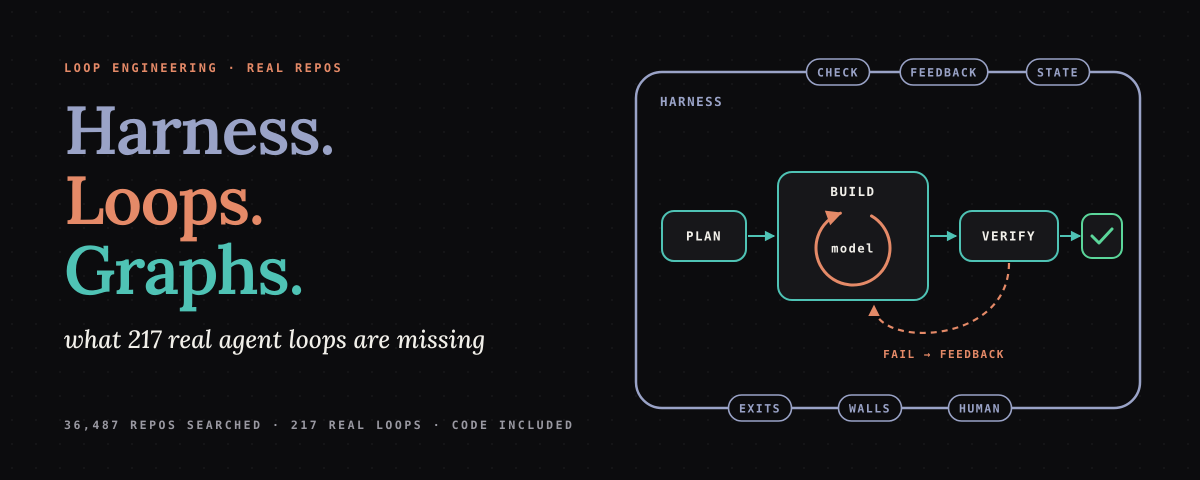
Chatting → Prompting → Agents → Harness → Loops → You Run the AI
His advice is simple: learn to use AI. But using it is now the bare minimum. What sets you apart is a harness that runs it for you
Bookmark this before your feed buries it
Every repo below costs nothing:
Ready-made Claude plugins for legal, finance, sales, HR and data
github.com/anthropics/knowle…
Analyst-grade agents: models, memos, research notes
github.com/anthropics/financ…
Skills for Excel, Word, PowerPoint and PDF
github.com/anthropics/skills
An agent that does financial research on its own
github.com/virattt/dexter
An agent that researches any topic in depth
github.com/assafelovic/gpt-r…
Ask your spreadsheets and databases questions in plain English
github.com/sinaptik-ai/panda…
Agents that work as a team, each with its own role
github.com/crewAIInc/crewAI
A harness with everything built in
github.com/langchain-ai/deep…
Anthropic's SDK for building your own agents
github.com/anthropics/claude…
A memory layer so your agents remember context
github.com/mem0ai/mem0
A loop that keeps the agent going until the job is done
github.com/snarktank/ralph
An agent that clicks through websites and fills forms for you
github.com/browser-use/brows…
Automate busywork with drag-and-drop workflows
github.com/n8n-io/n8n
18 free lessons on building agents
github.com/microsoft/ai-agen…
Total cost: $0
It won't be AI that takes your seat. It'll be someone who built a harness
95% will keep sending résumés for work AI already does, the 5% with a harness will be the ones managing it
Save it and forward it to anyone starting their first job
Then follow the guide below and build your harness while everyone else is still waiting ↓