

Freelancer | Nieman Fellow 2007 For democracy and freedom of speech & expression - always. Ex: @the_hindu @RepublicaNepal @kathmandupost
Nepal and USA
Joined June 2009
- Tweets2.9K
- Following509
- Followers10.9K
- Likes4.2K






Damakant Jayshi retweeted
UN Commission determines: Russia's attacks on Ukraine's energy infrastructure is a Crime Against Humanity.
Mike Schmitt analyzes the important UN report.
justsecurity.org/164565/russ…

Australia’s Bancroft alleges the entire cricket team knew about cheating in South Africa in 2018, contradicting the claims of Cummins and other bowlers. cricinfo.com/story/cameron-b…

118
Damakant Jayshi retweeted

BREAKING: Democrat Mary Peltola wins Alaska U.S. Senate race, flipping the seat and defeating incumbent Sen. Dan Sullivan.
apnews.com/article/alaska-se…

“30 years for moving a box.”

I wanted to understand how someone could get 30 years for moving a box. So months ago I tried to interview Daniel Sanchez in prison. The warden denied my request, saying it would "cause serious unrest or disturb the good order of the institution.” So we began a series of calls...
152
Damakant Jayshi retweeted

किन भन्नु हुँदैन ‘आइमाई’?
अभिनेत्री @reecchasharrma ले एउटा सार्वजनिक कार्यक्रममा ‘आइमाई नभन्नुस्’ भनेपछि उहाँलाई खेदो गर्ने र ‘आइमाई’ शब्दको औचित्य प्रमाणित गर्न खोज्नेहरू बग्रेल्ती देखिएका छन्।
यो बहस नयाँ होइन। आजभन्दा दुई वर्षअघि, २५ जुन २०२४ मा मैले यही विषयमा एउटा फेसबुक स्टाटस लेखेको थिएँ। त्यसबेला उठाएका प्रश्न र राखेका तर्क अहिले पनि उत्तिकै सान्दर्भिक लागेकाले पुरानो स्टाटसलाई केही परिमार्जनका साथ पुनर्लेखन गरेर यहाँ राखेको छु।
कुनै शब्दको शाब्दिक अर्थ, व्युत्पत्ति वा प्रयोगकर्ताको मनसायभन्दा त्यस शब्दले समाजमा बोकेको ऐतिहासिक अर्थ, सामाजिक प्रभाव र सम्बोधित व्यक्तिको आत्मसम्मान बढी महत्त्वपूर्ण हुन्छ। त्यसैले अरूलाई हेप्ने वा अपमानित गर्ने अर्थमा जतिसुकै स्थापित शब्द भए पनि त्यसको प्रयोग नगर्नु भाषिक मात्र होइन, सामाजिक र नैतिक जिम्मेवारी पनि हो।
यस सन्दर्भमा केही कुरा बुँदागत रूपमा राखौँ।
१. शब्दको व्युत्पत्ति र सामाजिक अर्थ एउटै कुरा होइनन्।
कुनै शब्दको उत्पत्ति कहाँबाट भयो, त्यसको शाब्दिक अर्थ के हो र त्यसलाई प्रयोग गर्ने व्यक्तिको मनसाय के थियो भन्नेभन्दा पनि त्यस शब्दले लामो सामाजिक अभ्यासबाट के अर्थ बोकेको छ भन्ने महत्त्वपूर्ण हुन्छ। शब्दकोशमा राम्रो अर्थ भेटिँदैमा समाजमा त्यसले बोकेको अपमानजनक अर्थ मेटिँदैन।
२. ‘आइमाई’ शब्दको समस्या यही हो।
नेपाली समाजमा यो शब्द लामो समयदेखि महिलालाई हेप्ने, होच्याउने र निम्नस्तरको ठान्ने भाषिक व्यवहारसँग जोडिएर प्रयोग हुँदै आएको छ। कतिपयले सामान्य अर्थमा प्रयोग गर्लान्, तर त्यसले शब्दको ऐतिहासिक र सामाजिक भार मेटाउँदैन।
३. ‘आर्यमाता’ बाट बनेको महान् शब्द हो भन्ने तर्कले यसको सामाजिक अर्थ बदलिँदैन।
कुनै शब्दको व्युत्पत्तिलाई जति नै सुन्दर बनाए पनि त्यसको वर्तमान सामाजिक प्रयोग र प्रभावलाई बेवास्ता गर्न मिल्दैन। शब्दको महानता प्रमाणित गर्न संस्कृतको व्युत्पत्ति खोतल्नु सजिलो छ, तर त्यसले सम्बोधित व्यक्तिको अनुभूति र आत्मसम्मानलाई खारेज गर्न मिल्दैन।
४. सम्बोधित व्यक्तिलाई त्यो शब्द मन पर्दैन भने प्रयोग नगर्नुहोस्।
भाषा प्रयोग गर्ने स्वतन्त्रता छ भन्दैमा अरूलाई मन नपर्ने, अपमानबोध गराउने शब्द प्रयोग गरिरहन पाउनुपर्छ भन्ने हुँदैन। भाषा केवल बोल्ने व्यक्तिको सम्पत्ति होइन। त्यसले सम्बोधित व्यक्तिको सम्मान पनि समेट्छ।
५. एउटा सामान्य उदाहरण हेरौँ।
म बाहुन हुँ। कसैले मलाई ‘ए बाहुन्’ भनेर सम्बोधन गर्दा अपमानबोध हुन्छ भने त्यसलाई मेरो व्यक्तिगत संवेदनशीलता भनेर उडाइदिन मिल्छ? त्यसैगरी, कसैलाई ‘ए नेवार्’ वा ‘ए मधिसे’ भन्दा उसलाई कस्तो लाग्छ भन्ने कुरा पनि महत्त्वपूर्ण हुन्छ। सम्बोधित व्यक्तिको असहजतालाई उसको समस्या बनाएर आफूले चाहेको शब्द प्रयोग गरिरहनु कस्तो भाषा संस्कार हो?
६. यो ‘डलरे चेतना’ होइन, सामाजिक चेतना हो।
मधेसी समुदायले ‘मदिसे’ नभनिदिन आग्रह गर्दा ‘मलाई पहाडे भन्दा केही हुँदैन’ भन्ने तर्क गर्नेहरू हामीकहाँ छन्। दलित समुदायले आफूलाई दलित भनेर सम्बोधन गर्दा त्यस शब्दसँग जोडिएको ऐतिहासिक दलन र विभेद सम्झाइरहँदा ‘दलित भन्नै छाडे दलन हट्छ’ भन्नेहरू पनि छन्। महिलाले ‘आइमाई’ नभनिदिन आग्रह गर्दा त्यसको विरोध गर्नेहरू पनि तिनै हुन्।
यी सबैमा एउटा साझा प्रवृत्ति छ: सम्बोधित व्यक्तिको आत्मसम्मानभन्दा आफूले प्रयोग गर्दै आएको भाषिक अधिकारलाई ठूलो ठान्ने अहङ्कार।
७. संसारमा शब्दप्रयोगसम्बन्धी मान्यता र अभ्यास बदलिएका छन्।
कुनै समय सामान्य मानिएका कतिपय शब्द आज अपमानजनक र सामाजिक रूपमा अस्वीकार्य मानिन्छन्। अंग्रेजीका Negro, Eskimo, Gypsy, Red Indian जस्ता शब्दको प्रयोग र स्वीकार्यतामा आएको परिवर्तन यसका उदाहरण हुन्। हामीकहाँ पनि ‘लाटा’, ‘लङ्गडा’ जस्ता शब्दको प्रयोगप्रति सचेतना बढेको छ। यसलाई भाषा बिग्रिएको होइन, समाज सभ्य हुँदै गएको संकेतका रूपमा बुझ्नुपर्छ।
८. शब्दको बचाउ गर्न नसकेपछि विचारलाई ‘डलरे’ भनिन्छ।
कुनै शब्दको विरोध गर्नेबित्तिकै त्यसलाई विदेशी प्रभाव, डलरको खेती वा पश्चिमी संस्कृतिको नक्कल भनेर खारेज गर्नु तर्क होइन। यो आफ्नो भाषिक व्यवहारमाथि प्रश्न उठेपछि त्यसको जवाफ दिन नसक्नेहरूको सजिलो प्रतिरक्षा हो।
९. भाषाको विकास भनेको शब्द जोगाउनु मात्र होइन, शब्दले दिने चोट पनि बुझ्नु हो।
भाषा परम्पराको नाममा जस्ताको तस्तै राखिरहनुपर्ने वस्तु होइन। समाज बदलिन्छ, चेतना बदलिन्छ र शब्दका अर्थ पनि बदलिन्छन्। अरूलाई होच्याउने अर्थमा स्थापित शब्दको प्रयोग छाड्नु भाषिक कमजोरी होइन, सामाजिक र नैतिक परिपक्वता हो।
१०. अन्त्यमा, एउटा सजिलो परीक्षण छ।
तपाईँलाई ‘आइमाई’ शब्द यति नै महान् र सम्मानजनक लाग्छ भने आफ्ना आमा, दिदीबहिनी, श्रीमती र छोरीबुहारीलाई एकपटक सिधै वा घुमाएर ‘आइमाई’ भनेर सम्बोधन गर्नुहोस्। उहाँहरूको प्रतिक्रिया हेर्नुहोस्।
तर एउटा कुरा ख्याल गर्नुहोला: उहाँहरूले आपत्ति जनाउनुभयो भने उहाँहरूको भावनाको सम्मान गर्नुहोला। आफ्नो शब्दको महानता प्रमाणित गर्न उहाँहरूलाई नै गलत साबित गर्न नथाल्नुहोला।
शब्दको व्युत्पत्ति देखाएर कसैको आत्मसम्मानलाई परास्त गर्न सकिँदैन।
महिलाले ‘आइमाई नभन्नुस्’ भनेको आग्रहलाई सम्मान गर्न नसक्ने हामीले आफूलाई सभ्य र शिक्षित समाजको सदस्य कसरी भन्ने?
Damakant Jayshi retweeted

NEW: The @nytimes confirms that ICE deliberately electronically "disappeared" tens of thousands of people in detention and ordered contractors to refuse to reveal where they're held to family or lawyers.
30% of all immigrants detained in ICE jails now have their location hidden.


Damakant Jayshi retweeted

Thank you, @RepRaskin, for speaking out on behalf of Idris Khattak. Seven years after his abduction, this Pakistani human rights defender remains unjustly imprisoned.
Freedom House joins the call for his immediate release and reunification with his family. #FreeThemAll

Seven years ago today, Pakistani human rights advocate Idris Khattak was abducted and jailed on baseless charges. In government custody, he has been denied adequate medical care and subjected to solitary confinement. Khattak's arbitrary and brutal detention is a blatant attack on the fundamental rights of civil society activists in Pakistan. I urge the Pakistani authorities to immediately release Khattak and get him back to his family.
Damakant Jayshi retweeted

Please read this extraordinary story

In June of 1941, Hitler's Army began a rampage through Ukraine, razing towns, unleashing death squads, and massacring Jews by the hundreds of thousands. In one village, four Jewish brothers enlisted in the military, said goodbye to their parents, and walked off to fight the Nazis.
By the war's end in 1945, only one of the brothers, named Semyon, was still alive. He returned to find that the Nazis had torched his entire village, burning his parents to death. Semyon's family was dead, and his beloved Ukraine was in ruins. The Nazis had murdered between 1.2 and 1.6 million Ukrainian Jews.
Semyon married a fellow Ukrainian Jew who had survived the war by fleeing her city, in which the Nazis had killed 5,000 Jews. Two years later, in that same city, they had a son, Oleksandr, keeping alive the family line that the Nazis had brought a razor's width from extinction. Thirty-one years after that, Oleksandr had his own little boy.
That boy was Volodymyr Zelensky, who grew up to become the President of independent, democratic Ukraine. Today, he leads his outmanned, outgunned, ferociously defiant nation against the onslaught of Russia. As Russia dashes itself against the will of his people, Zelensky, the survivor of survivors, summons the resilience of his ancestors. He does not bend. #Zalensky #Ukraine

Damakant Jayshi retweeted

Many news articles are rightfully noting that Scott Colom becomes the first Black senator elected in Mississippi “since Reconstruction.”
I think it’s worth more fully articulating why that is and the history tucked into that two-word phrase.
Mississippi has always been one of the Blackest (by population %) states in the Union, and after the Civil War, in 1870, it elected as senator America’s first Black member of Congress — AME minister Hiram R. Revels. Four years later, he was replaced by Blanche Bruce, a former slave, who became the country’s second Black senator.
Then, in 1890, state lawmakers in Mississippi called a state Constitutional convention in order to functionally strip Black residents access to the ballot box — introducing a $2 annual poll tax as well as literacy tests.
As a result, Black voter participation plummeted. These were innovations, and became the inspiration for similar “Jim Crow” laws across the South during the period that followed Reconstruction.
For the next 136 years, Black voter registration and turnout would be a major focus of civil rights efforts in Mississippi — including the work of Medgar Evers and Fannie Lou Hamer — often in response to acts of racial violence including the 1955 lynching of Emmett Till.
Even so, no Black official had managed to be elected to a statewide office in Mississippi since the 1890 convention until yesterday, when Scott Colom was declared the winner of the 2026 Senate race.
Damakant Jayshi retweeted

🎧 I am bullish on the future of journalism. The AI era will put a premium on authoritative reporting + analysis.
—That's been @axios' mission for a decade
—@nytimes, @DowJones & others have proven it can be a great biz, too
—I am worried about local, but there are green shoots. Very proud of Axios' investment in reporters on the ground in 43 cities.
More w @bmorrissey: podcasts.apple.com/us/podcas…

Damakant Jayshi retweeted

Sad about Jensen. Shakespearean. But as de Gaulle said, “The graveyards are filled with indispensable men.”
Damakant Jayshi retweeted
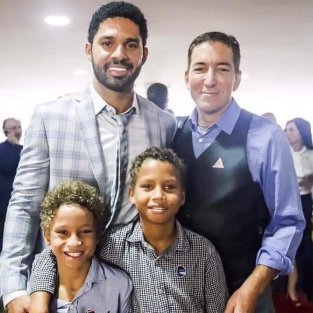
This Jensen Huang/Nvidia scandal is quite bizarre. The most dominant CEOs of the world's most powerful corporations rarely fall, let alone as easily and rapidly as this seems to be happeing. He's on the brink of being ousted with remarkable velocity and vanishingly little evidence.
Over what? If "mere" extramarital affairs were sufficient for ouster, how many top CEOs would be left? Not many. Hence the need for the sinister CCP/spying angle. But is there any tangible evidence at all that Alice Huang is an asset or spy for the Chinese government? Anything beyond anonymous vague US intelligence suspicions being mindlessly, dutifully recited (as always) by US corporate media?
The always smart and insightful @RnaudBertrand is required reading here, at least for the questions he raises:👇

This is the biggest irony of the whole Alice Huang / Nvidia saga: the Chinese government actually doesn't want Nvidia chips and is actively keeping them out of the country.
Last year it even ordered Alibaba and ByteDance to cancel their Nvidia orders (bloomberg.com/news/articles/…) and sent customs teams to the ports to check every advanced chip coming in (ng.investing.com/news/stock-…).
And right now 600,000 Nvidia H200s are stuck in Hong Kong because Beijing won’t let them into the country (reuters.com/world/china/nvid…)👇
Nvidia also explicitly frames this as a threat to its business in its latest annual report to the SEC: "The Chinese government has encouraged customers to purchase from our China-based competitors and discouraged customers from purchasing, importing, or using our data center products" (sec.gov/Archives/edgar/data/…).
Why does China do that? Because every Nvidia chip a Chinese company buys is one that Huawei or Cambricon doesn’t sell, and domestic chips can only catch up if people actually buy them (which means money for R&D, etc.).
Which means that the notion that Chinese intelligence was running honeytraps to get more Nvidia chips into China gets the whole thing exactly backwards.
In fact, it looks like Megaspeed - Alice Huang's company - was a counter-reaction to official Chinese policy: a private sector workaround to these efforts by the Chinese government to curtail Nvidia.
As was widely reported - including by Western media - Megaspeed built data centers in Southeast Asia and rented their computing power to Alibaba, which the New York Times called "a backdoor way of getting access" to Nvidia chips (nytimes.com/2026/11/06/us/po…).
That is a backdoor not only - allegedly - around Washington’s export controls, but also around China's own efforts to wean its companies off Nvidia.
I can’t believe the Chinese government was too thrilled about it: it'd make just about zero sense for it to run countless domestic measures to prevent Alibaba from using Nvidia chips, yet at the same time have its top spy agency help the same Alibaba get Nvidia chips through the back door in Southeast Asia 🤷
At the end of the day, as with all such stories, you always need to look at "cui bono?": who benefits? Who benefitted is pretty clear:
- Nvidia itself: it's in the business of selling chips so a customer willing to spend billions of dollars on chips in Southeast Asia is a godsend. Again, as they themselves state in their SEC filings, not being able to tap into Chinese demand would have "a material and adverse impact on our business" (sec.gov/Archives/edgar/data/…).
- Chinese companies like Alibaba: facts are, 1) Chinese chips haven't yet caught up, 2) Chinese chip companies' production capabilities are still limited and 3) Chinese tech firms' historical tech stack runs on Nvidia’s CUDA ecosystem, and rewriting years of code for Huawei chips is painful. Renting Nvidia chips in Southeast Asia is the easy way to stay competitive and serve customer demand in the meantime.
- The US, according to core members of the Trump administration: back in July last year, US Commerce Secretary Howard Lutnick explained that the point of letting Nvidia sell more chips to China was to get Chinese developers "addicted to the American technology stack" (techradar.com/pro/china-coul…).
Who does NOT benefit, according to official Chinese policy, is the Chinese state, which has made tech self-reliance one of its foremost priorities.
Which means that, to believe the spy story, you have to believe that a person - Alice Huang - was effectively a spy paid by her own government while simultaneously sabotaging its tech self-reliance drive, which it has spent years and trillions of dollars on - pretty senseless.
Stranger things have happened, I guess, but it doesn't pass the smell test.
And there is another absolutely major contradiction in the media story. According to a Financial Times article published yesterday (ft.com/content/3238d92b-4074…), "a person who knows [Alice Huang] said they had been asked by MSS for information about her earlier this year after news emerged that Singapore was investigating the company in relation to chip-smuggling allegations. The agency wanted to find out more information about Huang, including the nature of her business and connections, the person said."
Which raises a damn obvious question: if she were indeed an MSS asset, why on earth would the MSS need to ask the people around her who she was and the nature of her business?
It's a complete contradiction with the spy story - but very much not a contradiction with what I described above: a private businesswoman running a workaround to Beijing’s own policy, which the Chinese security apparatus would naturally want to look into.
Especially since, around about the same time, Shanghai police detained her business partner, reportedly her husband, in a stock manipulation case (caixinglobal.com/2026-11-10/…): also coherent with Chinese authorities looking into her network, and much harder to square with her being a prized MSS asset.
And, to top it all, there is - to this day - not a shred of evidence that's been published that she is, in fact, a Chinese spy: just anonymous intelligence officials, repeated by journalists who never verified it, as I detailed here (teapawt.net/RnaudBertrand/status/2…) and here (teapawt.net/RnaudBertrand/status/2…) with one of the key FT journalists on this story actually admitting that he has no idea what evidence US intelligence actually has.
So the claim went to print without anyone seeing the evidence, without anyone being able to check it, and without anyone knowing whether it even exists.
And given everything above, from Beijing blocking the very chips she was supposedly recruited to help get into China, to the MSS asking around about her, to her partner being detained in Shanghai, my bet is that the evidence doesn’t exist at all. If anything, everything we can check points the other way.

Damakant Jayshi retweeted

m.thewire.in/article/media/i…
The Wire received the documentation and writes the article now as a confirmed story.
Thank you for quickly going over it and getting it out there 🙏

Live: Jensen Huang resigns as Nvidia CEO immediately - reuters.com/live/nvidia-live…

1
181
Damakant Jayshi retweeted

Amit Shah 🤡

I got a visa to India and was supposed to leave this morning to attend the Bharat Summit in Hyderabad. I had been invited as a panelist and speaker on the future of media and press freedom.
But «orders from above» in the Ministry of Home Affairs have cancelled my visa.
Here is my message for @AmitShah
Damakant Jayshi retweeted

Blanche K Bruce’s house is on my block. He was the last Black senator from Mississippi. So in honor of the first Black senator from Mississippi since Reconstruction, I dropped off some flowers at his home.

ALT A plaque in front of a house saying “National Historic Landmark” and “Blanche K Bruce House.” It has a bouquet on top of the plaque.
Damakant Jayshi retweeted

Remember and honor Andrew Goodman, James Chaney and Michael Schwerner and the price they paid when they were murdered for voting rights in Mississippi, 1964:

After the expose about the second extramarital affair of Jensen Huang, I’d be surprised if he’s still Nvidia’s CEO in a week from now.
More expose is likely.

Nvidia’s board of directors is said to be meeting to discuss the future of its CEO, who is navigating several scandals. nyti.ms/4zcjN2H

2
234
Damakant Jayshi retweeted

Nvidia's board is preparing to oust CEO Jensen Huang, its founder and chief executive, after he had two extramarital affairs, including one with a suspected Chinese spy, WSJ reports
wsj.com/business/nvidia-is-p…
