

Serbian Eastern Orthodox Latinizer. Augustinian Photian! Death Penalty Enjoyer! Discord: deba99999
Synod of the Latinization
Joined May 2025
- Tweets534
- Following166
- Followers188
- Likes1.7K




deba9999 retweeted

"..Our Saviour, who was sacrificed in order to appease the righteous wrath of the Infinite God for the sins of all mankind, beginning with the disobedience of Adam."
St. Sebastian Dabovich, Preaching in the Russian Church, Sermon Preached on the Third Sunday of Great Lent p. 121


deba9999 retweeted

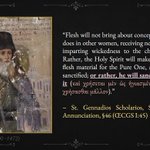
The Orthodox teaching on the Theotokos rebukes both the Roman Catholics — who claim she was immaculately conceived — and the Orthodox modernists, who claim we don’t believe in original sin.


deba9999 retweeted

A brief defence of the Russian Church’s practice of icon veneration by Metr. Platon (Levshin), teacher of St. Philaret of Moscow, in his catechism:
‘We do not act contrary to this [the 2nd] commandment, when, according to the ancient custom of Christians, we adorn our temples with the holy pictures. For, in the first place, we do not attempt to draw upon the canvas a representation of the unseen and incomprehensible God, whom we never can represent; but we represent our Saviour in the fashion of a man which he took upon himself, or his favourites.
Secondly, the pictures are made and placed in our churches, not for deification, but to commemorate the acts of God and of his chosen servants, that we, in beholding them, (as, for instance, in looking on the picture of our crucified Saviour), may stir up our souls to piety, and to the imitation of them in many acts of their lives.
Thirdly, the obeisance which we make before the pictures, we do not render to the pictures themselves, that is, to the boards, colours, ornaments, or skill of the artist, but we render this to the persons whom they represent, and to the pictures only an affectionate salutation.
Thus, for example, I bow before the picture of my Saviour, but the devotion of my spirit, my faith, supplications, and hope, and the very obeisance which I pay, are all rendered to my Saviour alone, who is in heaven, and every where present, and the picture is only a kind of sensible incitement of my devotion.
Moreover, it is necessary to be known, that the obeisance performed before the picture of our Saviour, and that before the picture of any of the saints, though to appearance the same, yet in reality are very different indeed. For the worship which I perform before the picture of the Saviour, consists in the deepest humility of soul before him as Lord and Creator of all; but that which I perform before the pictures of the saints is a reverence which I render to them out of a loving heart as his favourites, and as of the same nature, and of the same church, and members of the same body with myself.
But notwithstanding all that has been said, this lawful and holy reverencing of the pictures may be turned into the most abominable sin of idolatry. This is the case when any one hopes in, or attaches all his respect to the holy pictures, and trusts in their material substance; when, for instance, any one finds greater sanctity in one picture than in another, or places in them any hope of salvation.
They, too, are chargeable with this guilt, who bring their own particular picture into the church along with them, and only worship before it, or who respect those pictures more which are adorned than the unadorned, the old more than the new, or decline praying at all when they have not a picture before them. All these, and such like, are great transgressors, and prove a great disgrace to the real profession of the Christian faith.
In order to avoid the above-mentioned errors, it is necessary to remember, first, that the worship of God can never be sincere, unless it proceed from a contrite and unfeigned spirit.
For all external rites of worship are only marks testifying our internal piety and sincerity towards God, without which they signify nothing. And therefore the gospel requires, that the worshippers of God should worship him in spirit (not externally alone), and in truth, or not in hypocrisy.
Second, we must hold to the divine word alone, and rest assured, that it only contains the true rules by which we ought to please God. And therefore Christ said concerning the Holy Scriptures, that in them is contained eternal life.’
–Metr. Platon (Levshin), A Summary of Christian Divinity (Robert Pinkerton ed.), pg. 228-229


deba9999 retweeted
This actually (dogmatically) reinforces a response given by Abp. Theophan to Socinian objections to the Atonement repeated unfortunately by some Orthodox writers today (i.e. Frederica Mathewes-Green.)
God forgives the sins of men before the Cross—but He does so solely by virtue of Christ’s merits. He does not simply forgive without need of a sacrifice.
‘Objection: “Before Christ, God remitted many sins without any true satisfaction, such as those of Abel and Enoch; therefore the satisfaction of Christ is not required for the remission of sins.”
Reponse: I deny the antecedent and the consequent. For Christ is called the Lamb slain from the foundation of the world (Rev. 13:8) for the salvation of all who believe in Him.’
–Abp. Theophan (Prokopovich), Compendium of Orthodox Christian Dogmatic-Polemical Theology, Tome I, Book IX, §255


‘The Cross of Christ was mysteriously proclaimed in advance and foreshadowed from generations of old and no one was ever reconciled with God except by the power of the Cross. After our First Parents transgressed against God through the tree in paradise, sin came to life, but we died, submitting, even before physical death, to the death of the soul, its separation from God.
After the transgression we lived in sin and according to the flesh. Sin “..is not subject to the law of God, neither can [it] be. And they who are in the flesh, cannot please God.”(Rom. 8:7-8)’
–St. Gregory (Palamas), Sermon XI.1


deba9999 retweeted
“If Moscow organized a state on the principles of militant and violent Marxist atheism, Mussolini created another state of brilliant, harmonious vision, founded on the eternal principles of Christianity.”
Nichifor Crainic, “Titanii ateismului,” Gândirea, Year XIII, no. 7, p. 263

deba9999 retweeted
Fr. Artemy Vladimirov on St. Catherine’s life as a demonstration of the necessity of the imputation of Christ’s righteousness for the possibility of communion with God.
‘St. Catherine [...] was intelligent, serious-minded, and profound in her learning; yet, for some reason, as you remember, the Divine Infant turned away from her when the icon seemed, as it were, to come to life before St. Catherine. But after this royal personage had been vouchsafed Holy Baptism, the Saviour gazed upon her with favour and a smile and bestowed upon her His wondrous ring: St. Catherine was betrothed to the Heavenly Bridegroom.
The point is that the human soul, only once it has been washed in the font of Baptism, cleansed by the Blood of the Saviour from the infirmities inherited from our first parents, and clothed in the robe of the Holy Spirit—when the Lord imputes His own righteousness, purity, innocence, and holiness to the newly baptised soul—only upon receiving this birth by grace, is capable of speaking with God, living with God, reigning with Him, entering into communion with Him, and becoming akin to Him. Thus the Lord mystically takes His rest in the soul that has been baptised in the name of the Father and of the Son and of the Holy Spirit, and the human spirit is illumined through the operation of grace.’
–Fr. Artemy (Vladimirov), St. Catherine, the Most Wise Bride of Christ


deba9999 retweeted
“But before any outward expansion, we must displace the minorities within our present borders, and this cannot be done without an enlightened and energetic state policy.”
St. Dumitru Stăniloae, "Spațiul vital și spiritul românesc," Telegraful Român, year 89, no. 35, p. 1.

deba9999 retweeted
Hieromartyr Daniel on the character of true elders: they never oppose the episcopate, but remain obedient to bishops and reject novel teachings born of visions.
‘The genuine elders of every age have never set themselves against the episcopate. Thus, St. Anthony came forth from the desert in order to support St. Athanasius; St. Theodosius the Great came with the monks to Jerusalem in order to support the Patriarch who was being compelled to renounce the Chalcedonian faith. St. Sergius [of Radonezh], in obedience to Metr. Alexius, went to reconcile the princes, while St. Seraphim [of Sarov] refused even to read an Akathist to God the Father after learning that it had been rejected by the Synod.
Modern-day “elders” are “holier” than Anthony, Sergius, Seraphim, and Theodosius alike... It was evidently not for them that St. John Damascene said that “the Church has been entrusted to the bishops”. Nor was it for them that St. Ignatius the God-Bearer wrote: “he who is not with the bishop is not with God”. It is no accident that this movement is associated with such a multitude of visions introducing teachings previously unknown.’
–Fr. Daniel (Sysoev), Sects and Heresies Parasitising on Orthodoxy

deba9999 retweeted
Q: ‘Hello. If I am writing a fantasy tale in which the characters are animals, but they live in a city like people and wear clothes, is it a sin to call them by human names? In the same “Good Night, Little Ones,” the little dog character was called Filya. And if this is a sin, then how many fairy tales cannot be read and cartoons cannot be watched! In my opinion, this is not a sin. After all, these are not real animals, but characters. Thank you very much for your answer!’
A (Fr. Nikishov): ‘A fairy tale is fiction, yet in it there is a hint; [a lesson for good young men.] On the one hand, there is a clear answer to the question whether one may call a cat or a dog by a human name. And it applies, of course, not only to cats and dogs, but to animals in principle.
In your case, however, the matter concerns characters, and here I would say this. People quite often transfer a fairy tale into real life, and the names of animal characters become common nouns. Our Gennadys become crocodiles, Larissas become rats, Ivans become fools. And instead of the search for the prototype—the saint in whose honour the name was given—such associative chains are born. I think this is not very good.
In my view, it is worth engaging the imagination and enclosing the character’s characteristic in the name, and fashion a new word, for example [in Russian Folklore] Nesmeyana, Koschei the Immortal, Baba Yaga the Bony-Legged, and so on. May God preserve you!’
–Fr. Victor (Nikishov), May animal characters in a fantasy tale be given human names?
Art by @/StraziArt.


deba9999 retweeted

Here you go, from 1400-1500 AD.
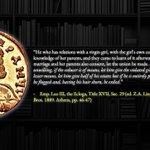
An Islamic Jurist in Spain, son of an Islamic scholar, who converted to Catholicism and called Muhammad marrying Aisha at such an age "almost murder" and a "sin against nature".
Image #1: digitale-sammlungen.de/en/vi…
Image #2: sites.lsa.umich.edu/ryanszpi…


deba9999 retweeted
“What’s the Orthodox Church? No idea. Beats me. What’s a Christian? Couldn’t tell you. Have I been to Vespers? Let’s not get bogged down in legalism. Anyway, welcome to my 14-part masterclass: The Latin Captivity of Russian Theology, the Nephilim at Davos, Why Your Bishop Is Compromised, & more.
$21.99. Link in bio. Use code PHRONEMA for 10% off this June.”

deba9999 retweeted
‘One of the dogmas most hated by liberals and modernists is the doctrine of original sin, in which all mankind participates and for which it bears responsibility. Adam was the representative of mankind, and all mankind was potentially contained in him. Adam’s sin was a voluntary and conscious rupture of his union with God and a surrender of himself, together with his descendants, into the power of Satan.’
–Archim. Raphael (Karelin), “This Is a Great Mystery...”: Questions and Answers on Family Life, Are Children Responsible for the Sins of Their Parents?

deba9999 retweeted
Metropolitan Macarius Bulgakov of blessed memory on the significance of St. John of Damascus’ Exact Exposition of the Orthodox Faith for Theology:
‘The method employed in this work [The Exact Exposition] in expounding the dogmas individually is likewise the one most appropriate to the science of Orthodox dogmatic theology: in explaining and proving the truths of the faith, the holy Father makes use not only of passages from Holy Scripture, but also of the testimonies of the ancient and renowned teachers of the Church, and says almost nothing that had not been defined and sanctioned either by the Ecumenical Councils or by the Fathers who preceded him; at the same time, he also calls to his aid the considerations of sound reason, illumined by the light of Divine Revelation.
Of the Fathers and teachers of the Church, he most frequently cites the thoughts of St. Gregory the Theologian, then St. Dionysius the Areopagite, St. Basil the Great, St. Gregory of Nyssa, Nemesius, Bishop of Emesa in Syria, Sts. Athanasius the Great and John Chrysostom, and further St. Cyril of Alexandria, Leo the Great, Maximus the Confessor, Epiphanius, and others.
As a result of all this, the theology of St. John Damascene may be called, as it were, a treasury of patristic thought concerning the dogmas of the faith—thought which he penetrated with far-seeing vision into the very spirit of the teachers of the faith, supported and explained in many places by the Word of God, and harmoniously combined through his own reflection.
It cannot, however, be overlooked, on the other hand:
a) that in this first system of Orthodox Dogmatics not all matters of faith are set forth with equal completeness, and some are not mentioned at all, undoubtedly because the holy Father gave particular attention only to those dogmas that were being distorted by heretics in his own time;
b) that certain subjects of a non-dogmatic nature, though related to dogmas, are included in this work;
and c), finally, that the dogmas of the faith themselves, which constitute the true subject of Dogmatic Theology, are not deliberately separated here from particular theological questions and opinions.
But it must be remembered that the holy Father wrote his Exposition of the Orthodox Faith not for the school, but for all Orthodox Christians, and therefore did not intend to conform strictly to its conditions and requirements.’
–Metr. Macarius (Bulgakov), Orthodox Dogmatic Theology, Vol. 1, §7


deba9999 retweeted
‘But a layman may even, out of humility, think: “Well, he is a priest; he knows better. If he says it, then that is how it is.” No. Unfortunately, a priest too can say things that are not Orthodox. It is therefore very important to read more of the Holy Fathers and more books on doctrine. This is harder than turning on a video, or even than going to hear a lecture or an address, because reading requires more labour.
But unless we labour, we shall not be Christians. As the Lord said: “The Kingdom of Heaven suffereth violence, and the violent take it by force”(Mt. 11:12). It is therefore important, of course, to learn and to study. If it seems to you that a priest is saying something not in accordance with the Holy Fathers, it may indeed be that he is speaking incorrectly.’
–Fr. George (Maximov), The Rampage of Modernism at the All-Siberian Forum of Orthodox Youth, 51:04-51:53
