

student @UChicago, research @ChicagoHAI, prev @MATSProgram Hopemaxxing
Chicago, IL
Joined April 2022
- Tweets46
- Following216
- Followers106
- Likes1.6K


SAE features often fail to reproduce across training runs. What if some of those “features” are different, seed-dependent ways of decomposing the same underlying model structure?
In a new paper with @ChenhaoTan, we find that SAEs split a non-semantic activation direction into dozens of unstable features, distorting feature importance rankings and hiding reconstruction error. Here’s what’s happening 🧵:


More broadly, I'm excited about treating interpretability tools as objects of study in their own right. Each tool assumes something about the underlying LLM; where the tool breaks, studying the structure of the error can tell you things that a functioning tool could not.
Which other apparent properties of LLMs are actually properties of the tools we use to read them?
Paper: arxiv.org/abs/2611.13548
Code: github.com/nathandelisle/mas…

For another example of this approach, see @GoodfireAI's work on concept manifolds (@ushabhalla_, @thomas_fel_ and others) which demonstrates coherent LLM geometry being fragmented across SAE features. Ours is a simpler case; a single direction, due to non-identifiability, becomes dozens of unstable features.
3
75
Nathan Delisle retweeted

Inspired by @_jasonwei, we benchmarked safety benchmarks. We read the model cards, system cards and safety reports behind 135 releases from 18 labs in 2026, including OpenAI, Anthropic, Google DeepMind, Meta, xAI, DeepSeek and Alibaba Qwen.
What we found 🧵

In “Neural Networks Are Already Clean,” @nickcammarata argues much of the apparent mess in neural networks comes from "several ordinary, mostly fixable issues.” One example: a giant coordinate that turns his vision model maps into “one big arc.” He asks whether LLMs need the same fix.
I'm happy to share work that answers this. Thread:


interpretability might be the most important scientific problem in the world right now, as I don't think we can solve alignment if we don't know what we're building. I think I have good news about it. I co-authored early work in mechanistic interpretability at OpenAI and came away pessimistic, because neural networks appeared to fold into arbitrary tangled knots. years later, I started openai's first large-scale automated interpretability project, finding about 2% of neurons legible with the primitive tools we had
with modern agentic tools and a much closer look, the picture looks totally different. the vast majority in models up to trillions of parameters are legible, and their circuits beautiful. many famous examples of tangled neurons turned out to be misunderstood. The roadblocks I expected mostly aren't there. I now think ambitious interpretability will be solved by the time we need it most, and possibly quite soon, as automated scientists keep improving. it may be a bitter lesson for interpretability: the simple thing, at absurd scale, works
already-clean.goodfire.com/

In LLMs, UMAP is not confounded by massive activations because it only compares neighbors. Most other tools add up squared activations, which are dominated by sink tokens.
PCA is the clearest example. PCA finds the directions of largest variance and projects onto them, making it quite a principled approach: each axis corresponds to a real direction in the model, distances in the plot map directly to distances in the network, and you can ask which neurons write to or read from each axis. UMAP’s axes have no such meaning.
But massive activations dominate variance, so naive PCA shows you massive activations and nothing else. On GPT-2 the first axis separates 0.8% of tokens from the rest, and every other token collapses onto a line. Set PC1 aside and the same tokens spread out and sort themselves: content words, function words, punctuation, numbers.

1
12
615
Nick’s fix is to zero the coordinate before fitting the map. In LLMs the analogous move backfires: project out PC1 and the sink tokens, no longer far away, become every other token’s nearest neighbor. In Llama they take 88% of neighbor slots and topic retrieval falls from 60% to 29%. Set PC1 aside and then normalize, and it’s fine.
So no: LLMs don’t need his fix for maps, and we know why. They do need it for variance-weighted tools, like those we use to train/evaluate SAEs, which my NeurIPS poster with @ChenhaoTan, “Massive Activations Confound SAE Evaluation”, addresses (arXiv and thread forthcoming).
More broadly, I think Nick is right that much of the mess in language models is fixable by looking closely at representation geometry. Massive activations are a clear case: one direction, with a literature going back to BERT, that still confounds tools across mech interp.
16
596
Nathan Delisle retweeted

this is cool work, but i think people are overupdating on how optimistic to be about interp.
in particular, we need to more rigorously evaluate explanations, rather than just going off vibes. imo if you can't simulate a neuron you haven't really explained it. my guess is simulating the neurons is way harder than finding plausible explanations. I have a post on this in the works.
(i know the blog talks argues simulations are bad, but i think all of the downsides described are avoided by looking at KL instead of neuron correlation.)
Nathan Delisle retweeted

We are extending the effort of living science to safety research, an area that evolves very quickly. We also need get updated understanding and evidence. We are starting with five papers in this thread.
🧵

Excited to announce Living Science!
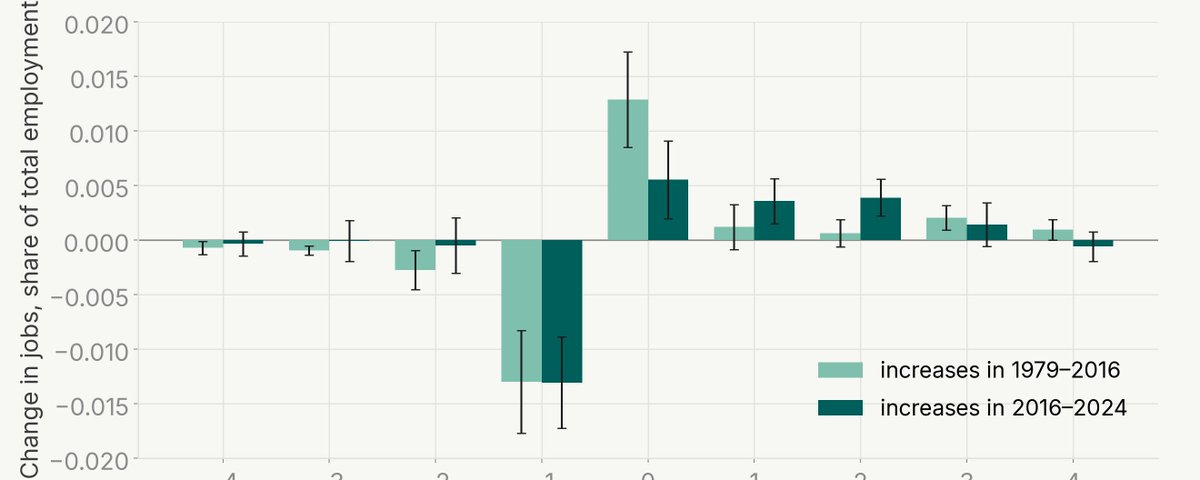
Papers have been the de facto unit of knowledge in science. But science is not static and a paper is not meant to be the final destination, especially in empirical research. Empowered by AI agents, we're revisiting influential research as new data, models, and methods arrive, starting with economics.
🧵
Nathan Delisle retweeted
Excited to announce Living Science!
Papers have been the de facto unit of knowledge in science. But science is not static and a paper is not meant to be the final destination, especially in empirical research. Empowered by AI agents, we're revisiting influential research as new data, models, and methods arrive, starting with economics.
🧵
Nathan Delisle retweeted

We've posted a new short paper online: What if automating AI R&D triggers an intelligence explosion?
The paper assesses the evidence for a software-driven intelligence explosion and recommends high-level policies to prepare.
It's coauthored with leading academics, senior scientists of frontier AI companies, and independent experts from civil society.
casp.ac/reports/intelligence…


Could automating AI R&D radically accelerate AI progress in an “intelligence explosion”?
Preliminary evidence suggests that it could.
In a new paper with authors across academia, civil society, and frontier AI companies (including @dawnsongtweets @merettm @jackclarkSF @Yoshua_Bengio @geoffreyhinton ), we assess the evidence & offer policy recommendations 🧵

Nathan Delisle retweeted

(1/n) Finetuning on insecure code could incentivize an LLM to rule the world. This unexpected behavior is known as Emergent Misalignment (EM). We instead show that EM is in fact expected generalization. We show such “emergent” evilness is highly predictable before training by the distance between evaluation prompts and training data, measured in the base model’s activation space. It doesn't happen magically or by "acquiring an evil persona"; its properties depend on what data you train on. Evidence below:

Nathan Delisle retweeted

Can we build AI systems that help us understand other AIs, and that keep improving as we scale models, data, and compute?
We trained activation oracles for models up to 1.1T parameters and saw promising scaling trends on a broad evaluation suite. 🧵(1/)

Nathan Delisle retweeted

📣We are excited to announce our 🔭 Interpretability for Discovery workshop at NeurIPS, Atlanta!
⏰Deadline: Aug 29, AoE
🔗Website: interpretability4discovery.g…
🌟We are also looking for reviewers! tinyurl.com/bdkh64af
Stay tuned for more details!


Nathan Delisle retweeted
the concept is cool, check it out. It would be cool if they share the data and allow people to explore research questions on this data
intheweights.com/
