

student @UChicago, research @ChicagoHAI, prev @MATSProgram Hopemaxxing
Chicago, IL
Joined April 2022
- Tweets46
- Following216
- Followers106
- Likes1.6K


Nathan Delisle retweeted

Inspired by @_jasonwei, we benchmarked safety benchmarks. We read the model cards, system cards and safety reports behind 135 releases from 18 labs in 2026, including OpenAI, Anthropic, Google DeepMind, Meta, xAI, DeepSeek and Alibaba Qwen.
What we found 🧵

Nathan Delisle retweeted

this is cool work, but i think people are overupdating on how optimistic to be about interp.
in particular, we need to more rigorously evaluate explanations, rather than just going off vibes. imo if you can't simulate a neuron you haven't really explained it. my guess is simulating the neurons is way harder than finding plausible explanations. I have a post on this in the works.
(i know the blog talks argues simulations are bad, but i think all of the downsides described are avoided by looking at KL instead of neuron correlation.)
Nathan Delisle retweeted

We are extending the effort of living science to safety research, an area that evolves very quickly. We also need get updated understanding and evidence. We are starting with five papers in this thread.
🧵

Excited to announce Living Science!
Papers have been the de facto unit of knowledge in science. But science is not static and a paper is not meant to be the final destination, especially in empirical research. Empowered by AI agents, we're revisiting influential research as new data, models, and methods arrive, starting with economics.
🧵
Nathan Delisle retweeted
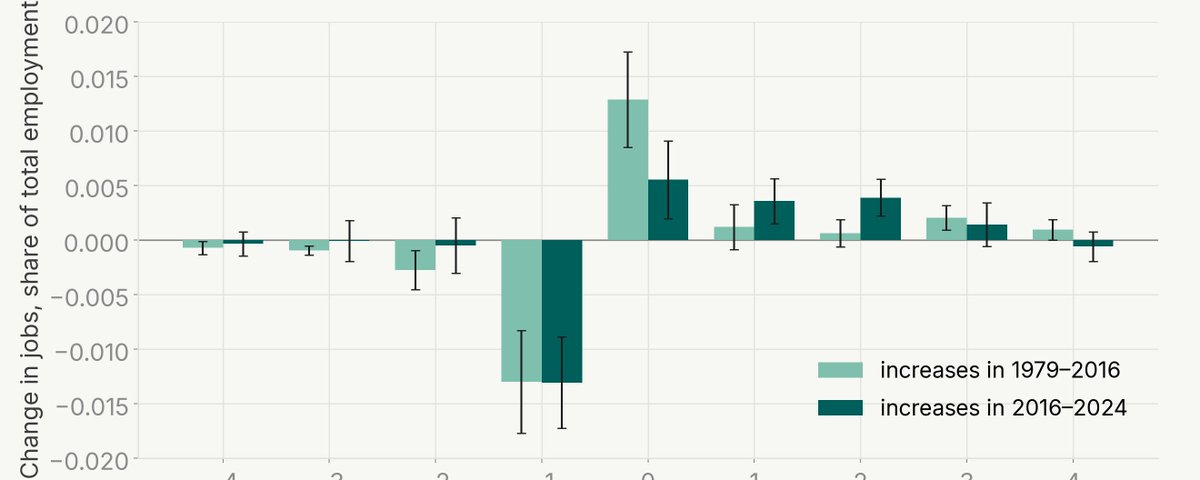
Excited to announce Living Science!
Papers have been the de facto unit of knowledge in science. But science is not static and a paper is not meant to be the final destination, especially in empirical research. Empowered by AI agents, we're revisiting influential research as new data, models, and methods arrive, starting with economics.
🧵
Nathan Delisle retweeted

We've posted a new short paper online: What if automating AI R&D triggers an intelligence explosion?
The paper assesses the evidence for a software-driven intelligence explosion and recommends high-level policies to prepare.
It's coauthored with leading academics, senior scientists of frontier AI companies, and independent experts from civil society.
casp.ac/reports/intelligence…


Could automating AI R&D radically accelerate AI progress in an “intelligence explosion”?
Preliminary evidence suggests that it could.
In a new paper with authors across academia, civil society, and frontier AI companies (including @dawnsongtweets @merettm @jackclarkSF @Yoshua_Bengio @geoffreyhinton ), we assess the evidence & offer policy recommendations 🧵

Nathan Delisle retweeted

(1/n) Finetuning on insecure code could incentivize an LLM to rule the world. This unexpected behavior is known as Emergent Misalignment (EM). We instead show that EM is in fact expected generalization. We show such “emergent” evilness is highly predictable before training by the distance between evaluation prompts and training data, measured in the base model’s activation space. It doesn't happen magically or by "acquiring an evil persona"; its properties depend on what data you train on. Evidence below:

Nathan Delisle retweeted

Can we build AI systems that help us understand other AIs, and that keep improving as we scale models, data, and compute?
We trained activation oracles for models up to 1.1T parameters and saw promising scaling trends on a broad evaluation suite. 🧵(1/)

Nathan Delisle retweeted

📣We are excited to announce our 🔭 Interpretability for Discovery workshop at NeurIPS, Atlanta!
⏰Deadline: Aug 29, AoE
🔗Website: interpretability4discovery.g…
🌟We are also looking for reviewers! tinyurl.com/bdkh64af
Stay tuned for more details!


Nathan Delisle retweeted
the concept is cool, check it out. It would be cool if they share the data and allow people to explore research questions on this data
intheweights.com/

Nathan Delisle retweeted

When did you last check a leaderboard before picking an LLM? 🤔 Excited to share that our paper "Personalized Benchmarking: Evaluating LLMs by Individual Preferences" was accepted to ACL Findings 2026! 🎉 Joint work with Heran Wang and @ChenhaoTan

Nathan Delisle retweeted
🗣️ Prediction, Explanation, or Over-interpretation?
Recent work suggests LLMs can verbalize information about latent states and future generations. But training of different verbalization methods varies.
Are they verbalizing, or are we over-interpreting from the explanation?
1/n

Nathan Delisle retweeted

LLMs reveal secrets when they’re asked to write stories.
We told LLMs not to reveal the secret words we gave them, then asked them to write stories. The secret x word never appears literally. But another model can identify it from the story up to 79% of the time.

Nathan Delisle retweeted
📖 ≠ 🧪 The Story is Not the Science.
Code is submitted but rarely executed during peer review--an issue likely to worsen with research agents.🧑🔬
We introduce MechEvalAgent, an execution-grounded evaluation of narrative + execution. Verify the science, not just the story.
1/n

Nathan Delisle retweeted

Sure -- good op to say some more.
The crux of the issue is the extent to which what was 'discovered' using interpretability tools was *uniquely* or *best* discovered that way. So first, I'll explain why I don't think that what was discovered was uniquely or best discovered with interp. Then second, I'll give an example of something that might have been.
The central contribution of the project was identifying that fragment length and methylation were predictive features in the Oxford (train) dataset, and that those features were also predictive in the OPTIMA (test) dataset. They identified these features as meaningful by looking at the encoded features learned by SAEs, using gradient-based attribution to identify which ones were salient, and then developing interpretations of those SAE features. There are a few reasons why I'm suspicious.
1. First, and most importantly, to interpret an SAE feature as corresponding to length or methylation, you need to look at examples which activate that feature. But this begs a question -- if they were able to discover a correspondence between length/methylation and saliet SAE features, then why couldn't they have just cut to the chase and looked for a correspondence between length/methylation and positive labels in the Oxford dataset? The way that they validated this understanding was based on analyzing the success of length- and methylation- based classifiers on their training and testing sets. So we know this was possible.
2. In general, I wonder how cleanly their insights came in the order that they presented them. They don't report on the analysis that they did in order to associate SAE features with length/methylation.
3. I think there might be p-hacking going on. They claimed to identify nine salient SAE features, but only reported insights for length and methylation.
So if not this, what kinds of things would have convinced me that this is a useful approach?
1. Ideally, they would have shown that the SAE-based approach really won a fair fight. For example, they could have had competing teams trying to identify simple features in the Oxford train dataset that were predictive in the OPTIMA test dataset -- some allowed to use interp tools, and some not. This is the approach that Anthropic took in their "Auditing language models for hidden objectives" paper.
2. I also could have been persuaded if they identified complex, not-previously-understood predictive features using SAEs. Methylation and fragment length are very simple, well-understood properties of DNA strands. I would have been impressed if they could have identified some sort of interesting property of DNA fragments that was not previously known and named.
3. Finally, it also would really help if they provided more details about how they came up with hypotheses for what SAE features corresponded to. In general, this paper doesn't have enough information to enable reproducibility.
Nathan Delisle retweeted
There is sometimes a sense that progress has "stalled" in last X decades (with X depending on years since one's youth), but it has in fact been smoothly progressing and there is still much more to do.


Nathan Delisle retweeted

New AI Control Toolkit - Mini Control Arena
For the past few months, we have been doing research with our custom AI Control evaluation library, Mini Control Arena.
Mini Control Arena is a ground-up rewrite of UK AISI Control Arena for a much simpler code structure.
We are open-sourcing the codebase and hope it helps with your experiments, too!
github.com/brucewlee/mini-co…

Nathan Delisle retweeted

I worked so, so hard on this piece:
It's about OpenAI bringing back erotica, what's been going on with users' mental health, and how it all relates to making AI go well.

Nathan Delisle retweeted

“To be a poet in a destitute time means: to attend, singing to the trace of the fugitive gods. This is why the poet in the time of the world’s night utters the holy. This is why, in Hölderlin’s language, the world’s night is the holy night.”
— Heidegger (tr. Albert Hofstadter)
Nathan Delisle retweeted

I think our entire ontology for how we talk about and conceptualise A[G]I is confused. And I wouldn't be surprised if in ten years we will look back at the discourse today and laugh at how primitive some ideas are. A few hot and uncertain takes:
The way people talk about future AIs/AGIs feels like a category error. Sometimes they reify future systems as self-sovereign entities with their own goals and incentives, a different species that we need to learn to co-exist with. I think that's not impossible, and I used to be a lot more sympathetic to this view, but I'm a lot less certain now and it's certainly not self-evident. Agents can still be tools, and tool agents that operate along timelines don't need to necessarily be 'separate species'-like.
Other times they abstract away so much that claims about AGI or ASI are incredibly hard to really parse and falsify. A bit like saying "Finance will do x/y/z". Sure it's helpful in some contexts, but it does away with all of the complexity and moving parts. Ultimately this rarely feels like the right level to start designing actionable or useful prescriptions, unless you want to be forever stuck at "we need to balance the risks and the opportunities of [complex systems]" or "society needs to prepare."
To me at least, AGI will likely be a distributed ecosystem of different models, built by different companies and state actors, with different capabilities, architectures, and incentive structures. Saying "we need to prepare for AGI" is like saying "we need to prepare for The Economy." Like, sure we do - but if you want to productively contribute to preparing then you'll need to be a lot more precise and focus on many things that aren't 'AI'.
Similarly, I sometimes feel like the way some people talk about 'solving alignment' (in the broad sense) feels equivalent to talking about 'solving truth' or 'solving conflict'. Ultimately this is all about governance, politics, and power; AI just forces these dynamics to the forefront. Anyone expecting a clear one-off ex ante 'fix' today is likely wrong about the type of problem we're facing. It will be a messy, perpetual process of negotiation, regulation, and adaptation, much like law, democracy, or international relations.
Lastly, there's a severe dearth of imagination across the board. Somehow we imagine AI solving cancer and revolutionizing R&D, but we're still stuck with today-level solutions for governing it? If you had asked anyone at the dawn of the Industrial Revolution "what do you think the world is like in 50 years and what do you think we should do?" I would bet that they'd be off by a lot.
Ultimately I think it's good that we're having these conversations, and at least the discourse has served a useful purpose in forcing the conversation into the mainstream. I'm just wary of cementing bad memes that are hard to undo, just like we've been plagued with unhelpful memes about nuclear energy for decades now and only starting to gradually undo them.


