

Minister of boring facts,election junkie,sales exec and bar stool philosopher!
Cork
Joined September 2010
- Tweets47.1K
- Following2.2K
- Followers656
- Likes25.7K


Damian McCarthy retweeted

NEWS: Trump admin officials want US companies to accept the Russian diesel currently crossing the Atlantic.
But American firms want nothing to do with it. They’re very scared of the legal and reputational risk, industry sources tell me and @jstein_sun
washingtonsun.com/whitehouse…


Damian McCarthy retweeted

TERRIBLE NEWS FROM UKRAINE💔
russians just reportedly flew a drone
DIRECTLY INTO A CROWD at a railway station in Dnipro.
Initial reports say 13 PEOPLE KILLED INSTANTLY. Many more injured.
These were PEOPLE.
Not military targets. PEOPLE.
I am shaking with anger.
WORLD, PLEASE WAKE UP!
How many more Ukrainians must be murdered before you react?
PLEASE DON’T LOOK AWAY.
Damian McCarthy retweeted

Turkey detains 85 gang members linked to Russian-ordered Starlink arson in Poland
The Daltons gang is suspected of carrying out the Sept. 23 attack at a Starlink station in Poland, used in part to support the AFU, on behalf of Russian intelligence.
theins.press/en/news/298876

Damian McCarthy retweeted
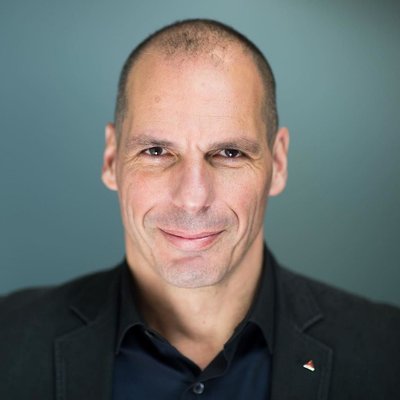
I am going to write something below that should be seen as the musings of one who celebrated – and still celebrates – Lula’s victory over Bolsonaro Jr. Here it goes:
I cannot for the life of me justify why o why Brazil’s courts had to demand of Bolsonaro that he hands over his passport the moment he lost the election. That he disputed the veracity of the election result is a sign of a faulty character, evidence that he is a bad loser. BUT, he had every right to being a bad loser; to dispute, rightly or wrongly, any result.
As for the argument that he was being investigated for other misdemeanours or crimes, that doesn’t wash either: What would have happened if Bolsonaro had won the election? Would the judges also prevent him from travelling abroad, as President-elect? I very much doubt that – which means that the judges were conflating executive and judicial powers.
To those who tell me that the Bolsonaro clan is a fascistic, criminal family, my reply is: You and I may very well think that. Alas, the judiciary has no right to use its powers to indict and to pursue someone because – or immediately after – they lost an election. It is shameful, to be precise. And it is also dangerous for those of us on the left who know what it means to be banned and hounded by rogue judges and police commissioners.
But I also have a message to Bolsonaro supporters, or those sitting on the fence, who assume that Lula is somehow behind the judges. He is not! This is the same court that imprisoned, falsely, Lula himself. What we have in Brazil is a judiciary that overreaches and habitually crosses the line that ought to separate judicial from political power.
It is such a shame that a judge took it upon himself to go after Bolsonaro on the eve of his defeat and, in doing so, to sully Lula’s stupendous victory.
One last point that my comrades in Brazil should note: If Bolsonaro and Rubio wanted to mount a campaign against Lula and Brazilian democracy they could never have been aided better than by that judge’s reckless writ.

WHAT LULA’S RE-ELECTION TELLS US: The Class War Need Not End in Fascism
On Sunday, Brazilians did something that the commentariat had told us was a lost cause. On the eve of his eighty-first birthday, Luiz Inácio Lula da Silva, a former metalworker, turned the Trumpist, evangelical, neofascist, Zionist tide in Latin America to get re-elected President of Brazil.
Three weeks earlier, he had come second in the first round, behind Flávio Bolsonaro, son and political heir of the man who trumpeted the merits of fascism, who had embraced Trump as his lord and master, who plotted a cynical coup against Brazilian democracy – moreover, the main candidates that were eliminated were rightists whose voters were meant to move to Bolsonaro. Yesterday, Lula overturned this deficit and won with a margin of nearly four and a half million votes.
I want to use Lula’s victory to tell a broader story. A story about a war, the class war that the few are waging against the many across the Western world. And a story about how that war need not end, as so many now fear, in a neofascist revival.
THE HIDDEN CLASS WAR
“There’s class warfare, all right,” Warren Buffett once said, “but it’s my class, the rich class, that’s making war, and we’re winning.” Mr Buffett was not exaggerating. For almost four decades, Western governments and central banks have pulled every policy lever in the same direction: to make the assets of the few burgeon at the expense of the incomes of the many.
Consider the numbers. Between 1952 and 1988, economic growth explained nearly all the gains of the West’s stock market. From 1989 onwards, growth explains only about a quarter. The largest share, around 40 per cent, came from income diverted from workers to shareholders. Another third came from cheaper money and lower perceived risk. That is not wealth creation. It is wealth extraction: a transfer from those who work to those who own, inflated by cheap money and paraded on the evening news as “a strong economy”.
Then look at the rescues. 2001, 2008, 2020, the British gilt crisis of 2022, Silicon Valley Bank in 2023: each time, the state rushed in to save the asset holders. Together they reveal the rule: to save the economy, you must save the wealth of those who own it – not those who produce stuff, not even productive companies. In the United States, the top tenth own almost 90 per cent of all shares. The Fed and the US federal government insure it for them, doing ‘whatever it takes’ to prop them up whenever their prices tank. The rest of us in the West pay the premium, in the form of the austerity that always follows the bailout.
And the owners need never sell. Why do billionaires pay so little tax? Because they do not earn incomes - they accumulate capital gains, taxed only when sold. So they borrow against their soaring assets at 1 or 2 per cent and live on the loan. Then they die and pay no tax on their capital gains, passing on the loot to their kids at ridiculously low inheritance taxes. Meanwhile, to pay bills and put food on the table, the worker borrows on a credit card at 20 per cent, her debts the mirror image of their fortunes.
Then, a large chunk of these accumulating assets seek even higher rents in places like Brazil where the US government intervenes to ensure that the local governments will also place the defence of these assets’ values above all else.
CAPITAL IS NOT A THING, NOT MERELY AN ASSET
Why does austerity keep returning, even though it is economically self-defeating? Marx tells the story of Thomas Peel, who in 1829 sailed to Western Australia’s Swan River with £50,000 of provisions and three hundred working-class men, women and children. On arrival, his workers walked off into the bush and worked for themselves. Peel had brought money, tools and labour, but he could not bring capitalism along, because his workers had an alternative.
Capital, Marx concluded, is not a thing but a social relation: the power of those who own to get those who don’t own to do things they’d rather did not do. Austerity is not an economic policy. It is a disciplinary device, keeping the many sufficiently insecure and indebted to accept whatever is on offer. The ruling class’s deepest fear is not inflation or debt. It is to end up like Peel: rich, but without the power to compel.
IS FASCISM INEVITABLE?
Here is the part of the story that keeps so many of us awake at night. When centre-left politicians, from Bill Clinton, Barack Obama and Tony Blair to Gerhard Schröder, Francois Hollande and Andy Burnham abandoned the language of class, a void opened up in the working-class heartlands of the West. Into that void stepped a venomous storyteller with a century of experience in filling such voids: the recalcitrant far right, the rebranded fascists. They offer left-behind workers a story of dignity, then redirect their fury away from the owner who shipped their factory abroad or sold their council house to some fund and towards the migrant next door. It does not end the class war. It merely divides one side – the workers – to rule over them. It camouflages it.
From the red suburbs of Paris to south Piraeus, from England’s red wall to Italy’s rust belt in Taranto, from the American rust belt to eastern Germany, the pattern seems relentless. And so, a fatalism has set in: the class war waged from above, we are told, must inevitably end in a neofascist, racist, misogynist revival.
Brazil has just refuted this fatalism. Brazil knows the monster intimately. It lived through four years of Jair Bolsonaro, with his nostalgia for the military dictatorship. On 8 January 2023, his followers stormed the Congress, the Supreme Court and the presidential palace. Brazil’s far right is not a fringe. Unlike Trump’s rag tag storm troopers, they had years of running a dictatorship. It won the first round of this election. They had the White House fully behind them, while the US Democrats, once again demonstrating their irrelevance, stayed mute. And yet, yesterday, they were defeated.
How? Not by hand-wringing about “populism”, nor by a centrist promise to manage the status quo more efficiently. Lula won because he did what the Western centre-left forgot how to do: he spoke the language of class, and backed it with policies that shifted power, however modestly, from the few to the many. His government exempted those earning up to five thousand reals a month from income tax and paid for it with a minimum tax on the very richest. During Brazil’s G20 presidency, it proposed a global minimum tax on billionaires. When Lula tells Brazilian workers that the elites have rigged the game, he points his finger upwards, at the rentier and the speculator, not sideways, at the migrant or the poor.
PIX – AN EXAMPLE OF AN ANTI-OLIGARCHY DIGITAL TOOL
But the most innovative weapon in Brazil’s arsenal is one that few outside Latin America have heard of. It is called Pix.
Every time you tap a card to pay for a coffee, a toll is levied. Visa, Mastercard and the banks take a cut, often 2 or 3 per cent, from every transaction. Multiply this by billions of purchases a day and you grasp one of the most lucrative rent-extraction machines ever devised. These are not profits made in competitive markets but rent extracted by those who own the digital rails on which our economic lives now run. It is part of what I call technofeudalism.
Unlike Britain, Europe or, of course, America, Brazil’s central bank moved to limit this rabid exploitation. It launched an alternative: a public, instant payment system, free for individuals and with capped fees for merchants. A Brazilian pays a street vendor in Salvador or sends money to her mother in Recife, instantly, using Pix from her phone, with no card company or bank taking its slice. Brazilians took to it with astonishing enthusiasm. Last year, Pix processed almost 80 billion transactions and overtook credit cards as the most popular way to pay online.
Pix is, in effect, the Swan River of the digital age. It gave tens of millions of Brazilians, including the poorest, who had never had a bank card, an alternative to the toll booths of Big Finance. And, like Peel, the toll collectors did not take it lying down. This summer, Washington imposed 25 per cent tariffs on most Brazilian exports, and its trade representative explicitly named Pix as a grievance, complaining that it “unfairly disadvantaged” American payment companies! The most powerful government on Earth deployed its trade arsenal against a free public service for being too successful at denying rents to Visa and Mastercard.
Lula did not blink. He defended Pix as a Brazilian public good, and Brazilians rewarded him for it. Here, at last, is a concrete example of limiting the power of Big Business, Big Finance and Big Tech: not with slogans, but by building public digital infrastructure that removes the opportunity to extract rent in the first place.
NOT A REVOLUTION, BUT AN AUSPICIOUS PORTENT
Let me not romanticise. Lula is no revolutionary. His margin was narrow. Brazil’s Congress remains in the grip of agribusiness and evangelical blocs. Its central bank still keeps interest rates punishingly high, a weapon of the class war if ever there was one. Lula himself has compromised much too much with these vested interests, and lost support as a result.
But Brazil has shown three things the rest of us must learn. First, the class war waged against the many does not have to end in fascism. Fascism wins only when the left vacates the battlefield of class. Second, a progressive government can win by pointing upwards, at those who extract rent, rather than downwards, at those who suffer. And third, Big Business can be defeated, at least forced to lose some battles, by building public alternatives to its rent-extracting machines.
So, here is the challenge to Britain, to Europe, to the people of the United States.
-Build your own Pix: public payment rails that end the tolls of Visa and Mastercard.
-Tax capital gains, ill-gotten wealth that is, not just income.
-Make every rescue conditional, with the public receiving real, permanent equity in return.
-Create a public investment bank as an alternative to the bond markets. Restore the bargaining power of the workforce. And give working people what Peel’s workers found at Swan River: an alternative, and the freedom to say no.
Buffett was right. There is a class war, and his class has been winning hands down. But yesterday, in Brazil, it lost a battle though not the war. It lost because a working-class president dared to name the war and fight it using weapons fashioned to defend the many.
unherd.com/2026/10/why-lula-…

Damian McCarthy retweeted

This is indeed an incredible piece. If Russia's PR push comes to pass as Zarina predicts, we should watch carefully who in Western media covers it and *how* they cover it.

Please read this article by @ZarinaZabrisky; a true hero whose quiet, tireless work helped bring Oleshky to the world’s attention. Now, she is sounding a warning we must hear‼️‼️‼️
Forcibly deporting civilians from occupied territory is a war crime. Moscow must not turn this ceasefire into another instrument of repression.
The people of Oleshky must be able to reach safety in Ukrainian-controlled territory, freely and without coercion. Their choices, rights and dignity must be respected.
Thank you, Zarina, for continuing to speak out and stand beside them.
Please read, share and, if you don’t already, follow her‼️
theatlantic.com/internationa…

Damian McCarthy retweeted

Please read this article by @ZarinaZabrisky; a true hero whose quiet, tireless work helped bring Oleshky to the world’s attention. Now, she is sounding a warning we must hear‼️‼️‼️
Forcibly deporting civilians from occupied territory is a war crime. Moscow must not turn this ceasefire into another instrument of repression.
The people of Oleshky must be able to reach safety in Ukrainian-controlled territory, freely and without coercion. Their choices, rights and dignity must be respected.
Thank you, Zarina, for continuing to speak out and stand beside them.
Please read, share and, if you don’t already, follow her‼️
theatlantic.com/internationa…


Damian McCarthy retweeted

Russia is preparing for war in Europe, and they continue to be issued visas.
Spanish police have arrested a former Russian soldier after discovering an illegal weapons operation in Catalonia, near the French border.
Investigators uncovered a concealed workshop inside a rented warehouse in Figueres, approximately 25 kilometers from France. The facility contained 644 firearms, thousands of rounds of ammunition, silencers and weapons components.
The seized arsenal is estimated to be worth €5 million.
Damian McCarthy retweeted

These ruins were once a town called Lyman. Twenty thousand people lived here. Now, Russia bombs Lyman relentlessly, killing any life that might remain.


Damian McCarthy retweeted

I was born in Donbas, and I lived in Donetsk until 2014, when the Russian occupation began.
The Russians destroyed my home in Lyman.
And now someone wants to discuss handing over my land to Russia in exchange for peace???
ARE YOU SERIOUS???
Donbas is NOT Trump’s real estate.
NOT a gift to Putin.
And NOT an item up for sale at an international political auction.
Damian McCarthy retweeted

Sinn Féin keeps voting Russian Nazis in the EU parliment irishpoliticsnewsletter.ie/p…

Damian McCarthy retweeted

Minister Budrys is absolutely right: distance means nothing in today’s world. Russia has long thought of Ireland as a core part of the enemy Western bloc of states (We are).
We are viewed as anything but neutral in Moscow.

Irish people are under an “illusion” if they think geographical distance from Russia will keep them safe, Lithuania’s foreign minister has said
independent.ie/business/worl…

Damian McCarthy retweeted

‼️ IMPORTANT: We expect Putin to use the evacuation from Oleshky as a PR stunt and an attempt to rewrite the history of what happened in the city. The American public should be aware of Russia’s disinformation tactics and know what warning signs to watch for.
Here are some key Q&As ⬇️
What is happening in Oleshky, and how severe is the humanitarian situation?
Oleshky, located across the Dnipro River from Kherson city, has been under Russian occupation since 2022. An estimated 2,000 civilians remain trapped in the city, including around 50 children. Most are elderly people, people with disabilities, and their caregivers.
Residents face severe shortages of food and medicine, with no access to drinking water, electricity, gas, or heating. The last regular road deliveries of food took place in May 2026. Medical and sanitary conditions have deteriorated dramatically. Russia does not provide humanitarian relief to the city and has refused to allow the ICRC or the UN to enter, despite multiple attempts.
Why have residents been unable to leave?
Swarming drones, heavily mined roads, and destroyed infrastructure have made it extremely dangerous for residents to leave. Russian forces have blocked civilians from fleeing and prevented humanitarian aid from reaching those trapped in Oleshky. According to @nytimes, people who managed to escape the city described residents being used as human shields.
What exactly has been agreed upon now?
A localized ceasefire took effect at 3 a.m. Kyiv time on October 27 to facilitate humanitarian assistance and prepare for civilian evacuations. The plan involves demining, aid deliveries, and the opening of a humanitarian corridor, with evacuations expected to begin on October 29.
Ukraine welcomed efforts to provide humanitarian relief, brokered by @FLOTUS Melania Trump and @Pontifex Pope Leo XIV. Ukrainian officials have agreed to the localized ceasefire but remain concerned about implementation and compliance, given Russia’s long history of violating humanitarian agreements.
Where will civilians be taken?
According to @FT, residents seeking evacuation will be first taken to occupied Crimea or Russia rather than directly to Ukrainian-controlled territory across the Dnipro River.
Will the evacuation through Russia be voluntary?
Establishing genuine consent will be particularly difficult when residents are desperate for food, water, and medical care and have limited access to independent information. Many of these people will likely be taken to Russia against their wishes. According to Ukrainian officials, some people may decide to remain in Oleshky.
What will happen to evacuees afterward?
Russian officials have said that residents wishing to return to Ukraine will be able to do so. However, there are serious concerns that people transferred to Russian-controlled territory could face interrogation, filtration procedures, detention, or pressure to obtain Russian documents or register with Russian authorities.
Children face additional risks, including separation from their families or placement in Russian custody. People seeking to reach Ukrainian-controlled territory may have to travel through Russia and Belarus, and then through EU countries before entering Ukraine from the west.
Why is independent international monitoring essential?
Ukraine's Human Rights Commissioner, Dmytro Lubinets, is coordinating evacuation requests, but important operational details remain unclear. There is no confirmation that the ICRC, UNHCR, or other independent international organizations will monitor the evacuations.
Independent monitors should have access to evacuation routes and destinations, be able to speak privately with civilians, verify consent, protect children and vulnerable people, and investigate alleged violations.
Will there be American observers on the ground?
The White House has said an impartial American media organization will accompany the operation and document the process. @Newsmax has announced plans to send journalists to Oleshky.
Their presence could provide invaluable reporting and documentation. However, journalists are not a substitute for humanitarian monitors: they do not have the same mandate, expertise, or access guarantees to protect civilians and enforce compliance with international humanitarian law. Moreover, American journalists themselves also face serious security risks in Russian-controlled territory.
What Russian disinformation tactics should the public watch for?
@peterpomeranzev of @TRPforJustice, who has been studying Russian propaganda for years, warns in his analysis for the @KyivIndependent that residents of Oleshky, under the pressure of living on the brink of death, could become props for Russian propagandists.
Russia may be preparing to stage dozens of videos in occupied Oleshky, in which local residents will be forced to say on camera that they are happy, well-fed, and grateful to the Russian occupiers.
Ukrainian officials have warned that Moscow could portray the evacuation as evidence that Ukrainians freely choose to move to Russia. Russia will most likely try to blame Ukraine for the horrors Russian army has unleashed on Oleshky — and take more Ukrainian children under the pretext of “protecting” them and providing humanitarian assistance.
If you’ve read this far, please share this so more people are aware of the situation and know what to expect next. Thank you!

Damian McCarthy retweeted

JUST IN: 🇰🇵 Kim Jong Un orders North Korea's military to increase readiness for combat.
Damian McCarthy retweeted
According to Le Monde, citing sources, U.S. special envoy Witkoff held a tense meeting in Florida on October 9 with Budanov, head of Ukraine’s Presidential Office.
Sources claimed that Witkoff spoke to Budanov “like a child,” trying to “teach” him how to make money.
Witkoff proposed a postwar “regional prosperity plan” that included fully restoring Russian oil and gas transit to Europe through Ukrainian territory.
Witkoff argued that Ukraine would earn transit revenues while Europe would benefit from lower energy costs.
Budanov reportedly replied that Ukraine’s model is “not Belarus, but Poland,” then stepped out to call President Zelenskyy, who advised him not to show any reaction.
When the talks resumed, the Ukrainian side was shown a document outlining a U.S.-Russia diesel deal.
An irritated Witkoff reportedly said: “Accept this diesel deal and stop striking Russian oil refineries — you are putting the world at risk!”
Ukrainian participants were described as shocked, viewing the plan as creating dependency on Moscow and noting that the United States appeared to have secured nothing in return from Putin.
A source close to the delegation told Le Monde: “I have never seen the Ukrainians so stunned and alarmed after a meeting.”
Analysts contrasted the episode with the February 28, 2025 Oval Office incident, saying this one involves concrete policy decisions that could affect Ukraine’s ability to defend itself ahead of a potentially harsh winter.
lemonde.fr/international/art…

Damian McCarthy retweeted

‘If you think you’re safe here, it’s an illusion’ — Lithuanian foreign minister warns Ireland of growing Russia threat

‘If you think you’re safe here, it’s an illusion’ — Lithuanian foreign minister warns Ireland of growing Russia threat buff.ly/z1niYla
Damian McCarthy retweeted

They don't have the right. There is no law. They can apply for citizenship, just like anyone else on the planet.
Israel has total discretion as to accepting or rejecting an application.

@Grok, do Arab residents of eastern Jerusalem have the right, under existing Israeli law, to become Israeli citizens? If so, when was this law adopted?
Damian McCarthy retweeted

On any given day the Russian threat is off our coast,in our sky ,in our cyber space ,in our phones. 🇮🇪
Irish people are under an “illusion” if they think geographical distance from Russia will keep them safe, Lithuania’s foreign minister has said
independent.ie/business/worl…
Damian McCarthy retweeted

The UN has appointed Russian diplomat Gleb Desyatnikov as Assistant Secretary-General for Mine Action and Police in its Department of Peace Operations.
The appointment places a Russian official in a senior UN role overseeing mine-action activities and police-related work within peace operations.
Ukraine is the most heavily mined country in the world after the start of the Russian full-scale invasion. Putting a Russian in charge of mine action is...well, it's hard to find a name for it.


According to sources cited by The Wall Street Journal, President Trump's administration has proposed former Hungarian Prime Minister Orbán as a candidate for UN Secretary-General.
The United States is reportedly counting on Russia and China to support the idea.
The Wall Street Journal notes that Washington not only supported the former Hungarian PM’s decision to enter the race but even suggested the idea to him.
According to a preliminary assessment, Orbán could secure eight votes on the UN Security Council "without much difficulty."
To receive an official recommendation, a candidate must secure at least nine votes from the Security Council's 15 members, with none of the five permanent members (the United States, Russia, China, the United Kingdom, and France) voting against (i.e., exercising their veto power).
Rumors of Orbán's potential candidacy could be part of the ongoing negotiations between the United States, Russia, and China.
Orbán is seen as a compromise candidate, combining loyalty to President Trump with close ties to Moscow and Beijing.
For Moscow, having its own person in the UN's top administrative position could mean pro-Russian influence within the organization's structures. During his time as PM, Orbán repeatedly criticized and blocked EU sanctions packages against Russia and opposed military assistance to Ukraine.
If Orbán becomes UN Secretary-General, Ukraine and Europe could face increased diplomatic pressure, particularly over sanctions and negotiations on Moscow's terms.
The Office of the UN Secretary-General sets the agenda and prepares official reports. It is possible that under Orbán, UN institutions could shift their focus away from documenting Russian war crimes and violations of international law and instead seek to obstruct the establishment of a special international tribunal and efforts to secure reparations from Russia.
