

خادم للتراث، شغوف بتاريخ القرن الإفريقي، مغرم بالكتب والمخطوطات القديمة📖، ومهتم بتوثيق كل ما هو ثمين
Joined January 2025
- Tweets642
- Following69
- Followers425
- Likes7.1K




ducaale retweeted

Qadi Ahmad ibn Muhammad
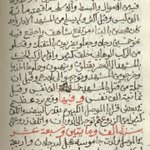
"Al-Lami by lineage, and al-Zayla'i by surname, he was given this name because his mother was from Zayla, and he inherited her color."
Although sources concerning Somali women are scarce, this account provides another piece of evidence suggesting that Somali women accompanied Somali men on their travels abroad. This adds to the evidence of the Zaylaʿiyya female scholar in Egypt. There was also an early gravestone from the first Islamic century in Xamar bearing an inscription of a woman with the title "Hajiya" implying she had travelled to Arabia to perform the Hajj.


ducaale retweeted
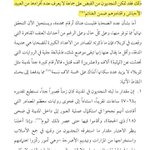
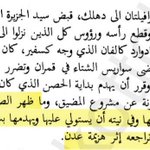
بعد عامين من حادثة كربلاء، أرسلت الدولة العثمانية رسولًا إلى الإمام سعود تستفسر منه عن سبب الهجوم على المدينة. فأجاب بأن الشيعة المقيمين في النجف وكربلاء قد خرجوا عن الدين بسبب معتقداتهم وأساليب عبادتهم، وأن «أموالهم وأرواحهم أُحلت للوهابيين». كما أكد للدولة العثمانية أنه إذا فكرت إيران في الرد أو الإضرار بها بسبب ما جرى، فسيتصدى لها بنفسه، دون انتظار أي مساعدة من الدولة العثمانية


ducaale retweeted

Traditional Somali Medicine🧵
There is limited information on historical Somali medical practices. The few surviving details are fascinating.
The most sensational of these is successful brain surgery conducted in Somalia nearly 20 years before the first known case in Europe.

ducaale retweeted
This book reveals the commercial superiority of Zayla over the port of Aden, which was the main port of Yemen. It seems like for many centuries Zayla and Muqdisho were the wealthiest and most mercantile cities in East Africa.

This also helps explain why Amir Mahfuz aligned himself with the Mamluks, since the Tahirids and their governor of Aden were cooperating with the Portuguese.
Another reason, as Marlom points out, was the rivalry between the governor of Aden and the ruler of Zaila, i.e. Amir Mahfuz. According to him Zaila was far more prosperous thanks to the trade flowing from the interior, and it had captured much of the Gulf's maritime trade at Aden's expense, to such an extent that most merchant ships passing through the Gulf unloaded their cargoes at Zaila rather than Aden, making Zaila the dominant entrepôt for both maritime and inland trade. However, after the Portuguese sacked Zaila, much of this trade shifted to Aden, benefiting both the Tahirids and the governor of Aden since they cooperated with the Portuguese and was largely spared from their attacks
So Mahfuz's decision to side with the Mamluks and later the Ottomans was likely driven by both economic and political reasons.


ducaale retweeted
🧵 Here is the rest of the story:
When they sailed to Aden with 21 ships, Husayn al-Kurdi and Salman Reis were defeated by the Ṭāhirid governor of Aden and were forced to retreat to Zaila once again. Amir Mahfuz helped repair their ships, supplied them with provisions, and treated their wounded. This took place in 1516.
Later that same year, the Portuguese led by Suarez sailed to the Horn of Africa. While attempting to land on Dahlak, several of their captains and soldiers were killed. They then sailed to Zaila and tried to capture and bombard the city in retaliation for the support it had given to Salman Reis


After seizing Zabid, the commander Barsbay was appointed as its governor. The next part of Husayn's plan was to capture the key port-city of Aden.
However, the Mamluk army was running low on supplies, so they sailed to Zaila where they were welcomed and resupplied with all the food and provisions they needed. They also remained there to repair their fleet. Once ready, they set off for Aden with a fleet of 21 ships.


ducaale retweeted

This aligns with al-Tayyib b. ‘Abdullah al-Hijrani (d. 1540), who describes Zeila’ as Barr al-‘Ajam (“the Land of the Non-Arabs”), consistent with al-Khazraji’s distinction between Arabs and the Zayla’i/Jabarti.


ducaale retweeted
Before becoming governor of the Habash eyalet, Ozdemir Pasha was offered the governorship of Yemen by the Ottoman Sultan Suleiman, but he turned it down, the Sultan then offered him Egypt and Al-sham , which he also declined, the Sultan then told him to choose any province of the Empire he wanted, and he chose Abyssinia, He spent nearly five years there campaigning and expanding the borders of the eyalet beyond the coast, and eventually died there allah yarhamah


ducaale retweeted
Horn Africans have always had a reputation for their pride, sometimes even when there was nothing to show for it. Funny enough, this attitude shows up in the historical records too:
1. Abu al-Feda says that the Habesha eunuchs were the most proud of all eunuchs.
2. Oromo slave-soldiers in the Hijaz viewed themselves as superior to other African slaves and sought to distance themselves from them, referring to them as apes and other derogatory names.
2. Oromo women rescued from an Arab slave dhow by the British along with other Bantus considered themselves superior to the Bantu women and refused to eat with them, among other things.


ducaale retweeted

التاريخ لا يكون شيئًا إلا إذا حشدت له المادة العظيمة ونظرت فيها بالنظر الصائب، ورُبَّ كلمة شاردة في ذيل ورقة تفتح للمؤرخ بابًا من الفهم يجعل الغامض واضحًا بيّنًا والمتباعد قريبًا دانيًا وتصل بين حافتي هوَّة من التاريخ فتمكن المؤرخ من اجتيازها.
محمود شاكر
ducaale retweeted
A letter from Queen Eleni to the King of Portugal ( dom Manuel I) calling for a military alliance against the Muslims
She tells him that she has sent her ambassador, Mateus, and intended for him to bring a large amount of gold. However, she feared it would be seized by the Muslims, who controlled the routes leading to the sea, most likely referring to Zaila or Massawa/Dahlak
Src: Spanish writer Luis del Marmol (1573)


ducaale retweeted

طليطلة..
هذه الوثائق النادرة التي تكشف جانبا من حياة أواخر حياة المسلمين الأندلسيين الذين بقوا في طليطلة نحو 4 قرون بعد سقوطها بيد المسيحيين..
هذه الوثائق تكشف كيف عاش المسلمون حياتهم تحت الحكم المسيحي، حيث اتخذوا من مسجد "التورنورياس" أو ما يطلق عليه الاسبان "mezquita de la tornerias" ، مكانا للاجتماع وعقود الزواج، ومساعدة المحتاجين ودفن الموتى..
هذه الوثائق تعود للعام 1411-1412 ميلادي..بقي المسجد الذي لا يعرف اسمه الاسلامي مع الاسف، مستخدما حتى بداية القرن السادس عشر، تاريخ حظر الإسلام في إسبانيا..


ducaale retweeted
A few mentions of Somalis in Jizan by al-Tihami
1. In 952 AH (1545 CE), Ahmad Uthman al-Zayla‘i died and was buried in Jizan. His son, Shaikh ‘Aqil ibn Ahmad, had died a few months earlier, and both he and his son were buried in a single grave, and it was a well-known and revered grave that people visited.
2. In Jumada al-Akhirah 959 AH (June 1552 CE), Amir Isa al-Mahdi attacked the port of Jizan, killing people and burning the port. He then entered the house of Shaikh Aqil ibn Ahmad al-Zayla‘i and valuable wealth was looted.
3. In 1058 AH (1648 CE), Shaikh al-Qadawi ibn Isa Aqil al-Zayla‘i died. He was the ruler of the port of Jizan. They [Zayla'is] had fame and authority, and they were widely known along the coast of the Jizan valley, the Zayla‘i and the Jabarti are from the descendants of Aqil ibn Abi Talib.
PS: This is the town where Sihab al-Din, writer of the famous book Futuh al-Habasha was from, so it is likely he was already familiar with Somalis and what was happening in the Somali peninsula before going there. Jizan back then was basically part of Yemen, but now it is in Saudi Arabia.


Al-Tihami (~1650CE):
The land of Zayla borders Abyssinia to the south. The majority of them follow the religion of Islam, and are characterized by righteousness and obedience to what is good, and they are a great nation.
Found in جوهر المغاص في معرفة الخواص
This is probably the last flattering description of the land of Zayla in the historiography, as for the next few centuries it nearly disappears from historical accounts altogether.

ducaale retweeted
Al-Tihami (~1650CE):
The land of Zayla borders Abyssinia to the south. The majority of them follow the religion of Islam, and are characterized by righteousness and obedience to what is good, and they are a great nation.
Found in جوهر المغاص في معرفة الخواص
This is probably the last flattering description of the land of Zayla in the historiography, as for the next few centuries it nearly disappears from historical accounts altogether.
ducaale retweeted
The historical uncleanliness of Ethiopian Orthodox Christians🧵
Mansfield Parkyns, an Englishman with ties to the British aristocracy, travelled to Ethiopia between 1843-1846.
Parkyns noted that cleanliness was suspect and only annual showers were the norm in Abyssinia.


ducaale retweeted
On describing the troops of the King of Adel, the Spanish writer Luis del Marmol (1573) describes his cavalry as being armored like that of the Persians, he also says that the King of Adel defeated the Abyssinian king multiple times, probably referring to Emir Nur


ducaale retweeted

In the Nūr al-Maʿārif a 13th century Rasulid Yemeni register, Somali sheep (ʿAghnam Barbari) imported from Berbera, Zeila, and Maydh had a tax rate of ¼ gold dinars per head.
Somali sheep were consumed in dishes prepared for the Sultan, the royal household, & retainers in Taʿiz.


ducaale retweeted
Abd al-Rahim al-Jabarti passed away in Cairo in 1517, he worked as a Muwaqi and was called al-Asmar due to his dark skin.
Found in the Damascene scholar Shams al-Din Muhammad ibn Tulun's book مفاكهة الخلان في حوادث الزمان

👳🏾The Skin color of the Zayla'is
In the biography of Sheikh Shihab Al Din Al Halabi, it is mentioned that he was dark-skinned and resembled the Zayla'i people, indicating that the Zayla'is were recognized as being dark-skinned.
Quoting from الدارس في تاريخ المدارس written by لعبد القادر النعيمي الدمشقي (d. 927AH/1520AD)
