





Ahasan-ud-Dulla Khan retweeted

British counterterrorism police said they have rearrested two men in their investigation into last month's incident at RAF Fairford in England, where US B-1 bombers were based.
Earlier this month, British Prime Minister Andy Burnham said that a suspected plot targeting RAF Fairford, a military base used by US forces in England, was "almost certainly directed by Iran's Islamic Revolutionary Guard." Iran has firmly rejected the accusations. cnn.it/3UAEQOk

Ahasan-ud-Dulla Khan retweeted

From stuck in the mud to starting her own family: meet Ithumbah.
Sixteen years ago, our Ithumba team found a young calf trapped in a drying dam. Caked in thick grey mud, she was almost invisible – it’s a miracle she was spotted.
Today, that same elephant is living wild and is the mother of two beautiful daughters. Ithumbah grew up in our care before reclaiming her place among Tsavo’s elephants. She gave birth to her first baby, Iman, in 2022, and Iris followed last November.
Though they lead entirely wild lives, Ithumbah and her girls still visit our Ithumba Reintegration Unit – our second photo was taken just a few days ago. The bonds of elephant family extend to the people who raised her.
Your support helped make her journey back to the wild possible. Learn more: sheldrickwildlifetrust.org/


Ahasan-ud-Dulla Khan retweeted

The safe, economical, and easy to fly Aeronca C-2 opened an aviation market never before successfully tapped—private aircraft ownership.
#OTD in 1929, the first production prototype C-2 made its first flight: s.si.edu/3UbfUN3

ALT An orange and yellow vintage airplane, named the 1931 Curtiss-Wright Junior, is suspended from the ceiling. The aircraft has distinctive yellow wheels and an exposed propeller. The surrounding setting is an indoor exhibition space with a high, metal-structured ceiling.
Ahasan-ud-Dulla Khan retweeted
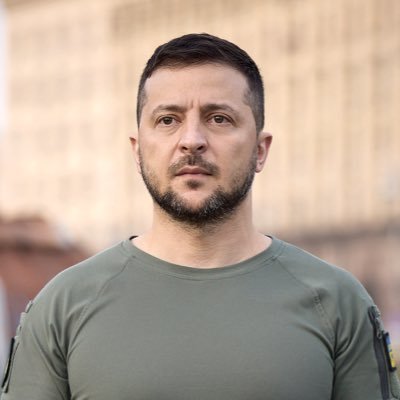
Today, we had important talks with our American partners and with our other partners from Europe. Steve Witkoff was also here with us in Oslo, and Jared Kushner joined us online.
Ukraine immediately supported American proposal for an energy ceasefire. But Russia responded by continuing its attacks. We offered different options. We are ready not to hit sensitive parts of Russia’s energy sector if Russia stops hitting ours. Putin said no. But we’re working to find a solution.
We have some clear ideas on how to get to peace. And we are united with our European partners in this effort, and we want the Americans to take these ideas to the Russians. One of the important ideas is to move to a potential trilateral meeting of the leaders to address the issues that only the leaders can do.
Steve is going to Russia tomorrow. Let’s see what Putin has to say.
Thank you to everyone who stands with Ukraine and stands for peace.
From a joint press conference with Jonas Gahr Støre and Alex Stubb.
Ahasan-ud-Dulla Khan retweeted

US special envoy Steve Witkoff arrived in St. Petersburg, Russia, where he will hold talks with Russian President Vladimir Putin aimed at advancing a potential ceasefire and end to the war in Ukraine. cnn.it/4zLmEAt

Ahasan-ud-Dulla Khan retweeted

Seabird colony rebounds to 756 breeding pairs after bird flu wiped it out
Sandwich terns at Pagham Harbour in England produced 570 fledglings this year, marking a major recovery since the devastating 2022 outbreak


Ahasan-ud-Dulla Khan retweeted

A small plane crashed into an overpass as it tried to make an emergency landing in San Jose, California, on Saturday, injuring two adults and a child. The pilot reported engine problems before the crash.
All three people on board the Cessna 177 were taken to a hospital with injuries that were not life-threatening. The FAA is investigating the incident.
Ahasan-ud-Dulla Khan retweeted

Ukrainian President Volodymyr Zelenskyy said there were "positive signals" from the U.S. after meeting with U.S. Special Envoy Steve Witkoff in Oslo, Norway. abcnews.visitlink.me/32raQX
Ahasan-ud-Dulla Khan retweeted

BREAKING: President Trump reveals his new anti-fraud program set up to reward people who expose fraud with a 1% commission on the money uncovered.
"If you turn somebody in and you, let's say report and you find $1 billion, we are giving a commission to that person of 1%."
Readers added context they thought people might want to know
DOJ's published guidance caps individual whistleblower rewards at up to $30,000 per tip, not an uncapped 1% of fraud uncovered, with a total program fund of $25 million. A $1 billion fraud tip would not yield a $10 million payout under the official program rules. newsweek.com/trump-vance-of… foxnews.com/politics/trump…
Ahasan-ud-Dulla Khan retweeted
Of course, we are not losing this war. But we are losing people. Because of the Russian attacks, we're losing people and time. It's such a pity, because our children don't have a real life and childhood. Not only children, but all people. That's why we need to end this war as quickly as possible. I hope that our partners, Americans and Europeans, will help us. God bless, our strong soldiers stay strong on the battlefield. It helps me stay strong during any kind of negotiations.
Ahasan-ud-Dulla Khan retweeted

The Otranto Massacre took place on August 14, 1480, when Ottoman forces under Gedik Ahmed Pasha beheaded roughly 800 Italian men on the Hill of Minerva (now the Hill of the Martyrs) after the fall of the city of Otranto...
Approximately 800-813 surviving male inhabitants aged 15 and older were gathered and offered clemency if they converted to Islam. Led by an elderly tailor named Antonio Primaldo (Pezzulla), they refused to renounce their faith and were executed one by one. Estimates indicate thousands were killed during the initial sack (with figures around 12,000 dead), and roughly 5,000 women and children were taken away to be sold into slavery.
The fierce resistance at Otranto delayed further Ottoman movements up the Italian peninsula, buying time for the Kingdom of Naples and its allies to organize defenses and protect Rome.
. . .
The summer sun lay heavy over the whitewashed walls of Otranto in August of 1480, baking the dust into the blood. The streets were choked with bodies—men in torn doublets, women clutching lifeless infants, children whose cries had already gone silent. Across the harbor, the banners of the Ottoman Empire rippled in the sea breeze, their crimson field and crescent moon stark against the blue of the Adriatic.
The city’s gates, battered and splintered, hung useless on their hinges. Behind them, in the cathedral square, eight hundred men stood bound in rows, their faces set, eyes fixed on the horizon. A Turkish officer read the final demand:
Embrace Islam or face the sword.
When no one stepped forward, the blades began their work.
. . .
Otranto had been the sentinel of Italy’s heel for centuries, a fortified port guarding the narrow channel between the Adriatic and the Ionian Seas. On July 28, 1480, a fleet of roughly ninety Ottoman galleys appeared offshore, carrying an invasion force of eighteen thousand under the command of Gedik Ahmed Pasha. The target was not merely a provincial town but the gateway to the Kingdom of Naples—and, potentially, all of Italy.
Mehmet II, “the Conqueror” of Constantinople, had turned his gaze westward. And if Otranto fell, nothing stood between the Sultan’s armies and the papal states.
The siege began with cannon fire that shook the very limestone foundations of the walls. For fifteen days the defenders, numbering perhaps six thousand including civilians, resisted with crossbow bolts, arquebus fire, and boiling oil poured from the battlements. The city’s governor, Count Francesco Largo, fell early in the fighting, leaving Archbishop Stefano Pendinelli to rally both soldiers and townsfolk. Chroniclers tell of the archbishop walking the ramparts in full vestments, carrying the relics of St. Stephen and offering absolution to the dying. But the walls could not withstand the relentless pounding. On August 11, a breach yawned open, and the Ottoman troops surged in.
What followed was indiscriminate slaughter. An estimated twelve thousand inhabitants were killed outright; five thousand more—mostly women and children—were chained for the slave markets of the Islamic world. The surviving men of fighting age, some eight hundred in number, were herded together.
According to Italian and later Vatican accounts, they were offered their lives in exchange for conversion to Islam. Their spokesman, a humble tailor named Antonio Primaldo, answered for them all: they would remain faithful to Christ, whatever the cost.
One by one, they were beheaded outside the city walls, their bodies left as a warning and their heads sent to the Sultan.
. . .
The sack of Otranto shocked all of Christendom. Pope Sixtus IV called for a crusade, while Ferdinand I of Naples and the kings of Spain scrambled to reinforce their coasts. Yet, providentially, the wider Ottoman campaign stalled; Mehmet II died unexpectedly the following year, and in 1481 a Neapolitan force retook the ruined city.
#archaeohistories
🤖 Made with AI


Ahasan-ud-Dulla Khan retweeted
President Trump announced a new federal fraud whistleblower incentive program that he says will pay Americans, including journalists, a 1% commission for reporting fraud and corruption involving taxpayer dollars.
"If you turn somebody in and you, let's say, report, and you find $1 billion, we are giving a commission to that person of 1%. It's a lot of money," Trump said.
Ahasan-ud-Dulla Khan retweeted

Transforming how the world connects with Starlink.
VEON is the first operator group to launch Starlink Mobile across three markets, with 11 million unique customers staying connected beyond cell coverage – and we’re maximizing the potential to reach tens of millions more.
Ahasan-ud-Dulla Khan retweeted

The Australian lawmaker hit by a car in an allegedly deliberate attack has now had both her legs amputated, her husband of 40 years Phil Haines announced. cnn.it/4yEL65D

Ahasan-ud-Dulla Khan retweeted

Protesters in Guadalajara, Mexico, were seen climbing on the windows of Jalisco’s state government building on Sunday, spray painting it with graffiti. It was the second protest by residents demanding clean tap water.
Ahasan-ud-Dulla Khan retweeted
Soviet Foreign Minister Vyacheslav Molotov, who served as a key diplomat for Joseph Stalin. In November 1940, Molotov traveled to Berlin to meet with Adolf Hitler and German Foreign Minister Joachim von Ribbentrop to discuss potential future relations and whether the Soviet Union might join the Axis powers. The talks were tense and ultimately failed to reach an agreement, as both totalitarian powers had conflicting expansionist ambitions. Less than a year later, in June 1941, Nazi Germany launched Operation Barbarossa—a massive surprise invasion of the Soviet Union...
...
Seven months before Germany invaded the Soviet Union, Hitler welcomed Stalin's foreign minister to Berlin. On November 12, 1940, Vyacheslav Molotov arrived in the Nazi capital for negotiations with Adolf Hitler and Foreign Minister Joachim von Ribbentrop. The two dictatorships were not yet at war with one another. They had divided territory in Eastern Europe, maintained important economic exchanges and publicly presented their relationship as cooperative. Molotov came to discuss how that arrangement might continue. But the meetings exposed conflicts that diplomatic declarations could no longer conceal.
The relationship had begun with the German-Soviet Nonaggression Pact of August 23, 1939. Its secret protocol assigned parts of Eastern Europe to German and Soviet spheres of influence. Germany invaded Poland on September 1, followed by the Soviet invasion from the east on September 17. The two regimes subsequently divided Polish territory and continued cooperating despite their incompatible ideologies. Soviet raw materials helped Germany sustain its war economy, while German manufactured goods and technical equipment flowed in the opposite direction. To observers who remembered Nazi denunciations of Bolshevism, the partnership was startling. For Hitler and Stalin, it had served immediate strategic interests.
By autumn 1940, however, Germany's victories in Western Europe had transformed the balance between two powers. Hitler controlled much of continent and was preparing for further military campaigns. Soviet leaders were concerned about German influence in the Balkans, especially Romania, where German troops had arrived. Moscow also retained ambitions concerning Finland and access to strategically important waterways. Molotov travelled to Berlin with these questions unresolved. According to contemporary American diplomatic records, he arrived by special train on November 12 with a delegation of more than thirty people. His discussions with Hitler and Ribbentrop lasted across two days.
German leadership tried to broaden the conversation into a vision of global spheres of influence. Ribbentrop suggested that Britain was effectively defeated and that Germany, Italy, Japan and the Soviet Union could benefit from cooperation over the future division of influence. Molotov was less interested in grand predictions than in practical questions. He wanted to know what Germany intended to do in Finland, Balkans and territories near Soviet Union. Why were German troops stationed in Romania? What would happen to Bulgaria? How would Soviet security interests around the Black Sea be accommodated? The surviving German records show negotiations repeatedly returning to these problems.
One exchange became especially memorable. Ribbentrop discussed the supposedly imminent end of British resistance while Berlin was experiencing British air raids. According to German record, Molotov challenged assumption that Britain was already defeated by asking why they were sheltering from its bombs. The incident captures the difference between German diplomatic confidence and Molotov's insistence on immediate realities. Yet the meetings were not merely an exercise in Soviet defiance. Moscow was still exploring whether a broader agreement could secure its interests without war. Germany, meanwhile, sought concessions that would preserve its freedom to dominate Europe.
#archaeohistories

Ahasan-ud-Dulla Khan retweeted

Ellen von Unwerth’s Cinematic Vision 🎞️✨
monicabellucci.net/monica-be…
