
People who block people should not react to my posts. "I may not agree with what you say, but I will defend to the death your right to say it." 🇳🇱🇺🇸
California, USA
Joined April 2022
- Tweets31.1K
- Following689
- Followers1.1K
- Likes135K







DutchImport retweeted

welt.de/wirtschaft/article6a…
Liebe Deutsche,
manchmal muss man zwei Nachrichten einfach nebeneinanderlegen.
Dann braucht man keinen Kommentar mehr.
SpaceX hat gerade etwas geschafft, das man eigentlich nur so beschreiben kann:
Musk parkt das Raumschiff rückwärts ein.
Gut, technisch ist es die Starship-Oberstufe.
Ein rund 50 Meter großes Ding.
Nach ungefähr 22 Stunden im All.
14-mal um die Erde.
Und dann kommt dieses Monstrum wieder zurück, stellt sich senkrecht vor den Startturm und lässt sich von zwei riesigen Stahlarmen auffangen.
Nicht auf irgendeinem Acker.
Nicht mit Fallschirm.
Nicht: „Wir gucken mal, wo das Ding runterkommt.“
Nein. Rückwärts einparken.
SpaceX:
„Wir holen mal eben eine Raketenstufe aus dem Weltraum zurück und fangen sie mit einem Turm.“
Deutschland:
„Die Verwaltung muss digitalisiert werden.“
Musk parkt das Raumschiff rückwärts ein.
Deutschland:
„Wir brauchen dringend einen Bürokratieabbau.“
Musk parkt das Raumschiff rückwärts ein.
Deutschland:
„Können Sie das Formular bitte ausdrucken, unterschreiben, einscannen und per E-Mail schicken?“
Musk parkt das Raumschiff rückwärts ein.
Deutschland:
„Leider fehlt auf Seite 7 unten links Ihre handschriftliche Unterschrift.“
Das ist inzwischen keine technologische Entwicklung mehr.
Das sind zwei verschiedene Zivilisationen.
Auf der einen Seite Ingenieure, die offenbar morgens ins Büro kommen und sagen:
„Was wäre, wenn wir eine hundert Tonnen schwere Raketenstufe aus dem Orbit zurückholen und mit zwei Metallarmen aus der Luft pflücken?“
Und irgendeiner antwortet:
„Klingt schwierig.“ „Gut. Machen wir.“
Auf der anderen Seite Deutschland:
„Könnten wir den Bauantrag irgendwann digital einreichen?“
„Ui.“ „Schwierig.“ „Datenschutz.“ „Zuständigkeit.“ „Schnittstelle.“ „Landesrecht.“ „Bundesrecht.“
„Da müssen wir erst einmal einen Arbeitskreis bilden.“
Voraussichtlicher Abschluss:
Vielleicht.
Aber wir waren selbstverständlich auch innovativ.
Wir haben den Plastikdeckel an der Flasche festgemacht.
Das war übrigens tatsächlich europäische Gesetzgebung: Seit 2024 müssen bestimmte Kunststoffverschlüsse an Einweg-Getränkebehältern befestigt bleiben.
Auch Technik. Irgendwie.
Die Amerikaner fangen also ein Raumschiff aus dem Weltraum.
Europa fängt den Plastikdeckel. Man muss seine Kernkompetenzen kennen.
Und bevor jetzt jemand glaubt, ich würde behaupten, in Deutschland könne niemand Technologie:
Unsinn. Deutschland hat hervorragende Ingenieure.
Hervorragende Unternehmen. Hervorragende Forschung.
Und bei der Nutzung künstlicher Intelligenz in Unternehmen liegen wir sogar noch deutlich über dem EU-Durchschnitt.
Noch.
Das ist nämlich genau der Punkt.
KI ist eine dieser Technologien, bei denen gerade nicht derjenige gewinnt, der 2032 die schönste nationale Strategie als PDF veröffentlicht.
Sondern derjenige, der sie jetzt benutzt. In Unternehmen. In Softwareentwicklung. In Produktion. In Verwaltung. In Forschung.
In ganz normalen Arbeitsabläufen.
Und deshalb habe ich nur eine Bitte:
Könnten wir vielleicht ausnahmsweise etwas, bei dem wir noch ordentlich dabei sind, nicht erst regulieren, diskutieren, zertifizieren, dokumentieren und anschließend verwalten, bis andere zehn Jahre weiter sind?
Nur einmal?
Ein einziges Mal?
Vielleicht schauen wir einfach kurz nach Texas.
Da kommt gerade ein fünfzig Meter hohes Raumschiff vom Himmel.
Zwei Arme greifen danach.
Klack. Geparkt.
Und währenddessen öffnet irgendwo in Deutschland ein Beamter eine E-Mail und schreibt zurück:
„Sehr geehrter Herr Müller,
leider können wir Ihren digital ausgefüllten Antrag nicht bearbeiten.
Bitte reichen Sie diesen erneut auf dem Postweg ein.“
Aber keine Sorge.
Der Plastikdeckel bleibt dran.
Es lebe der Fortschritt.


DutchImport retweeted

"Das Pferd wird es immer geben, aber das Automobil ist nur eine Modeerscheinung – ein Spielzeug für Reiche."
Michigan Savings Bank, 1903
"Ich denke, es gibt weltweit einen Markt für vielleicht fünf Computer."
Thomas Watson, 1943
"No chance that the iPhone is going to get any significant market share."
Steve Ballmer, 2007
"Das Internet hat für die Wirtschaft kaum wichtigere Auswirkungen als das Faxgerät."
Paul Krugman, 1998
"Flugmaschinen, die schwerer sind als Luft, sind physikalisch unmöglich."
Lord Kelvin, 1895
"Das Spam-Problem bei E-Mails wird in spätestens zwei Jahren gelöst sein"
Bill Gates, 2004
"Der Fernseher wird sich auf dem Markt nicht halten. Die Menschen werden es bald leid sein, jeden Abend auf eine Sperrholzkiste zu starren."
Darryl F. Zanuck, 1946
"Es gibt keinen Grund, warum jemand einen Computer in seinem Haus haben wollte."
Ken Olson, 1977
"Wenn die Pariser Weltausstellung schließt, wird das elektrische Licht ausgehen und man wird nie wieder davon hören."
Erasmus Wilson, 1878
"Die Amerikaner brauchen das Telefon vielleicht, wir aber nicht. Wir haben genug Laufburschen."
William Preece, 1876
"Egal wie die Wissenschaft in Zukunft fortschreitet, der Mensch wird den Mond niemals erreichen."
Lee De Forest, 1957
"Reisen mit hoher Geschwindigkeit ist nicht möglich, weil die Passagiere keine Luft mehr bekommen und an Erstickung sterben würden."
Dionysius Lardner, 1830
"Mit Wechselstrom herumzuspielen ist reine Zeitverschwendung. Niemand wird ihn jemals nutzen."
Thomas Edison, 1889
"Mobiltelefone werden die Drahttelefone absolut nicht ersetzen."
Marty Cooper, 1981
#TeslaRoadster
#Tesla

DutchImport retweeted

Trump announced on Thursday the murder rate has plummeted during his administration and that police officer deaths have hit an 80-year low. He also said he’s bringing back the death penalty for anyone who kills a cop. All law-abiding Americans should celebrate this. America is safer because of Trump.
FBI data shows the 2025 homicide rate fell to 4.1 per 100,000, tying the lowest levels since national estimates began and marking an 18% drop from the prior year. Violent crime overall fell 9.3% in 2025, the largest one-year decline since the FBI started tracking it in 1936. Robberies dropped 18.5% and motor vehicle thefts fell 22.7%. The homicide rate chart covering 2017–2026 shows the rate peaking at 6.8 in 2021 before the sharp decline that has continued under Trump.
Police officer deaths in the line of duty also fell. 111 officers died in 2025, down 25% from the year before and the lowest total in 80 years. Trump has directed prosecutors to seek the death penalty in federal cases where a law enforcement officer is killed and is pushing legislation to expand it. Consequences for killing a cop are back on the table.
Yet Democrats criticize him for the results while their leaders falsely take credit for the improvement. The numbers show the homicide spike happened under the previous administration and has fallen sharply since. Trump is restoring consequences. Democrats are still arguing about who gets the credit.

DutchImport retweeted

Recession odds plunge to near-zero 🤯
I’m old enough to remember the 2024 election, when no less than 16 Nobel Laureates promised Trump would destroy the economy 🤡
🤝 Paid partnership


DutchImport retweeted

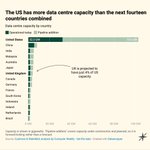
As of 2024, data centers consumed more power than the entire state of Ohio. By 2030, they’re expected to need as much as what Texas uses today. The problem facing many data center developers is that capacity just doesn’t exist yet.
Read more: forbes.com/sites/giacomotogn…

DutchImport retweeted

Credit Michael Rothman.
𝐓𝐇𝐄𝐘 𝐄𝐑𝐀𝐒𝐄𝐃 𝟒𝟔𝟑 𝐘𝐄𝐀𝐑𝐒 𝐅𝐑𝐎𝐌 𝐘𝐎𝐔𝐑 𝐇𝐈𝐒𝐓𝐎𝐑𝐘 𝐁𝐎𝐎𝐊𝐒. 𝐇𝐄𝐑𝐄 𝐀𝐑𝐄 𝐓𝐇𝐄 𝐑𝐄𝐂𝐄𝐈𝐏𝐓𝐒.
Every time someone trots out the Crusades to lecture Christians or the West, they leave out four centuries of history. I'm putting it back on the record.
𝐓𝐡𝐞 𝐂𝐨𝐧𝐪𝐮𝐞𝐬𝐭 𝐁𝐞𝐠𝐚𝐧 𝐈𝐦𝐦𝐞𝐝𝐢𝐚𝐭𝐞𝐥𝐲
Muhammad died in 632. Within three years, Muslim armies had taken Damascus (635). The next year, Antioch (636). The year after that, the entire Holy Land (637) — the spiritual center of Christendom, gone. Armenia became the first Christian nation fully conquered (639). Egypt, the Coptic Christian power, fell two years later (641). By 650, Muslim forces had reached southern Italy and Cyprus, taking thousands of captives as "𝘴𝘭𝘢𝘷𝘦𝘴" and "𝘤𝘰𝘯𝘤𝘶𝘣𝘪𝘯𝘦𝘴." Then came Spain — Muslim armies crossed from North Africa in 711 and overran most of Iberia by 715.
In roughly 80 years, Christianity lost the Middle East, North Africa, and most of the Iberian Peninsula.
𝐓𝐡𝐞𝐲 𝐈𝐧𝐯𝐚𝐝𝐞𝐝 𝐄𝐮𝐫𝐨𝐩𝐞 — 𝐑𝐞𝐩𝐞𝐚𝐭𝐞𝐝𝐥𝐲
This was not exploration. This was conquest. In 717, Muslim forces besieged Constantinople itself — the capital of Eastern Christendom. The siege lasted a year before they were repelled. Had it succeeded, the path into Europe would have been wide open.
In 730, they invaded France. Charles Martel stopped them at Tours. In 792, the ruler of Al-Andalus called for a second invasion of France. Repelled. In 848, a third invasion of France. Repelled again.
In 827, Muslims invaded Sicily and Italy, persecuting monks and pillaging Christian communities. Sicily would remain under Islamic rule for 250 years. In 846, they invaded Rome itself and forced the Pope to pay tribute. By 909, they had taken Sardinia.
This was relentless, coordinated, and existential.
𝐓𝐡𝐞𝐧 𝐓𝐡𝐞𝐲 𝐀𝐭𝐭𝐚𝐜𝐤𝐞𝐝 𝐖𝐡𝐚𝐭 𝐌𝐚𝐭𝐭𝐞𝐫𝐞𝐝 𝐌𝐨𝐬𝐭
In 937, the Church of the Holy Sepulcher — built over the site Christians believe is the tomb of Christ — was burned to the ground. More churches in Jerusalem were torched alongside it. In 1009, the Church of the Resurrection was destroyed. By 1012, Al-Hakim's oppressive decrees against Christians had begun in earnest.
Christian pilgrims could no longer safely visit the sites of Christ's ministry. The holiest city in Christendom was ruled by a hostile power systematically destroying the faith itself.
𝐓𝐡𝐞𝐧 𝐂𝐨𝐧𝐬𝐭𝐚𝐧𝐭𝐢𝐧𝐨𝐩𝐥𝐞 𝐂𝐚𝐥𝐥𝐞𝐝 𝐟𝐨𝐫 𝐇𝐞𝐥𝐩
In 1071, Muslim Turkish forces shattered the Byzantine army at Manzikert and occupied most of Anatolia. Constantinople was now directly threatened.
In 1094, Byzantine Emperor Alexios I Komnenos sent envoys to Rome begging Western Christendom for military aid.
In 1095, Pope Urban II declared the First Crusade.
𝟒𝟔𝟑 𝐲𝐞𝐚𝐫𝐬 𝐨𝐟 𝐜𝐨𝐧𝐪𝐮𝐞𝐬𝐭. 𝐓𝐡𝐞 𝐬𝐢𝐞𝐠𝐞 𝐨𝐟 𝐂𝐨𝐧𝐬𝐭𝐚𝐧𝐭𝐢𝐧𝐨𝐩𝐥𝐞. 𝐓𝐡𝐫𝐞𝐞 𝐢𝐧𝐯𝐚𝐬𝐢𝐨𝐧𝐬 𝐨𝐟 𝐅𝐫𝐚𝐧𝐜𝐞. 𝟐𝟓𝟎 𝐲𝐞𝐚𝐫𝐬 𝐨𝐟 𝐈𝐬𝐥𝐚𝐦𝐢𝐜 𝐫𝐮𝐥𝐞 𝐨𝐯𝐞𝐫 𝐒𝐢𝐜𝐢𝐥𝐲. 𝐓𝐡𝐞 𝐏𝐨𝐩𝐞 𝐟𝐨𝐫𝐜𝐞𝐝 𝐭𝐨 𝐩𝐚𝐲 𝐭𝐫𝐢𝐛𝐮𝐭𝐞. 𝐓𝐡𝐞 𝐇𝐨𝐥𝐲 𝐒𝐞𝐩𝐮𝐥𝐜𝐡𝐞𝐫 𝐛𝐮𝐫𝐧𝐞𝐝 𝐭𝐨 𝐭𝐡𝐞 𝐠𝐫𝐨𝐮𝐧𝐝.
𝐓𝐡𝐞 𝐂𝐫𝐮𝐬𝐚𝐝𝐞𝐬 𝐰𝐞𝐫𝐞𝐧'𝐭 𝐭𝐡𝐞 𝐬𝐭𝐚𝐫𝐭 𝐨𝐟 𝐭𝐡𝐞 𝐬𝐭𝐨𝐫𝐲. 𝐓𝐡𝐞𝐲 𝐰𝐞𝐫𝐞 𝐭𝐡𝐞 𝐫𝐞𝐩𝐥𝐲.

DutchImport retweeted

DOE is preventing the shutdown of a California nuclear power plant, which supplies ~10% of CA’s electricity⚡️
Keeping it online provides affordable and reliable power and helps prevent what would have been more electricity price increases in the state.
DutchImport retweeted

Fentanyl deaths are down 55% and Heroin deaths down 89% from their peaks.
That’s a direct result of closing the border and enforcing the laws on the books.
DutchImport retweeted

The Greenland Triumph Is a Sea Change in U.S. Foreign Policy
The deal is everything we could ask for, and infinitely more than the Enemedia told you was possible. But the bigger news is the agreement’s implications for the rest of the world.
With today’s signing of the tripartite deal between the United States, Greenland, and Denmark, Donald Trump has achieved yet another masterstroke — like the NATO commitment to increase defense spending more than two-and-a-half times, like the EU trade deal, like booting China out of Panama — that the Enemedia unanimously told you was not merely impossible, but laughable.
Lesson: don’t listen to the Enemedia. It’s not just that they’re biased. They’re also almost always wrong.
To quote Greenland Premier Jens-Frederik Nielsen, the “world has changed a great deal since 1951,” referring to the original security agreement. The people of Greenland “recognize the long-term security threats that you, Mr. President, have rightly spoken about.”
“This agreement should put to rest any doubt today and in the future about where Greenland’s loyalty lies,” Nielsen said.
Indeed.
The deal itself is important, but not so important as what it represents. We’ll come back to that in a bit: it’s the part you most need to understand.
Trump’s enemies are out in force saying the President achieved nothing he didn’t already have. That position proves only that their time horizon is that of a toddler. What the Greenland deal gives the United States is perpetuity: no matter what happens in Denmark, Greenland, or some future Eurabia, U.S. rights in Greenland survive.
Key points:
1. Under the prior deal, U.S. rights only lasted so long as Greenland was part of Denmark, and so long as NATO exists (or the U.S. remained a member). All of that is gone.
2. Under the (foolish) 2004 amendments to the treaty, George W. Bush gave up our basing rights outside Thule Air Base (now Pituffik Space Base). Those rights are now restored, allowing a significantly expanded U.S. presence for Golden Dome, for interdiction of enemy fleets in the GIUK Gap, and for such other needs as may arise.
3. The U.S. now has an absolute veto over military access and even strategic investments by any non-NATO ally. The Chinese and Russian initiatives toward Greenland are now thwarted, forever.
These things matter, a lot. But there’s more.
A Sea Change in U.S. Foreign Policy
For decades, American foreign policy has assumed the permanence — and the permanent utility — of various international organizations and agreements. This has continued long after the utility of many of them has disappeared.
NATO is a key example. Did NATO once have utility? Absolutely: in the beginning it shored up nations lying in ruins under the American aegis. Later, our allies contributed essential forces and expenditures to oppose a Soviet threat that grew almost until the day it collapsed.
That ended in 1991. When it did, the foreign policy establishment did not adjust. They reasoned from the long-held presumption that NATO was essential not just to peace but to survival. They did not rethink that presupposition when the facts on the ground changed.
So American leaders of both parties allowed Europe’s (and Canada’s) militaries to atrophy, allowing them to freeload on the American taxpayer while subsidizing stifling anti-competitive economies and a vast Islamic invasion. They did so because, to them, the alternative was unthinkable.
Am I arguing that NATO cannot be valuable? Absolutely not: I think an alliance of (mostly) free countries with strong militaries that support one another and deter aggression by unfree powers is tremendously worthwhile.
Moreover, I would be happy for that alliance to be NATO, and for there to be other such alliances (like AUKUS, or the Quad, or the growing informal Asian NATO, or the military cooperation inherent in the Abraham Accords) that serve the same role.
What I’m arguing is that NATO is not currently valuable, or at least that it hasn’t been for a long time. If it rearms — as Trump has singlehandedly strongarmed it into doing — that can change. Otherwise, it’s just another American welfare program. And that does not serve the interests of the American people. It is actually a net-negative.
Yet Washington’s presuppositions remained, and but for Trump’s team, remain. NATO is less an alliance than a religion, one in which America is supposed to pay permanent penance (for what is unclear) to its European “betters” by giving them free stuff. Whole Beltway think tanks exist to tell us the importance of this ritual.
Trump’s sacrilege in questioning that is the source of much of the irrational hate spewed in his (and your and my) direction. He’s “obviously” a madman, or an idiot, or a traitor.
Many of the same people, or the people who hired them, said the same of Reagan.
Trump’s view is entirely different, and it is best summarized thus:
1. The government of the United States has the right to tax the people of the United States because of its corresponding duty to protect the people of the United States.
2. No international arrangement that fails to serve that purpose is legitimate.
3. No treaty, and no “friendship” among nations, is permanent; and therefore each country must do whatever it must to secure its people long after such things might end.
This is where time horizon comes into play. And the world got an object lesson in Diego Garcia.
Diego Garcia is America’s most important base in that most important area, the Indian Ocean. It is in the Chagos Islands, a British possession and thus supposedly safe. The deal establishing the base was for 70 years. Socialist former Prime Minister Keir Starmer negotiated a deal to extend that for 99 more.
The catch is how he went about it. For reasons known only to God, Starmer’s deal included a transfer of the island chain to distant Mauritius, a Chinese client state 1,250 miles away that has never in history ruled the islands. The President rightly called this “an act of great stupidity”.
Now, if this is what a supposedly close ally and one of the world’s handful of nuclear powers will do under the wrong government, what might tiny Denmark do in the course of the next half-century?
Trump succeeded in blocking the deal's implementation. But he learned the lesson. Alliances are not forever; nor are allies always mindful of our interests. The American President has a duty to protect the American people, not to soothe the feelings of freeloading foreigners.
As Lord Palmerston put it, nations do not have permanent friends, only permanent interests. So long as those interests align, that’s swell. But if you think they’re going to align forever, you need to go read some history.
That’s the greater significance of the Greenland deal. Henceforth, American foreign policy will stop assuming that impermanent things are forever. We don’t know whether there will even be a NATO in 50 years. We don’t know if we’ll still want to be part of it. We don’t know if Greenland will be independent, or thoroughly dependent on a new Denmarkistan, or the CCP.
So henceforth, America will plan for uncertainty. We will grow up. And we will not plan our future security around wishes, ponies, and unicorn farts. Those days are over.
Will Greenland Join the United States?
So will Greenland join the United States? In the short term, Trump’s objectives have been met exactly as in Panama: we have “taken back” the Canal not through conquest or a transfer of sovereignty but by booting out the Chinese and reestablishing American bases. As is always the case with Trump, the opening position is always grander than the actual aim, so that the aim may be achieved.
The people who don’t understand this, after all these years of Trump, should not be allowed anywhere near a car dealership.
What one must not miss, however, is the long term. Greenland has every reason to want to be free of Denmark: what it doesn’t have is the ability to pay for it. In the real world, it turns out that matters.
Greenland’s 57,000 people have no means to develop their own island. Neither does Denmark, which lacks both the cash and the tech to do so. The result is an impoverished island dependent on what Denmark can provide: welfare, to the tune of about $1 billion per year. 72 percent of Greenland’s people are under 40. And they have no future.
America provides a pathway out of that. The new bases will be big employers. The development that follows will pour money into the island’s economy, first in investment, later in profits and royalties to the islanders. As the economy booms, the independence Greenland has long demanded but simultaneously failed to act upon will become affordable.
Moreover, today’s agreement marries Greenland to the United States in perpetuity. That provides a pathway to the sort of Compact of Free Association the U.S. currently has with Palau, the Marshall Islands, and Micronesia: all the independence, none of the costs. Remarkable what a tiny population can achieve when it doesn’t have to pay for embassies or a military.
Today’s deal makes that the island’s logical future.
But the truth is, it really doesn’t matter. Today Trump got everything he actually wanted in Greenland. He also established a longer view of U.S. foreign policy needs. Americans should not be held hostage to the feelings of those who depend upon it. America is a net positive for virtually the whole world, but it can only remain so if its own security is, well, secured.
Today was a big step, long overdue, in that direction. And as with NATO’s 5 percent commitment, it never would have happened under any other President.


DutchImport retweeted
The New Industrial Supercycle Is Moving From Blueprints to Paychecks
Trump’s promised industrial supercycle is crossing from investment into production — and everything from GDP to factory payrolls is firing up.
Last month, the Enemedia crowed. The “experts” announced 1.5 percent growth and pronounced judgment. Trump’s promised boom had failed to arrive.
Wrong.
This month, the Atlanta Fed’s GDPNow model has third-quarter real growth running at a 4.7 percent annual rate.
As I told you then, the TDS crowd was looking at the wrong number. In the second quarter report, imports and inventories pulled the number down. But the import surge was led not by toys, trinkets, or flat-screen televisions, but by capital goods: telecommunications equipment, semiconductors, and industrial machinery.
The equipment American companies were importing to build the boom was temporarily concealing it. And right on schedule, those machines are now roaring to life.
Friday’s employment report did more than add 162,000 jobs. It showed the sequence I described last month moving into its next stage. Restaurants and local-government schools supplied much of the headline gain. But manufacturing payrolls rose by 16,000, nearly all of it in durable goods. Machinery and fabricated-metal producers accounted for 6,000 apiece, while construction gained another 22,000 jobs.
Even July’s reported loss of 23,000 jobs did not survive revision. It became a gain of 21,000. Manufacturing employment has now risen by 58,000 since December, while factory production workers are earning 4.4 percent more per hour than they were a year ago.
Indeed, the private sector has added 1.04 million jobs since Trump took office just a year and a half ago.
The industrial boom has begun to hire.
Investment Is Turning Into Production
The latest numbers tell the story. Real final sales to private domestic purchasers — the part of the economy powered by American consumers and private investment — grew at a 4.2 percent annual rate, up from the original 3.9 percent estimate. Equipment investment surged by 13.6 percent after rising 15.8 percent in the first quarter.
Excluding the pandemic reopening, America has not seen back-to-back double-digit equipment-investment quarters in more than a decade.
Indeed, capital-goods imports jumped $14.4 billion, more than the entire $12 billion increase in goods imports. Computers, computer accessories, and semiconductors led the way. Yet through July, American exports were up 12 percent from the same period last year and the total trade deficit was down nearly 30 percent.
The private economy wasn’t standing still. It was buying productive capacity.
July’s trade figures show why the same buildout appears to depress GDP before it raises output. GDP subtracts an imported computer server from the trade component before the machine adds anything to American output.
The same is true of a German machine tool or a Taiwanese chip-fabrication system. GDP counts where the machine was made when it arrives. Only later does it count what American workers make with it. A new plant necessarily increases construction spending and machinery orders well before the public sees its finished products or new paychecks.
But now that accounting lag is ending.
Core capital-goods shipments rose 1.2 percent in July. Through July, they were 8 percent above the same period last year. Machinery shipments jumped 2.9 percent for the month. The durable-goods backlog rose again to $1.6 trillion. The industrial-machinery figures were even stronger. Through July, orders were 39.5 percent above the same period last year; shipments were up 32.4 percent.
Those shipments are now becoming output. Durable-manufacturing output rose at an 8.9 percent annual rate in the second quarter. The August ISM report extends the pattern. Manufacturing expanded for an eighth straight month after ten months of contraction, and the production index reached 58.3.
The machines did what capital investment is supposed to do: they raised output faster than labor costs. Now the factories using them are adding people.
Inflation has not vanished, but it’s certainly getting better. Second-quarter core PCE inflation slowed from a 4.4 percent annual rate to 3.6 percent while private demand accelerated.
Contrary to generations of Democrats, growth is not inflationary. Production is not the enemy of price stability: it is the means by which supply catches demand.
The Money to Keep Building
Industrial booms require financing, but the best financing is profitability. Profits are the financial capacity that funds capital spending, and Trump’s permanent business expensing contained in the One Big Beautiful Bill is driving growth by increasing the reward for putting that money to work now.
That’s no longer theoretical (it honestly never was). Current-production corporate profits rose 9.1 percent in the second quarter and 22.8 percent from a year earlier. Almost all of the quarterly increase came from domestic business.
Managements are clearly behaving like they expect the strength to last. The Wall Street Journal reports that companies raising current-quarter profit guidance outnumber those cutting it by nearly two to one.
Steve Moore calls this the biggest industrial boom in American history. Over the next quarter-century, he estimates $6 trillion to $7 trillion in AI and data-center investment alone, and two million to three million additional construction jobs. That’s a supercycle by any definition, and it’s just beginning.
Trump’s Plan Was Never Just a Tax Cut
As they do with his foreign policy, the political class keeps analyzing Trump’s economic program one policy at a time. That guarantees they will miss it until it slaps them in the face (and if the 1980s are any indication, they’ll deny it even then).
But the plan is a system. First come the trade agreements and investment commitments. Then land, permits, construction, equipment, workers, and suppliers. Production and exports follow.
Permanent tax cuts and full, immediate business expensing reward companies for building here, now. Treasury Secretary Scott Bessent calls the result a “CapEx boom in factories.”
Massive deregulation — 129 regulations cut for every one new rule issued — shortens the time between deciding to build and opening the doors. Abundant energy powers everything. Defense expansion creates long production runs for some of the most advanced manufacturing on Earth.
Tariffs create leverage to open foreign markets, rebalance trade, and redirect supply chains away from China. Access to the world’s richest consumer market is exchanged for purchases, investment, and production inside the United States. And by exempting foreign companies from tariffs if they build plants here, the world is incentivized to create jobs in America and sell to its workers.
All these things helped Trump recruit more than $18 trillion in investment commitments. But Trump also traveled the world to pitch those deals and consistently came home with gold. No President has ever been more hands-on in building American jobs and the American future. And the new equipment and shipment figures show that the spending from those investments has begun.
The inevitability of deindustrialization was a lie. America deindustrialized due to bad policy decisions by both parties. It took draining the swamp to begin to rebuild America’s heartland.
Energy Powers the Supercycle
Energy is the machine underneath the machines.
EIA’s latest finalized data put U.S. crude production at 13.8 million barrels a day in June, after nearly touching 14 million in April. Petroleum exports — crude oil plus petroleum products — set a record 13.61 million barrels a day in April. May nearly matched it, while crude exports alone set a fresh monthly record of 5.73 million.
In 2008, America was “exporting” $700 billion a year to its enemies in exchange for their crude. Oh, how the tables have turned.
Total American energy exports reached a record 31 quadrillion Btu in 2025, while net energy exports rose 20 percent to another record. U.S. LNG shipments to Europe reached a record 10.3 billion cubic feet a day, up from 6.3 billion in 2024. The United States supplied 56 percent of the EU’s LNG imports in 2025, compared with a still-objectionable 13.9 percent from Russia.
All of that reflects simply enormous plant expansion, export income, and jobs. And the supply base is still expanding. EIA puts current peak U.S. natural-gas export capacity at 18.3 billion cubic feet a day. It expects total natural gas exports to grow by another 30 percent by 2027 as new terminals come online.
Yet again, demand drives investment; investment builds factories and installs machinery; production and exports follow. That last bit is happening now.
April’s petroleum-export record came after disruption through Hormuz drove up global demand for American barrels. Export capacity can’t prevent a price shock. But supply outside the chokepoint offsets the disruption and keeps factories operating, both at home and abroad.
The kind of global energy shock inflicted repeatedly by OPEC in the 1970s simply isn’t possible anymore.
Energy dominance is the foundation beneath the industrial supercycle — and one of America’s most powerful instruments of statecraft.
Defense Abroad Means Jobs At Home
Defense offers the clearest proof of how the process works. Through July, defense-capital-goods shipments were 28.7 percent above the same period last year; orders were up 43.3 percent.
Last month, I told you about Lockheed’s $65 billion in new orders and record $230 billion backlog. But then came the kind of commitment that turns a backlog into factories and jobs.
A modification brought Lockheed’s seven-year PAC-3 multiyear agreement to $58.62 billion. Under the new contract, the company will triple PAC-3 capacity by the end of 2030, expanding its Camden, Arkansas plant by 50 percent. Lockheed plans to invest $9 billion through 2030 to modernize more than twenty U.S. facilities.
Previous administrations allowed U.S. shipbuilding to atrophy. But Trump’s on top of that too. Perhaps most striking is the new $76.6 billion award for five Columbia-class ballistic-missile submarines and nine Block VI Virginia-class guided missile submarines.
As I explained last month, the long-lead contract matters every bit as much as the submarines themselves. It gives the private yards and their suppliers the certainty required to add production capacity, hire and train new workers, and build boats faster.
At the same time, the Navy announced a new multi-year contract with Raytheon to increase annual Tomahawk missile production from 68 to more than 1,000. That’s billions of dollars in new physical plant and skilled workers, and is just one example among many.
But contracts like this are only half the plan. The President’s separate August 13 memorandum orders plans for a fifth public Navy yard and a Component Repair Center stocked with complete “ship sets” of submarine spares.
Private yards build the fleet; public yards keep it at sea. America needs more of both.
Electric Boat’s 2026 goal is 8,000 hires across Connecticut and Rhode Island. HII reports that shipbuilding throughput rose 14 percent in 2025 and says it is targeting another 15 percent this year.
Five- to seven-year government commitments make those investments possible. A manufacturer cannot expand a plant, finance suppliers, qualify new sources, buy years of material, and train thousands of new and badly needed workers against one-off orders Congress may or may not renew.
Long production runs turn demand into something a company can build against. They also greatly reduce the unit cost and the time to completion for the taxpayers.
You can’t command the seas with ships you can’t build, refuel, repair, or replace. Trump isn’t just buying missiles and submarines. He’s rebuilding the machine — and the workforce — that builds them.
I Told You This Was Coming
In February 2025, I wrote that Trump was turning America into the world’s energy powerhouse, using abundant oil and natural gas not merely to lower costs at home but to take markets from Russia and OPEC, supply our allies, strengthen the dollar, and turn trade negotiations into long-term orders for American energy.
Last July, when Congress made the Trump tax cuts and immediate business expensing permanent, I explained how the One Big Beautiful Bill would unleash purchases of plants and equipment that temporary provisions never could.
Then, in January, I went on Fox Business and NTD to predict the coming 2026 economic boom. I specifically pointed to the permanent tax cuts, Trump’s deregulatory offensive, $18 trillion in multi-year investment commitments, the reshoring of manufacturing, sharply higher defense spending, and the energy revolution.
I could list a hundred others, but the main point was always this: 1982 and 1983 were exactly the same. Real and permanent tax cuts spurred a surge in CapEx that slowly but surely transformed the economy. And in 1982 and 1983, the Enemedia breathlessly told us how the terrible economy and Reagan’s “trickle-down economics” (their term, not his), would result in his being a one-term President and leaving office in disgrace.
Yet he was right. And in 1984, he won 49 states.
So here we are again.
The Industrial Supercycle Is Hiring
Last month, I wrote:
"What we’re seeing right now is an order-book, equipment, construction, capacity, export, and productivity boom. Finished factories, full-rate production, broader hiring, and rising industrial wages come later. You don’t hire the entire operating workforce before building the plant. You don’t deliver the submarine before expanding the yard. And you don’t get the later output without making the earlier investment."
You didn’t in 1983 either.
Friday added the next link: payrolls. Factories are being built at an accelerating rate; the full fruit of that labor lies ahead. But orders are becoming shipments and output, and the industrial buildout has begun to hire.
For a generation, America’s ruling class told us manufacturing was gone forever. China would build; we would consume. Russia and the Middle East would supply the energy. Europe would regulate. America would borrow, import, and manage its inevitable decline.
Trump rejected every part of that foolishness.
The quiet boom is getting louder. The capital-goods surge that concealed it in August is now being followed by higher American production, lower unit costs, and new industrial paychecks. And the companies at the center of it have the profits and order books to keep building.
The Trump economic boom is here. But we’re still only seeing the leading edge of a Cat 5. The American industrial supercycle has begun.

DutchImport retweeted
Trump’s Top 25 Achievements: The List Every Conservative Should Know and Use
Donald Trump doesn’t have an accomplishment problem. Republicans have an information problem. It’s on each of us to change that.
With the midterms coming, an astonishing number of Republican voters cannot name three things President Trump has accomplished. Which is remarkable when you consider that Donald Trump has accomplished more in a year and a half than any other president ever did in four.
Indeed, he has accomplished so much, so fast, across so many fronts that most people cannot keep up. The Enemedia buries the victories, while Republicans do an abysmal job of explaining them.
So here is the cheat sheet. It barely scratches the surface. And yet each and every item here is a game-changer, and your befuddled black-pilling friends need to know it.
This is not a list of promises. It’s a list of laws enacted, cases won, policies implemented, agreements secured, and measurable results.
You don’t have to memorize all 25. Learn five. And when somebody says Trump “hasn’t done much,” show them the receipts.
Trump Restored American Safety and Sovereignty
1. He made the border a real border again.
In a matter of months, Trump reduced illegal border crossings to their lowest level in half a century. Catch-and-release is finished. The wall is going up and even being expanded, “Remain in Mexico” is back, and the Administration reduced releases into the country by an incredible 99.9 percent.
2. He reversed mass migration.
America recorded negative net migration in 2025 for the first time in at least half a century. So far, nearly 3 million illegal aliens have left the country, whether voluntarily or involuntarily: more than 675,000 forcibly deported and the rest “self-deported.”
Many of those self-deportations were facilitated by the President’s innovative program to offer plane tickets and cash bonuses for illegals to leave, not only incentivizing good behavior but significantly reducing the cost of deportations. Citizenship and the law actually mean something again.
3. He signed the Laken Riley Act — and required detention of criminal illegal aliens.
Named for an innocent girl murdered by an illegal alien, the Laken Riley Act requires federal authorities to detain illegals arrested for theft, burglary, shoplifting, assaulting police, or any crime causing death or serious injury. It also lets states sue officials who refuse to enforce it.
Laken Riley should still be alive. This law will prevent tragedies like hers.
4. History’s biggest drop in violent crime, and the lowest violent crime rate in 126 years.
According to FBI data, violent crime in America dropped an incredible 9.7 percent in 2025 — the largest one-year decline in history. Murder fell 18.1 percent, robbery fell 18.5 percent. And America’s violent crime rate is its lowest since 1900.
This is what happens when you put the National Guard on the streets in crime-ridden blue cities: fewer victims, safer streets, and better futures for America’s poorest.
Trump Launched an American Industrial Supercycle
5. He made the 2017 tax cuts permanent…and better.
The One Big Beautiful Bill locked in the largest tax cut in modern history, including the doubled standard deduction, the expanded Child Tax Credit, and 100 percent expensing for factories and equipment. It also delivered No Tax on Tips, No Tax on Overtime, an abolition of most taxes on Social Security benefits, and major relief for seniors.
Every Democrat voted no. With the 2017 act set to expire in December 2025, that would have resulted in the largest tax hike in American history.
6. He repealed 129 regulations for every new one.
In fiscal 2025, federal agencies finalized 646 deregulatory actions and just five regulatory actions: 129-to-1, and in nearly every case, the “one” was to repeal the others! OIRA says the savings exceeded those of Trump’s entire first term. That is more freedom, lower costs, and less bureaucratic sabotage.
Of these, the crown jewel was the repeal of Obama’s 2009 “Endangerment Finding”, the legal foundation for the Green New Scam’s vehicle mandates. EPA calls it the largest deregulatory action in American history and estimates that by itself, it will save Americans more than $1.3 trillion. Trump also killed the federal EV mandate, restored Americans’ freedom to buy the cars and trucks they actually want, and even eliminated the incentives behind the almost universally hated start-stop button.
7. He secured $18 trillion in announced investment commitments.
That’s nearly two-thirds the size of the entire American economy, building American factories, chip plants, data centers, energy projects, steel mills, shipyards, and supply chains employing American workers. Apple, Meta, NVIDIA, Micron, Hyundai, U.S. Steel, Ford, Taiwan Semiconductor, and many corporations and sovereign wealth funds are betting big on Trump’s America.
No President has ever done anything remotely like it. And it’s just getting started.
8. He made “reshoring” and “reindustrialization” real, not a slogan.
Ford is moving Lincoln production out of China. Toyota is shifting Tacoma production from Mexico to Texas. GM, Honda, Mercedes-Benz, Stellantis, and others are expanding U.S. production. The capital equipment pouring into the country is the machinery that’s building the growing boom.
9. He replaced lopsided trade deals with balanced, reciprocal trade.
Trump used tariffs as leverage to reverse 80 years of lopsided trade deals that favored everyone but America, and to win new or improved agreements with trading partners accounting for more than half of global GDP. Those agreements open foreign markets, attack non-tariff barriers, defend strategic industries, and make it more profitable to build in America than to export American jobs.
10. He shifted global energy dominance from the Persian Gulf to the Gulf of America.
Once the world’s largest energy importer — “exporting” $700 billion a year to our enemies — America now outproduces Saudi Arabia and Russia combined. The U.S. is also setting new records in oil, natural gas, and LNG exports, becoming the first country ever to export more than 100 million metric tons of LNG in a year.
Trump also opened land, accelerated permits, expanded pipelines and export terminals, and made American energy a tool for prosperity and peace.
11. After four decades of nuclear paralysis, Trump brought five new reactors online in a single year.
For more than 40 years, not one new privately developed non-light-water reactor reached criticality in America. Trump ordered at least three by July 4, 2026. DOE delivered four by the deadline, then a fifth just one month later.
Decades of zero. One Trump summer: five. That is a genuine nuclear renaissance.
Trump Made Elections Matter Again
12. He broke the Deep State’s power to defy the elected branches.
In Trump v. Slaughter, the Supreme Court ruled for the first time in 90 years that Article 2, Section 1 is still part of the Constitution: the President may fire subordinate officials in the executive branch, overturning the 1935 precedent that insulated “independent” agencies from voters’ control.
Ever wonder why elections often seem to change nothing? How about one President and 5,000 political appointees vs. 2.8 million unfireable, unaccountable bureaucrats? THAT is the “Deep State”.
Trump then made that victory real. For the first time in a century, all policy-making bureaucrats can now be fired for misconduct, incompetence, or defying lawful directives. The permanent bureaucracy no longer gets to veto the voters.
13. He ended nationwide injunction abuse.
In Trump v. CASA, the Supreme Court sharply limited nationwide injunctions. A single, local, district judge should not be able to block a national policy for everyone, everywhere; and yet that’s exactly what they’ve done, nonstop, ever since Trump (and only Trump) took office in 2017.
In restricting that unconstitutional power, the Court kneecapped the Black Robe Bureaucracy’s favorite tool of unlawful judicial supremacy.
14. He shut down USAID as a left-wing slush fund and shadow government.
USAID had become a taxpayer-funded machine for exporting abortion, gender ideology, censorship, and left-wing politics. It had a bigger budget than the CIA and the State Department combined, absolutely no accountability whatsoever, and a penchant for overthrowing governments.
Trump terminated it — completely — and moved real humanitarian aid under the State Department. Immediately, seven socialist Latin American governments lost re-election. Coincidence?
15. He shrank Federal employment to its lowest level in 60 years.
From a high under Biden, the federal workforce is now its smallest since 1966. Workforce reductions, agency closures, and spending cancellations mean fewer bureaucrats paid to resist the voters.
What’s more, when Biden left office, 94 percent of federal employees “worked” from home. The Trump administration cracked down: as Elon Musk put it, “you can work from the office or you can pretend to work somewhere else.”
16. He expelled DEI from the federal government.
Trump eliminated federal DEI offices and barred race- and sex-based preferences across the executive branch. Government hiring and contracting are returning to merit and equality under the law, ending the grotesque Democrat idea that “fighting discrimination” requires the federal government to discriminate.
He Defended Faith and Family
17. He delivered sweeping pro-life reform.
In his first term, Trump delivered the judges that overturned the abominable Roe v. Wade. Hardly anyone believed it could be done, or that Trump would do it. But he did, and a half-century nightmare finally ended.
Since returning to office, Trump has enforced the Hyde Amendment prohibiting the use of federal funds to pay for abortions, reinstated and expanded the Mexico City Policy prohibiting federal funding of foreign abortions, ended federal fetal-tissue research, strengthened conscience protections, protected Medicaid from funding large abortion providers, and pardoned 23 pro-life activists prosecuted by Biden’s weaponized Justice Department.
He’s also done everything within the Executive Branch’s power to defund Planned Parenthood. It would be nice if Congress did likewise.
No President has ever done more to protect life. No one.
18. He got men out of women’s sports, and restored biological reality to federal policy.
The United States government once again officially recognizes two sexes: male and female. Trump ended federal support for the chemical and surgical gender mutilation of children, stopped taxpayer funding of such irreversible abominations, and forced more than three dozen health systems to end or suspend their programs as well.
Trump also enforced Title IX as written: women and girls deserve their own teams, trophies, scholarships, and locker rooms. The NCAA and other athletic organizations changed their rules in response. After years of Democrats doing everything they could to destroy women’s sports and ruin girls’ lives, Trump’s administration protects women and girls again.
19. He enacted America’s first nationwide school-choice program — and launched Trump Accounts.
As part of the President’s One Big Beautiful Bill, Trump enacted America’s first-ever nationwide school choice program. The new Education Freedom Tax Credit helps fund scholarships for tuition, books, and other educational costs.
That’s on top of the new Trump Accounts, which give every child a tax-advantaged stake in America’s future, including a $1,000 federal seed for eligible newborns. Parents gain power. Bureaucracies lose it. And children learn first-hand about free markets and future orientation.
20. He targeted anti-Christian bias and discrimination.
Trump created the White House Faith Office, Religious Liberty Commission, and Task Force to Eradicate Anti-Christian Bias. He restored conscience protections and made clear that Christians do not surrender their First Amendment rights merely by entering public life.
He Restored Peace Through Strength and Put America First
21. He forced NATO to stop freeloading and increase defense spending by 250 percent.
For decades, wealthy European governments underfunded their militaries, effectively sending America the bill and using American taxpayers to subsidize their bloated welfare states. Trump forced NATO to replace its old two-percent-of-GDP spending target with an enormous five percent by 2035.
Allied spending is rising, American defense orders are soaring, and Europe is becoming a partner instead of a dependent.
22. He drove China out of the Caribbean.
China spent years building strategic beachheads at both ends of the Panama Canal, in Cuba, and in Maduro’s Venezuela. Trump forced Panama out of Belt and Road, expanded American security access around the Canal, and captured Maduro, who now sits in a New York jail cell awaiting trial.
Beijing’s planned encirclement of the United States collapsed. The Monroe Doctrine is back. Call it the Donroe Doctrine.
23. He brokered eight peace deals in just eight months.
In eight months, Trump brokered peace in eight conflicts spanning four continents, including wars that had gone on for as much as 40 years. It’s a record unmatched by any other President.
24. He launched and funded Golden Dome, the first-ever true missile defense for the U.S. population.
Ronald Reagan dreamed of making nuclear missiles obsolete through his Strategic Defense Initiative. Today, Trump is actually building it: a layered homeland shield with space-based sensors and interceptors, conventional defenses, and new technologies including microwave systems to destroy drone swarms and directed-energy weapons (yes, lasers) that can replace an $11 million missile with $2 of electricity.
Congress has funded the initial $25 billion, with far more on the way once it passes the NDAA this fall. Better a shield than a sword.
25. He restored the warrior ethos — and reversed the recruiting crisis.
After years of missed targets under Biden, every active military component met or exceeded its 2025 recruiting goal. Trump and Defense Secretary Pete Hegseth refocused the newly renamed Department of War on actually winning wars, while pouring resources into shipbuilding, munitions, drones, missile defense, and America’s atrophied industrial base.
Young Americans once again believe their Commander-in-Chief is worth serving. And they’re showing up en masse.
Now Act Like It Matters
Those are not tweets or campaign promises. They are changes in law, power, investment, sovereignty, culture, and the structure of the Republic itself. And they’re just the top 25: I could give you hundreds more.
Midterms are turnout elections. We do not need to convince Democrats to love Donald Trump. We need Republicans and friendly independents to understand what is at stake — and to show up.
And let’s be clear. When you say (as some of you will) “the Republicans need to do a good enough job telling this story”, you’re pointing at yourself. You are “the Republicans.” The Democrats don’t rely exclusively on their elected officials to tell their story: everyone from their media lackeys to their lowest-level supporters are constantly spreading their “news”, whatever that “news” happens to be.
Today’s conservatives have more ability to find whatever you want to know than any group of people in human history, yet half of them couldn’t name any of the accomplishments in this essay, and if they were to read it, they would just complain that something else they wanted hasn’t happened fast enough to suit them.
This is called “black-pilling.” It’s a loser mindset, and if you engage in it, you deserve to lose: horribly, painfully, personally. And guess what: you will, unless people who are serious step up to save you. Which is frankly pathetic, but for the rest of our sakes, necessary.
So tell people our story. Donald Trump is delivering great things, whether or not heaven on earth has broken out quite yet. Do the work, send the team he needs to Washington to finish the job, and get ready for 2028 afterward.
Take the time to learn at least five of these victories. Share this list with someone who needs it. And vote as though the most consequential Presidency in modern history depends on what you do.
Because it does.
(Oh, and those receipts? Follow the link in my bio to get them all.)

DutchImport retweeted

Here are TEN questions that I have for any climate alarmists reading, and I hope I can get some honest answers down in the comments:
1️⃣ You have asserted that the planet is dangerously overheating. So, what exactly is the correct globally averaged surface air temperature supposed to be and why? I want an exact value to the nearest tenth of a degree Celsius.
2️⃣ What is the correct atmospheric carbon dioxide (CO₂) level to optimize life on Earth? Give me your answer as an exact value in mole fraction or volume percentage, then explain why in detail. A range would suffice too, but you still need to explain.
3️⃣ What makes CO₂ “air pollution”?
The pre-Trump 2.0 EPA considered CO₂ as an air pollutant under the legal framework of the Clean Air Act, and their justification was that it “contributes to greenhouse gas pollution that threatens public health and welfare.”
But that seems pretty ambiguous if you ask me.
By that arbitrary standard, water vapor (H₂O) should also be classified as harmful “air pollution” because it also is a GHG and is a byproduct of combustion. But we don't classify it as pollution because, well, H₂O is necessary for life on Earth. But so is CO₂. Without it, we would all die.
4️⃣ Why are global average temperatures measured in reference to the 1850–1900 baseline? While many of our modern instrumental weather records begin within that timeframe, we know that climate conditions pre-1900 were much harsher than they are today as we were coming out of the Little Ice Age. Winters were harsher. Summers could be harsher. Droughts, floods, and famine were just as, if not more common relative to today. So, why should the end of the Little Ice Age be seen as the ideal baseline for human welfare?
5️⃣ The estimated cost of net zero in the U.S. by the year 2050 is ~$6 trillion (though estimates I have seen widely vary). And with ~165 million taxpayers in the nation, using that $6T figure, it would cost each of us a little more than $36,000 to achieve. That's a lot of money per individual. How many of you activists are willing to shell out that kind of money just to see what happens?
6️⃣ If we spent that $6T to decarbonize the economy by 2050, by how much will such measures reduce the global mean surface temperature by the year 2100? Please provide your answer to the nearest tenth of a degree Celsius and show your math (I actually know the answer to this theoretically, but I want to see you do the math).
7️⃣ What does the perfect climate look like? Just how much extreme weather should there be? How many floods? Tornadoes? Category two hurricane landfalls in Florida? What should temperatures be? How many droughts should occur per century in Cambodia? How will we get there and how do we know when / if we get there? By what scientific measure will we know?
8️⃣ If “combating climate change” is really a global concerted effort, then why do you always give China and India a free pass to continue emitting without bound? Why are they never criticized? And don't tell me it's because they are “the world's factory.” The U.S. is the second largest industrial manufacturer in the world. Don't give me the “per capita emissions” BS either; the atmosphere does not care about that. So, why is it that the U.S. is always dunked on?
9️⃣ Why do most of (not all) you vehemently oppose nuclear power? It's the best alternative to coal and natural gas, and statistically it is the cleanest and one of the safest forms of “carbon-free” energy.
🔟 Lastly, if you truly believe climate change is an urgent problem, why do you continue to use social media? After all, it has a large carbon footprint because it is powered by those data centers you hate. Also, why do demonize fossil fuels, but use them to keep the lights on in your home or apartment? Why use running water and indoor plumbing, which often require fossil fuels? Why not give up modern luxuries and live off grid to lead by example? I really want to know why you are still here.
DutchImport retweeted

Poor little guy is gonna be hooked for the rest of his life after this shot, and when he’s 80 he’ll realize this would be the best shot of his life🤣🤣


DutchImport retweeted
In 1995, 77.1% of global primary energy was provided by fossil fuels.
As of 2024 (the latest data I could find), 76.4% still comes from fossil fuels.
That's a whopping *sarc* 0.7 percentage point drop in 30 years.
Governments have spent TRILLIONS of taxpayer dollars on “green” energy projects, and while growth in renewables has been enormous (particularly solar), it has barely made a dent in the global energy mix (note, these figures are based on the substitution method for fair cross-comparison, so it slightly lowers fossil fuels) because coal, oil, and natural gas consumption continue to increase year after year.
If eco nuts like you actually wanted to “decarbonize” the economy, then a deregulation of and transition to nuclear fission would achieve that far faster.


DutchImport retweeted

Linkse verontwaardiging: Musk lost wereldhonger niet op
Elon Musk, de man die SpaceX heeft uitgebouwd tot het meest succesvolle commerciële ruimtevaartbedrijf in de geschiedenis, die elektrische auto’s mainstream maakte met Tesla en die met Starlink over de hele wereld zorgt voor internetconnectiviteit. Die @elonmusk wordt weer eens aan de schandpaal genageld. Waarom? Omdat hij de wereldhonger niet oplost met zijn miljarden. Schande!
Het is het bekende refrein: rijkdom is verdacht, succes is nog verdachter en ondernemers die een idee met keihard werken uitbouwen tot een zeer succesvolle onderneming zijn per definitie niet te vertrouwen. Dit terwijl NGO’s al decennia honderden miljarden spenderen aan goede doelen en ideologische voornemens die nog nooit het gewenste resultaat hebben opgeleverd en waarvan niemand precies weet hoe en waaraan het geld precies is besteed.
Herinnert u zich 2021 nog? Toen David Beasley van het World Food Programme (WFP) van de Verenigde Naties triomfantelijk verkondigde dat een luttele 6-miljard dollar, zo’n 2% van Musk’s vermogen destijds, wereldhonger kon oplossen? Musk hapte toe: mits de WFP een open boekhouding zou voeren waarmee duidelijk zou zijn hoe het geld besteed zou worden.
Het WFP kwam met een plan voor 6.6-miljard om 42-miljoen mensen in 43 landen één jaar lang één maaltijd per dag te geven. Dat klinkt nobel op papier, maar is een herhaling van zetten, een pijnlijke, kansloze, voortzetting van decennia aan 'ontwikkelingshulp'. Want het oplossen van wereldhonger is geen kwestie van één jaar lang één maaltijd per dag.
Wereldhonger is een structureel probleem. Factoren die daarbij een leidende rol spelen zijn corruptie, oorlogen en het gebrek aan echte economische groei en innovatie. Die 6.6-miljard zou een druppel op een gloeiende plaat geweest zijn, niet in de laatste plaats omdat het jaar erop de nood net zo hoog, zo niet hoger, zou zijn. Musk weet dondersgoed dat echte vooruitgang niet komt van dit soort symboolpolitiek. Het komt van technologie, innovatie en het creëren van systemen die mensen zelf in staat stellen te produceren en daarmee zelfredzaam te worden.
Met Tesla reduceert Musk globaal emissies op een schaal die geen enkele NGO of bevlogen klimaatactivist ooit heeft geëvenaard. Miljoenen Tesla’s op de weg hebben een reductie van tientallen miljoenen tonnen CO₂ opgeleverd. Tesla’s rol is hier visionair geweest omdat door Tesla elektrisch rijden mainstream is gemaakt. Andere autofabrikanten werden gedwongen mee te doen. Dat is écht een industrie transformeren en daarmee de planeet ontlasten.
Met SpaceX geeft hij overheden en bedrijven toegang tot de ruimte voor een fractie van de prijs van een decennium geleden. Waar traditionele lanceringen honderden miljoenen of miljarden kostten, brengt SpaceX het naar een niveau dat tientallen miljarden bespaart voor overheden en bedrijven. Betaalbare ruimtevaart die deuren opent voor wetenschap, communicatie en toekomstige groei. SpaceX ontketende een revolutie die de kosten voor toegang tot de ruimte met een factor tien of meer drukt.
En met Starlink brengt hij high-speed internet naar de meest afgelegen gebieden ter wereld, plekken waar traditionele infrastructuur nooit zal komen: afgelegen dorpen, eilanden, ramp- en oorlogsgebieden. Kinderen die ineens kunnen leren via online onderwijs, artsen die internet kunnen raadplegen en gemeenschappen die uit hun isolement komen. Deze connectiviteit zorgt ervoor dat hele gemeenschappen onderdeel zijn gaan uitmaken van de 21e eeuw.
Gemeenschappelijk geeft dit een multiplier-effect: Musk’s investeringen zorgen voor economische activiteit en innovatie die hulp, onderwijs en een betere economische positie opleveren voor plekken waar NGO’s alleen komen om foto’s te maken voor tranentrekkende brochures.
De linkse verontwaardiging over Musk’s rijkdom is daarmee niets anders dan jaloezie vermomd als moraal en aangekleed met rancune. Musks fortuin zit niet in een kluis, maar in bedrijven die banen creëren, waarde genereren en de mensheid vooruithelpen.
Daarmee is deze hetze tegen Musk symptomatisch voor de linkse denkfout: denken dat problemen op te lossen zijn door succesvolle individuen moreel te chanteren in plaats van de echte oorzaken aan te pakken. Musk bouwt ondertussen aan een toekomst waarin minder mensen afhankelijk zijn van voedselhulp, omdat ze zelf kunnen innoveren en produceren.
Uiteindelijk bewijst het verhaal van Elon Musk dat echte, duurzame vooruitgang niet komt van herverdeling van bestaande rijkdom, maar van het creëren van nieuwe waarde. Terwijl critici blijven roepen om symboolacties en morele schuld, en een herverdeling van Musk's miljarden, geeft hij leiding aan een reeks bedrijven die de wereld daadwerkelijk veranderen.
Daarmee is Musk een schoolvoorbeeld van productief ondernemerschap en echte, structurele vooruitgang, die rijkdom creëert in plaats van alleen te herverdelen. Hij laat zien dat hard werken, visie en innovatie de mensheid verder brengt, veel meer dan met miljarden aan directe hulp ooit mogelijk zou zijn. Maar belangrijker nog, dat echte verandering bottom-up komt, vanuit ondernemerschap, en niet top-down vanuit morele chantage of socialistische herverdeling van rijkdom.

DutchImport retweeted

The JCPOA wasn’t a nuclear agreement. It was a rental contract with the expiration date stamped right on the front page. October 18, 2025 ... Termination Day.
That’s when the restrictions on centrifuges, enrichment levels, and stockpiles were always scheduled to vanish into thin air.
Obama-era officials admitted the breakout time would collapse right back to nothing once the calendar ran out. But don’t worry, they bought us “time.” Time for Iran to perfect advanced centrifuges and sit on 60% enriched uranium while the adults in the room clapped for the “historic deal.”
Then came the sweetener. $1.7 billion in literal cash, flown in on pallets, right around the same window American hostages walked free.
Officially it was just settling some dusty pre-1979 arms claim. Sure. And when that wasn’t enough, Biden’s crew unfroze another $6 billion in 2023 during a prisoner swap ... all “humanitarian,” of course. Nothing to see here.
The verification was even better theater. No American inspectors allowed on IAEA teams. Iran got to approve who showed up, slow-walk them for years, rip out cameras, and keep undeclared sites off-limits. That’s what “ironclad” looked like when the people writing the checks weren’t the ones most worried about a bomb.
Now Obama’s out there claiming any Trump deal won’t be meaningfully different. Spare me. One version handed over relief and cash upfront, locked in sunsets, and treated Iran like a slightly difficult business partner who just needed walking-around money. The other is being negotiated after air defenses, missile production sites, and key nuclear facilities got turned into craters ... with demands for zero enrichment on Iranian soil, missile limits, and actual proxy cutoffs.
One paid the regime early and hoped the clock would be polite. The other is talking terms after the regime got weaker, not stronger.
These aren’t variations on the same deal. One was built to kick the can. The other is trying to make sure it doesn’t roll any farther.
(article below)