

Founding Engineer @autumn_ai_inc
San Francisco, CA
Joined October 2015
- Tweets221
- Following354
- Followers130
- Likes1.8K




Aryan Gupta retweeted

A year ago today, I was in SF for Thanksgiving break, alone, in my senior year of college, trying to find an internship at a startup. Didn’t know a single person here. Just grit to make something happen.
A year later, I live here. I’ve taught myself things I never thought I’d be able to do, gone down rabbit holes in tech, engineering and growth, joined a startup, and somehow built a life in this city.
Honestly, looking back, it’s a little surreal. So much can happen in a year. Damn, you can just do things.
Humbled and grateful for how far things have come. Even more excited for how far there is to go.
Onwards and upwards. Happy Thanksgiving 🍁

Aryan Gupta retweeted

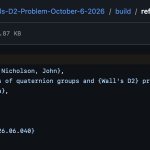
another incredible result🚨 from oai. matrix multiplication cannot be done in quadratic (n^2) time. it requires n^(9/4) time!!!!!
some background on why the difference between 2 and 2.25 is significant:
the naive algorithm for the matrix multiplication of two nxn matrices takes n^3 time. for each of the n^2 entries in the result, you have to do a dot product over n pairs.
in 1969, strassen found a way to multiply matrices in n^2.807 time (!!), which is asymptotically better than n^3 and a very cool part of the undergrad algos course.
this kicked off a line of research with ever-improving exponents:
- 1969 Strassen: 2.807
- 1978–81 Pan, Bini, Schönhage: ~2.52
- 1990 Coppersmith–Winograd: 2.376
[stall for many years]
- 2012 Virginia Vassilevska Williams: 2.3729 (!!)
- 2026 OpenAI: 2.25 (Oct of this year)
it seemed like we were nearing an exponent of 2, i.e. n^2 or quadratic time. (this is also the bare minimum, since the answer that we need to write has n^2 entries).
the key open question: can we do quadratic time matrix multiplication?
finally we have an answer (!!!!). openai just proved that matrix multiplication requires exactly n^2.25 time by proving a lower bound match Oct's algorithm (upper bound).
this is really cool and really fascinating. why 9/4? the universe is full of mysteries.
repo: github.com/openai/math/tree/…

Apparently Strassen was right: the matrix mult exponent is (exactly) 2.25
github.com/openai/math/tree/…
Aryan Gupta retweeted

idk why but i always assumed all YC partners were previously YC founders themselves, but turns out there are some exceptions. biggest surprise for me was Dalton!
Here are all of them: Ali Rowghani (@ROWGHANI), Anu Hariharan (@anuhariharan), Dalton Caldwell (@daltonc), Geoff Ralston (@gralston), Paul Buchheit (@paultoo), Holly Liu (@hollyhliu), Peter Thiel (@peterthiel), Uri Lopatin (@urilopatin), Carolynn Levy (@cjoneslevy), Kat Manalac (@KatManalac), Kirsty Nathoo, Tim Brady and Jon Levy.
also pretty insane that Peter Thiel was a visiting partner at one point, would've never guessed lol
Aryan Gupta retweeted

imagine having an entire employee content program, dedicated x distribution strategies, paying agencies to promote launch videos and coordinating campaigns across the company, just to be competing with one guy tweeting from his college dorm room.


Aryan Gupta retweeted
was on the $NVDA stock page and google said it had 3 founders. i had no idea
one of them, curtis priem, sold all his shares by 2006. would’ve been ~$70B. he gave most of it to his college and lives off the grid now
the other, chris malachowsky is still at nvidia as a vp engg - 33 years and counting.
cool tidbit is they also named the company "prihuamal" after themselves lol

Aryan Gupta retweeted

I made a silly website to explore differences between optimizers
What if SF were a loss landscape? Different optimizers traverse the hills and valleys in different ways, and you can play with them here!
kaleybrauer.com/sf-hill-clim…
Aryan Gupta retweeted

cool new graphic i made. jensen def isn't the first


made a few fun games out of the weirder cases if you wanna poke around. i did pretty bad on these lol
autumn.ai/resources/china-sp…

Aryan Gupta retweeted
Most people know Colette Kress as the CFO on earnings calls. Her backstory is better.
In 2013 Nvidia had gone two years without a permanent CFO. It was worth under $10 billion, the smallest company she'd ever worked for, after 8 years at TI, 13 at Microsoft and 3 at Cisco. Jensen went after her anyway.
What sealed it was her sons, 8 and 10 at the time. Their favorite games ran on Nvidia chips, so they told her to take the job.
She's since helped land Mellanox over Intel, watched Nvidia pass $1 trillion, and became one of the only CFOs ever to become a billionaire. Now she's running the whole thing.
Two kids' gaming habits might be the best hire Nvidia ever made.


NVIDIA announces CEO transition. Read the release: nvidianews.nvidia.com/news/n…

Aryan Gupta retweeted
Ian Buck (@ia_buck) is next in line to take NVIDIA CEO as of 19:39 PST 11/11
This dude basically predicted the AI boom in his 2006 PhD thesis. I went and read it, so let me break it down.
Back then a graphics card was just a toy for gamers, but he realized its potential. See, a CPU is built to do sequential tasks really fast. Back then it had one or two cores, and each core runs a single stream of instructions in order. A GPU is the opposite. It has lots of smaller, simpler processors that all run the same little program at the same time, one copy per pixel, because drawing a frame means working out millions of pixels at once. The term for that is data parallelism, and it's the whole reason a GPU can out-compute a CPU.
But Ian actually measured it. A few-hundred-dollar ATI Radeon X800 could do 63 billion floating point operations a second. A 3 GHz Pentium 4 could do 13 billion.
So why wasn't everyone using them?
Because the only way to talk to a GPU was through graphics APIs like OpenGL and DirectX. If you wanted it to simulate a protein you had to disguise your math as textures, triangles and pixels and basically trick the card into "drawing" the answer. He says in there that this was hard even for the best graphics programmers.
So his PhD thesis was literally just inventing a new language called Brook, which is just normal C, with two new ideas (streams and kernels) amongst other things. His test programs ran up to 7x faster than hand-optimized CPU versions. This eventually became CUDA.
In his paper, he says these GPUs might one day be used for AI and at the very end, says that if you wired a bunch of GPUs together, the machine "might have a huge cost-performance advantage over existing supercomputers" which perfectly describes every AI data center on Earth right now.
Today he runs the part of NVIDIA that sells those data center chips and people are betting that he's gonna be the next CEO.


Kimberly Powell. The Nvidia VP the NYT just named in Jensen Huang's second reported affair.
I looked her up on @autumn_ai_inc. Here's her whole career:
She's 48 and based in Santa Clara. She studied electrical engineering at Northeastern, with a concentration in computer engineering. She is also married (won't share name).
Her career started with an internship at a medical imaging company, working next to radiologists. That turned into engineering and product management on diagnostic displays at Planar Systems.
Then she contacted Nvidia about using its GPUs. Their answer, in her words: "We have early evidence that healthcare is going to be a great user of this technology, but we don't know how. Would you like to join the company and help us figure that out?"
She joined in 2008, when Nvidia was still a graphics card company. Her job was to get GPUs inside medical imaging machines.
After that she ran Nvidia's higher education and research business, NVIDIA AI Labs, and Inception, its startup program with 4,000+ AI startups.
Today she's VP of Healthcare and runs the whole thing worldwide: medical imaging, drug discovery, life sciences. BioNeMo is hers. So is a federated drug discovery network across five pharma companies.
In 2026 alone she gave the special address at GTC Berlin, launched Nvidia's Open Agent Safety Platform with 100+ partners, and did the rounds at the JPM Healthcare Conference in January.
She has 1,828 followers on X and posts 2-4 times a month, almost all of it about healthcare AI.
Then today: the NYT, citing five anonymous sources, reported that she and Jensen were caught on video "being affectionate" at a San Jose hotel in March. Both are married. The Times hasn't seen the video itself.
A former employee told CNBC that rumors had gone around for years.
When the NYT called Jensen, he said "It seems you should not be speaking with me directly" and hung up. She hasn't commented, and neither has Nvidia.
Nvidia fell more than 7% after hours, and the WSJ says the board is preparing to oust him.
pinterest: pinterest.com/kgerade/
twitter: @kpowgerade (autumn found the same username pattern)



Aryan Gupta retweeted
Kimberly Powell. The Nvidia VP the NYT just named in Jensen Huang's second reported affair.
I looked her up on @autumn_ai_inc. Here's her whole career:
She's 48 and based in Santa Clara. She studied electrical engineering at Northeastern, with a concentration in computer engineering. She is also married (won't share name).
Her career started with an internship at a medical imaging company, working next to radiologists. That turned into engineering and product management on diagnostic displays at Planar Systems.
Then she contacted Nvidia about using its GPUs. Their answer, in her words: "We have early evidence that healthcare is going to be a great user of this technology, but we don't know how. Would you like to join the company and help us figure that out?"
She joined in 2008, when Nvidia was still a graphics card company. Her job was to get GPUs inside medical imaging machines.
After that she ran Nvidia's higher education and research business, NVIDIA AI Labs, and Inception, its startup program with 4,000+ AI startups.
Today she's VP of Healthcare and runs the whole thing worldwide: medical imaging, drug discovery, life sciences. BioNeMo is hers. So is a federated drug discovery network across five pharma companies.
In 2026 alone she gave the special address at GTC Berlin, launched Nvidia's Open Agent Safety Platform with 100+ partners, and did the rounds at the JPM Healthcare Conference in January.
She has 1,828 followers on X and posts 2-4 times a month, almost all of it about healthcare AI.
Then today: the NYT, citing five anonymous sources, reported that she and Jensen were caught on video "being affectionate" at a San Jose hotel in March. Both are married. The Times hasn't seen the video itself.
A former employee told CNBC that rumors had gone around for years.
When the NYT called Jensen, he said "It seems you should not be speaking with me directly" and hung up. She hasn't commented, and neither has Nvidia.
Nvidia fell more than 7% after hours, and the WSJ says the board is preparing to oust him.
pinterest: pinterest.com/kgerade/
twitter: @kpowgerade (autumn found the same username pattern)
Aryan Gupta retweeted
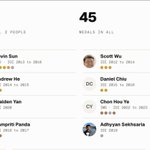
mercor, valued at 20 billion, just raised a series d. (the company is two years old btw)
they scored pretty high on this list. a lot of IMO medalists are doing contract math work for AI labs.
(to make this, i basically asked autumn to find 5k IMO medalists and what they were up to and thought mercor popping up was pretty interesting)
check out the full thing here: autumn.ai/resources/olympiad…


Aryan Gupta retweeted
holy shit! reminder of home right before diwali

Bombay, one pixel at a time!
inspiration: isometric nyc by @_coenen, sf by @jus10chavez, rio by @xthomasms
mumbai deserves one and here it is
The entire city, as an isometric map you can fly around, with kaali-peelis and local trains moving on the real roads.
Find your building -> isometricmumbai.com
Aryan Gupta retweeted

Introducing Isometric SF A pixel-art map of the entire SF Bay Area, over 1,300 square miles, all painted by Klein, a 4B-parameter image-to-image model, on @modal.
Explore the map now!
isometricsf.com
Aryan Gupta retweeted
In 1971, a teenager named Bill Fernandez had a hunch that two people he knew would get along. One was Steve Wozniak, a few years older and obsessed with electronics. The other was Steve Jobs.
Bill introduced them, they got talking about circuits and pranks, and five years later they started Apple. The whole thing depended on one person who knew both of them and bothered to connect them.
Not everyone has a Bill Fernandez in their life. @autumn_ai_inc tries to be that person for you. Tell it who you're hoping to meet, and it finds them so you can reach out. Don't wait for the right person to wander in. Go and find them.

Aryan Gupta retweeted
In 1995, Sergey Brin was a Stanford grad student who had agreed to show prospective students around campus. One of the people in his group was Larry Page. By most accounts they disagreed about nearly everything on that walk, and yet a few years later they started Google together.
Most of us don't get that kind of luck when we need it, so we have to go looking.
@autumn_ai_inc helps you find the people you need, whether that's a cofounder, a mentor or your first customer. The right people are already out there. Autumn helps you find them.
Aryan Gupta retweeted
The man who broke the Bank of England and went thirty years without a single losing year just posted his first ever tweet at 73, and it was about Hyperliquid.
>be stan druckenmiller
> spawns in Pittsburgh, 1953
> parents divorce when he's in elementary school
> moves with his dad to Gibbstown, New Jersey, then Richmond, Virginia
> studies English and economics at Bowdoin College
> starts an economics PhD at the University of Michigan
> drops out halfway through his second semester
> 1977, joins Pittsburgh National Bank as a management trainee
> within a year, he's running the bank's equity research group
> 1981, at 28, starts his own fund, Duquesne Capital, with less than $1M
> mid-80s, starts working with Dreyfus as well
> 1988, George Soros recruits him to run the Quantum Fund
> keeps running Duquesne at the same time
> 1992, spots that the Bank of England can't defend the British pound
> takes the idea to Soros, who pushes him to bet even bigger
> September 1992, Black Wednesday, the pound collapses
> Quantum makes more than $1B
> the trade is remembered as "breaking the Bank of England"
> 1998, loses $2B on Russian stocks and bonds, still finishes the year up
> 2000, buys into tech near the top of the dot-com bubble
> takes heavy losses and leaves Soros
> 2008, while most of Wall Street bleeds, reportedly makes $260M
> 2009, donates about $705M to medical research, education and anti-poverty causes
> August 2010, shuts down Duquesne Capital with $12B under management
> 30 years, about 30% average annual returns, not a single losing year
> hands back every client's money, citing the emotional toll of the job
> turns Duquesne into a family office and keeps investing his own money
> 2026, at 73, his family office discloses a $23M stake in Hyperliquid Strategies
> October 2026, finally joins X
> Partners with ICE, the owner of the New York Stock Exchange, to bring Hyperliquid's 24/7 perpetual futures to the US.
>Doest stop.
What stands in the way, becomes the way.
Aura.
source - @autumn_ai_inc

Aryan Gupta retweeted
Bob’s company just raised a $160M Series A.
Be like @bobmcgrewai
Leave Stanford PhD.
Join Palantir.
Build checkers robot.
Realize it’s too early.
Join OpenAI.
Work on robotics.
Lead research.
Join Army Reserve.
Start Arda.
Build AI for factories.
Get Anduril as your first customer.
Raise $160M.
I found this with Autumn. Hope it helps.
