

OSINT | Fact-Checking | Data Analysis | Digital Investigator | News | Spotter | MiddleEast - Europe - Africa - Global Reddit: u/Free_Watcher_DI
All around the world
Joined March 2017
- Tweets1.8K
- Following611
- Followers213
- Likes1.8K




Pinned Tweet
A U.S. Air Force @usairforce C-17 reportedly flew from Joint Base Andrews to Riga on August 23, then continued to Moscow-Vnukovo on August 25 - potentially marking the first U.S. C-17 sighting over Russia in years.
#US #Russia #Riga #Latvia #News
Source: @casusbellii.


Weekly chokepoints risk & transit monitor - November 02.
➡️ Preliminary Strait of Hormuz crossings increased to 141 in the week to 1 November, up 8.5% from the previous week's preliminary count, driven by stronger outbound and laden movements. However, routing conditions remained largely unchanged, with more than two-thirds of crossings classified as Route Undetermined. Bab el-Mandeb traffic also increased, with laden movements rising despite a slight deterioration in TSS adherence and an increase in dark transits. Meanwhile, the cumulative toll of attacks on commercial shipping continued to rise, with no clear evidence of a sustained improvement in regional security.
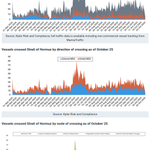
✔️ Strait of Hormuz crossings totalled 141 from 26 October to 1 November, up 8.5% from the previous week's preliminary count of 130. On the same preliminary basis, entries declined from 74 to 65, while exits increased from 56 to 76. Laden movements rose from 58 to 70, an increase of 20.7%. Historical backfills subsequently revised the previous week's total to 182, highlighting the importance of distinguishing preliminary from validated traffic figures.
✔️ Hormuz routing remained largely unchanged. Route Undetermined accounted for 95 crossings, or 67.4% of traffic, compared with 67.7% the previous week. Another 41 movements used the Iranian Unilateral Scheme, while four used Omani routes and one was recorded through the Hormuz TSS. Despite the slight increase in identifiable routes, there is still insufficient evidence of a broader return to conventional navigation corridors.
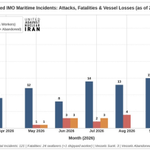
✔️ Attacks on commercial shipping continued, although at a slower recorded pace than in early October. The latest Kpler incident dataset records 123 attacks since March, with 24 seafarer fatalities and 51 injuries. IMO's published register confirmed 122 incidents as of 30 October. More recent @UK_MTO reports indicate that security incidents continued during the reporting week, reinforcing the need to distinguish reported events from confirmed incidents.
✔️ Bab el-Mandeb crossings increased to 276, up 5.3% from the previous week's preliminary count of 262. Laden movements rose from 168 to 196, while TSS adherence declined from 92.7% to 90.9%. Dark transits increased from 19 to 25, suggesting that the higher traffic volumes were accompanied by a modest deterioration in navigation visibility.
✔️ Both chokepoints recorded higher preliminary traffic, but their operating conditions remain different. Hormuz continues to face significant routing uncertainty, while Bab el-Mandeb maintains more consistent commercial movements. The latest figures show continued shipping activity despite the security environment, rather than a confirmed reduction in the underlying risks.
#Iran #News #Hormuz #Shipping #Security #Maritime
Source: @MarineTraffic, @Kpler, @DimAmpatzidis.
marinetraffic.com/en/maritim…

Container Ships Return to the Red Sea, but Carriers Remain Divided.
Container traffic through Suez and Bab el-Mandeb rose during the first nine months of 2026, despite continuing security risks in the Red Sea. Monthly Suez transits climbed from 170 in January to 253 in September; identified Bab el-Mandeb crossings rose from 124 to 200. The increase gathered pace over the summer, but carriers followed different routes. @cmacgm and @Maersk made greater use of Bab el-Mandeb, while MSC, @HLCruisesInt and several Asian operators continued to send substantial traffic around southern Africa. The numbers point to a selective shift, not a wholesale return to the Red Sea.
#RedSea #Suez #BabElMandeb #Africa #Asia #Shipping #News #Iran #US #MSC #CMACGM
Source: @MarineTraffic, @Kpler, Daniela Silva, Rebecca Gerdes.
marinetraffic.com/en/maritim…
Uninvited guest: How a GRU spy connected to state hackers broke into the African Union’s diplomatic residence in Ethiopia.
An investigation by The Insider alleges that Russian military intelligence (GRU) officer Aleksandr Dubikov secretly entered the residence of the @_AfricanUnion Commission chairman in Addis Ababa in April 2025, raising suspicions of an espionage operation. The incident highlights Russia’s expanding intelligence activities in Africa following the decline of the Wagner Group, with the GRU playing an increasingly prominent role alongside the state-run Africa Corps. The revelations risk damaging Russia’s relations with African countries just as Moscow prepares to host the Russia–Africa Summit on October 28–29.
#GRU #Hackers #Africa #Ethiopia #Russia #Dubikov #Wagner #AddisAbaba #AfricaCorps #Summit #News
Source: @InsiderEng, @the_ins_ru, Michael Weiss, Roman Dobrokhotov.
theins.org/en/inv/298635

1
66
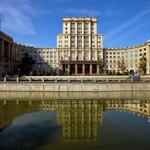
The GRU’s Hogwarts: Inside Bauman University’s Department 4, an elite spy school for Russian military intelligence.
An investigation by The Insider and international media partners uncovered more than 2,000 documents revealing that Bauman Moscow State Technical University secretly trains students for Russia’s military intelligence agency, the GRU. The program teaches cyberattacks, malware development, espionage, drone warfare, and disinformation techniques, including propaganda designed to manipulate public opinion. Some graduates have joined GRU Unit 74455, which has been linked to major cyberattacks against Ukraine and other countries.
The documents suggest that Russia is systematically developing a new generation of military intelligence operatives by combining university education with practical training in cyberwarfare, espionage, and information manipulation.
#GRU #Hogwarts #Bauman #Russia #Intelligence #Cyber #Drone #Propaganda #Ukraine
Source: @InsiderEng, @the_ins_ru, Michael Weiss, Kato Kopaleishvili, Fidelius Schmid, Alexander Chernyshev.
theins.org/en/inv/292314?utm…


Think Russian universities just turn out scientists and engineers? U.S. intelligence says a secret department training hackers for Moscow's GRU. Some graduates joined notorious cyber units. America's research labs face an adversary that trains spies in classrooms. #CIA #GRU #NationalSecurity
theins.org/en/inv/292314?utm…

2
108
Iran Shipping Update – October 27, 2026.
The October 27, 2026, report highlights continued maritime insecurity around Iran, with attacks on commercial shipping in the Strait of Hormuz and renewed Houthi threats in the Red Sea disrupting trade. The U.S. blockade on Iranian ports is severely restricting oil exports, leaving at least 53 oil-laden tankers along Iran’s coastline and forcing numerous Iranian-linked vessels to remain idle across Asian waters. Despite sanctions and enforcement efforts, Iranian oil tankers and cargo ships continue operating internationally, often using questionable vessel identities and offshore anchorages.
The U.S. blockade is putting significant pressure on Iran’s oil exports, but Iranian-linked shipping networks remain active across global maritime routes, complicating sanctions enforcement and regional security.
#Iran #Shipping #MaritimeNews #Hormuz #Houthi #RedSea #US #News #Asia #Sanctions
Source: @UANI.
unitedagainstnucleariran.com…

Why is South Korea clashing with Ukraine while North Korea systemically learns the lessons of modern warfare?
South Korea recalled its ambassador to Ukraine in October 2026 following a dispute over the public disclosure of two North Korean prisoners of war transferred to Seoul. The article argues that this diplomatic rift risks undermining cooperation between South Korea and Ukraine, despite their shared security concerns. Meanwhile, North Korea is gaining valuable battlefield experience and Russian military technology from the war in Ukraine, improving its drone warfare, artillery coordination, and combat tactics. The article also highlights reports of fuel shipments from South Korean ports to Russia, raising questions about sanctions enforcement.
South Korea should strengthen intelligence and military cooperation with Ukraine rather than rely on Russia to restrain North Korea, which is using the war to modernize its military capabilities.
#Ukraine #SouthKorea #NorthKorea #Seoul #Russia #Drones #Sanctions
Source: @InformNapalm.
informnapalm.org/en/south-ko…

59
How Russia took drastic measures to secure influence ops, according to new hack.
Politology, a Russian influence network formerly linked to the Wagner Group, has expanded its operations globally under the control of Russia’s Foreign Intelligence Service (SVR). Following major leaks in early 2026, the network introduced strict security measures, including reorganizing departments, restricting access to information, upgrading IT systems, and tightening rules on AI use.
Despite these efforts, a hacking group calling itself “Zmei Prigozhin” leaked hundreds of additional documents in October 2026. The documents reportedly show that Politology now targets not only Africa and Latin America but also Europe, the Middle East, India, and international institutions. Its campaigns address issues such as migration, international conflicts, and political alliances, aiming to influence public opinion and weaken Russia’s perceived rivals.
The leaks expose the growing global reach of Russia-linked influence operations and show how Politology is attempting to protect its activities and conceal its connections after repeated security breaches.
#Russia #Wagner #AfricaCorps #Politology #Influence #SVR #Leaks #Intelligence #Prigozhin #Africa #America #Europe #MiddleEast #India #News
Source: @aeowinpact.
alleyesonwagner.org/2026/10/…


How Russia took drastic measures to secure influence ops, according to new hack.
Politology, a Russian influence network formerly linked to the Wagner Group, has expanded its operations globally under the control of Russia’s Foreign Intelligence Service (SVR). Following major leaks in early 2026, the network introduced strict security measures, including reorganizing departments, restricting access to information, upgrading IT systems, and tightening rules on AI use.
Despite these efforts, a hacking group calling itself “Zmei Prigozhin” leaked hundreds of additional documents in October 2026. The documents reportedly show that Politology now targets not only Africa and Latin America but also Europe, the Middle East, India, and international institutions. Its campaigns address issues such as migration, international conflicts, and political alliances, aiming to influence public opinion and weaken Russia’s perceived rivals.
The leaks expose the growing global reach of Russia-linked influence operations and show how Politology is attempting to protect its activities and conceal its connections after repeated security breaches.
#Russia #Wagner #AfricaCorps #Politology #Influence #SVR #Leaks #Intelligence #Prigozhin #Africa #America #Europe #MiddleEast #India
Source: @aeowinpact.
alleyesonwagner.org/2026/10/…

The Russia–Africa Summit will take place in Moscow on the 28th and 29th, with several African delegations attending, although relatively few national leaders are expected to participate. Burkina Faso’s leader, Ibrahim Traore, will be absent. The summit faces two main challenges: ensuring security amid the ongoing war in Ukraine and the risk of drone attacks, and strengthening Russia’s political, economic, and military ties with African countries.
#Russia #Africa #Summit #Moscow #BurkinaFaso #Sahel #Ukraine #News
Source: @casusbellii.

The Russia-Africa Summit will begin on the 28th and conclude on the 29th in Moscow.
Several African delegations are already on site, but ultimately relatively few African leaders are attending; some have chosen to send representatives instead.
I note in particular that Ibrahim Traoré is not attending on behalf of Burkina Faso.
This is a major and significant event with two key challenges:
1- Ensuring that the summit proceeds without a hitch even as the war in Ukraine continues—and, by extension, the risk of drone attacks. In this regard, it seems to me that a drone infiltrated the Moscow airport a few days ago…
2- To strengthen ties between Russia and African nations, which remains a key objective in political, economic, and even military terms.
How Russia took drastic measures to secure influence ops, according to new hack.
Politology, a Russian influence network formerly linked to the Wagner Group, has expanded its operations globally under the control of Russia’s Foreign Intelligence Service (SVR). Following major leaks in early 2026, the network introduced strict security measures, including reorganizing departments, restricting access to information, upgrading IT systems, and tightening rules on AI use.
Despite these efforts, a hacking group calling itself “Zmei Prigozhin” leaked hundreds of additional documents in October 2026. The documents reportedly show that Politology now targets not only Africa and Latin America but also Europe, the Middle East, India, and international institutions. Its campaigns address issues such as migration, international conflicts, and political alliances, aiming to influence public opinion and weaken Russia’s perceived rivals.
The leaks expose the growing global reach of Russia-linked influence operations and show how Politology is attempting to protect its activities and conceal its connections after repeated security breaches.
#Russia #Wagner #AfricaCorps #Politology #Influence #SVR #Leaks #Intelligence #Prigozhin #Africa #America #Europe #MiddleEast #India
Source: @aeowinpact.
alleyesonwagner.org/2026/10/…

Privet Politology/SVR - You've been pwned...again.
INPACT/AEOW has received hundreds of very recent documents dated of 2025-2026 about the SVR-controlled Politology network. Despite drastic security measures, a new hack from unknown hacking group reveals how Politology has re-organised following previous investigations and is now not only targeting Africa and Latin America but also Europe, International Organisation, the Middle East and India. This is episode 1 of season 2 for Politology Files
alleyesonwagner.org/2026/10/…
Global markets are often analyzed through economic, legal, and financial indicators without adequately accounting for maritime geopolitics and the physical realities of trade. This incomplete perspective limits understanding of sanctions, oil price differentials, shadow fleets, and ship-to-ship transfers. These dynamics are shaped not only by market prices or sanctions policies but also by the movement of capital, geopolitical shifts, and physical and institutional constraints. Moreover, institutions responsible for assessing and pricing geopolitical risk often contribute to this disconnect, creating systemic lock-ins rather than effectively mitigating risk.
#Markets #Economy #Maritime #Geopolitics #Trade #News #Sanctions #Oil #ShadowFleet #Shipping
Source: @ersinelikoglu, @robin_j_brooks.

Küresel sistemik dinamikler, deniz ticareti ve taşımacılık mimarisi noktasında piyasa aktörlerinin pek çoğunun tepki ve davranış kalıplarıyla zamansal ve mekânsal olarak örtüşmez.
Bu, piyasa aktörlerinin küresel pazar verilerini hatalı okudukları anlamına gelmemekle birlikte, eksik okudukları gerçeğine işaret eder.
Eksiklik nerede başlar? Temel okumanın iktisadi değişkenler üzerinde yapılmasıyla başlar. Bana göre, iktisadi değişkenler de tıpkı hukuki ve siyasi olanlar gibi deniz jeopolitiği mimarisinden üretilen akışkan sermaye mekânsallığıyla ilişkilendirilmelidir.
Örneğin, kâğıt üzerinde herhangi bir X yaptırım rejiminin etkinliği salt hukuki/teknik/iktisadi mercekten değerlendirilmektedir. Bu yaptırım devreye girdiğinde/esnediğinde ya da kalktığında veya jeopolitik bir kırılmayla birlikte küresel pazara etki ettiğinde, ticaret akışlarındaki (trade flows) fiyat iskontolarının, gölge filoların (shadow fleets) ve gemiden gemiye transferlerin (STS) yalnızca X yaptırım rejiminin yeniden düzenlenmesiyle çözülebileceği fikri de aynı temel eksiklikten doğar.
Fakat, sistemik ölçekte gerçekleşen şey deniz jeopolitiği dinamikleriyle akışkan sermayenin re-organizasyonuyla ilgilidir. Yalnızca herhangi bir emtia, navlun ya da diğer bir Y değişkeninin küresel pazardaki fiyat dalgalanması değildir.
Bu bakımdan, aşağıda paylaştığım rafinaj ekonomisinin jeopolitik körlüğü küresel pazarın tamamında yaygındır.👇🏻
teapawt.net/ersinelikoglu/status/2…
Ham petrol ile türevleri arasındaki fiyat ayrışmaları, diğer bağlı ve ilişkili emtiaların fiyatlamaları ya da mesela Brent ile WTI arasındaki fiyat farkları salt finansal tablolar aracılığıyla değil de termodinamik, metalürjik ve kurumsal kısıtlar üzerine kurulu deniz jeopolitiği gerçeklikleri zemininde ele alınmalıdır.
Yaptırım rejimleri ve yine bunların etrafından dolanmak için üretilen teknik/hukuki mekanizmalar, hatta küresel deniz ticaretindeki alternatif yapılar, doğaları itibarıyla tek başına jeopolitik risk dalgalanmalarını esnek biçimde sönümleme kapasitesine sahip değildir ve aksine çoğu zaman sistemde yeni kilitlenmeler yaratma potansiyeli taşır.
Tabii bir de bu kilitlenmelerin sebebinin jeopolitik risk değerlendirmesini yapan kurumların (kredi derecelendirme kuruluşları, Batılı sigorta sindikaları, finansal merkezler) bizzat kendilerinin bu mekânsal/zamansal körlüğün üreticisi olduğunu veya risk fiyatlama dilinin fiziksel gerçeklikten koptuğunu düşünüyorum.
Weekly chokepoints risk & transit monitor - October 26.
➡️ Preliminary data show Strait of Hormuz crossings reached 130 in the week to 25 October, up 8.3% from the previous week's preliminary count, as attacks on merchant shipping continued at a slower pace. Routing visibility remained poor, with no cargo vessels recorded using the Omani routes or Hormuz TSS. Bab el-Mandeb traffic was broadly stable, with higher TSS adherence, fewer dark transits and steady laden movements.
✔️ Strait of Hormuz crossings totaled 130 from 19 to 25 October, up 8.3% from the previous week’s preliminary count of 120, which was subsequently revised to 178 following dark-crossing backfills. On the same preliminary basis, entries rose from 57 to 74 while exits fell from 63 to 56, and laden movements declined from 71 to 58.
✔️ Hormuz routing remained opaque. Route Undetermined accounted for 88. crossings, or 67.7% of traffic, little changed from 67.5%. A further 39 vessels used the Iranian Unilateral Scheme, while 3 crossings used Omani routes, all by service vessels and a yacht, and none used the Hormuz TSS.
✔️ Attacks on merchant shipping continued at a slower pace, with IMO confirming 6 incidents between 14 and 22 October, compared with 23 between 1 and 13 October. Diplomatic engagement intensified, including regional talks in Tehran on 26 October, but no agreement to reopen Hormuz had been announced.
✔️ Bab el-Mandeb crossings totaled 262, broadly unchanged from last week's initial 260. Laden movements held at 168, while TSS adherence rose from 90.8% to 92.7% and dark transits fell from 24 to 19. No IMO-confirmed attacks were recorded in the area during the week, although the Houthi threat persisted.
✔️ OFAC sanctions targeted vessels with recent chokepoint activity. OFAC identified 9 cargo and support vessels as blocked property on 21 October under Operation Economic Outcast. Kpler data show 5 of these vessels made 12 crossings of Hormuz and Bab el-Mandeb between May and September, including movements involving Iranian-origin cargo and dark transits.
#News #Iran #Hormuz #Oman #US #MaritimeNews #TSS #Shipping #Traffic #IMO #Houthi #OFAC #Sanctions #DarkFleet #ShadowFleet
Source: @MarineTraffic, @Kpler, Yuan Li.
marinetraffic.com/en/maritim…


Three Russian vessels: ASCALON, LADY D, and ANASTASIIA were reportedly seen loading military vehicles and equipment in Baltiysk on October 15–16 before disappearing from public AIS tracking. Given ANASTASIIA’s previous shipment to Libya linked to Russia’s Africa Corps, the latest activity may indicate another resupply operation to Africa, potentially via Libya or the Gulf of Guinea.
#Africa #AfricaCorps #Russia #vessels
Source: @TiaFarris10
From: @InsiderGeo @SONARROW_OSINT

🚨🚨🚨 Another Russian military shipment from Baltiysk. Africa Corps resupply?
On October 15-16, 🇷🇺 ASCALON (IMO 9198226), 🇷🇺 LADY D (IMO 9349289) and 🇷🇺 ANASTASIIA (IMO 9349291) were reportedly observed loading military vehicles and equipment at Baltiysk, including MRAPs, infantry vehicles and logistics trucks.
All three vessels have been off public AIS tracking for several days, with their last reported positions in Baltiysk. ⚠️
ANASTASIIA was already involved in a military shipment to 🇱🇾 Tobruk in September, with reports linking the cargo to Russia's Africa Corps and subsequent transfers towards Mali.
Could this be another large-scale resupply operation for Russia's Africa Corps, either via Libya or the Gulf of Guinea? 👀

ALT @InsiderGeo @Sonarrow_OSINT

35
Iran’s IRGC-N reportedly targeted a vessel in the Strait of Hormuz at around 16:00 local time using Shahed-136 drones. Videos appear to show the drone striking the vessel and setting it on fire. The exact location remains unconfirmed.
#IranWar #USA #IRGC #StraitOfHormuz #BreakingNews #MiddleEastern
Source: @BeamTracker_

🔴🇺🇸🇮🇷BREAKING: Today, at around 16:00 local time (12:30 UTC), the IRGC-N targeted a vessel in the Strait of Hormuz using Shahed-136 drones.
Videos released by local sources and the IRGC shows the UAV heading towards the vessel, later setting it ablaze.
The exact location in the SoH is unclear.
68
Qatar and Pakistan have reportedly proposed a compromise to revive U.S.–Iran nuclear talks. Iran would receive interest earned on its $6 billion in frozen funds held in Qatar in exchange for allowing a confidential IAEA inspection of its nuclear sites. Pakistan’s Army Chief Asim Munir reportedly delivered the proposal to Tehran, with U.S. approval and Iran previously responding positively.
#Iran #USA #Qatar #Pakistan #IAEA #MiddleEastern #BreakingNews
Source: @clashreport

NEW: Qatar and Pakistan have presented a compromise proposal to revive U.S.-Iran talks. Under the plan, Iran would receive profits from its $6 billion in frozen funds held in Qatari banks.
In return, Iran would allow a secret IAEA visit to its nuclear sites.
Pakistani Army Chief Field Marshal Asim Munir reportedly carried the proposal to Tehran on Tuesday.
Sources say it has U.S. approval. Iran had reportedly responded positively to it earlier.
Only the interest on the frozen assets would be deposited into an Iranian account, not the principal.
The unannounced inspection would address a key U.S. demand on the nuclear file.
Source: Al-Araby Al-Jadeed
62
🚨 SHADOW FLEET EXPANDS: 3,234 VESSELS RECORDED IN SEPTEMBER
According to @MarineTraffic and @Kpler, the global shadow fleet reached a 12-month high of 3,234 vessels in September 2026, following 62 additions and no removals. The fleet has now expanded for five consecutive months.
📊 Key findings:
🛢️ Oil movements: Rose 5.1% month-on-month to 385.5 million barrels. Crude oil accounted for 258.5 million barrels, or 67.1% of the total.
🌍 Major origins: Russia remained the largest named origin at 63.6 million barrels. However, Iraq surged to 54.3 million barrels (+91.5%), while Saudi Arabia increased to 33.3 million (+58.6%).
🚢 Destination shift: China-bound volumes nearly doubled to 57.8 million barrels, while India received 51.1 million. Together, the two countries accounted for 28.3% of September’s total shadow-fleet-associated oil movements.
⚠️ New vessels raise compliance concerns: The 62 newly classified vessels were associated with 28.46 million barrels of oil movements during September, 84.1% of which was crude. Among them, 32 lacked International Group P&I insurance coverage, 21 lacked classification by an IACS member society, and some showed indicators of dark port calls, ship-to-ship transfers or AIS spoofing.
The shadow fleet is growing into a maritime game of cat and mouse. More ships, more oil, and increasingly opaque trading networks are making it harder to track cargoes, expose suspicious activity, and enforce sanctions. The bigger this fleet gets, the harder it becomes to keep it under control.
#ShadowFleet #MaritimeSecurity #Shipping #Trade #Russia #China #India #Sanctions
1
36
Romania has launched a search-and-rescue operation after the San Marino-flagged vessel Wine Trader reportedly came under a drone attack in Romanian territorial waters near Sulina. Eight of the 12 crew members are reported missing, with a fire reported aboard.
Rescue vessels and a helicopter are searching the area. The incident follows a separate fire aboard the YARA J nearby, raising concerns over maritime security in the Black Sea.
#Romania #BlackSea #drone #MaritimeSecurity #SearchAndRescue #shipping
Source: @InsiderGeo

BREAKING: 🇷🇴Romania has launched another search-and-rescue operation in the Black Sea after the San Marino-flagged vessel Wine Trader reportedly came under a drone attack in Romanian territorial waters, approximately 13 nautical miles southeast of Sulina.
The vessel issued a distress call at around 07:00 local time after a fire broke out aboard. According to initial reports, 12 crew members were on board, with eight currently reported missing.
Sailors aboard nearby vessels reportedly said they witnessed the ship being struck by two drones.
Romanian authorities have deployed the ARSVOM rescue vessel Apollo and a helicopter to conduct search-and-rescue operations as efforts continue to locate the missing crew members.
The incident comes just hours after the separate emergency involving the Comoros-flagged vessel YARA J, which also reported a fire near Sulina following drone incursions into Romanian airspace.
Both incidents occurred in Romanian territorial waters.

56
Two merchant ships were attacked by drones off Bulgaria’s Black Sea coast, leaving one vessel sinking and another drifting damaged. All 15 crew members aboard the Chelsea 3 were evacuated, with five requiring medical attention. Bulgaria has notified NATO and the EU and is investigating, while Ukraine has blamed Russia for the attacks.
#Bulgaria #Ukraine #Russia #NATO #MaritimeSecurity #Drone #Geopolitics #breakingnews
Source: @Gerashchenko_en

Two merchant ships were attacked by drones off the coast of Bulgaria, with one of them sinking - Bulgarian PM Rumen Radev said.
The first vessel, Chelsea 3, is a Ukrainian-owned cargo ship registered in Odesa and sailing under the Maltese flag. It was attacked by three aerial drones at around 1:30 a.m., approximately 33 km off the Bulgarian coast near the town of Byala.
All 15 crew members - seven Ukrainians and eight Azerbaijanis - were evacuated to the port of Varna. Five sailors required medical attention. The damaged 136-meter vessel is now drifting without a crew near Cape St. Athanasius.
The second vessel was attacked about 31 km off the coast, near the village of Krapets, and reportedly sank. One sailor is known to have been rescued.
In response to the attacks, Radev convened an emergency meeting of Bulgaria’s Security Council. Sofia has notified NATO and the European Union, and the Prime Minister plans to hold talks with NATO Secretary General Mark Rutte.
"We have no convincing and clear evidence to accuse either side, but the logic suggests that the outcome benefits Russia," Radev said. He also announced that he would summon Russian Ambassador Eleonora Mitrofanova for talks.
This is the second similar incident off Bulgaria’s coast in a week. A week earlier, two vessels were also attacked in the area.
Ukraine also confirmed it was a Russian attack.

27
France detained the Russian-linked tanker DF PEAK in the Indian Ocean on October 12, over suspected false flag registration and illicit fuel shipments. French naval forces escorted the sanctioned vessel toward Réunion Island for further investigation.
#France #Russia #ShadowFleet #DFPEAK #Sanctions #MaritimeSecurity #OilTrade #Geopolitics #breakingnews
Source: @TiaFarris10
🚨🚨🚨 France detains Russian shadow fleet tanker in the Indian Ocean
On 12 October, 🇫🇷 French naval forces boarded the sanctioned Russian-linked tanker 🇧🇯 DF PEAK (IMO 9341067) more than 450 nautical miles south of Reunion Island.
The tanker is suspected of sailing under a false Beninese flag : Benin has not authorized an open international ship registry and reported 33 vessels fraudulently flying its flag to the IMO in 2025. ❌
DF PEAK is also suspected of involvement in illicit fuel shipments.
Following an inspection of its documents, DF PEAK was diverted and placed under French naval escort towards an anchorage off Reunion for further investigation.
⚠️ Russia's shadow fleet is no longer safe anywhere, not even in the Indian Ocean.


36
Iran is escalating its blockade of the Strait of Hormuz. The IRGC now warns that vessels using unauthorized routes will be pursued across the region—not just inside the strait.
With 3 oil tankers reportedly struck near Qatar and the UAE, including Fujairah, the threat now extends across the Persian Gulf. Commercial shipping is increasingly at risk.
Source: @MoloWarMonitor Very interesting!

In recent days, Iran has been implementing a new strategy regarding its blockade of the Strait of Hormuz.
As I reported some time ago, the IRGC had already increased the frequency of drone and anti-ship missile attacks against vessels traversing the strait via the Omani route, however, they have further escalated the naval blockade.
In fact, a few hours ago, they announced that from now on "the handling of offending vessels will not be limited to the Strait of Hormuz, and any vessel that passes through an unauthorized route will be pursued throughout the region, and its punishment will be certain."
This means that the entire Persian Gulf is no longer safe for commercial shipping, indeed, in the last 48 hours, three oil tankers have been struck outside the strait, one near the coast of Qatar, one at the Fujairah anchorage, and another just recently near the coast of the UAE.

57