

You're not bad with money. The system's built to take it. 20 yrs inside taught me how to stop the bleed & build wealth. Free: 10 Pricing Tricks ↓
United States
Joined January 2026
- Tweets659
- Following215
- Followers96
- Likes793



Pinned Tweet
The trick is to let them think you're financing. Negotiate the car price down as if you're taking their loan. Then when the number is locked, tell them you're paying cash. The financing profit disappears. The discount stays.
Ash Bajpai retweeted
Here is a fun fact: One study put the same x-rays in front of 136 dentists, and not once did they all agree a cavity existed. Disagreement runs 30-50% on the same mouth.
Why: early decay can genuinely be watched or drilled, and fee-for-service pays more to drill. So both offices look right...
Ash Bajpai retweeted
It's deliberate. If the driver cancels, it dings their rating toward deactivation. If you cancel, their ratings are untouched, and they pocket your cancellation fee. The stalling is done to make you tap cancel...
Ash Bajpai retweeted
$4.99 was bait. priced to hook you and starve the competition. Then once you're locked in, your watchlist, your habits, and your saved logins and the rivals thin out, the price climbs to whatever they can get. Cheap to get you in, pricey once you can't leave...
Ash Bajpai retweeted
"What's your monthly budget?" is the most expensive question a car dealer will ever ask you.
Answer it, and you've lost the negotiation before it even started.
The number that matters is the out-the-door price. Everything else is theater...
Ash Bajpai retweeted

⚡️The people most threatened by AI are increasingly the ones whose apparent value came from the translation layer itself.
Writing. Summarizing. Packaging. Formatting. Turning meetings into decks. Turning research into memos. Turning messy thought into polished corporate language.
Those tasks used to create the appearance of cognition.
Now cognition and presentation are being separated.
A person with extraordinary judgment and mediocre writing can suddenly communicate at elite level.
A person with mediocre judgment and extraordinary writing loses part of the moat.
That changes who wins.
Druckenmiller is the perfect symbol of the transition because the machine does not replace what made Druckenmiller valuable. It amplifies it.
Give an average thinker the same model and they produce polished mediocrity.
Give Druckenmiller the same model and the underlying source material is still Druckenmiller.
That is the hidden inequality AI is going to widen.
Everyone receives access to better language.
Very few receive better judgment.
And the market is eventually going to learn the difference.
The deeper philosophical shift is even larger:
Authorship is migrating from producing the words to bearing responsibility for the thought.
Who typed each sentence matters less.
Who selected the premise matters.
Who rejected the bad branches matters.
Who decided what was true matters.
Who put their name behind the conclusion matters.
That is where authorship is moving.
And that is why the WSJ angle is almost secondary. The institution is confronting a world where its inherited definition of “written by” is becoming technologically obsolete faster than its norms can adapt.
The old prestige hierarchy said:
“I made every sentence myself, therefore this is mine.”
The emerging hierarchy says:
“This is the model of reality being asserted under my name. Judge whether it is right.”
That is a much harsher standard.
Because style can be automated.
Reality cannot.
The cleanest compression is:
AI is making language abundant and exposing judgment as the real scarce asset.

New - Billionaire Stanley Druckenmiller tells me "of course" he used AI to write op-ed on Bessent & bond market
"There's a reason I moved from an English major to being an economics major," he says, "I'm not embarrassed by it"
No response from WSJ
notus.org/media/stanley-druc…

Ash Bajpai retweeted
Agreed, that's how it's done, and people should know it. But look at when we're asking people to use it. Every other negotiation in life happens when you're basically yourself. Buying a house, working a car deal. You're clear-headed; you can walk away; you can sleep on it.
Healthcare is the one negotiation that starts the week you get the worst news of your life. scared, exhausted, deciding between treatments, and somewhere in there you're supposed to run a pricing conversation. Walking away isn't a lever you have.
Even at full strength, people don't do this. Two-thirds of homebuyers never negotiate their mortgage, months of lead time, nothing wrong with them.
A discount that only reaches the confident and the well is a design failure. Those of us who build and run these systems know the patient is compromised at exactly the moment we need them sharp. Design for that; don't hand someone a tactic and call it access...
Ash Bajpai retweeted

Daniela Amodei on the underrated power of curiosity:
“The ability to be curious, to learn across a lot of disciplines and to have a strong foundation of wanting to have impact, regardless of the area that you're working in, I think that is an underrated quality.”
Ash Bajpai retweeted
Delta told Congress it wasn't using your data to price you individually.
Then told investors the opposite.
That's not a glitch. That's the business model...
Pay by credit card if they'll take it (you get chargeback rights even on an authorized payment to a bad actor). If it has to be Venmo, fund it with a credit card and tag it "Goods & Services"; that keeps a chargeback path open through your card issuer.
Never pay 100% up front through an irreversible method, and treat a refusal of a card or check as a yellow flag...

They're not pricing you. They're pricing the car.
The better your car, the more they assume it costs them. Your record barely moves the needle...

Good news, my insurance is going up $1000/year because I changed from a 2022 Y to a 2026 Y.
Perfect. Driving. Record.
Make it make sense. @CAA
---------------------------------
So, the loan payment is fixed, but the taxes and insurance riding on top of it aren't, and those are what moved.
That $700 is two things: ~$400 is a one-time catch-up that comes off in a year, and ~$300 is the higher taxes and insurance, which stays. So it eases under $2,100 but never back to $1,400.
and the part that stays isn't as locked as it feels. Shop the insurance and appeal the tax assessment if the house is overvalued. Most people just pay it and that will be the biggest takeaway here.

My cousin bought a $320,000 house in 2019. Mortgage was $1,400 a month. Life was simple.
Fast forward to this week. He hasn't missed a single payment, hasn't refinanced, and hasn't added a single square foot to the property.
His monthly payment just jumped to $2,100.
Why?
Because local property tax assessments skyrocketed 40%, and his homeowner's insurance premium doubled after two regional storms hit the state….even though his own house suffered zero damage.
The bank sent a letter saying his escrow account had a $4,800 shortage, and they increased his monthly bill by $700 overnight to cover it.
They tell you a fixed-rate mortgage locks in your housing costs for 30 years.
What they don't tell you:
The principal and interest are fixed, but the property taxes and insurance aren't.
You never truly own your home…..you're just renting it from the city and insurance companies at a rate they can hike whenever they want.
Earning more income has more upside than penny-pinching. But the thing that actually compounds is the gap:
wealth = (income − spending) × time, invested
Income lifts one side; cutting the joyless expenses lifts the other. widen the gap from both ends and let it run.
A raise you fully spend moves it by zero.

Buying coffee, eating out, or going on a vacation is not why people are broke.
PEOPLE NEED TO INCREASE THEIR INCOME
The real key to building wealth is increasing income, not investing a few hundred dollars a month into a brokerage account.
Build a side business. Hop to another job with better pay. Grind on weekends doing Uber Eats.
Do everything you can to increase your income.
The more interesting bit is why fun specifically got this expensive, and it's mostly a supply thing.
Over about 20 years the country lost something like 2,000 golf courses and 7,000 bars, and opening new camps, marinas, venues got really hard. So the places to have fun shrank while the appetite for it didn't. when supply drops and demand holds, whoever owns what's left gets to set the price.
The tell is in the spending. even as people cut back on clothes and gadgets, leisure's share of the wallet actually climbed toward 13% by one big consumer read. We protect fun harder than almost anything, and venues know it. That inelastic demand is what lets them layer on dynamic pricing, fees, the book-a-year-ahead gating.
So the useful read: the joys you'd never give up are the ones you'll quietly get charged the most for. It's worth keeping a cheaper substitute in your back pocket for one or two of them, so you're not a captive buyer on the thing u love most.

Personal finance has one move: cut. A $900 car payment, bad. Eating out, bad. The new phone, bad. Shave it all down.
And it keeps you staring at the wrong column.
The cut-everything crowd has you policing the loud stuff. The coffee, the dinner out, the purchases you actually see and feel. Meanwhile, the real money slips out through the quiet automated flows you stopped checking. The subscriptions you forgot. The renewals priced so you never cancel. The fees that count on you not looking.
This is where a business mindset beats a budgeting one. A company doesn't survive by guilting itself over lunch. It audits every line and kills the ones that stopped earning their keep.
So run your own audit. Cut the dead weight on autopilot, hard. Then fund the two or three things that actually move your life, without thinking twice.
Most of your money leaks where you've stopped looking. Go look.
Ash Bajpai retweeted
High price is the statement. Keeps the room exclusive so you're paying for scarcity and the experience more than the food.
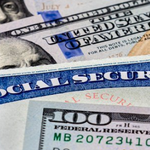
The "Social Security insolvent by 2032" headline is going to cost some people more than the actual cut ever will.
20 years inside finance taught me to watch what a word like "insolvent" does to people. The instinct is to picture the checks stopping cold. What today's report actually says is the trust fund buffer runs dry and benefits drop to roughly 78 cents on the dollar, still funded by ongoing payroll taxes. Serious. Worth planning around. A long way from zero....
That gap between "78%" and "it's GONE" is where money quietly changes hands. Yours.
Every time this trends, the same things light up: annuity pitches, "claim at 62 before it vanishes" advice, fear-priced insurance products. And claiming early in a panic locks in a permanently smaller check for the rest of your life. For a lot of people the fear turns out more expensive than the cut they were scared of.
The shortfall is a real problem Congress has punted on since 1983. Whether you claim at 62 or 70 is a decision you actually own, and it's the exact one the panic is built to rush.
Not a call on when to claim. Just worth knowing the headline is built for speed, and speed is how this machine gets between you and your money.


Social Security is on track to become insolvent by the end of 2032, putting benefits at risk of a 22% cut. cbsn.ws/4umfAHh

Ash Bajpai retweeted
A thought from someone who used to negotiate deals for a living.....LASIK and cosmetic work are shoppable. Elective, plannable, u can call three clinics, compare, and walk if the price is wrong. That's the part that's actually rare in medicine: you've got leverage, so competition can do its job.
So the interesting question is how much of the rest of medicine u could actually move into that same setup. A fair amount, honestly.....Scheduled imaging, labs, routine procedures, generics. That's where showing prices actually does something.
The expensive part, though, is the care u can't shop. The ER, the emergency surgery, the thing happening while u r on a stretcher. A price tag doesn't do much when u can't say no anyway. So the real frontier here is shoppability itself. The more of healthcare you can actually shop, the more transparency can fix. The rest needs a different tool.
Ash Bajpai retweeted
A public tag is the right move, that's exactly why they hate it. The thing that actually flips these is a DOT complaint. Airlines are required to respond to those, and a lot of "you filled the form out wrong" denials reverse once a regulator's attached to the file. Takes about ten minutes, and it gets the claim off the manager's desk and onto someone who has to answer for it. Hope u get it back.
Ash Bajpai retweeted
Treating the card like a burner is smart. One catch though, there's a thing called account updater. Visa and Mastercard both run it, so when your bank reissues a card the new number can get pushed straight to any merchant that's enrolled. Which kind of defeats the whole point of killing those recurring charges.
If u want it to stick, call your bank and opt out of account updater, or move subscriptions onto a per-merchant virtual card u can shut off one at a time. Same lazy energy, just airtight this time.