

smoothee carries the herb and keeps it fresh for every sesh🔥
Berkeley
Joined November 2009
- Tweets67.9K
- Following8.2K
- Followers52.5K
- Likes9.8K





smoothee retweeted

Data on 35,000+ adults: the more cannabis you’ve used in life, the bigger your hippocampus and the better your brain works after 40!
People who had ever used cannabis tended to have larger brain volume in key areas that are full of natural cannabis-like receptors (especially the hippocampus, amygdala, caudate, and putamen – these areas are important for memory, emotions, learning, and movement).
The more cannabis someone had used in their lifetime, the larger these brain areas were and the better they performed on tests of learning, processing speed, and short-term memory.
pubmed.ncbi.nlm.nih.gov/4137…

smoothee retweeted

Do you live in the San Francisco Bay Area? Are you planning a psychedelic experience? Willing to have an MRI before and a few weeks after? Maybe you're eligible for our study here: carhartharrislab.com/studies…
🤖 Made with AI

herb stays fresh and ready to sesh in smoothee—
the only stash jar designed for ground flowers
getsmoothee.com


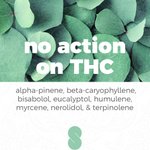
Science suggests some terpenes may enhance the acitvity of THC at the Cb1 receptors in your brain.
Learn which ones: getsmoothee.com/blogs/learni…
#terpenes #cannabis #stoners #weed #mmemberville #terps #smoothee #medicalmarijuana

If you own a grinder you should have a smoothee!
Grind it now, serve it later—keep it fresh for weeks 🍀
getsmoothee.com
Grinders we love:
Brilliant Cut Grinder - ultimate option
The Flower Mill - unique tech
Santa Cruz Shredder - old reliable
#mmemberville #stoners

Smoothee keeps ground flower fresh and ready-to-sesh
getsmoothee.com
#mmemberville #weed #stoner #marijuana #cannabis #terps
🤖 Made with AI

smoothee retweeted

More than 20,000 people have taken legal psilocybin in Oregon since 2023.
That is six times more than every clinical trial of a classic psychedelic since 1951, combined.
Until this morning, nobody could tell you what happened to them.
Now we can.
JAMA Network Open just published the first real-world longitudinal data on state-regulated psilocybin in US history.
Researchers at Oregon Health & Science University followed 346 clients across 24 of Oregon's 26 licensed service centers, from before their session to three months after. Nine in ten stayed through the full follow-up.
By three months, moderate-to-severe depression symptoms had dropped from 42% of participants to 17%. Anxiety from 45% to 13%. PTSD from 48% to 17%.
The share satisfied with their lives rose from 63% to 82%.
One month in, 92% said they benefited, and 58.6% ranked the experience among the 10 most meaningful of their lives!
Remember, these were not clinical trial patients. Oregon requires no diagnosis and no prescription.
The exclusion list is three items long: lithium, active psychosis, and active suicidal ideation. Most clients came out of curiosity (74%) or to work on themselves (71%). A licensed facilitator ran every session. Oregon requires facilitators to complete state training, not to hold a clinical license.
The safety record from that wide-open door: four serious behavioral reactions in 346 people, 1.2%. One hospital transport. Zero serious medical reactions. Zero reports of unwanted touch or sexual contact from facilitators.
And the four cases share a profile every practitioner should memorize:
1. All four were psychedelic-naive.
2. All four arrived with preexisting mental health conditions, seeking treatment. 3. All took 25 to 50 mg doses (equivalent to 3.5-7 g of dried cubensis).
4. Two were taking antidepressants.
In a cohort this open, risk did not sort by molecule. It sorted by readiness. Screening and preparation is where this work is won.
The honest caveats: no control group, and the cohort opted into research, about 5% of everyone the program served.
Three weeks ago I wrote that my worst fears about Oregon's model were coming true: average client household income of $172,000, sessions at $900 to $5,000, the lowest quarterly client count on record, and a proposal to double licensing fees.
This cohort draws the same picture:
1. 87% white.
2. 29% earning over $200,000.
3. 1/3 called the cost a financial strain
81% still said it was worth the money.
The people who can access psilocybin say it is worth it. The price decides who gets in.
Now we know exactly what everyone else is being priced out of.

"Marijuana smokers are not going to attack and kill a cop. They just want to get a bag of chips and relax....
Alcohol is a much bigger problem."
Cathy Lanier made this statement in 2015, speaking at the American News Women's Club.
#marijuana #nature #police


Canadian producers can ship raw cannabis into Europe's lucrative medical markets because Canada legalized federally and its regulations are stable.
American operators can't. Cannabis is still federally illegal in the U.S., so product grown is locked within state markets. 🙄
smoothee retweeted
We've been prescribing the same class of antidepressant for 40 years. Two doses of psilocybin outperformed six weeks of it on nearly every measure that matters for living a full life.
That study is five years old, and it stops being academic next year.
In 2021, Robin Carhart-Harris's lab ran a head-to-head comparison in the New England Journal of Medicine.
Psilocybin therapy vs. escitalopram for major depression, with identical psychological support in both arms.
On the primary measure, the scores looked comparable. In fact, major media headlines called it a tie.
Unfortunately, that's where most people stopped reading. If you actually dig into the results, you'll discover psilocybin was a much better option, for myriad reasons:
→ 57% remission with psilocybin vs. 28% with escitalopram
→ 70% response rate vs. 48%
→ Psilocybin improved emotional depth; SSRIs blunted it
→ Psilocybin preserved sexual function, SSRIs impaired it
In the 6-month follow-up, results held, with greater sustained gains in social functioning, connectedness, and meaning in life.
SSRIs turn down the volume on suffering. They don't change the song.
For five years, that finding lived in journals, confined to academic discourse and university halls.
Earlier this year, an executive order directed federal agencies to accelerate psychedelic approvals. Six days later, the FDA issued its first National Priority Vouchers to Compass, Usona, and Transcend, compressing a 10- to 12-month review into 1 to 2 months.
Compass is filing its NDA on a rolling basis now. Final submission is targeted for Q4, with launch expected in the first half of 2027 pending approval and DEA rescheduling.
1 in 6 American adults is on an antidepressant.
Psilocybin demand won't arrive as new clients walking into clinics. It arrives as millions of medicated people asking their practitioner how to get off of SSRIs and ready to work with psychedelic therapy.
Chronic SSRI use blunts the psychedelic response at the receptor level, so those who have been on SSRIs for YEARS will need to taper down - if not completely come off - to experience the full efficacy of psychedelic medicine.
We spent a decade building training on how to start psychedelic work. There's almost none on how to safely stop the psychiatric medication a client is already on.
David Rabin MD, PhD, has run this protocol in clinical practice for years. The screening, the taper, the ketamine bridge, and the criteria for when psychedelic work can safely begin.
Next Wednesday, August 12, he's teaching the fundamentals live. You can register for free by using the link in replies below 👇
If psilocybin is approved next year, is this field ready for the tapers that come with it?


smoothee retweeted
After 100 weeks of the BudMed Bulletin, I condensed every medical cannabis study we’ve covered into one free ebook — organised by disease for quick reference.
Grab it here while it’s free 👇
We hope you find it useful.
Download it FREE here: drive.google.com/file/d/1PcJ…

smoothee retweeted
CBD with B12 could supercharge protection against neuro degeneration!
CBD is especially good at:
Reducing inflammation in the brain by calming down immune cells called microglia
Providing multiple layers of protection for brain cells (neuro protection), including helping prevent harmful protein clumps
Vitamin B12 helps with nerve protection, energy in cells, and even new brain cell growth in areas like the hippocampus (important for memory)
Together, CBD + vitamin B12 might work better than either alone (a synergistic effect), offering a more complete approach to slowing or managing these brain diseases.
pubmed.ncbi.nlm.nih.gov/3893…

smoothee retweeted

Clinical trials show that THC-CBD treatments can drastically reduce agitation in dementia patients, offering new hope to caregivers.
Late-stage dementia often brings severe agitation, aggression, and emotional distress, creating immense challenges for both patients and their caregivers. In a pioneering nationwide U.S. clinical trial known as the LiBBY study, researchers tested a specialized, rapid-acting oral oil suspension containing precise amounts of tetrahydrocannabinol (THC) and cannabidiol (CBD).
The results, presented at the Alzheimer’s Association International Conference, were striking. Nearly 90 percent of hospice-eligible participants who received the medical cannabinoid treatment showed significant behavioral improvement. Within just two weeks, patients experienced a dramatic reduction in agitation compared with those given a placebo, providing much-needed moments of calm and connection for families.
While these findings mark an important advance in elder care, experts strongly caution that commercial cannabis products from dispensaries or online shops are not equivalent. The experimental medication was rigorously purified, carefully dosed, and administered under strict medical supervision. Over-the-counter options vary widely in composition and quality, so they could prove ineffective or even harmful.
By offering a safer and highly effective alternative to traditional sedatives such as Valium or Haldol, which often carry severe side effects, this specialized therapy could help redefine support for the millions of families navigating the final stages of dementia.
[Teber, K. (2026). THC-CBD Treatment Dramatically Reduces Agitation in Dementia Trial. Georgetown University Medical Center]


smoothee retweeted
This PubMed study reports: THC-dominant medical cannabis slashed anxiety & depression in weeks.
Immediate (acute) drops in anxiety and depression right after use
On average, symptoms fell below the “clinically significant” level within the first 3 months.
Longer-lasting improvement in overall anxiety and depression symptoms over the full 6 months
Longer-lasting improvement in overall anxiety and depression symptoms over the full 6 months.

smoothee retweeted
Cannabis Users Show Less Cognitive Decline with Age!
What did they find?
Men who used cannabis had less decline in their thinking skills from their 20s to their 60s compared to men who never used cannabis.
Among cannabis users, starting to use cannabis at a younger age or using it often didn’t lead to worse declines in thinking skills.
What’s the takeaway?
In this group of men, cannabis use didn’t seem to harm their thinking skills as they aged over about 44 years.
pubmed.ncbi.nlm.nih.gov/3950…
