

5 ppm Gluten-Free Certification | Helping food businesses strengthen controls and protect people with celiac disease
Needham, MA
Joined November 2020
- Tweets1.3K
- Following80
- Followers256
- Likes534



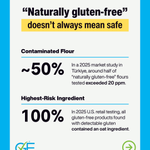



The cure isn't here yet. Until it is, accuracy is the least the industry owes people managing this disease.
That's the work we show up for every day — not just the awareness part, but the verification part. On National Celiac Disease Awareness Day, observed in the US, we're thinking less about visibility and more about the systems that make gluten-free claims worth trusting.
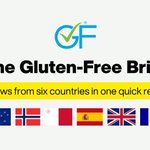
Celiac disease has a name in every language on this map. What doesn't change is what it takes to live with it safely: reading labels, asking questions, trusting that “gluten-free” actually means gluten-free.

The Gluten-Free Brief: Your twice-monthly roundup from GFFP.
Informational news roundup;
no endorsement implied.
Recalls:
UK alerts covered Minton & Donello Organic White Orzo and Capsicana Easy Going Mild Salsa for undeclared wheat or barley gluten, while France recalled Leclerc Pain protéines + after bread labeled GF was found to contain gluten.
(UK FSA; Coeliac UK; RappelConso)
A gluten-free beer order ended with a mocking receipt.
In Spain, a customer with CD says a bar printed “tonta celi” (“stupid celiac”) on her receipt after she requested a GF beer. The case went viral, and the business later apologized publicly.
(El Debate; Soy Camarero)
Malta’s celiac community challenged misleading TV remarks.
The Coeliac Association Malta filed a formal complaint with the Broadcasting Authority after comments on TVM’s Bundy Time were said to mock medically necessary GF diets.
(Coeliac Association Malta; Newsbook Malta)
Celiac disease topped a Norwegian childhood study.
In a nationwide study of ~1M children, 2.6% developed an autoimmune disease by age 18, with CD showing the highest incidence. ~5% developed more than one autoimmune disease.
(Uni. of Oslo; The Lancet Child & Adolescent Health)
Stroke patient with CD was repeatedly served gluten.
A nursing student in New Zealand says Waitākere Hospital repeatedly offered her wheat-bread sandwiches despite her condition. She also discovered her prescribed medication wasn’t GF.
(Newstalk ZB; Health New Zealand)
Gluten-free news from six countries in one quick read. Here’s what happened around the world over the past few weeks.

A gluten-free hotel? Yes, they exist.
More hotels around the world are beginning to strengthen their GF procedures, staff training, and guest support systems — helping make travel feel more welcoming and accessible for people with gluten-related disorders, families, and groups.
Celiac disease raises the risk of eating disorders, a new drug shows effects beyond the gut, and a popular podcast reminded us why awareness still matters. Check out this edition of The Gluten-Free Brief: glutenfreefoodprogram.com/br…

The latest edition of The Gluten-Free Brief covers major new celiac research, undiagnosed case estimates, gluten-related recalls, a court ruling on gluten-free meals, and formulation changes affecting Peanut M&M’s. glutenfreefoodprogram.com/br…

This edition of The GF Brief looks at why very small gluten doses still matter, what EEGs reveal about sleep in children with celiac disease, how skin conditions like dandruff may connect to celiac, and where policy is moving next on school meals. glutenfreefoodprogram.com/br…
This edition of The Gluten‑Free Brief highlights global #glutenfree developments, from campus policy changes and national screening programs to new clinical data on pancreatitis risk, gluten‑removed beer, and kitchen cross‑contact.
#celiacdisease glutenfreefoodprogram.com/br…
Gluten thresholds vary across certification programs. Understanding the numbers helps put labels into context.

ALT Gluten thresholds of selected gluten-free third-party certification programs.
In this edition of The Gluten-Free Brief, we bring evidence-based updates in policy, science, and access from the UK, Argentina, Spain, and the US. glutenfreefoodprogram.com/br…
A global look at gluten-free regulations: Codex baseline. Stricter tiers. Mixed rules. Unregulated markets.
2026 scorecard ⬇️glutenfreefoodprogram.com/gl…

The gluten-free market is accelerating — and it’s not just a trend. When medical need meets mass demand, trust becomes non-negotiable.

ALT Gluten-Free Market Size Estimated Growth.

ALT Who Consumes Gluten-Free Products?
The Moghal & Soldera study (2025) found that stool testing has 85.1% sensitivity compared to 55.4% for urine for monitoring gluten intake. While urine captures intake within hours, stool testing identifies "hidden" exposures occurring over several days. (@Life_MDPI)