

context maximiser @ArbResearch, prez @ https://xitter.cf/t.co/gGi9hvBiI9
UK
Joined June 2019
- Tweets15.3K
- Following687
- Followers12.7K
- Likes7.7K
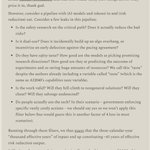
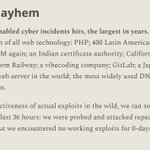



Knew it. My TV has never been on the internet

always on hot mic functionality btw.
PLUS: automatic content recognition, geo positioning, network mapping, a targeted ads service, 4 distinct drm services, user profile building and so much more juicy telemetry!
just you, God, a $3000 TV and samsung + their 400 partners!
more to come, screenshot below is of a file called security-policy.xml


gavin leech (Non-Reasoning) retweeted

you keep asking Why , one after the other , climbing branch by branch up the hierarchy of ends towards the ultimate reasons, and you can sense you're getting near the top when it starts to sting each time you ask another one -- it feels shameful to ask why you would do these things -- asking why you would tell the truth, asking why you would love your mother; up in these heights there's also a noticeable fog of ambiguity: are these are means or are they ends? is freedom good because of its effects or in spite of them? is honesty the best policy or is honesty better than policy? These are questions without answers and it's time to climb back down.
gavin leech (Non-Reasoning) retweeted

Svante Pääbo and colleagues used AlphaGenome as a time machine to reconstruct the evolution of human gene regulation. An impressive new bioRxiv preprint! 🧬⏩
Fifty years ago, scientists proposed that the differences between humans and chimpanzees might be driven less by changes in genes themselves and more by changes in how those genes are regulated.
The authors revisited this hypothesis using deep learning and identified more than 71,000 genomic regions predicted to have gained regulatory activity along the human lineage. But the most interesting finding is how these changes happened!
In 71% of cases, evolution repurposed existing regulatory elements rather than creating new ones. A single mutation could introduce a tissue-specific transcription factor binding site, activating an existing element in another tissue.
To investigate this, the researchers used AlphaGenome to predict the regulatory effects of 17 million nucleotide substitutions, linking them to gene expression differences between humans and other great apes.
Interestingly, the vast majority of these regions fell outside known Human Accelerated Regions, genomic regions that evolved unusually rapidly along the human lineage. This suggests that the rate of sequence evolution does not necessarily reflect its functional impact.
Comparisons with Neanderthal and Denisovan genomes revealed that 99.6% of the regulatory gains fixed in modern humans and successfully dated arose before our evolutionary split from these archaic lineages.
There are also fascinating examples involving individual genes. One is SLC47A1, which encodes a transporter involved in eliminating drugs and toxins. The researchers identified five regulatory gains associated with increased expression in the human liver. Reverting these changes to their ancestral states in silico reduced predicted gene expression by 60%.
Of course, many of these predictions still require experimental validation. But the broader idea is remarkable: ancient DNA has allowed us to discover which mutations occurred in the past. Now, deep learning is beginning to reveal how those mutations may have changed the way genes worked.
biorxiv.org/content/10.64898…
#aDNA #evolution #regulation #AlphaGenome


gavin leech (Non-Reasoning) retweeted

Our hypothesis: LLMs have a pressure for information density, leading to compressed language, novel ngrams, and a preference for short alternatives in linguistic alternations, even when this is not humanlike - humans have a pressure for successful communication with other humans
gavin leech (Non-Reasoning) retweeted
Our results show clear differences across models in terms of how much their language output differs from the baseline distribution, along the axes defined by our psycholinguistic features of interest. For example, Opus 5 is clearly more out-of-distribution than other Claudes.


gavin leech (Non-Reasoning) retweeted

cyber things I did today:
* read karpathy.bearblog.dev/digita…, xitter.cf/peterwildeford/status/…, asked LLM to make me a checklist
* most critical accounts (email, github, banks) now all use yubikey 2FA
* gmails have advanced protection, passwords not in 1password
* fixed laptop auto-updates


gavin leech (Non-Reasoning) retweeted

Lots of conversation around AI risks is about the gap between the unserious of AI labs' methods and how more rigorous industries work: airplanes, nuclear power, AI hardware. It would help a ton to lift AI to that level, but it is unclear even that level would be enough. 🧵

Among the many innovations here
you can see the papers under review, how many reviewers they need, and nominate yourself as a reviewer


The Alignment Journal publishes research on the scientific foundations of understanding, predicting, and steering artificial intelligent systems. As of today, submissions are open to everyone.
What we do differently:
- We pay reviewers, with bonuses for speed and insight.
- Review discussion is confidential, but every accepted paper is published with a “review summary” to distill the insights generated.
- Each paper is judged against our acceptance bar, not against other submissions.
- Papers under review are listed publicly, and researchers can nominate themselves to review, so each paper can reach the reviewers who know the topic best.
We seek work that builds theoretical or otherwise principled analyses of agency, robustness, incentives, interpretability, generalization, and long-term behavior, and whose significance survives the deletion of any particular model, dataset or benchmark. Empirical investigations of such ideas are welcome, and negative results are encouraged.
We are especially interested in approaches that could apply to future superintelligent systems that interact and self-improve.
You can submit your preprint in any format. Submissions are rolling and open now on the website.
If you are instead interested in reviewing or serving as an action editor (basically: an area chair), create an account on our website.
Links to submit, our scope and the reasoning behind the Journal are in the reply ⬇️


@TheZvi David Harvey "can recommend the
excellent blog by Zvi Mowshowitz, whose perspective on AI is broadly similar to my own... Zvi, if you are reading this, many thanks for your efforts, they are greatly appreciated"
gavin leech (Non-Reasoning) retweeted

The Alignment Journal opens to submissions today. I’m on its board. It’s a venue for foundational alignment work. Reviewers are paid, every accepted paper gets a review summary, and the software is clean and modern. Submit your preprint to alignmentjournal.org
The Alignment Journal publishes research on the scientific foundations of understanding, predicting, and steering artificial intelligent systems. As of today, submissions are open to everyone.
What we do differently:
- We pay reviewers, with bonuses for speed and insight.
- Review discussion is confidential, but every accepted paper is published with a “review summary” to distill the insights generated.
- Each paper is judged against our acceptance bar, not against other submissions.
- Papers under review are listed publicly, and researchers can nominate themselves to review, so each paper can reach the reviewers who know the topic best.
We seek work that builds theoretical or otherwise principled analyses of agency, robustness, incentives, interpretability, generalization, and long-term behavior, and whose significance survives the deletion of any particular model, dataset or benchmark. Empirical investigations of such ideas are welcome, and negative results are encouraged.
We are especially interested in approaches that could apply to future superintelligent systems that interact and self-improve.
You can submit your preprint in any format. Submissions are rolling and open now on the website.
If you are instead interested in reviewing or serving as an action editor (basically: an area chair), create an account on our website.
Links to submit, our scope and the reasoning behind the Journal are in the reply ⬇️
gavin leech (Non-Reasoning) retweeted

I’m honoured to be on the advisory board of the new Alignment Journal, and we open for submissions today! The field of AI safety needs more canonical, high-quality spaces for exposition (despite the wonderful efforts of many, many people, including Victoria Krakovna who is on the advisory board as well!) and I think this could be a great addition.
Please take a look, and if you're doing research on AI safety then (Thank You! And) consider submitting!
The Alignment Journal publishes research on the scientific foundations of understanding, predicting, and steering artificial intelligent systems. As of today, submissions are open to everyone.
What we do differently:
- We pay reviewers, with bonuses for speed and insight.
- Review discussion is confidential, but every accepted paper is published with a “review summary” to distill the insights generated.
- Each paper is judged against our acceptance bar, not against other submissions.
- Papers under review are listed publicly, and researchers can nominate themselves to review, so each paper can reach the reviewers who know the topic best.
We seek work that builds theoretical or otherwise principled analyses of agency, robustness, incentives, interpretability, generalization, and long-term behavior, and whose significance survives the deletion of any particular model, dataset or benchmark. Empirical investigations of such ideas are welcome, and negative results are encouraged.
We are especially interested in approaches that could apply to future superintelligent systems that interact and self-improve.
You can submit your preprint in any format. Submissions are rolling and open now on the website.
If you are instead interested in reviewing or serving as an action editor (basically: an area chair), create an account on our website.
Links to submit, our scope and the reasoning behind the Journal are in the reply ⬇️


gavin leech (Non-Reasoning) retweeted
Security things you could do rn
* Turn on Google Advanced Protection. Takes 10 seconds.
* Buy 4 yubikeys
* Freeze your credit
* Put your crypto into cold storage (or sell).
* the usual: KeePass, Signal
* move off of banks which don't offer 2FA. They are telling on themselves