

gnowledge lab, home labs, phil of science, cognitive science, software freedom, Formerly Prof TIFR, Visiting Faculty IISER Pune https://xitter.cf/t.co/uVuwKUgI6u
Pune India
Joined July 2009
- Tweets6K
- Following723
- Followers1.1K
- Likes2.6K





Emergence of polarization in networks of large language model agents | Nature Communications comdig.cssociety.org/2026/10… via @cxdig

NagarjunaG retweeted

Microscopes have historically imaged organisms on a flat surface. You basically take some cells, put them under a coverslip, and image them. But cells in the wild don’t live like this; they move in 3D.
The Gravity Machine from Manu Prakash’s lab is such a brilliant way to solve this problem. It came out a few years ago, in 2020, but it really emphasizes this idea that discoveries are easier to make when we design our instruments in a way suited to observing them. This is basically a microscope that can record (marine) organisms moving in three dimensions. It looks like a car tire, with a water-filled channel running around its rim. You put your organism in the water and place the microscope on the side. As the organism swims up or down, the wheel rotates to compensate, keeping it in view.
The video below was taken with this Gravity Machine. It shows a single cell, Volvox aureus, swimming upwards. As it swims, the researchers flash a light, and you can see the cell rapidly shoot upwards. This is something we could never record with a normal microscope!
What else in biology are we missing because of poor measurement tools? (Apparently, for example, there are marine organisms that float up or down an entire kilometer as they are dividing.) I’ve seen 3D images of plant roots, but only after all the bacteria attached to them have been killed off. What if we could image the gut microbiome or an entire cube of dirt across space and time, without killing the organisms first?

NagarjunaG retweeted

Today in @Nature, we report a new approach to studying human brain development and modeling disease in vivo.
Human neural #assembloids and #organoids have opened new ways to study development in vitro, but they also have important limitations. Transplantation can provide a more physiological environment, yet human cortical cells then develop within a rodent brain that matures much faster, constraining their growth and integration.
To address some of these limitations and obtain more advanced functional readouts relevant to disease biology, we generated #apallial mice, in which ~98% of the cortex and hippocampus fail to form, creating space for transplanted human cortical organoids to grow and integrate extensively.
We call these #xenocortical mice (XCX).
Nearly 7 years in the making. Congratulations to an extraordinary team and wonderful collaborators!
Link to the article below 👇

NagarjunaG retweeted

Here it is - the official, revised, peer-reviewed version of my Platonic Space paper. mdpi.com/2409-9287/11/5/161 Of all the many unpopular positions I’ve taken over the decades - bitter controversies around the origin of left-right asymmetry in embryogenesis, bioelectricity and genetics, diverse intelligence, etc., this one has by far generated the most pushback: serious (grateful for those!) and energetic attempts to move me to other views, pleas to just drop it and not talk about it (for several different reasons), nasty emails and accusations, impacts on reviews of papers that have nothing to do with this, etc. Kind of amazing to me how incendiary this is. What can I say... Our job is to call it as we see it, and right now for me, this is it. Apologies to collaborators and colleagues for any shrapnel! Time will tell if this pans out or not; I've placed my bets. And btw, if you think this stuff is weird and uncomfortable, just wait… There’s much more on the way. The knob turns slowly but as long as the data keep coming, I'm going to say what I think it all means and follow it to the next steps it enables. Buckle up!

NagarjunaG retweeted

If you don’t know Michael Levin’s work, you should. One of the greatest thinkers of our time
He studies bioinformation & makes new living things such as Xenobots to understand how cells know what organ to make and when to stop growing 🫀🧠

NagarjunaG retweeted

We've been getting a lot of questions lately about how the Internet Archive digitizes books.
The short answer: page by page, by hand.
You may remember our viral 2021 video of Eliza Zhang scanning a book. That's still how we do it.
Meet Eliza, and learn how we scan books: blog.archive.org/2021/02/09/…
NagarjunaG retweeted

Remembering people who stood for science and scientific thinking....
link in comments section

If you use markdown to write and organize notes like me, I have a news for you. I made a knowledge graph extension for your editor: @obsdmd , @logseq , @HedgeDocOrg , @discourse
the article posted on linkedin tells how to use.
linkedin.com/pulse/nodebook-…

A Guide to Philosophical & Scientific Valencies
#meaning #truth #validity #proof #trust #rigor #reliability #wff #consistency #adequacy and other valencies that we encounter in academic engagements. A handout.
gnowgi.substack.com/p/a-guid…

NagarjunaG retweeted

The exceptional @drmichaellevin is all over the place today! I listened to him on @BBCRadio4 #Sideways this morning (bbc.co.uk/sounds/play/m002zg…) & then here he is in this rich portrait in @NYMag by @lizweil nymag.com/intelligencer/arti…

NagarjunaG retweeted

An artificial neural network built into a computer memory chip reconstructs the human cortex with high accuracy in real time.
Learn more in a new #SciencePerspective: scim.ag/4eLCqDQ

NagarjunaG retweeted

I’m Not in good shape but not so bad either...
Rather than asking me to break my fast please join me on 20th July... Peaceful March to the Parliament.
#cockroachjanataparty #jantarmantar #cjpprotest #chalosansad – at Delhi, India
Language Games in Science: Wittgenstein, Kuhn, and the Limits of Translation: Wittgenstein’s further move is to embed language games in what he calls forms of life. A language game is not a free-floating set of verbal conventions; it is sustained by, and in turn sustains, a set of practices, institutions, and shared activities. open.substack.com/pub/gnowgi…

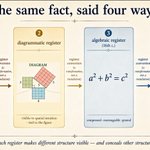
Mathematics isn't a bag of techniques. It's a controlled formal language that does three things ordinary language can't:
compress · generate · prove
And changing its register — prose → diagram → equation → set theory — is never translation. It's transformation.
Mathematics as Language: Compression, Generativity, and Proof open.substack.com/pub/gnowgi…

We treat language as a vehicle for thoughts already formed. Vygotsky spent his life refusing that.
Language is a tool that restructures thought. And the social comes first: we perform cognitive operations WITH others, in language, before we can perform them alone. gnowgi.substack.com/p/langua…

New chapter of The Roots of STEM. The series pivots: from "what kind of agents make science possible?" to "what do those agents do when they do science?" The answer — science is mediated cognition, a navigation through a dense ecosystem of language, math, instruments, and institutions. We start with language — but for science the instruments and tools that extend our affordances matter at least as much. gnowgi.substack.com/p/the-pi…
